
UAE Stands Alongside Bahrain, Kuwait and Qatar at the Centre of Renewed Gulf Aviation Disruption as EASA Advises Covered Airlines to Avoid Their Airspace, Triggering Rerouting, Longer Flight Times and Growing Airfare Pressure

Published
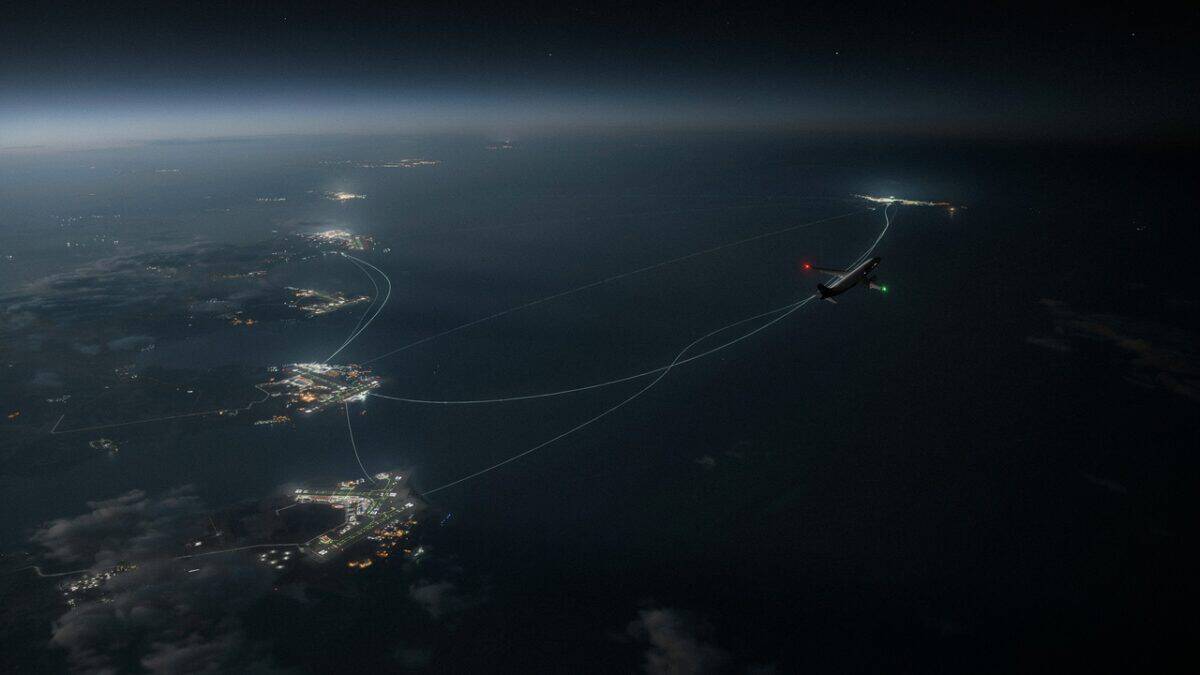
Image generated with Ai
Gulf Aviation has been placed under renewed operational strain after EASA issued CZIB-2026-07 on 14 July 2026, advising covered operators not to fly through the airspace of the United Arab Emirates, Bahrain, Kuwait or Qatar at any altitude. The restriction has also been applied to Gulf of Oman waters inside Muscat Flight Information Region west of longitude 58 degrees east. A high risk to civil aircraft has been identified amid recurrent ceasefire violations, maritime attacks, military activity, missile and drone exposure, interception operations and heightened air-defence readiness. European-regulated services and EASA-authorised third-country operators serving the European Union have been covered. Rerouting, schedule revisions, longer journey times, tighter aircraft utilisation and higher operating costs may consequently be produced, while airfare pressure may be intensified where capacity is reduced or fuel consumption rises. No universal fare increase has been officially quantified, however, and disruption should not be assumed for every flight. The bulletin has been made valid until 29 July 2026 unless reviewed earlier, while continuous monitoring of aeronautical publications and national directions has been required across the affected Gulf Aviation network.

Image generated with Ai
Covered Airlines Face a Clearly Defined Airspace Restriction
The latest intervention has been directed at a precisely defined group of operators rather than every airline worldwide. Its application has been assigned to air operators governed by Commission Regulation EU 965/2012 when operations through the affected airspace are being planned. Third-country operators authorised by EASA have also been included when services are being conducted to, from or within the European Union under their third-country operator authorisation. The Emirates Flight Information Region, identified by code OMAE, has been covered in full at all altitudes and flight levels. The same treatment has been applied to Bahrain FIR OBBB, Kuwait FIR OKAC and Doha FIR OTDF. Western Gulf of Oman airspace inside Muscat FIR OOMM has been included only where it lies west of longitude 58 degrees east. Oman’s entire national airspace has therefore not been placed under the same recommendation. This distinction remains important because the geographical scope can otherwise be overstated. The bulletin has been presented as a conflict-zone safety recommendation, not as a declaration that the four national airspaces have legally been closed by EASA. Sovereign closure powers have remained with the relevant states. Nevertheless, a clear recommendation not to operate has been issued to covered carriers, while close monitoring of regional developments has additionally been requested. Available aeronautical publications, information circulated through the European conflict-zone platform, and guidance issued by national authorities have been required to be followed. Operational decisions may consequently differ between airlines, routes and jurisdictions while the same regional threat environment is being assessed. This scope has been expected to reshape Europe-linked operations more directly than services operating entirely beyond EASA regulatory reach.
Advertisement
Advertisement

Image generated with Ai
Escalating Regional Threats Force Fresh Safety Action
The renewed warning has followed a rapid reversal in the region’s assessed aviation risk. An earlier Middle East and Persian Gulf bulletin expired on 8 July after reduced short-term tensions had been recognised and residual Gulf risk had been transferred into a dedicated information note. Separate high-risk bulletins covering Iran, Iraq and Lebanon had then been retained. By 14 July, however, a new high-risk bulletin had been issued specifically for Bahrain, Kuwait, Qatar, the United Arab Emirates and the defined Gulf of Oman sector. According to EASA, a temporary United States–Iran ceasefire had first been announced on 8 April and had remained in effect until 17 June, when a memorandum had extended it for another 60 days. Recurrent and significant violations were subsequently identified, and a high level of Gulf risk was assessed again. Iranian efforts around the Strait of Hormuz, attacks against commercial vessels and associated United States military activity were cited as principal danger factors. Exposure to missile or drone attacks was considered possible because major United States military facilities are positioned across the covered states. Weapon overflights, interception operations, falling debris and wider escalation effects were also identified. Further danger was associated with the heightened readiness of national and United States air-defence systems, through which misidentification, unintended engagement or collateral damage could be caused. Because military activity could occur with little warning inside confined airspace, the time available for tactical rerouting or protective airspace management was considered severely restricted. Temporary closures and operational restrictions had previously been introduced by regional authorities, but their timely effectiveness was not guaranteed by EASA against rapidly developing events. Civil traffic has consequently been treated as exposed across all flight levels, without a lower-altitude or upper-airway exemption being offered to covered operators.

Image generated with Ai
Longer Flight Paths Reshape Airline Operations
The EASA airspace recommendation has been expected to create effects extending beyond flights scheduled to land in the United Arab Emirates, Bahrain, Kuwait and Qatar. Services traditionally routed through their flight information regions may also be redirected, particularly where European-regulated operators or EASA-authorised third-country carriers are involved. Alternative flight paths may be planned through airspace judged acceptable under each operator’s security assessment and national guidance. However, every diversion must be examined against available route capacity, weather conditions, fuel requirements, aircraft range, crew-duty limits and access to suitable diversion airports. Longer routings may therefore be introduced even when the departure point and destination remain outside the four affected Gulf states. Additional fuel may be carried, while payload calculations may be revised where aircraft performance or range limitations are encountered. Arrival and departure timings may also be changed because aircraft rotations can be disturbed by extended airborne periods. Where one delayed aircraft has been scheduled to operate several daily sectors, disruption may be carried into later services. Connections at major hubs can consequently be weakened, particularly when minimum transfer times are exceeded. Under such conditions, passengers may be rebooked and baggage transfers may be delayed. These outcomes have not been guaranteed across every route, but they have been made more likely wherever established Gulf corridors are removed from operational planning. Gulf Aviation connectivity has therefore been exposed to a network problem rather than a narrowly isolated airspace restriction.
Advertisement
Advertisement
Category-Wise Summary of the Gulf Airspace Situation
| Category | Officially identified position | Likely operational consequence |
|---|---|---|
| Affected airspace | Bahrain FIR, Kuwait FIR, Doha FIR and Emirates FIR have been covered at every altitude | Scheduled routes may be diverted away from the four Gulf airspaces |
| Additional sector | Gulf of Oman waters within Muscat FIR west of longitude 58 degrees east have been included | East–west routing choices may be further restricted |
| Covered operators | EASA operators and EASA-authorised third-country operators serving the EU have been addressed | Europe-linked services may be affected most directly |
| Threat environment | Missiles, drones, interceptions, falling debris and air-defence activity have been identified | Rapid tactical changes and conservative route planning may be required |
| Operational period | CZIB-2026-07 has been made valid until 29 July 2026 unless reviewed earlier | Timetables may remain exposed to short-notice revisions |
| Required monitoring | Aeronautical publications and national authority instructions must be followed | Flight plans may differ by carrier, jurisdiction and operating day |
| Fare implications | No official universal airfare increase has been quantified | Cost pressure may emerge where detours and capacity reductions occur |

Image generated with Ai
Why Longer Journeys Can Create Airfare Pressure
Higher ticket prices have not been ordered or predicted numerically by EASA, and a region-wide fare surge cannot be presented as an established official fact. Nevertheless, airfare pressure may be generated through recognisable airline operating mechanisms when aircraft are required to avoid large areas of strategically important airspace. Longer journeys may be associated with greater fuel consumption, additional crew time and more complicated fleet scheduling. Aircraft productivity may be reduced when fewer sectors can be completed within the same operating day. Available seat capacity may also be tightened if frequencies are consolidated, connections are removed or smaller numbers of services are maintained. Pricing may then be influenced by remaining capacity and passenger demand. The eventual fare paid by a traveller may still be shaped by booking date, travel class, route competition, refund activity and each airline’s commercial strategy. No single surcharge should therefore be assumed. The most immediate traveller consequences are more likely to be experienced through schedule changes, extended itineraries and altered connections. Several operational effects may be produced:
Advertisement
Advertisement
- Flight times may be extended when direct Gulf corridors are removed from the approved route plan.
- Departure timings may be changed so that revised airways, airport slots and aircraft rotations can be accommodated.
- Connections may be missed when inbound aircraft arrive beyond the planned transfer window.
- Fuel and crew costs may rise when additional distance and duty time are required.
- Seat availability may be reduced if frequencies are temporarily consolidated or suspended.
- Airfares may face upward pressure where stronger demand is concentrated onto fewer available services.
Major Gulf Hubs Face Wider Network Consequences
The four affected flight information regions support aviation markets that connect Europe, Asia, Africa and the wider Middle East. Disruption can therefore be transmitted beyond the immediate Gulf through connecting itineraries. A traveller flying between Europe and South or Southeast Asia may be affected even when neither journey endpoint is located in an EASA-listed Gulf state. Where a connection has been planned through a Gulf hub, the journey may be lengthened, retimed or transferred to another routing. Where the operating airline is not directly covered by the bulletin, different decisions may be reached under its state regulator and internal security procedures. This distinction must be preserved because the EASA recommendation has not been imposed universally on all global carriers. Differences between airline responses should consequently be expected. Some services may be maintained under another regulatory framework, while covered operations may be cancelled, rerouted or suspended. Passengers may therefore encounter inconsistent schedules across airlines serving the same city pair. The developing situation must be assessed through confirmed airline notifications and airport information rather than assumptions based solely on destination. Because CZIB-2026-07 may be reviewed before its stated expiry, restrictions may be strengthened, extended, revised or withdrawn as the security assessment changes. Flexibility has consequently been made essential for travellers, tour operators, travel-management companies and connecting-airport teams handling journeys through the affected Gulf Aviation system.
Cancellations Do Not Automatically Remove Passenger Protection
Passengers affected by Gulf Aviation disruption may continue to receive protection under European Union air-passenger rules when the journey falls within their scope. If a covered flight is cancelled, the operating airline must generally offer a one-time choice between reimbursement, rerouting to the final destination at the earliest opportunity, or rerouting on a later suitable date under comparable transport conditions, subject to seat availability. Where a connecting itinerary is held under one reservation, a return flight to the original departure airport may also be required when the remaining journey no longer serves its original purpose. Care must still be provided while passengers await alternative transport. Refreshments, meals, communication facilities, hotel accommodation and transport between the airport and accommodation may be required according to the waiting period. These responsibilities are not automatically removed when disruption has been caused by extraordinary circumstances. However, standard financial compensation may not be payable where exceptional security conditions are proved to have directly caused the cancellation or delay and reasonable preventive measures had been taken. Each claim must therefore be assessed individually. The presence of CZIB-2026-07 alone should not be treated as automatic proof that every disruption has been caused by the same circumstance.
Passenger Rights During Gulf Aviation Disruption
| Disruption category | Protection that may be provided | Important limitation |
|---|---|---|
| Flight cancellation | Reimbursement or rerouting must generally be offered | The applicable journey must fall within EU passenger-rights rules |
| Extended delay | Meals, refreshments and communication may be provided | Eligibility depends on flight distance and waiting time |
| Overnight disruption | Hotel accommodation and airport transfers may be arranged | Care must remain proportionate to the disruption |
| Delay of five hours or more | Ticket reimbursement may be requested when travel is abandoned | A return flight may apply when a connection is involved |
| Extraordinary circumstances | Assistance and care remain applicable | Standard compensation may not be payable |
| Airline-arranged rerouting | Alternative transport should be offered under comparable conditions | Availability and operational safety may affect timing |
| Passenger self-booking | Reasonable costs may sometimes be recoverable if airline obligations are not met | Receipts and evidence must be retained |
Travellers Must Confirm the Operating Carrier and Ticket Structure
The identity of the operating airline must be checked because passenger rights are determined by more than the logo shown on a booking confirmation. Codeshare itineraries may be marketed by one carrier but operated by another. The departure location, destination, airline licensing jurisdiction and structure of the reservation may all affect the protection available. Separate tickets can create greater exposure because one airline may not be responsible for a connection missed on an independently booked service. By contrast, stronger rerouting obligations may be triggered when the disrupted sectors have been issued as one reservation. Package holidays may also be governed by additional consumer-protection arrangements. Passengers should avoid cancelling bookings independently before the carrier’s available options have been examined, because a voluntary cancellation may produce different refund conditions. Vouchers should not be treated as compulsory where a cash reimbursement right applies, since voucher repayment may generally be made only with passenger agreement. Travellers should also keep boarding passes, booking confirmations, receipts, airline messages and records of any alternative transport purchased. The following steps should be taken before departure:
- Flight status should be checked directly through the operating airline and departure airport.
- Transit arrangements should be reviewed because a rerouted journey may use a different hub or require revised entry documents.
- Connection times should be increased where longer flight paths or unpredictable arrival timings have been introduced.
- Medication and essential supplies should be carried in cabin baggage in case an unscheduled overnight stay is required.
- Receipts should be retained for reasonable meals, accommodation and transport purchased when assistance has not been supplied.
- Travel insurance conditions should be examined because conflict-related disruption or airspace restrictions may be excluded from some policies.
Airlines and Travel Sellers Face an Intensifying Information Challenge
Airlines, travel agencies and corporate travel managers may be required to handle constantly changing itineraries while the EASA bulletin remains active. Accurate communication must therefore be prioritised. Passengers should be informed when departure times, connecting airports, flight durations or operating carriers are changed. Where rerouting is offered, the complete revised itinerary should be checked rather than only the first replacement sector. Minimum connection times, terminal transfers and baggage arrangements must also be reassessed. Vulnerable travellers, including passengers with reduced mobility, older customers, unaccompanied minors and families travelling with young children, may require additional assistance when a journey is extended. Tour operators should avoid presenting airfare increases as universal or officially confirmed because no EASA pricing assessment has been issued. Instead, higher fares should be described as a possible market outcome where detours raise operating expenses or available capacity becomes restricted. The central official finding remains the identification of a high civil-aviation risk inside the specified airspace. Every commercial consequence should be distinguished from that verified safety assessment. Until the bulletin is withdrawn, replaced or extended, flexibility will be required across the Gulf Aviation market, while passengers must be prepared for rapid operational changes.
EASA Review Will Determine the Next Operational Phase
The immediate outlook for Gulf Aviation will be shaped by the security conditions recorded before CZIB-2026-07 reaches its scheduled expiry on 29 July 2026. The bulletin may be withdrawn, extended or replaced if the regional risk assessment changes. No automatic reopening of the affected routes should therefore be assumed on that date. EASA has confirmed that the situation will be monitored alongside the European Commission and EU member states. Information supplied through national aviation authorities, aeronautical publications and the European conflict-zone information platform will also be considered. If military activity is reduced and the ceasefire is stabilised, a less restrictive recommendation may eventually be issued. If missile launches, drone activity, attacks against vessels or military interceptions continue, the current avoidance recommendation may be maintained or strengthened. Carriers will consequently be required to preserve alternative flight plans and additional operational flexibility. Schedules may be published but later revised when a safer route cannot be secured. Aircraft and crews may also be positioned differently so that network disruption can be contained. A return to normal operations will not be determined only by whether airports remain open. The safety of the surrounding airspace, ground infrastructure, navigation systems and approach corridors must also be assessed before regular services can be restored by covered operators.
Advertisement
Advertisement
Regional Safety Has Become an International Aviation Priority
The wider threat to civil aviation has already been recognised at the international level. In April 2026, the International Civil Aviation Organization Council condemned violations affecting the territorial integrity and sovereign airspace of Bahrain, Jordan, Kuwait, Oman, Qatar, Saudi Arabia and the United Arab Emirates. Serious risks created by unauthorised military incursions and the disruption of civilian air operations were highlighted. Respect for the principles of the Chicago Convention was demanded, while the protection of international civil aviation was placed at the centre of the response. The latest EASA bulletin has narrowed its operational focus to Bahrain, Kuwait, Qatar, the United Arab Emirates and the specified Gulf of Oman sector. However, the underlying challenge remains regional. Civil aircraft may be exposed even when they are not deliberately targeted. Missile and drone overflights, interception activity, falling debris, electronic interference and possible misidentification by air-defence systems can all create danger. Confined airspace may leave limited time for an aircraft to be redirected after a threat has emerged. Conservative planning has therefore been required. Commercial efficiency, airport capacity and passenger convenience have been made secondary to safety. This approach may impose additional costs, but it has been designed to prevent aircraft from being exposed to rapidly developing military events that cannot be reliably controlled through last-minute tactical measures.
Travellers Must Prepare for Continuing Gulf Flight Changes
Passengers travelling through the United Arab Emirates, Bahrain, Kuwait or Qatar should remain prepared for changing schedules, revised connections and longer journey times while the warning remains active. Flight disruption should not be assumed solely because an airport is located within one of the listed states. The EASA recommendation applies to specified operators, while airlines outside that regulatory scope may reach different decisions under their own national authorities. Each itinerary should therefore be checked directly with the operating carrier. A booking platform may not display the latest operational change immediately. Extra time should be allowed for transfers, particularly where a connection depends on an aircraft arriving from Europe or crossing a route affected by the avoidance area. Flexible tickets may provide stronger protection where plans remain uncertain. Travel insurance should be reviewed carefully because conflict, military action and airspace closure exclusions may be applied. Passengers should also retain airline notifications, receipts and revised booking records if assistance or reimbursement later needs to be claimed. Claims for fixed financial compensation must be assessed separately from the right to care, rerouting or reimbursement. Security-related disruption may be treated as an extraordinary circumstance, but assistance obligations may still remain. Travellers should avoid presenting a possible airfare increase as a guaranteed outcome. Prices may rise where capacity is reduced or operating costs increase, but fares may also remain stable on competitive routes or bookings made well in advance.
Gulf Aviation Enters a High-Cost Era of Operational Caution
The renewed warning has demonstrated how quickly an improved regional outlook can be reversed. The earlier Middle East and Persian Gulf bulletin was allowed to expire on 8 July after short-term tensions had eased. Only six days later, a dedicated high-risk warning was issued for the four Gulf airspaces and the defined Gulf of Oman sector. That rapid change has shown why airlines cannot depend on a fixed operating environment. Contingency planning, route flexibility and immediate access to security information must now be maintained across every affected network. The United Arab Emirates remains at the centre because the Emirates Flight Information Region supports major international flows between Europe, Asia, Africa and the Middle East. Bahrain, Kuwait and Qatar also hold strategically important positions within the regional aviation system. Restrictions affecting these areas can therefore influence journeys far beyond their borders. Longer routes may increase fuel use and reduce aircraft productivity. Connection banks may be disrupted. Seat availability may be tightened, and commercial pressure may eventually be passed to travellers. Yet no universal fare surge has been officially confirmed. The verified story remains centred on aviation safety: EASA has advised covered operators not to use the affected airspace at any altitude. Until that recommendation is changed, Gulf Aviation will be governed by caution, rerouting and uncertainty, with passenger convenience and network efficiency being placed behind the overriding requirement to protect civil aircraft.
Advertisement
