
Venice Reinforces Tourism Controls as Access Fee and MOSE Reshape Travel Across Italy’s Lagoon City

Published
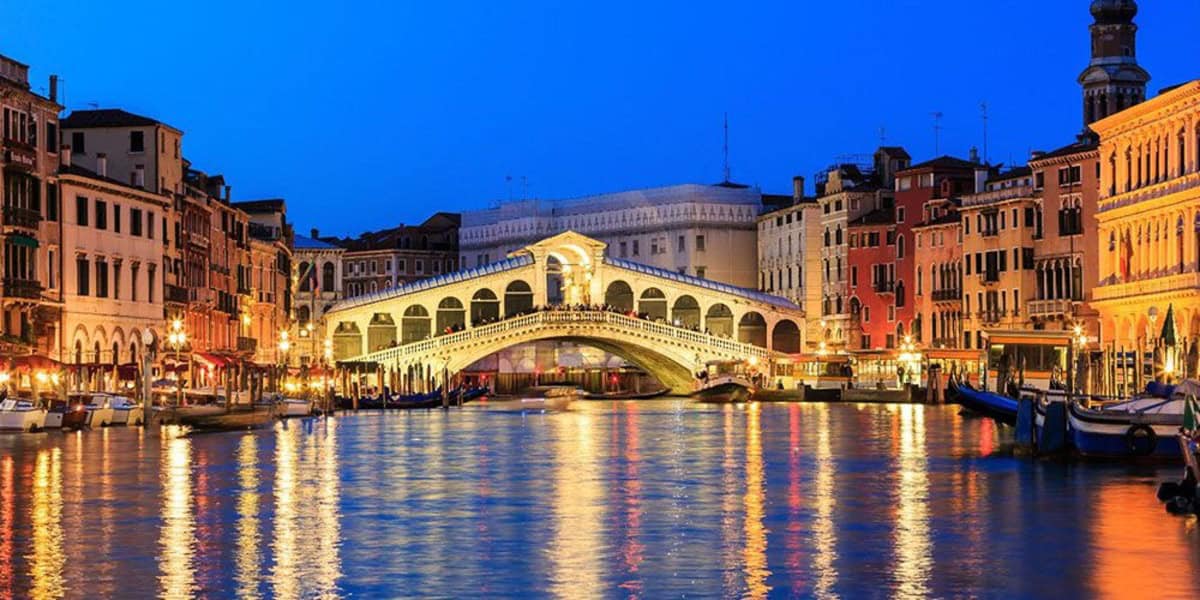
Venice, Italy, is strengthening tourism management in 2026 as the historic lagoon city responds to intense visitor pressure, population decline, flood risk and environmental concerns. Between April and July, municipal authorities operated the expanded Venice Access Fee across 60 selected days, while Italy continued using the 78-gate MOSE flood-defence system and maintained restrictions on large cruise ships entering sensitive historic waterways. These measures are reshaping how tourists, tour operators, cruise companies and travel businesses plan visits to one of Europe’s most distinctive destinations.
Venice’s Famous Beauty Now Comes With New Tourism Controls
Venice remains one of the world’s most unusual urban destinations. Built across more than 100 small islands within the Venetian Lagoon, the city has canals instead of conventional roads in its historic core. Its Gothic, Renaissance and Baroque palazzi appear to rise directly from the water. The Grand Canal reflects centuries of maritime wealth, while narrow calli, stone bridges and waterfront squares preserve a cityscape largely untouched by modern road infrastructure.
This unique geography also creates serious tourism-management problems. Large visitor volumes become concentrated around St Mark’s Square, Rialto Bridge, the Grand Canal and major transport routes. Venice is therefore shifting from pure tourism promotion towards tighter visitor management.
Venice Access Fee Expanded to Sixty Days in 2026
The most visible measure is the Contributo di Accesso, or Venice Access Fee. The 2026 programme operated on 60 non-consecutive days between 3 April and 26 July, compared with 54 days in 2025 and 29 days during the first experiment in 2024. The fee applied between 08:30 and 16:00 on designated dates.
Advertisement
Advertisement
Travellers booking sufficiently in advance paid €5, while those purchasing close to the date of entry paid €10. The two-tier system was designed to encourage earlier planning and give authorities better information about expected visitor flows. Not every visitor pays the fee. Exemptions apply to several categories, and travellers staying overnight in registered accommodation are treated differently because they are already subject to local tourism taxation rules.
Nearly 680,000 Paid Vouchers Recorded in 2026
The 2026 programme produced substantial data. Venice recorded 679,553 paid Access Fee vouchers, generating provisional revenue of €5,215,035.
Advertisement
Advertisement
Of these:
- 316,099 vouchers, or 46.5%, were purchased at the €5 advance rate.
- 363,454 vouchers, or 53.5%, were purchased at the €10 rate.
- Average daily paid-voucher volumes were reported to be 32.3% lower than in 2024.
- Authorities also recorded fewer days reaching the highest visitor-pressure levels.
The figures show that Venice is using pricing, digital registration and visitor data as tools to influence day-trip behaviour.
Advertisement
Advertisement
Venice Tourism Management in 2026
| Key Measure | Latest Position | Tourism Impact |
|---|---|---|
| Access Fee | €5 advance, €10 late | Encourages earlier trip planning |
| 2026 Fee Dates | 60 days, 3 April–26 July | Targets peak visitor periods |
| Paid Vouchers | 679,553 | Provides visitor-flow data |
| Revenue | €5.215 million | Supports management system |
| Historic Centre Population | Around 48,000 | Raises liveability concerns |
| MOSE System | 78 mobile gates | Protects against severe flooding |
| MOSE Reference Level | 110 cm | Main operational benchmark |
| Cruise Restrictions | Large ships barred from sensitive waterways | Changes cruise logistics |
Population Decline Adds Pressure to the Tourism Debate
Tourism pressure is only part of Venice’s challenge. The historic centre now has a permanent population of roughly 48,000 residents, far below the more than 170,000 people recorded in the early post-war period. The wider Municipality of Venice has a much larger population because it includes mainland areas such as Mestre and Marghera.
This distinction is important. The historic centre is increasingly shaped by visitor accommodation, tourism businesses and short-term rental demand. Rising housing costs and property conversion have contributed to long-term concerns about residents moving to the mainland. This trend is sometimes described as the “Venexodus”. The concern is that Venice could become increasingly dependent on visitors while losing the permanent community required to sustain shops, services, schools and everyday neighbourhood life.
MOSE Protects Venice From Severe Acqua Alta
Environmental risk is another defining issue. Venice is vulnerable to acqua alta, or exceptionally high tides, which can flood low-lying areas including parts of St Mark’s Square. The city is protected by the MOSE flood-defence system, located at the lagoon entrances of Lido, Malamocco and Chioggia.
MOSE consists of 78 mobile barriers installed on the seabed. When severe tides are forecast, the gates rise and temporarily separate the Venetian Lagoon from the Adriatic Sea. The operational reference level is around 110 centimetres at Punta della Salute, although authorities can adjust decisions depending on forecasts and conditions. For tourism, the system is crucial because it protects hotels, restaurants, museums, transport routes, shops and heritage structures from major flood disruption.
Advertisement
Advertisement
Venice Still Faces Sea-Level Rise and Subsidence
MOSE does not eliminate the long-term threat. Venice remains exposed to natural subsidence and rising sea levels in the northern Adriatic. The city has historically experienced gradual sinking, while climate change continues to increase concern about future high-water events.
This creates what is sometimes described as the MOSE paradox. Closing the lagoon during high tides protects Venice from flooding, but repeated closures also reduce normal tidal exchange with the Adriatic. That makes ecological management important because the lagoon depends on water circulation to sustain its sensitive salt-marsh and marine environments. Protecting Venice therefore requires both engineering and environmental balance.
Large Cruise Ships No Longer Pass Through Historic Venice
Cruise tourism has also changed significantly. Italy introduced restrictions preventing ships above 25,000 gross tonnes from passing through the San Marco Basin, San Marco Canal and Giudecca Canal. Larger cruise vessels have been redirected towards alternative facilities, including Porto Marghera, while other ports such as Chioggia play a role in the wider regional cruise network.
Before the restrictions, Venice Cruise Terminal handled about two million cruise passengers annually. The revised model has substantially changed how passengers arrive and move between ships and the historic centre. For cruise companies and tour operators, this means transfers and ground logistics are now a more important part of Venice itineraries.
What Travellers Need to Know
The 2026 Access Fee period ended on 26 July 2026, meaning travellers arriving later in the year should not assume the spring and summer payment schedule still applies. Future charging dates should always be checked through the official Venice Access Fee platform.
Cruise travellers should confirm their exact port and transfer arrangements because large vessels no longer sail through the most sensitive central waterways. Visitors should also monitor local information during periods of high-water risk, although MOSE has significantly improved protection against major flooding. For the travel trade, these issues are now core pre-departure information rather than minor operational details.
Advertisement
Advertisement
Venice Is Becoming a Global Test Case for Overtourism Management
Venice is increasingly important as a model for destinations struggling with overcrowding. Its Access Fee, flood barriers, cruise restrictions and urban-management policies all address different aspects of the same problem: how to preserve a globally popular destination without allowing tourism to overwhelm its residents, infrastructure and environment.
The city’s appeal remains intact. Its palazzi still shimmer above the canals. Gondolas still pass beneath centuries-old bridges. The Grand Canal still reflects the wealth of the former Venetian Republic. But the tourism story has changed. Venice is no longer focused only on attracting visitors. It is increasingly managing when they arrive, how they enter, where they concentrate and how their presence affects the city. For one of the world’s most fragile and celebrated destinations, protecting the magic now depends on managing the millions who come to experience it.
Advertisement
