
US Beats Canada and Others as Mexico Cruise Tourism Surges to 8.2 Million Passengers in 2026

Published
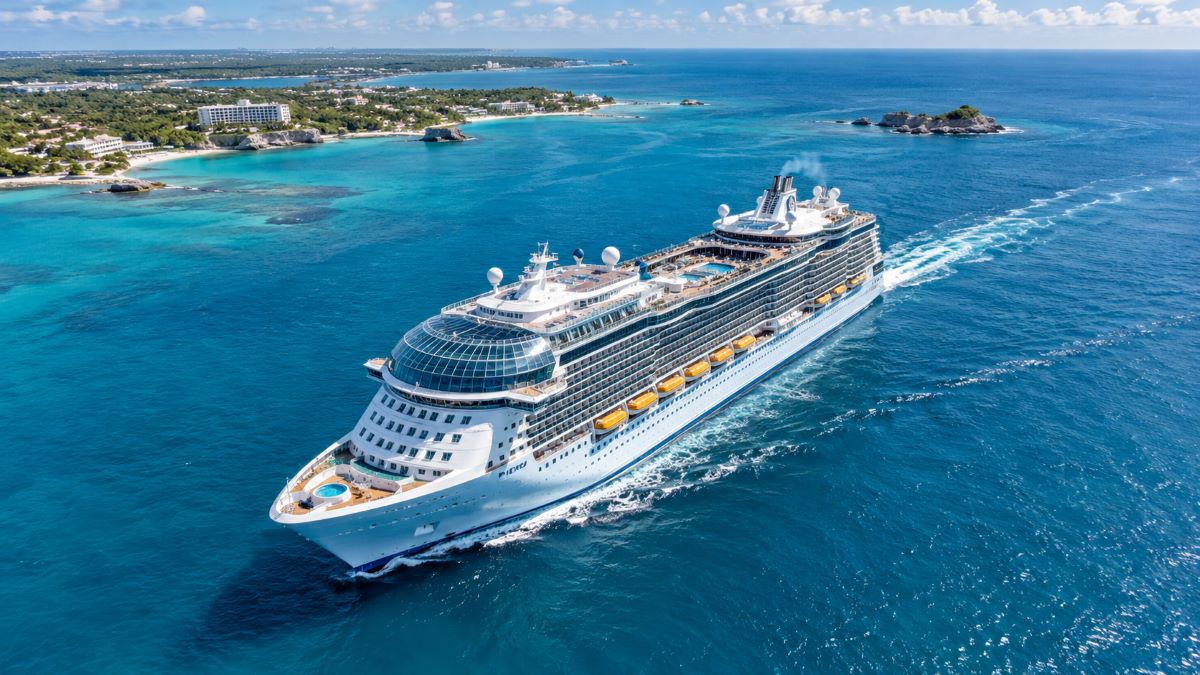
US beats Canada and others as Mexico cruise tourism surges to 8.2 million passengers in 2026, highlighting the growing strength of Mexico’s cruise sector and its appeal across major international markets. The US remains the leading source market, while Canada and others continue to support wider visitor demand. Cruise tourism is growing beyond traditional gateways with strong activity in Caribbean & Pacific ports. This gives travellers better choice of itinerary, improved connectivity to and from their destinations and greater option for shore experiences. In the case of Mexico, the cruise industry’s growth demonstrates the potential of travel trade to transform the competitiveness of port cities, tourism flows and the economies of the source markets.
Mexico Cruise Tourism 2026: The Numbers Behind the 8.2 Million Passenger Boom
Mexico’s cruise tourism boom is gaining both scale and economic value in 2026. Between January and August, Mexican ports received 8.2 million cruise passengers through 2,236 ship calls, with passenger traffic rising 15.9% from the same period of 2025 while arrivals increased 12%.
The headline number tells only part of the story. Mexico is not simply receiving more ships. It is handling more passengers per cruise call.
Average passenger volume increased from 3,557 travellers per cruise in 2025 to 3,680 in 2026, a rise of 3.5%. That matters because passenger growth of 15.9% is running ahead of the 12% increase in ship calls.
Advertisement
Advertisement
| Key cruise indicator | January-August 2026 | Annual change |
|---|---|---|
| Cruise passengers | 8.2 million | +15.9% |
| Cruise calls | 2,236 | +12.0% |
| Passengers per cruise | 3,680 | +3.5% |
| Pacific passengers | 2.79 million | +29.8% |
| Gulf-Caribbean passengers | 5.44 million | +9.9% |
| Cozumel passengers | 3.41 million | +10.7% |
Mexico received 11.2 million cruise passengers from 3,156 calls during all of 2025, meaning the country had already reached roughly 73% of last year’s full passenger volume by August. The comparison should not be treated as a year-end forecast because cruise traffic is seasonal.
Key takeaway: Mexico’s 2026 expansion is being driven by both additional cruise calls and heavier passenger throughput per arrival.
Advertisement
Advertisement
US Leads Canada as Mexico’s Biggest International Tourism Market
The United States remains the dominant international market feeding Mexico’s tourism economy.
In January 2026, Mexico received 1,136,132 US tourists, accounting for 57.9% of the foreign tourists covered by SECTUR’s source-market statistics. Canada ranked second with 455,083 visitors, representing 23.2% and an annual increase of 9.7%.
That made US volume around 2.5 times Canada’s total in the January dataset.
There is an important statistical distinction. Mexico has not published a complete nationality breakdown of all 8.2 million January-August cruise passengers. The 57.9% US figure and Canada’s 23.2% therefore describe broader international tourism arrivals, not shares of Mexico’s total cruise traffic.
What can be stated confidently is:
- The United States is Mexico’s largest international tourism market and has been identified by SECTUR as its principal cruise source market.
- Canada is Mexico’s strongest secondary international market in the January source-market data.
- Other markets are growing quickly, reducing Mexico’s long-term dependence on North American demand alone.
Canada, Colombia, Brazil, Europe and Asia Expand Mexico’s Visitor Pipeline
Mexico’s international tourism base is becoming more diverse.
Advertisement
Advertisement
During the first half of 2026, Canada generated 1.831 million air tourists, up 7.6%. Colombia reached 242,064, jumping 31.5%. Brazil increased 19.3%, Japan 17.1% and Switzerland 6%.
January figures also showed rising arrivals from Argentina, the UK, France, Spain and China.
| International market | Official 2026 signal | Tourism significance |
|---|---|---|
| United States | 1.136m tourists in January | Largest international market |
| Canada | 455,083 in January; 1.831m air tourists in H1 | Leading secondary market |
| Colombia | H1 arrivals +31.5% | Fast-growing Latin American demand |
| Brazil | H1 arrivals +19.3% | Expanding South American market |
| United Kingdom | January +10.6% | Important European leisure market |
| France | January +6.9% | Established long-haul market |
| Spain | January +7.7% | Growing European demand |
| China | January +15.7% | Expanding Asian source market |
The cruise relevance is indirect but strategically important. International air demand can support fly-cruise holidays, hotel stays before and after voyages, domestic connections and longer Mexico itineraries.
Mexico’s international aviation market is also diversifying. Between January and May, passenger traffic involving Canadian airlines increased 10%, Central and South American traffic rose 6.2%, and European airline traffic increased 0.5%.
Cozumel Dominates Mexico Cruises but Pacific Ports Are Growing Faster
Cozumel remains Mexico’s cruise giant.
The Quintana Roo port handled 3,408,730 passengers through 918 calls during January-August. That gives Cozumel roughly 41% of Mexico’s entire cruise passenger volume for the period.
Advertisement
Advertisement
Yet the fastest momentum lies on the opposite coast.
The Gulf-Caribbean received 5.44 million passengers, up 9.9%. The Pacific handled a smaller 2.79 million, but passenger traffic surged 29.8%.
Several destinations recorded striking growth:
- Puerto Chiapas: passenger traffic +90.2%
- Mazatlán: 328,136 passengers, +69.6%
- Cabo San Lucas: 956,964 passengers, +50.7%
- Progreso: 369,755 passengers, +18.8%
This creates a clear two-speed market. Cozumel supplies the volume; Pacific Mexico supplies much of the acceleration.
For destination planners, this matters because future investment in transport, excursions, port access and attractions cannot focus only on Mexico’s established Caribbean gateways.
Mexico Cruise Spending Is Rising Faster Than Passenger Traffic
Passenger numbers matter, but expenditure shows whether cruise growth is translating into economic value.
Advertisement
Advertisement
During the first half of 2026, Mexico recorded 6.6 million cruise visitors who spent US$575 million. Cruise visitor volume rose 15.2%, while expenditure increased 18.7%.
That means spending grew faster than passenger numbers.
Based on those official totals, average expenditure was approximately US$87 per cruise visitor, while the difference between spending growth and passenger growth implies an improvement of roughly 3% in nominal expenditure per visitor.
June strengthened the trend. Mexico received 843,417 cruise visitors, while their spending reached US$73.4 million, 30% above the previous year.
For local economies, that is the metric that ultimately counts. More passenger spending can flow into:
- guided excursions and attractions;
- restaurants and local food businesses;
- taxis and ground transport;
- shopping and handicrafts;
- marine and adventure activities.
The next challenge is therefore not simply getting travellers off ships, but encouraging them to spend more widely across the destination.
Advertisement
Advertisement
Puerto Vallarta Home Port Could Unlock Longer Stays and Higher Spending
Mexico’s developing Puerto Vallarta Home Port may become an important part of that strategy.
The planned terminal covers 95,172.11 square metres and will include three cruise berths, passenger embarkation and disembarkation services, commercial spaces and associated tourism facilities.
Unlike a normal port call, a home port allows passengers to start or finish their voyage in the destination.
That can generate spending that a short shore visit cannot always capture: hotel nights, airport transfers, restaurants, shopping and pre- or post-cruise holidays.
Mexico currently lacks a consolidated terminal operating regularly as a base for major international cruise ships. Puerto Vallarta could therefore connect cruise traffic more closely with Riviera Nayarit and wider Pacific Mexico itineraries.
Why Mexico’s Cruise Surge Matters Beyond the 8.2 Million Headline
Mexico’s cruise story in 2026 is no longer about one dominant Caribbean port or one source market.
Advertisement
Advertisement
The United States remains the core international market, Canada provides substantial secondary demand and rapidly growing markets such as Colombia and Brazil are widening Mexico’s tourism reach. Meanwhile, Cozumel maintains enormous scale while Cabo San Lucas, Mazatlán, Puerto Chiapas and the wider Pacific coast deliver faster growth.
More importantly, cruise spending is increasing faster than passenger traffic.
That changes the strategic question for Mexico. The next stage is not simply how many ships or passengers arrive. It is how effectively destinations can turn those arrivals into longer stays, broader shore experiences, greater local spending and stronger benefits for tourism communities.
In conclusion, US beats Canada and others as Mexico cruise tourism surges to 8.2 million passengers in 2026 because strong North American demand, rising international arrivals, expanding Pacific ports and Cozumel’s scale are driving wider cruise growth. Higher passenger volumes, stronger spending and new home-port ambitions are also increasing Mexico’s value in the global cruise market. While the US remains the leading source market, Canada and others continue to support broader demand, helping Mexico strengthen its position as one of the Americas’ most important cruise destinations.
Advertisement
