
Portland Meets Seattle as Pacific Northwest Quartet Elevates Food, Nature and Sustainable Tourism

Published
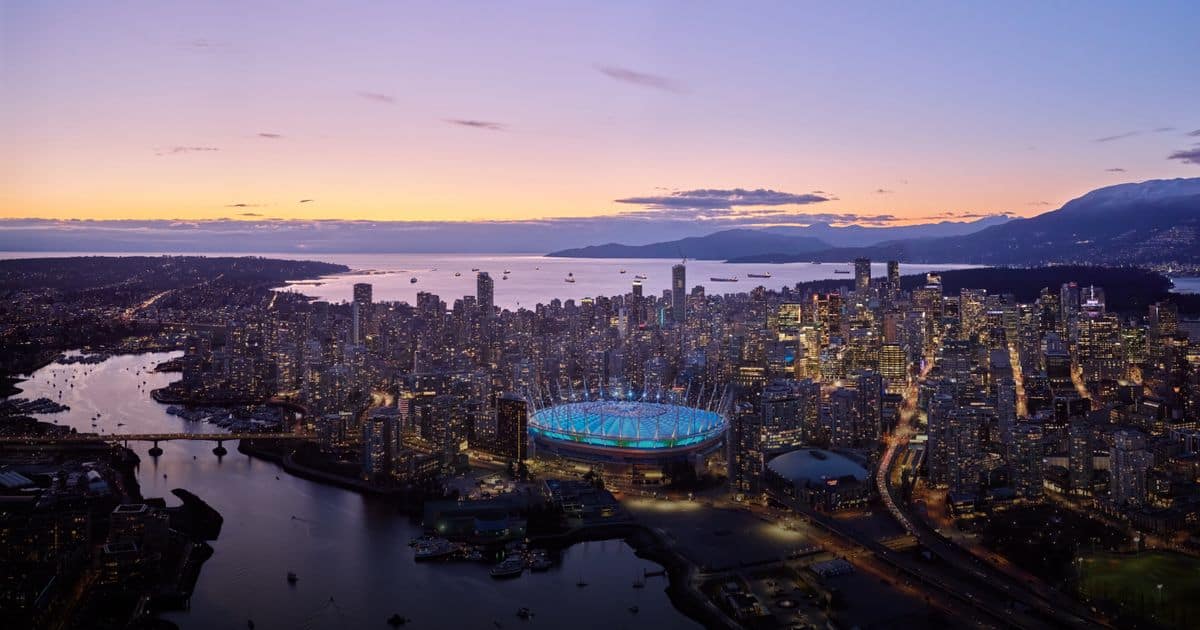
Portland, Seattle, Vancouver and Bend are emerging as four contrasting gateways into the Pacific Northwest’s food, nature and sustainability story. Their visitor economies also show why the region cannot be reduced to one travel model. Portland recorded $5.5 billion in visitor spending in 2024, while Seattle and King County generated $8.8 billion. Vancouver combines a globally recognised culinary scene with more than 250 city parks, while Bend channels tourism revenue into community services and sustainable visitor projects.
The comparison matters because travellers increasingly want experiences that connect eating, landscape and lower-impact mobility. Yet each destination handles that demand differently. Portland leans into food culture and urban greenery, Seattle combines metropolitan scale with extensive parkland, Vancouver integrates food policy with tourism, and Bend offers a smaller outdoor-oriented model.
Four Destinations, Four Tourism Economies
The first distinction appears in scale. Seattle and Portland operate as major urban visitor economies, while Vancouver adds an international, cross-border dimension. Bend is smaller but has built a strong tourism proposition around outdoor recreation, food and access to Central Oregon’s landscapes.
| Destination | Key visitor-economy indicator | Sustainability or nature marker |
|---|---|---|
| Portland | $5.5bn visitor spending in 2024 | 11,677+ acres in its park system |
| Seattle | $8.8bn visitor spending in 2025 | 6,441-acre park system |
| Vancouver | $544m economic output from supported 2024 events | 250+ parks covering 11% of land |
| Bend | 10.4% visitor room tax | Transport represents 44% of local emissions |
That distinction is important for travellers. Seattle’s $8.8 billion figure covers Seattle and King County, rather than the city alone. Portland’s $5.5 billion figure covers the Portland area, while Vancouver’s cited $544 million measures events supported by Destination Vancouver. These differences make a simple “winner” misleading, but they reveal the economic depth behind each destination.
Advertisement
Advertisement
Seattle welcomed 39.7 million visitors to Seattle and King County in 2025. Visitor spending remained at $8.8 billion, while tourism supported 68,623 jobs and generated $840 million in state and local taxes.
Portland recorded more than 12.3 million overnight trips in 2024. Those visitors spent $5.5 billion across accommodation, food, retail, transportation, arts and recreation. Food and restaurants accounted for $1.18 billion, while transportation represented $1.4 billion.
Advertisement
Advertisement
Vancouver’s event economy provides another useful lens. Destination Vancouver reported that 187 supported events generated $544 million in economic output in 2024. They also generated $283 million in GDP, $87 million in government revenue and 4,010 full-time equivalent jobs.
Portland Turns Food Into a Destination Asset
Portland’s strongest competitive advantage remains its unusually dense relationship between food, neighbourhoods and independent businesses. Its culinary identity extends beyond restaurants into food carts, food halls, craft beverages, farmers markets and regional produce.
The visitor economy demonstrates that this is more than branding. Portland visitors spent $1.18 billion on food and restaurants in 2024, making dining one of the largest identifiable spending categories.
The city’s food culture also benefits from a strong regional agricultural hinterland. That connection allows travellers to experience a food system rather than simply a restaurant scene. The result is a destination where neighbourhood exploration can become part of the culinary itinerary.
Portland’s green credentials also have a substantial physical footprint. Its park system covers more than 11,677 acres, including almost 7,895 acres of natural areas. The system spans five watersheds and contains more than 1.2 million park trees.
The urban forest provides another striking statistic. Portland’s latest inventory identifies more than 252,000 street trees, alongside millions of trees on public parks and private property. Street-tree numbers have risen 15% over the past decade, according to the city.
Advertisement
Advertisement
For visitors, that translates into a destination where green space is not confined to distant wilderness. Travellers can combine food districts, walking routes, parks and cycling within the same urban itinerary.
Portland is also testing the limits of low-carbon urban mobility. Its BIKETOWN and e-scooter network recorded about 1.8 million shared micromobility trips in 2024. The system included 2,400 e-bikes and 248 stations.
Seattle Marries Urban Scale With Wild Landscapes
Seattle offers a different proposition. It is the largest tourism economy among the four destinations in this comparison, yet nature remains embedded inside the metropolitan experience.
Seattle Parks and Recreation manages 6,441 acres across more than 489 parks. The system includes around 120 miles of trails and represents about 12% of the city’s land area.
Discovery Park illustrates the city’s unusual nature advantage. The 534-acre site contains forests, meadows, beaches, bluffs and tidal habitat within city limits. Travellers therefore do not need to choose between an urban break and a nature-focused itinerary.
Seattle’s sustainability challenge, however, is larger because its visitor economy is larger. Transportation accounted for 56% of the city’s core greenhouse-gas emissions in the latest inventory. Yet Seattle also recorded a 10% reduction in vehicle miles travelled compared with 2022, while Link light-rail ridership increased substantially.
Advertisement
Advertisement
That creates a revealing contradiction. The city can offer extensive rail, parks and walkable neighbourhoods, but its overall carbon footprint remains heavily shaped by transportation.
Food policy provides another dimension. The Seattle Food Action Plan seeks to strengthen local food production, urban agriculture, food access, waste reduction and climate resilience.
The city released its first progress report on that plan in 2026. That development makes Seattle particularly interesting for travellers who want to understand how food sustainability moves from restaurant marketing into municipal policy.
Vancouver Builds Sustainability Into Food Policy
Vancouver introduces the most distinctive international comparison. Travellers cross an international border, yet the destination shares many geographical and cultural characteristics with the two US cities.
The city maintains more than 250 parks covering 11% of Vancouver’s land mass. That network gives visitors direct access to beaches, gardens, waterfront areas and large urban landscapes.
Vancouver also has a much more formal municipal food-policy architecture than many North American destinations. Its food strategy incorporates production, processing, distribution, food access and waste. The strategy contains more than 72 actions across five goal areas.
Advertisement
Advertisement
Travellers can see this philosophy reflected in procurement policy. Vancouver defines local food as food raised, grown, produced or processed within British Columbia. Its sustainable-food framework includes recognised organic, fair-trade and responsible seafood certifications.
The culinary side is equally significant. The 2025 MICHELIN Guide Vancouver selection reached 12 Michelin-starred restaurants, while the overall guide covered 76 restaurants and 22 cuisine types.
That creates an unusually broad proposition. Vancouver can appeal to travellers seeking fine dining, Indigenous food experiences, Asian cuisines, sustainable seafood and neighbourhood markets within one compact metropolitan setting.
The destination also demonstrates how tourism can extend beyond summer peaks. Supported events generated $544 million in economic output in 2024, with 82% of the impact attributed to visitor spending.
For travellers, this means Vancouver’s visitor economy is not solely dependent on sightseeing. Culinary travel, events, business tourism and outdoor recreation reinforce each other.
Bend Offers a Smaller Outdoor Blueprint
Bend changes the scale of the comparison completely. Its attraction is less about metropolitan density and more about proximity to trails, mountains, rivers, farms and outdoor recreation.
Advertisement
Advertisement
The city itself acknowledges tourism as one of Central Oregon’s largest industries. Visitors pay a 10.4% visitor room tax, with about 64.6% of the revenue going into the city’s General Fund. Other funds support tourism promotion, arts and culture and projects designed to create sustainable visitor experiences.
That mechanism gives Bend a particularly useful tourism lesson. Visitor spending does not simply promote future visitation; part of the revenue supports public services and destination infrastructure.
However, Bend also exposes the environmental pressure created by outdoor tourism. Transportation represents 44% of local greenhouse-gas emissions, according to the city’s 2021 inventory. Transport emissions increased 28% between 2016 and 2021.
The city has responded with an EV readiness plan, expanded charging infrastructure and mobility-hub planning. Its long-term transport strategy seeks stronger links between buses, cycling, walking and shared mobility.
That makes Bend an important counterpoint to the larger cities. Its sustainability challenge is not simply congestion. It is how an outdoor destination can grow without undermining the landscapes that attract visitors.
The Food Stories Could Not Be More Different
Food provides the clearest way to distinguish the four destinations.
Advertisement
Advertisement
| Destination | Culinary identity | Strongest traveller angle |
|---|---|---|
| Portland | Food carts, independent restaurants, regional produce | Neighbourhood-led food exploration |
| Seattle | Seafood, multicultural dining and urban food policy | Food combined with city and waterfront travel |
| Vancouver | Michelin dining, Indigenous cuisine and multicultural food | Premium culinary and responsible dining |
| Bend | Farm produce, food carts, breweries and outdoor dining | Adventure paired with local eating |
Portland is strongest when travellers want culinary discovery embedded in city neighbourhoods. Seattle works particularly well for seafood, markets and food experiences tied to waterfront culture.
Vancouver brings a more international and fine-dining dimension. Its Indigenous culinary experiences also offer travellers a way to engage with the cultural history of the region through food.
Bend, meanwhile, has developed a surprisingly sophisticated food ecosystem for its size. Local farms supply restaurants, while food carts and breweries reinforce its informal outdoor culture. Visit Bend reports that local food purchases can retain about 70 cents of every dollar within the local community.
Nature Changes Character Across The Four
Nature is another category where rankings fail to tell the whole story.
Portland provides extensive urban natural areas and access to nearby forests and the Columbia River Gorge. Seattle places forests, beaches and mountain views directly inside the metropolitan fabric.
Vancouver offers the strongest combination of city and waterfront greenery. Its park system covers 11% of the city, while its position between ocean and mountains gives travellers unusually quick access to contrasting landscapes.
Advertisement
Advertisement
Bend delivers the most overt outdoor proposition. Hiking, cycling, skiing, paddling and mountain recreation form the backbone of its visitor appeal. The trade-off is that reaching many experiences can involve greater dependence on private vehicles.
This is why sustainable tourism cannot simply mean having more parks. Transport choices, visitor concentration, local procurement, accommodation standards and the reinvestment of tourism revenue all influence the actual footprint of a trip.
Which Destination Fits Which Traveller?
The comparison becomes most useful when travellers stop looking for a single winner.
| Traveller priority | Strongest fit | Why |
|---|---|---|
| Food-led city break | Portland | Dense independent culinary culture |
| Urban nature | Seattle | 489+ parks and extensive trails |
| Premium culinary travel | Vancouver | 12 Michelin stars in 2025 |
| Outdoor adventure | Bend | Strong mountain and recreation access |
| Sustainable food policy | Vancouver | Long-running municipal food strategy |
| Cycling and micromobility | Portland | Extensive shared-bike and scooter network |
| Large tourism infrastructure | Seattle | $8.8bn visitor spending in 2025 |
| Tourism revenue reinvestment | Bend | Visitor room tax supports services and projects |
The most important finding is that no destination dominates every category. Portland offers the strongest culinary-urban blend, Seattle delivers scale and metropolitan nature, Vancouver provides the most formal food-policy framework, and Bend offers the clearest outdoor-community model.
The Sustainability Test Is More Complicated
The four destinations also demonstrate why responsible tourism needs sharper measurement. A city may have extensive parks yet still generate significant transport emissions. Another may have sophisticated food policies while receiving large volumes of visitors by air.
Seattle’s latest emissions data illustrates that tension clearly. Core emissions fell about 6% from 2022, while transportation remained the largest source.
Advertisement
Advertisement
Bend faces a similar dilemma from a different starting point. Its 2021 inventory recorded 1.3 million metric tonnes of local emissions, with transport among the largest sources.
Portland is expanding its tree canopy and active mobility infrastructure. Vancouver is embedding sustainability into food procurement and urban policy. None of these measures makes tourism impact-free, but they provide practical mechanisms for reducing pressure.
For travellers, the most meaningful choice may therefore be behavioural. Staying longer, using public transport, eating locally, choosing certified accommodation and respecting natural areas can make a trip materially more responsible.
A Better Way to Plan The Region
The four-city comparison also works as a multi-stop itinerary rather than a competition. Travellers can use Portland and Seattle for dense urban exploration, Vancouver for international culinary and waterfront experiences, and Bend for a deeper outdoor stay.
However, transport planning matters. The journey between the destinations can involve different national border requirements, rail and bus options, flights and car travel. Travellers should therefore compare the full door-to-door environmental and financial cost rather than judging destinations individually.
The most useful lesson is that Pacific Northwest travel now offers several sustainability models rather than one regional formula. The urban model prioritises public transport, parks and food systems, while smaller destinations must balance outdoor access with vehicle dependence and landscape pressure.
Advertisement
Advertisement
For travellers, that makes the region unusually rewarding. A four-city journey can become more than a checklist of attractions. It can show how different communities are trying to reconcile tourism growth, culinary identity, public space and environmental responsibility.
The comparison also gives travellers a practical framework for choosing where to spend more time. Portland suits food-focused explorers, Seattle rewards urban-nature travellers, Vancouver fits premium and policy-conscious visitors, while Bend suits those seeking an outdoor reset. Together, they reveal a Pacific Northwest that is culinarily inventive, ecologically ambitious and increasingly conscious of tourism’s footprint.
Advertisement
