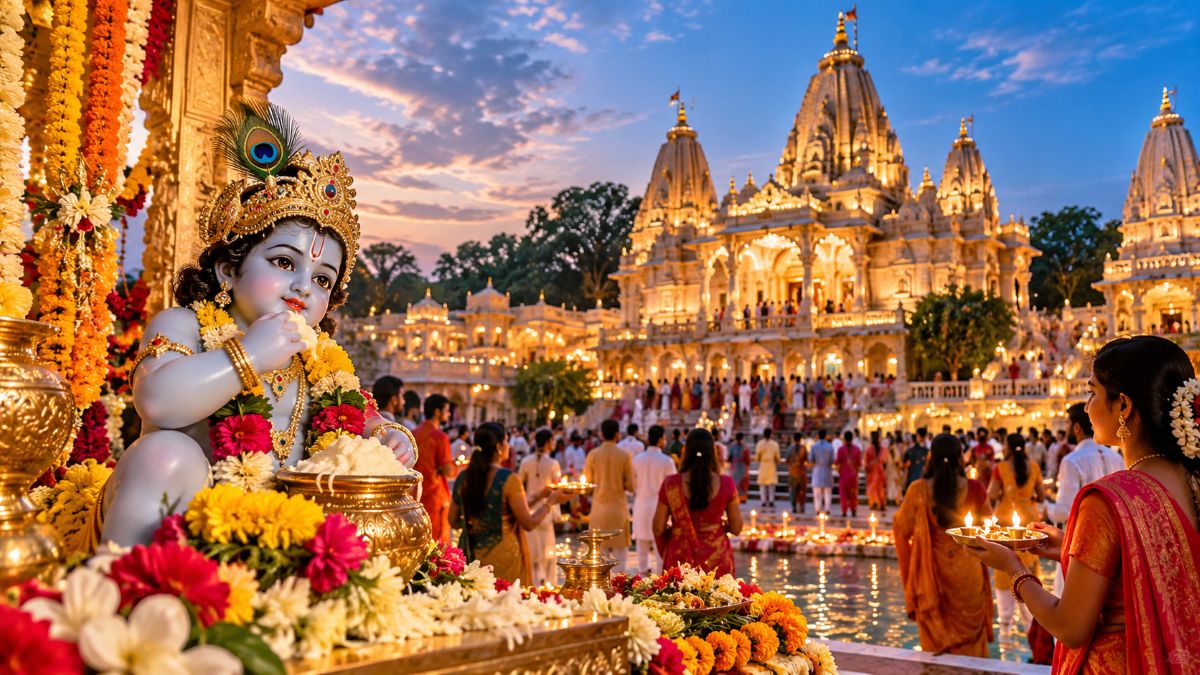
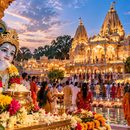
Image generated with Ai
India’s annual Janmashtami celebrations are transforming major pilgrimage centres into vibrant destinations for travellers seeking religious heritage, traditional performances and immersive cultural experiences. The festival commemorates the birth of Lord Krishna and is observed across the country through temple ceremonies, devotional music, fasting, midnight prayers, dramatic performances and distinctive regional customs. Mathura and Vrindavan remain central to the celebrations because of their deep association with Krishna’s life, while cities and regions including Mumbai, Gujarat, Odisha, Manipur and Assam offer their own interpretations of the festival.
For travellers, Janmashtami provides an opportunity to experience Indian culture through traditions that remain closely connected with local communities. Streets surrounding temples can become gathering places filled with music, flowers, lamps and devotional activity, while performances bring stories from Krishna’s life into public spaces. The midnight celebration has particular importance as devotees mark the traditional hour of Krishna’s birth. The following festivities can extend into public celebrations such as Dahi Handi, creating a journey that combines spirituality, heritage, cuisine and community participation. Visitors, however, should recognise that these are living religious observances and approach crowded temples and ceremonies with appropriate respect.
Advertisement
Mathura and Vrindavan occupy a distinctive position in India’s spiritual tourism landscape. Mathura is traditionally regarded as Krishna’s birthplace, while Vrindavan is closely associated with stories of his childhood and youth.
During Janmashtami, temples and surrounding neighbourhoods receive heightened attention from pilgrims. Decorative lighting, floral arrangements, devotional singing and religious ceremonies contribute to an atmosphere that differs significantly from an ordinary visit.
Advertisement
Advertisement
The destinations also offer travellers an opportunity to explore the relationship between mythology and place. Religious narratives are reflected through temples, pilgrimage routes, performances and community traditions, giving visitors greater context for understanding the cultural significance of the region.
The concentration of visitors during major celebrations means that travellers should plan carefully. Accommodation can be heavily demanded, roads may become congested and access around important religious sites can be restricted during peak ceremonies.
Janmashtami reaches its symbolic climax at midnight, when devotees commemorate the birth of Krishna. Many communities observe fasting before the ceremony, followed by prayers, devotional singing and rituals involving representations of the infant deity.
The timing is central to the festival’s identity. Rather than being a daytime cultural event, Janmashtami often extends late into the night, creating a distinctive experience for pilgrims and visitors.
Advertisement
Advertisement
Traditional accounts describe Krishna being born to Devaki and Vasudeva in Mathura while they were imprisoned by Kansa. The story of his miraculous escape and journey to safety forms the narrative foundation for many devotional traditions associated with the festival.
Understanding this story before visiting the region can help travellers appreciate the rituals and performances they encounter.
Although Mathura and Vrindavan are closely identified with Krishna celebrations, Janmashtami is observed across India in highly varied forms. Regional customs demonstrate how the same religious occasion can become part of different cultural landscapes.Destination Distinctive Janmashtami Experience Travel Interest Mathura Midnight celebrations and temple rituals Krishna birthplace traditions Vrindavan Devotional ceremonies and performances Krishna childhood heritage Mumbai Dahi Handi events Community celebrations Gujarat Krishna worship and festive gatherings Regional devotional culture Puri Temple food traditions Spiritual and culinary heritage Manipur Rasa Lila performances Classical and devotional arts Assam Vaishnavite traditions Religious and cultural heritage
This regional diversity strengthens Janmashtami’s importance for cultural tourism. Travellers can experience very different expressions of the festival without leaving the broader Indian cultural context.
Performing arts form an important part of Janmashtami celebrations. Rasa Lila and Krishna Lila use dance, music and theatrical storytelling to portray episodes associated with Krishna.
The traditions are particularly significant in the Mathura region and have strong cultural connections with areas such as Manipur, Assam, Rajasthan and Gujarat.
For visitors, these performances provide more than entertainment. They demonstrate how religious stories have been transmitted through generations using artistic traditions. The combination of costume, movement, music and storytelling also makes them particularly valuable to travellers interested in India’s intangible cultural heritage.
Visitors should follow local guidance regarding seating, photography and participation, especially where performances take place within religious spaces.
Dahi Handi is one of the most visually recognisable celebrations connected with Krishna’s childhood stories. The tradition draws inspiration from tales of Krishna’s fondness for butter and curd.
Participants form human pyramids to reach a suspended earthen pot and break it. The event requires coordination and teamwork and has become a major public spectacle in parts of western India.
Mumbai is particularly associated with large Dahi Handi celebrations, while Gujarat and Goa also have strong traditions connected with the event.
For tourists, these gatherings can provide a memorable insight into community culture. However, crowds around major events can become substantial, so visitors should remain in designated viewing areas and comply with safety instructions.
Cuisine adds another important dimension to the Janmashtami travel experience. Traditional offerings frequently reflect Krishna’s association with dairy products, particularly milk, butter and curd.
Festive preparations can include peda, kheer and panjiri, while devotees observing fasting may follow specific dietary customs before the midnight celebration.
Chhapan Bhog, traditionally understood as an offering of 56 dishes, represents another important connection between food and devotion. Puri in Odisha provides a significant destination for travellers interested in the relationship between temple culture, ritual offerings and Indian culinary heritage.
The significance of these foods goes beyond taste. Offerings are prepared as expressions of devotion, making culinary traditions an important component of the festival’s cultural meaning.
Janmashtami can produce intense visitor activity around important temples and pilgrimage centres. Responsible travel is therefore essential.
Travellers should dress respectfully when visiting religious sites, follow footwear requirements, observe photography restrictions and avoid disrupting ceremonies. Personal belongings should also be secured in crowded environments.
Visitors should allow additional travel time because processions and gatherings can affect local movement. Booking accommodation early is advisable for those planning to stay in major pilgrimage destinations during peak celebrations.
Most importantly, travellers should remember that Janmashtami is primarily a religious observance rather than a commercial attraction. Respecting worshippers and local communities allows visitors to experience the festival without compromising its spiritual character.
The festival demonstrates how religious traditions can contribute significantly to experiential travel. Rather than relying solely on monuments and conventional sightseeing, Janmashtami allows visitors to encounter music, dance, food, storytelling and communal rituals within their original cultural settings.
Mathura and Vrindavan provide the strongest connection to Krishna’s traditional story, but the wider celebrations reveal the regional diversity of Indian heritage. Dahi Handi introduces a community-driven public spectacle, while Rasa Lila highlights performing arts and temple food traditions demonstrate the importance of cuisine within religious culture.
This combination makes Janmashtami particularly relevant to travellers seeking meaningful cultural experiences. It also reinforces the importance of preserving living traditions alongside physical heritage sites.
India’s Janmashtami celebrations bring together pilgrimage, storytelling, performing arts, food and community traditions in one of the country’s most distinctive annual cultural occasions. Mathura and Vrindavan remain central destinations, while regional celebrations across western, eastern and north-eastern India demonstrate the breadth of Krishna traditions.
For travellers, the festival offers a chance to understand Indian heritage through direct observation rather than conventional sightseeing alone. The most rewarding experiences come from learning the cultural context, respecting religious practices and allowing time to absorb the atmosphere of each destination.
As spiritual and cultural tourism continues to attract visitors seeking deeper connections with destinations, Janmashtami stands out as an example of living heritage that remains deeply rooted in community participation.
1. What Is Janmashtami?
Janmashtami is a Hindu festival commemorating the traditional birth of Lord Krishna.
2. Where Is Janmashtami Celebrated In India?
It is celebrated throughout India, with particularly significant festivities in Mathura and Vrindavan.
3. Why Is Mathura Important During Janmashtami?
Mathura is traditionally regarded as Krishna’s birthplace and is therefore an important pilgrimage destination during the festival.
4. Why Is Vrindavan Associated With Janmashtami?
Vrindavan is closely connected with traditional stories concerning Krishna’s childhood and youth.
5. What Happens At Midnight During Janmashtami?
Devotees traditionally gather for prayers and rituals marking the symbolic birth of Krishna at midnight.
6. What Is Dahi Handi?
Dahi Handi involves teams forming human pyramids to reach and break a suspended pot, drawing inspiration from Krishna’s childhood stories.
7. Where Is Dahi Handi Popular?
Mumbai, Gujarat and Goa are among the regions particularly associated with Dahi Handi celebrations.
8. What Is Rasa Lila?
Rasa Lila is a devotional performance tradition that uses music, dance and storytelling to depict episodes from Krishna’s life.
9. What Foods Are Associated With Janmashtami?
Traditional foods can include dairy-based preparations, peda, kheer, panjiri and devotional offerings such as Chhapan Bhog.
10. Is Janmashtami Suitable For Cultural Travellers?
Yes. The festival offers opportunities to experience Indian religious heritage, performing arts, cuisine and community traditions, provided visitors travel respectfully.
Advertisement
Advertisement
Advertisement












Friday, September 4, 2026
Friday, September 4, 2026

Friday, September 4, 2026

Friday, September 4, 2026

Thursday, September 3, 2026

Wednesday, September 2, 2026
Friday, September 4, 2026
Friday, September 4, 2026


