
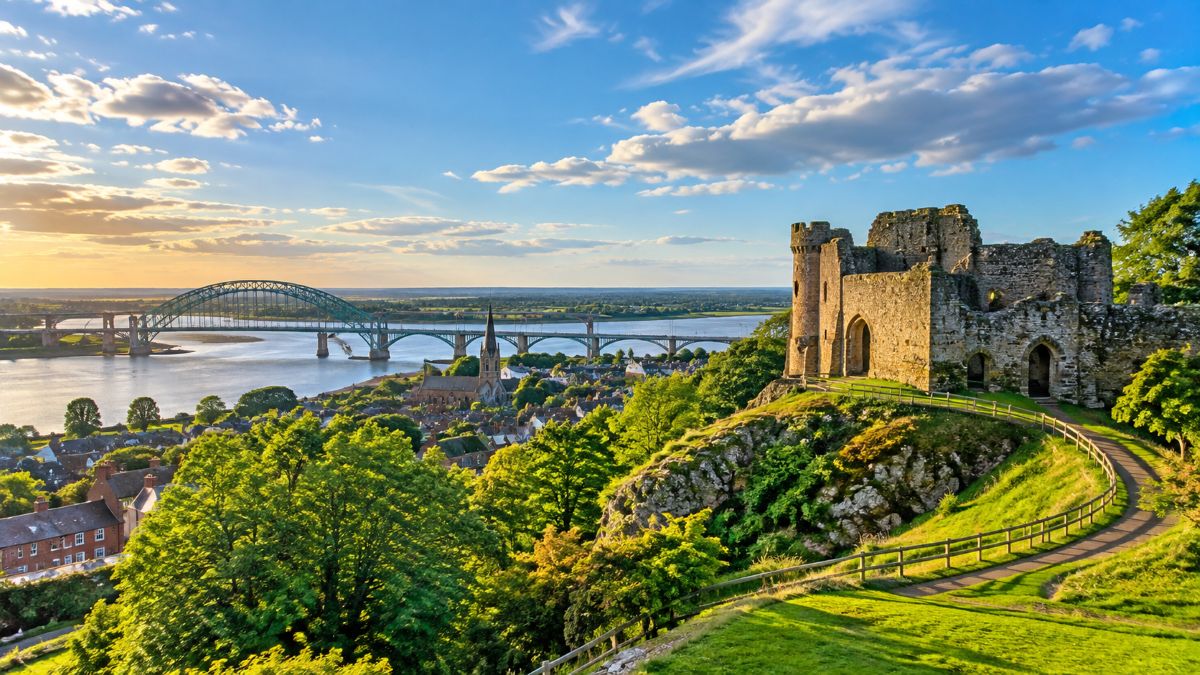
Image generated with Ai
Runcorn provides travellers with an appealing alternative to England’s better-known northwest cities, combining heritage attractions, waterside scenery, independent shopping and accessible green spaces within a compact destination. Positioned on the River Mersey between Liverpool and Manchester, the town presents a layered landscape where medieval remains sit alongside canals, Victorian infrastructure, modern development and expansive parkland. Its location also makes it suitable for travellers seeking a quieter addition to a wider northwest England itinerary.
The town’s appeal is particularly strong for visitors interested in history and outdoor exploration. Halton Castle occupies an elevated position overlooking the Mersey, while Norton Priory preserves archaeological remains alongside extensive gardens. Runcorn Hill Park adds woodland trails, sandstone landscapes and estuary viewpoints, creating opportunities for walking and photography. Meanwhile, the Old Town offers a more traditional retail experience through independent businesses. Together, these attractions give Runcorn a distinctive travel identity, particularly for visitors who want to explore beyond the major urban centres while remaining within easy reach of Liverpool and Manchester.
Runcorn’s story stretches from prehistoric settlement to the industrial transformation that helped shape modern northwest England. Archaeological discoveries at Norton Priory have provided evidence of human activity dating back thousands of years, while the arrival of the Bridgewater Canal in 1776 strengthened the town’s role as an important industrial and transport centre.
The canal connected Runcorn with wider commercial networks serving Manchester and Liverpool, encouraging the development of docks, factories and associated communities. Visitors can still encounter traces of this industrial heritage while walking beside waterways and through parts of the historic town.
Advertisement
Advertisement
The destination consequently offers more than conventional heritage sightseeing. Travellers can observe how medieval, industrial and modern periods overlap within the same landscape, creating a setting that rewards slower exploration.
Halton Castle is among Runcorn’s most recognisable historic attractions. The hilltop site originated as a Norman fortress, with the stone castle associated with the medieval period that followed.
The surviving ruins provide an atmospheric experience, particularly because of their elevated position above the surrounding landscape. Visitors can view the exterior remains, including sections of masonry and architectural features, while special openings may provide access to areas that are not routinely available.
Its position also makes the castle valuable from a sightseeing perspective. The elevated setting gives travellers an opportunity to combine heritage exploration with broader views across the River Mersey landscape.
Advertisement
Advertisement
Norton Priory offers a contrasting heritage experience, bringing together archaeological remains, museum interpretation and landscaped outdoor areas. The former religious complex allows visitors to explore remnants of its medieval buildings, including the church, cloister and chapter house.
One of the site’s distinctive features is its medieval undercroft, where historic stonework provides a tangible connection with the priory’s past. Beyond the archaeological area, woodland paths and formal gardens broaden the experience.
The Georgian walled garden covers approximately 2.5 acres and provides a quieter setting for visitors who want to combine cultural sightseeing with time outdoors. The combination of heritage and horticulture makes Norton Priory particularly suitable for travellers planning a relaxed day rather than a short photographic stop.
Runcorn Hill Park provides one of the town’s strongest attractions for travellers interested in walking and landscape views. The park occupies a sandstone ridge above Runcorn, with trails crossing woodland, heathland and former quarry areas.
The higher sections provide views towards the Mersey Estuary and the wider Liverpool area. This elevated perspective gives the destination a different character from its canal-side and historic streets.
The park also includes recreational facilities such as a lake, tennis courts, café and bandstand. For travellers extending a Liverpool visit, it can therefore provide an outdoor excursion without requiring a long journey into the countryside.
Nearby Lunt Meadows Nature Reserve can further expand an itinerary for visitors interested in wetlands and wildlife.
Runcorn’s waterways remain important to its visitor experience. The promenade along the River Mersey provides views across the estuary, while the Bridgewater Canal offers towpaths and historic canal infrastructure closer to the town centre.
These routes allow visitors to experience Runcorn without relying entirely on indoor attractions. Walking between the Old Town, canal and riverside also reveals how transportation shaped the town’s development.
For travellers who enjoy photography, the combination of water, historic structures, bridges and changing urban landscapes creates varied viewpoints throughout the day.
Shopping in Runcorn ranges from modern retail facilities to smaller independent businesses. Runcorn Shopping City provides a conventional indoor retail environment with everyday shopping options, while the Old Town offers a more traditional streetscape.
High Street, Church Street and Regent Street contain independent businesses that contribute to the area’s local character. Specialist shops can appeal to visitors searching for books, music and distinctive accessories rather than mainstream retail.
This creates a useful contrast for travellers. The modern shopping centre reflects Runcorn’s later development, whereas the Old Town provides a more atmospheric experience connected with the town’s historic streets.
| Travel Interest | Runcorn Experience | Best Appeal |
|---|---|---|
| History | Halton Castle | Medieval heritage and elevated views |
| Archaeology | Norton Priory | Ruins, museum and historic gardens |
| Walking | Runcorn Hill Park | Woodland, sandstone and estuary scenery |
| Waterways | Bridgewater Canal | Towpaths and industrial heritage |
| Riverside views | Runcorn Promenade | Mersey Estuary landscapes |
| Shopping | Old Town | Independent and specialist businesses |
| Wildlife | Lunt Meadows | Wetland landscapes and nature |
Runcorn’s position between Liverpool and Manchester makes it practical for travellers building a broader northwest England itinerary. The journey from Liverpool can be completed relatively quickly by road, while Manchester is also within convenient travelling distance.
A visit can be structured around several distinct experiences, beginning with the historic centre before continuing towards the canal, castle or Norton Priory. Travellers prioritising scenery can instead focus on Runcorn Hill Park and the riverside.
Those planning to explore extensively should consider their transport arrangements carefully. Walking is effective around the historic centre and waterways, while a vehicle can provide greater flexibility for reaching attractions across the wider area.
Runcorn demonstrates how smaller English destinations can complement visits to major cities. Its strongest advantage is variety: medieval ruins, archaeological remains, industrial waterways, green spaces, independent shops and riverside scenery are all found within the same destination.
Rather than competing with Liverpool or Manchester on scale, Runcorn offers a slower and more layered travel experience. For visitors seeking heritage, outdoor recreation and local character without leaving the northwest, the town provides a compelling addition to a regional itinerary.
Is Runcorn worth visiting for tourists?
Yes. Runcorn offers historic landmarks, gardens, walking routes, waterways, shopping and scenic views, making it suitable for a day trip or short detour.
Where is Runcorn located?
Runcorn is in Cheshire in northwest England, on the River Mersey between Liverpool and Manchester.
What is Runcorn best known for?
Runcorn is particularly associated with its industrial and canal heritage, Halton Castle, Norton Priory and its position beside the River Mersey.
Can visitors explore Halton Castle?
Visitors can generally view the castle ruins from outside, while access to some interior areas depends on special openings.
What can travellers see at Norton Priory?
The attraction includes archaeological remains, a medieval undercroft, museum displays, woodland areas and a Georgian walled garden.
Is Runcorn suitable for walking?
Yes. The town has canal towpaths, riverside routes and trails through Runcorn Hill Park.
Does Runcorn have shopping areas?
Yes. Visitors can choose between the modern shopping centre and independent businesses in the Old Town.
Can Runcorn be visited from Liverpool?
Yes. Its proximity to Liverpool makes it a practical option for a day trip or itinerary extension.
Can Runcorn be visited from Manchester?
Yes. Runcorn is also accessible from Manchester, making it suitable for travellers exploring northwest England.
What makes Runcorn different from larger nearby cities?
Runcorn combines medieval heritage, industrial history, waterways, green landscapes and local shopping in a smaller and generally slower-paced setting.
Advertisement
Tags: Bridgewater Canal, Halton Castle, Liverpool day trips, Manchester day trips, Norton Priory, River Mersey, runcorn, Runcorn England, Runcorn Hill Park
Advertisement
Advertisement













Friday, September 4, 2026
Friday, September 4, 2026
Friday, September 4, 2026

Friday, September 4, 2026

Thursday, September 3, 2026

Wednesday, September 2, 2026

Friday, September 4, 2026
Friday, September 4, 2026


