
Bali’s Juru Terang Tradition Offers Travellers a Rare Look Into the Island’s Spiritual Heritage

Published
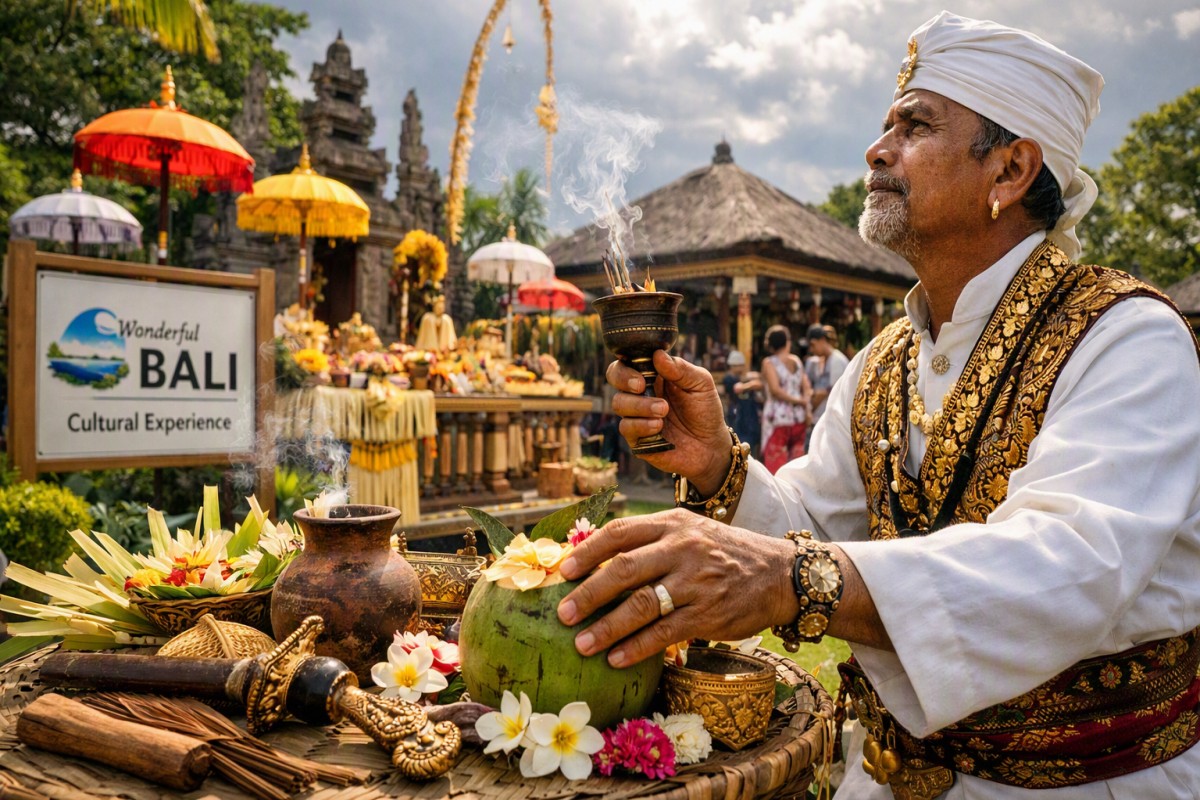
Image generated with Ai
The custom of juru terang on the island is still attracting attention with the participation of traditional practitioners in ceremonies, weddings, festivals, and cultural events that require good weather conditions. Ida Bagus Sugiharta is one of the juru terangs on the island who has been carrying out the family tradition of conducting certain rituals to postpone rainfalls during important gatherings.
The juru terang who has been conducting the rituals since 2005 has been practicing the family tradition of postponing rainfall due to the long history of spiritual practices in Bali related to community and nature.
For tourists, the custom gives additional information about the culture of Balinese people that goes far beyond beaches and resorts and even famous places visited by tourists. It illustrates how traditional customs coexist in the context of modern tourism such as weddings, cultural festivals, and outdoor events.
At the same time, while visiting juru terang, tourists have an opportunity to learn that their work is not connected with manipulation of weather but rather prayer and spiritual preparation.
Why This Matters for Travellers and Bali Tourism
Bali’s global popularity is built not only on its landscapes but also on its living traditions.
Advertisement
Advertisement
The island’s temples, ceremonies, performances, and spiritual practices continue to shape the visitor experience. Traditions such as juru terang provide insight into how local communities understand their connection with nature.
For tourism operators, weather can play an important role in outdoor activities. Destination weddings, cultural performances, music festivals, and religious ceremonies often depend on suitable conditions.
Advertisement
Advertisement
How the juru terang tradition connects with tourism
- Supports preparations for outdoor cultural events.
- Represents Bali’s spiritual relationship with nature.
- Provides visitors with insight into local beliefs.
- Helps preserve traditional knowledge.
- Adds cultural depth to Bali’s tourism identity.
The practice highlights that Bali’s tourism appeal extends beyond physical attractions and includes centuries-old cultural traditions.
Advertisement
Advertisement
Who Is Ida Bagus Sugiharta and How Did He Learn the Tradition
Ida Bagus Sugiharta comes from Cau Blayu Village in Tabanan Regency, Bali, an area known for its strong connection to Balinese culture and traditions.
His journey into the juru terang practice began through his grandfather, a respected tukang nerang. As a child, Sugiharta accompanied his grandfather to Hindu ceremonies throughout Bali, where he observed the role of traditional practitioners during important community events.
Over time, his interest developed into deeper study of family knowledge and traditional manuscripts.
Advertisement
Advertisement
The path that shaped Sugiharta’s practice
- Learned from his grandfather through ceremonial participation.
- Observed traditional rituals across Bali.
- Studied family-owned lontar manuscripts.
- Learned teachings connected with ilmu nerang.
- Continued a practice passed through generations.
The knowledge contained in lontar manuscripts forms an important part of Bali’s cultural heritage, preserving teachings, prayers, and traditional practices.
What Is a Juru Terang and What Role Does It Play in Bali
A juru terang is a traditional Balinese practitioner associated with rituals intended to seek favourable weather conditions, particularly during important outdoor events.
Advertisement
Advertisement
The practice is connected with Balinese spiritual traditions where harmony between humans, nature, and the universe is considered important.
Sugiharta specialises in rituals intended to delay rainfall rather than rituals associated with bringing rain.
Main responsibilities of a traditional juru terang
- Preparing spiritually before important events.
- Conducting traditional rituals.
- Offering prayers for favourable conditions.
- Supporting ceremonies and gatherings.
- Preserving cultural knowledge.
Practitioners emphasise that the outcome depends on many factors, including nature, spiritual beliefs, and circumstances surrounding an event.
How Bali’s Traditional Rain Ritual Preparation Takes Place
Preparation plays an important role before a juru terang performs a ritual.
Sugiharta follows a process involving meditation and spiritual purification before attending an assignment. This preparation reflects the importance of personal discipline within Balinese spiritual practices.
Advertisement
Advertisement
At the event location, ritual objects are arranged as part of the ceremony.
Traditional items used during juru terang rituals
- Incense.
- Coconut oil.
- Young coconut.
- Clay vessel.
- Sandalwood.
- Sacred keris.
- Lontar manuscripts containing prayers and mantras.
Each element carries cultural and symbolic meaning within the traditional practice.
The process represents an effort to create harmony between human activities and natural conditions.
Where Has Sugiharta Practised the Tradition
Over approximately two decades, Sugiharta’s work has taken him across Bali and other Indonesian destinations.
His services have been requested by different groups organising important events.
Advertisement
Advertisement
Regions where Sugiharta has worked
- Bali.
- Lombok.
- Sumbawa.
- East Nusa Tenggara.
His clients have included religious communities, event organisers, wedding planners, and entertainment organisers.
Events where juru terang services are requested
- Hindu ceremonies.
- Cultural festivals.
- Weddings.
- Music concerts.
- Tourism events.
- Community celebrations.
The variety of events demonstrates how traditional practices continue to adapt within modern society.
A Memorable Ceremony That Strengthened Belief in the Tradition
One of Sugiharta’s memorable assignments took place in Mengwi, Bali.
Heavy rain arrived shortly before an outdoor ceremony, creating concern among organisers. After completing the ritual, Sugiharta recalled that weather conditions improved, and organisers later requested that he remain at the location for several additional days.
Such experiences contribute to the continued interest in traditional practices among communities organising major events.
Advertisement
Advertisement
However, practitioners also recognise that weather remains influenced by natural forces and cannot be guaranteed.
What Travellers Should Know About Bali’s Rain Ritual Culture
Visitors interested in experiencing Bali’s cultural traditions should approach practices such as juru terang with respect and understanding.
The tradition is part of spiritual and cultural belief systems and should not be viewed only as a performance or entertainment activity.
Before Experiencing Balinese Cultural Practices
Important points for visitors
- Respect local ceremonies and customs.
- Understand the cultural meaning behind rituals.
- Follow guidance from local communities.
- Avoid treating spiritual traditions as tourist shows.
- Learn about Balinese beliefs before attending ceremonies.
Responsible cultural tourism allows visitors to appreciate traditions while supporting local heritage preservation.
The Connection Between Juru Terang and Bali’s Tourism Industry
Bali’s tourism sector has expanded significantly, but local traditions remain central to the island’s identity.
Advertisement
Advertisement
Many international visitors choose Bali because of its cultural atmosphere, including temple ceremonies, traditional dance, art, and spiritual experiences.
The juru terang tradition represents another example of living heritage that continues alongside modern tourism.
How traditional practices strengthen cultural tourism
- Creates authentic visitor experiences.
- Preserves local identity.
- Encourages cultural understanding.
- Supports community-based tourism.
- Connects travellers with Balinese heritage.
For many visitors, these cultural elements are as important as Bali’s beaches and natural attractions.
Preserving Bali’s Juru Terang Tradition for Future Generations
Sugiharta believes the tradition should receive greater recognition as part of Bali’s cultural heritage.
Beyond performing rituals, he works to share knowledge through community networks.
Advertisement
Advertisement
He currently leads the Tabanan chapter of the Indonesian Paranormal and Alternative Healer Family Forum (FKPPAI), where practitioners exchange knowledge and experiences.
Ways the tradition can be preserved
- Document traditional knowledge.
- Protect historic manuscripts.
- Encourage cultural education.
- Support younger generations learning the practice.
- Recognise intangible cultural heritage.
Preservation efforts can help ensure that traditional knowledge continues beyond individual practitioners.
Why This Cultural Heritage Matters Globally
Traditional practices around weather, nature, and ceremonies exist in many cultures around the world.
Bali’s juru terang tradition offers insight into how communities maintain relationships with their environment through spiritual practices.
For international travellers, discovering these traditions provides a more meaningful connection with destinations.
Advertisement
Advertisement
Global tourism lessons from Bali’s tradition
- Cultural heritage can create unique travel experiences.
- Local knowledge strengthens destination identity.
- Tourism can support preservation efforts.
- Authentic experiences attract curious travellers.
The tradition demonstrates how tourism and cultural preservation can work together.
Frequently Asked Questions
What is a juru terang in Bali?
A juru terang is a traditional Balinese practitioner who performs rituals intended to seek favourable weather conditions during important events.
Can a juru terang guarantee that rain will stop?
No. Practitioners explain that rituals involve prayer and preparation, but weather remains influenced by natural conditions.
When are juru terang practitioners usually contacted?
They are commonly contacted before ceremonies, weddings, festivals, concerts, and outdoor gatherings.
Where does Ida Bagus Sugiharta practise?
Sugiharta is based in Tabanan Regency, Bali, and has worked across Bali and other Indonesian regions.
Advertisement
Advertisement
Why is the tradition important for tourism?
The practice represents Bali’s cultural heritage and provides visitors with insight into local spiritual traditions.
Closing Update
The juru terang custom of Bali can be considered an example of a unique link between ancient cultural wisdom and contemporary tourism practices.
Despite the fact that the custom cannot substitute weather forecasting based on science, it is still important for the Balinese people as a means of spiritual preparation.
The fact that the island of Bali welcomes many tourists from abroad proves that there is more to its tourism than natural scenery and hospitality.
Advertisement
