
Jamaica Joins Cuba and Other Destinations Plunging Caribbean Tourism with a Record Drop in Tourism Demand from US Throughout 2026

Published
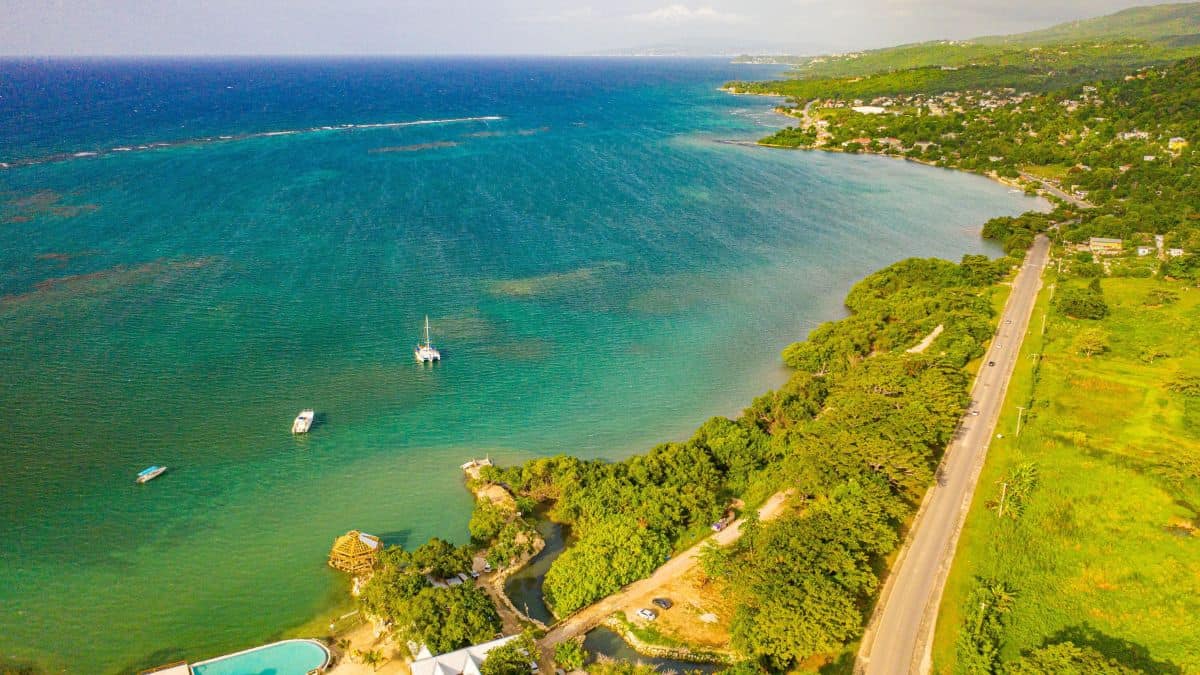
The Caribbean is still drawing millions of American travellers in 2026, but the region is no longer moving in one direction. While destinations such as Aruba, Curaçao, the Dominican Republic and Grenada continue to post gains from the United States, a smaller group is experiencing a sharp reversal. Jamaica, Cuba, Bonaire, Cancún and Antigua and Barbuda have all recorded year-on-year declines in US stopover arrivals in the latest available 2026 data, creating a more fragmented tourism picture across the Caribbean basin.
The scale of the fall is especially striking in Jamaica and Cuba. Jamaica received 922,437 US stopover visitors between January and July 2026, down from 1,268,602 during the same period in 2025. That represents a 27.3% decline and a loss of 346,165 American visitors. Cuba suffered the steepest percentage decline among the destinations in the comparative dataset, with US stopovers falling 50%, from 84,020 to 41,971 between January and August.
Cancún, although part of Mexico rather than an island Caribbean state, recorded the largest absolute loss in the Caribbean leisure market covered by the data. US arrivals fell from 3.58 million to 3.21 million between January and July, a decline of 374,252 visitors, or 10.5%.
The numbers are dramatic, but they do not all mean the same thing. In Jamaica, the decline is heavily tied to reduced hotel inventory and airline capacity following Hurricane Melissa rather than a simple collapse in consumer interest. In Bonaire, lower US air access has played a direct role. Cuba’s contraction is rooted in a far more serious combination of economic crisis, infrastructure deterioration and travel constraints. Antigua and Barbuda presents a different case again: its US market has softened even while the destination’s overall tourism industry has performed comparatively well.
Advertisement
Advertisement
The result is not a single Caribbean demand crisis. It is a series of destination-specific shocks occurring at the same time.
US Stopover Markets Showing Declines in the Latest 2026 Data
| Destination | 2026 US visitors | 2025 US visitors | Change | Visitor loss | Reporting period |
|---|---|---|---|---|---|
| Cuba | 41,971 | 84,020 | -50.0% | -42,049 | Jan-Aug |
| Jamaica | 922,437 | 1,268,602 | -27.3% | -346,165 | Jan-Jul |
| Bonaire | 35,445 | 40,528 | -12.5% | -5,083 | Jan-Aug |
| Cancún | 3,206,526 | 3,580,778 | -10.5% | -374,252 | Jan-Jul |
| Antigua and Barbuda | 126,428 | 129,989 | -2.7% | -3,561 | Jan-Aug |
These figures need to be read with one important caveat: the reporting periods are not identical. Jamaica and Cancún cover January to July, while Cuba, Bonaire and Antigua and Barbuda cover January to August. They are therefore best used to assess the direction and scale of year-on-year change within each destination, rather than to compare raw visitor totals directly.
Advertisement
Advertisement
Jamaica Records One of the Region’s Most Severe US Visitor Losses
Jamaica’s 27.3% fall in US stopover arrivals is the second-steepest percentage decline among the five destinations, behind only Cuba, and the absolute loss of 346,165 Americans is enormous for an economy where tourism is deeply connected to employment, hotels, restaurants, transport and foreign-exchange earnings.
Yet describing Jamaica’s 2026 position simply as weakening US demand would miss the central reason behind the numbers.
Advertisement
Advertisement
The Jamaica Tourist Board data cited by Tourism Analytics shows that total stopover arrivals fell 22.9% during January-July, from 1.78 million to 1.37 million. US arrivals fell even faster, from 1.27 million to 922,437. In July alone, Jamaica received 170,417 visitors from the US, 24.3% fewer than a year earlier. Caribbean Tourism Analytics
The immediate cause is heavily supply-driven. Hurricane Melissa struck Jamaica in October 2025 and severely damaged tourism infrastructure across parts of the island, particularly the western resort corridor. By July, an estimated 20% to 25% of hotel rooms were still out of inventory, limiting how many visitors the destination could physically accommodate. Caribbean Tourism Analytics
Airport data tells the same story. Sangster International Airport in Montego Bay, Jamaica’s principal leisure gateway, handled 1.91 million passengers in the first half of 2026, down 26.7% year on year. The airport operator linked the decline directly to the hurricane and the slow restoration of hotel capacity between Negril and Ocho Rios. Jamaica Observer
This distinction matters. The available evidence suggests that Jamaica has suffered a collapse in available tourism capacity more than a collapse in underlying traveller appetite.
Advertisement
Advertisement
By January-August, airline seats into Jamaica were down around 22%, but flights were operating at an average load factor of 85%, while passenger arrivals were down by slightly less than 20%. Tourism officials have argued that full aircraft and high load factors show demand remains stronger than the headline arrival decline suggests. Jamaica Gleaner
In practical terms, Jamaica’s problem in 2026 is that it cannot yet fully sell what American travellers still appear willing to buy.
Jamaica’s tourism impact
The short-term effects are substantial:
- Fewer American visitors mean reduced spending in resort regions.
- Montego Bay businesses face weaker footfall.
- Hotel closures restrict airline capacity.
- Airfares can rise when demand is concentrated across fewer available seats.
- Excursion operators, transfer companies and restaurants lose volume even when traveller interest remains relatively strong.
Jamaica’s recovery therefore depends less on rebuilding destination awareness and more on restoring room stock and matching airline capacity to that inventory.
The strongest recovery signal may come from the winter season. Airport operator GAP has said scheduled capacity suggests airline seats could return to roughly full pre-disruption levels for November, December and the wider winter period. Jamaica Observer
Cuba Posts the Steepest Percentage Fall at 50%
Cuba’s US visitor decline is much smaller than Jamaica’s in absolute numbers, but proportionally it is far more severe.
Advertisement
Advertisement
US stopovers fell from 84,020 during January-August 2025 to 41,971 during the same period in 2026, a 50% contraction.
Within the dataset, that is the steepest percentage fall.
Cuba’s problem is also fundamentally different from Jamaica’s. It is not primarily a temporary post-hurricane capacity issue. Tourism is being affected by a broader economic and infrastructure crisis.
The island has faced prolonged electricity shortages, deteriorating water infrastructure, shortages of essential goods and transport difficulties. In September, the US Embassy issued a health alert amid a surge in illnesses connected to deteriorating water and power conditions. Reuters reported that millions of people were affected by water shortages as blackouts undermined pumping and sanitation systems. Reuters
For tourism, those conditions matter because the Caribbean holiday market is highly substitutable.
An American traveller comparing Cuba with Cancún, the Dominican Republic, Jamaica, Aruba or The Bahamas is unlikely to judge the destinations solely on beaches or culture. They also compare hotel reliability, air access, electricity, healthcare, payment options and general ease of travel.
Advertisement
Advertisement
Cuba therefore faces a competitiveness problem that extends beyond marketing.
A destination can offer internationally recognised beaches and cultural attractions, but repeated disruptions to basic services can make alternative Caribbean destinations appear materially safer and easier.
The US market is also uniquely constrained by the political and regulatory framework governing travel to Cuba, which means it cannot behave like an ordinary Caribbean leisure market. The 50% fall should consequently be viewed as the product of both destination conditions and structural travel barriers.
Why Cuba’s decline is especially concerning
Unlike Jamaica, Cuba cannot expect a rapid rebound simply because damaged hotel rooms reopen. Its recovery depends on broader improvements in infrastructure, energy supply, international connectivity and operating conditions.
That makes the US decline potentially more persistent.
Cancún Loses the Largest Number of American Visitors
Cancún’s 10.5% decline appears less dramatic than Jamaica or Cuba when measured by percentage, but the sheer size of the destination changes the calculation.
Advertisement
Advertisement
The Mexican Caribbean destination lost 374,252 US visitors between January and July, falling from 3.58 million to 3.21 million.
That is the largest absolute decline among the destinations in the dataset.
Yet Mexico’s wider tourism statistics show why Cancún’s decline should not be mistaken for a collapse in Mexican tourism.
Mexico received 28.9 million international tourists between January and July 2026, up 4.5% year on year, according to the country’s official DataTur system. Air arrivals from the United States totalled around 8.1 million, representing approximately 65% of international air tourism. datatur.sectur.gob.mx
This suggests a redistribution problem rather than a nationwide demand crash.
US travellers are still going to Mexico, but Cancún appears to be losing share relative to other destinations or against its exceptionally large prior-year base.
Advertisement
Advertisement
That matters because Cancún operates in one of the world’s most competitive resort markets. Americans can increasingly choose among Punta Cana, Aruba, Nassau, Jamaica, Puerto Rico, Los Cabos and a growing number of Latin American beach destinations with direct flights from major US cities.
Cancún also faces its own success problem. The market is mature. Hotel inventory is vast. Travellers have visited repeatedly. Maintaining double-digit growth becomes increasingly difficult when annual visitor numbers are already measured in the millions.
Interestingly, forward-looking booking data has continued to rank Cancún among the most popular international destinations for Americans, suggesting that the fall in realised stopover arrivals does not necessarily mean the destination has lost its underlying appeal. Caribbean Journal
For Cancún, the key question is therefore not whether Americans still want to visit. It is why a strong-intent destination is converting fewer of those travellers into recorded arrivals than it did a year earlier.
Bonaire’s US Decline Has a Clear Airlift Explanation
Bonaire recorded 35,445 US stopover visitors through August 2026, down from 40,528 a year earlier. The decline of 12.5%, or 5,083 travellers, is small in absolute terms compared with Jamaica or Cancún, but significant for a small island tourism economy.
Here, the reason is unusually clear.
Advertisement
Advertisement
Tourism Corporation Bonaire reported that during the first six months of 2026, US stopovers were already down 12.2%, from 31,502 to 27,663. Tourism Analytics noted that JetBlue ended its New York service in early January 2026. Caribbean Tourism Analytics
For a small destination, the loss of one direct route can have an outsized impact.
Large Caribbean destinations can absorb airline schedule changes because they have dozens of routes, hubs and carriers. Bonaire has far less redundancy. When nonstop access from a major US source city disappears, travellers face longer journeys, extra connections and sometimes higher fares.
This makes Bonaire’s decline a textbook example of the relationship between airlift and tourism.
The island itself did not suffer a comparable overall tourism contraction. During the first six months of 2026, total stopover arrivals actually edged 0.3% higher, helped by growth from the Netherlands. Caribbean Tourism Analytics
The problem is specifically the American market.
Advertisement
Advertisement
That distinction is crucial for tourism strategy. Bonaire does not need to rebuild its tourism industry. It needs to rebuild or replace lost US connectivity.
Antigua and Barbuda Shows the Mildest Decline
Antigua and Barbuda recorded a comparatively modest 2.7% decline in US stopover arrivals through August, falling from 129,989 to 126,428.
Of the five destinations, this is the least severe contraction.
It is also the clearest case where weakness from the US does not translate into weakness across the tourism economy.
Official government data shows that Antigua and Barbuda welcomed 223,877 air visitors during January-August 2026, while the tourism authority had already reported a strong first quarter, when total stayover arrivals increased 6.7% year on year. The US remained the destination’s largest source market. Antigua and Barbuda Stats
The picture changed during the summer. In June, US stopover arrivals fell 12.1% year on year, helping push the first-half American market down 3.7%. At the same time, arrivals from the UK were growing, while cruise tourism remained strong. Caribbean Tourism Analytics
Advertisement
Advertisement
This is what source-market diversification looks like in practice.
Antigua and Barbuda can tolerate moderate softness from the US because it has meaningful business from Britain, Canada, Europe and the cruise sector.
Its decline should therefore be considered a warning signal, rather than evidence of a tourism crisis.
The Caribbean Is Not Experiencing a Region-Wide US Tourism Collapse
This point is essential.
The falling destinations sit beside markets showing strong gains from American travellers.
The same comparative data shows significant growth for Sint Maarten, the Cayman Islands, Grenada, Curaçao, Aruba, the Dominican Republic and others. Anguilla, for example, recorded record performance during the first half of 2026, with US visitors accounting for nearly three-quarters of stopover arrivals. Caribbean Journal
Advertisement
Advertisement
Curaçao’s first-half stopover arrivals increased 9.3%, while US arrivals were up 4.6%. Caribbean Tourism Analytics
This proves that the American Caribbean traveller has not disappeared.
Instead, tourism demand is being redistributed.
Destinations with strong air connectivity, sufficient hotel rooms, competitive prices and stable infrastructure are gaining. Those facing capacity losses, route reductions, operational disruption or wider economic problems are losing ground.
Air Capacity Is Becoming One of the Decisive Variables
The decline in several destinations also comes during a period of pressure on Caribbean airlift.
OAG data reported by the Jamaica Gleaner showed Caribbean airline seat capacity down 4.2% year on year in July 2026, equivalent to roughly 200,000 fewer seats. Capacity had also fallen by 3.6% in May. Jamaica Gleaner
Advertisement
Advertisement
A number of factors have contributed, including Jamaica’s post-hurricane tourism constraints, higher operating costs and airline network adjustments.
This creates a more competitive environment for destinations.
A Caribbean island is no longer competing solely for tourists. It is competing for aircraft.
Airlines will deploy capacity where they can fill seats profitably. Destinations that can demonstrate strong bookings, high hotel availability and attractive yields will be better placed to secure routes.
The contrast is already visible. American Airlines is expanding frequencies across destinations including Antigua, St Kitts and other Caribbean points for the winter season, while Southwest has announced additional Caribbean links. Caribbean Journal
That means weak 2026 arrivals do not necessarily become permanent losses. Airlift can be rebuilt — but only where airlines see a viable commercial case.
Advertisement
Advertisement
What the Declines Mean for Hotels and Local Tourism Businesses
The tourism impact extends far beyond airports.
A loss of hundreds of thousands of visitors directly affects:
- Hotel occupancy and room revenue
- Airport transfers and taxis
- Restaurants and bars
- Attractions and excursions
- Local tour companies
- Retail and duty-free spending
- Tourism employment
- Government tax receipts
Jamaica’s decline is particularly important because American travellers dominate much of its resort economy. Losing more than 346,000 US stopovers in seven months creates a spending gap that cannot easily be replaced by smaller source markets.
Cancún faces an even larger numerical loss, although its much bigger tourism base gives it greater ability to absorb fluctuations.
For Bonaire, the impact is different. A decline of 5,083 Americans may appear small next to Cancún, but in a small-island economy it can materially affect hotels, dive operators, restaurants and car-rental companies.
Tourism statistics always need to be viewed relative to destination size.
Advertisement
Advertisement
Why Price Alone Does Not Explain the 2026 Split
There is no convincing evidence that one single pricing trend explains all five declines.
American travellers remain highly interested in Caribbean holidays. Some competing destinations are recording record arrivals despite high airfares and hotel rates.
Instead, the 2026 performance suggests Americans are increasingly responsive to a combination of factors:
- Direct flight availability
- Hotel inventory
- Total holiday price
- Destination reliability
- Weather and hurricane recovery
- Health and infrastructure conditions
- Ease of entry
- Perceived value against competing islands
This makes the Caribbean tourism market more dynamic than the headline figures might suggest.
Demand can move quickly from one island to another because the core holiday product is often substitutable.
A traveller seeking warm weather, beaches and an all-inclusive resort has many choices within a four- or five-hour flight of the US East Coast.
Advertisement
Advertisement
Jamaica’s Numbers Need the Most Careful Interpretation
Jamaica is the destination where the phrase “drop in tourism demand” needs the greatest qualification.
Its US arrivals have undeniably plunged.
But high aircraft load factors suggest many travellers still want to go. The problem is that Jamaica has had fewer hotel rooms and fewer airline seats available to accommodate them. Jamaica Gleaner
This matters for forecasting.
A genuine demand collapse can take years to reverse because consumer sentiment must be rebuilt.
A capacity-driven decline can recover much faster once hotels reopen and airlines restore service.
Advertisement
Advertisement
If Jamaica successfully brings thousands of rooms back into service and winter airline schedules return as expected, its 2027 comparison could look dramatically different.
Cuba Faces the Hardest Road Back
Cuba is in the opposite position.
Its 50% drop in the US market sits alongside severe infrastructure and economic challenges that cannot be solved by adding several flights or reopening a resort.
The country must contend with problems affecting electricity, water, health conditions, transport and the wider visitor experience. Reuters
That gives Cuba the weakest short-term recovery profile among the destinations in this group.
Jamaica has damaged capacity.
Advertisement
Advertisement
Bonaire has reduced connectivity.
Antigua has a modest source-market correction.
Cancún appears to be facing competitive redistribution.
Cuba faces a much more structural tourism challenge.
A Caribbean Market Splitting Into Winners and Losers
The most important message in the 2026 figures is therefore not that Caribbean tourism as a whole is plunging.
It is that the market is splitting more sharply between winners and losers.
Advertisement
Advertisement
American travellers are still visiting the Caribbean in huge numbers, but they are concentrating more heavily in destinations where access, inventory and value remain strong.
That makes the decline in Jamaica, Cuba, Cancún, Bonaire and Antigua and Barbuda significant — but for very different reasons.
The destination-by-destination picture
| Destination | Core reason behind 2026 weakness | Outlook |
|---|---|---|
| Jamaica | Hurricane damage, reduced hotel inventory and lower airline capacity | Recovery potential relatively strong as capacity returns |
| Cuba | Economic and infrastructure crisis plus structural US travel constraints | Most difficult recovery |
| Cancún | Competitive redistribution within a still-growing Mexican market | Large market remains resilient |
| Bonaire | Loss of US nonstop airlift, particularly JetBlue New York service | Connectivity is key to recovery |
| Antigua and Barbuda | Mild US-source-market softness despite broader tourism strength | Limited overall concern |
Conclusion
Jamaica joining Cuba and other Caribbean destinations in reporting substantial declines from the United States is one of the most important tourism stories emerging from the region in 2026.
The headline numbers are stark. Cuba’s US stopover market has fallen 50%. Jamaica has lost 346,165 American visitors through July. Cancún has lost 374,252. Bonaire is down 12.5%, while Antigua and Barbuda has slipped 2.7%.
But the statistics do not describe one common crisis.
Jamaica’s drop is heavily linked to Hurricane Melissa, reduced hotel capacity and fewer airline seats. Cuba is confronting deep structural problems. Bonaire has lost important air connectivity. Cancún appears to be competing for Americans within a Mexican and Caribbean market that remains broadly active. Antigua and Barbuda is experiencing only modest US softness while its wider tourism sector remains comparatively resilient.
Advertisement
Advertisement
That makes 2026 less a story about Americans abandoning the Caribbean and more a story about where those travellers are choosing to go instead.
The destinations that can offer reliable infrastructure, sufficient hotel capacity, competitive air access and a clear value proposition are continuing to grow. Those unable to provide all four are losing share quickly.
For the Caribbean tourism industry, that may be the defining lesson of 2026: American demand remains powerful, but it is becoming far less forgiving.
Advertisement
