
Dubai International Airport to Be Replaced by Al Maktoum as UAE Unveils Monumental Twenty-Eight Billion Pound Plan for Record Two Hundred Sixty Million Passenger Hub

Updated
Published
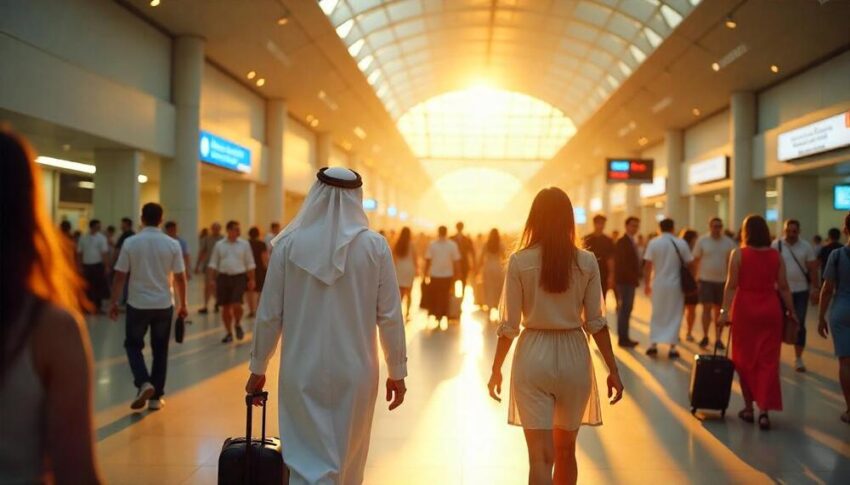 Image generated with Ai
Dubai International Airport, the world’s busiest for international travelers, is officially set to be replaced by the futuristic Al Maktoum International Airport as the UAE launches a monumental twenty-eight billion pound expansion plan. This bold move will create the largest aviation hub on the planet, with capacity for a record-breaking two hundred sixty million passengers annually—redefining global air travel and firmly establishing the UAE’s dominance in aviation infrastructure.
Dubai is preparing for a game-changing shift in global aviation, as the world-renowned Dubai International Airport (DXB) prepares for a long-term phase-out. With over 92.3 million passengers passing through its terminals in 2024, DXB has remained the busiest airport for international travel for years. However, the emirate has now set its sights on Al Maktoum International Airport (DWC) as the future hub for global air traffic.
A Strategic Transition in Aviation
Built in 1960, DXB has served as a critical link between East and West. Powered by Emirates’ expansive network, the airport became the preferred gateway for millions of international travelers. Despite its global reputation and peak capacity, DXB faces physical constraints. Surrounded by residential developments and major highways, the airport has limited room for further expansion.
Dubai has therefore committed to transferring all airport operations to Al Maktoum International Airport, located within the Dubai World Central (DWC) area. Backed by an ambitious £28 billion investment, the project aims to eventually accommodate up to 260 million passengers annually. This transition marks one of the largest airport developments ever undertaken.
Advertisement
Advertisement
From Cargo Terminal to Aviation Titan
Situated about 38 miles from DXB and 22 miles from central Dubai, Al Maktoum International Airport opened in 2010. Initially designed to handle cargo and a handful of low-cost passenger routes, DWC is now undergoing a complete transformation. Once completed, it will become the largest airport in the world in terms of capacity.
While DXB still holds the top position for international passenger traffic, the long-term plan is to gradually retire it by around 2050. Authorities have concluded that operating two large-scale airports within close range is not sustainable over the long term.
Advertisement
Advertisement
A Visionary Design with Cutting-Edge Features
The future layout of DWC spans a vast 70 square kilometers. Its structure will consist of eight satellite terminals connected by sleek, modern concourses that resemble open arms—allowing for seamless expansion and efficient passenger movement.
A key feature will be a high-speed underground rail system, reducing transfer times between terminals to just 15 to 20 minutes, offering metro-like convenience within the airport. This will be supported by advanced technologies including biometric immigration, contactless check-in, and automated baggage handling. Dubai Airports has described DWC as a “technological marvel” that will redefine the travel experience.
In addition, the airport will be fully integrated into the Dubai South development—an expansive city-within-a-city planned to accommodate one million residents. The project is expected to create extensive opportunities in employment, logistics, tourism, and real estate.
Unmatched Scale and Global Influence
DWC’s eventual design will include five parallel runways and up to 400 aircraft gates, a scale unmatched by any airport in operation today. Its anticipated annual passenger capacity of 260 million far exceeds that of existing global hubs like Atlanta, Beijing, or Heathrow.
The transition to DWC will not happen overnight. Dubai’s government has laid out a phased timeline, with the first major terminal at DWC expected to be operational by 2032. Full-scale completion and transfer of operations will extend into the 2050s.
This massive infrastructure shift aligns with the UAE’s broader economic and transport strategies. As the nation experiences a tourism boom and rapid urban development, decentralizing aviation activity is seen as vital to meeting future demand.
Advertisement
Advertisement
What Travelers and Airlines Can Expect
At present, DXB remains the primary airport for Dubai-bound travelers. Major airlines, including Emirates and British Airways, continue to operate high-frequency routes to and from DXB, especially between the UK and UAE.
For the foreseeable future, passengers will not experience any immediate changes. The transition will be gradual, ensuring stability and continuity in flight services. No disruptions are expected within the next decade.
However, the shift to DWC will reshape global airline operations in the long run. Airlines that have historically used DXB as a central hub may need to adapt their logistics and route planning. The new facility has the potential to rival other mega-hubs in Istanbul, Doha, and Singapore, cementing Dubai’s leadership in global aviation.
UK travelers, who form a major portion of Dubai’s international visitor base, will eventually need to transition to the new location. Though DWC lies 45 kilometers south of Dubai’s core, planned improvements to transport infrastructure—including expressways and high-speed rail links—will ensure the airport remains easily accessible from the city and surrounding regions.
Dubai International Airport will be replaced by Al Maktoum as part of the UAE’s bold twenty-eight billion pound plan to build a record-breaking 260 million passenger mega hub.
Looking Ahead
Dubai’s decision to move from DXB to DWC is more than just a logistical adjustment—it represents a long-term vision for the future of air travel. As passenger numbers continue to rise globally, especially in the Middle East and Asia-Pacific regions, the new Al Maktoum International Airport is designed to handle the surging demand while setting new benchmarks in efficiency, technology, and scale.
This transition marks the beginning of a bold new era. While DXB’s legacy will always be celebrated as a pioneering hub in international aviation, Dubai’s future clearly lies in the vast, futuristic complex taking shape in the south of the emirate. With its enormous capacity, cutting-edge technology, and integrated urban planning, Al Maktoum International Airport is poised to become the crown jewel of global aviation.
Advertisement
