
France Is Taking the Bayeux Tapestry to the UK as London Now Unlocks a New and Unique Museum Tourism Opportunity

Updated
Published
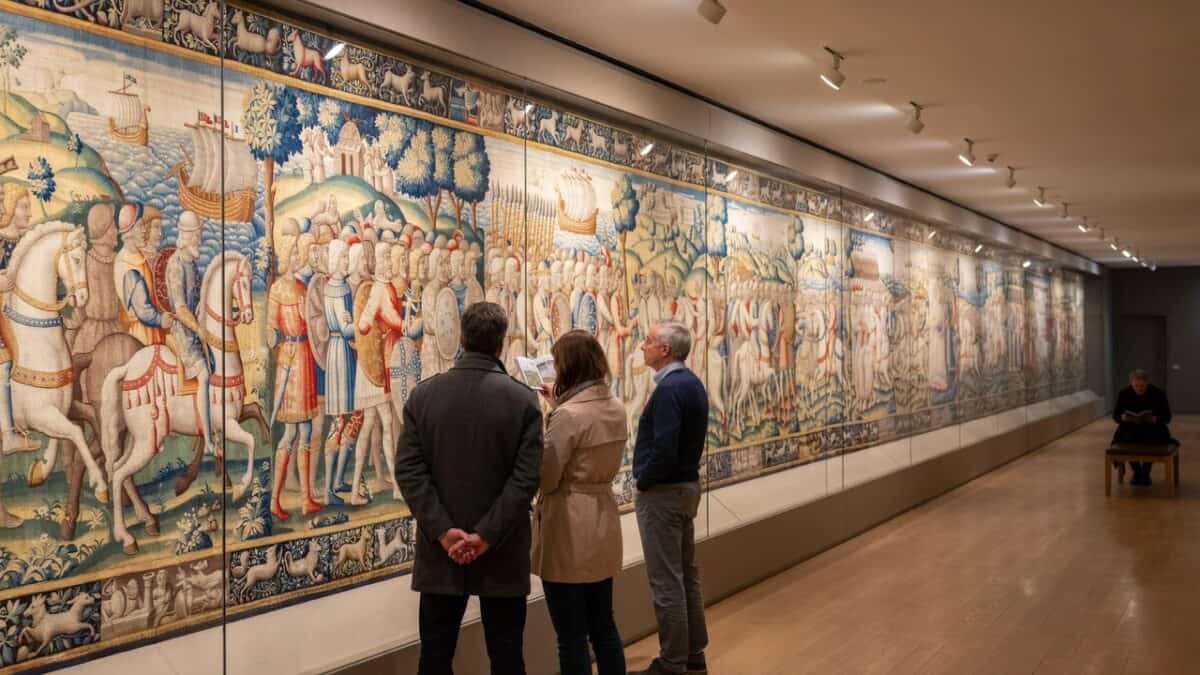
France’s nearly 1,000-year-old Bayeux Tapestry will be displayed at the British Museum in London from 10 September 2026 to 11 July 2027. The loan coincides with the renovation of its permanent museum in Bayeux, Normandy. This is the embroidery’s first UK display since its creation. It will also appear flat and in one continuous length for the first time. Tickets offered for visits through December 2026 have sold out. The exhibition therefore creates an important Museum Tourism opportunity, although official sources have published no attendance, hotel-demand or economic-impact forecast.
Why the French Loan Matters for Museum Tourism
The Bayeux Tapestry is an embroidered linen work measuring nearly 70 metres long and about 50 centimetres high. Coloured wool threads form its images, inscriptions and narrative scenes. Despite its familiar name, it is an embroidery rather than a woven tapestry. The work records events surrounding the Norman conquest of England in 1066. Its scenes provide evidence about ships, warfare, clothing, ceremonies, buildings and daily medieval life. UNESCO describes the work as a unique documentary record and added it to the Memory of the World Register in 2007.
Advertisement
Advertisement
The London display carries exceptional cultural significance. Official exhibition information confirms that this will be the first time the embroidery has appeared in the United Kingdom since it was created. It will occupy Room 30 inside a specially constructed protective case. Visitors will see it flat and in one continuous length, allowing them to follow the story from beginning to end. The exhibition will use a continuous, one-way visitor route. This combination of historical importance, limited availability and a new presentation format distinguishes the event from a routine temporary exhibition.
The Official Evidence Behind the Story
The following breakdown measures the importance of each verified component within the article. The percentages are an editorial assessment, not visitor statistics or official economic data. They total 100% and reflect the volume and relevance of evidence available from recognised institutions. The central story concerns the exhibition itself, followed by ticket demand, the redevelopment in France, travel implications and standard UK entry requirements.
Advertisement
Advertisement
| News Component | Share of Story | Officially Verified Finding | Relevance to Travellers | Official Source |
|---|---|---|---|---|
| Exhibition and heritage | 35% | The display runs from 10 September 2026 to 11 July 2027 | Creates a ten-month cultural travel window | British Museum |
| Ticket availability | 20% | The first allocation, covering visits through December 2026, is sold out | Travellers need advance timed admission | British Museum |
| Bayeux redevelopment | 20% | The permanent museum is closed, with reopening targeted for October 2027 | The original cannot currently be viewed in Bayeux | Bayeux Museums |
| Tourism implications | 15% | Strong ticket sales confirm demand, but no economic forecast exists | Possible benefits cannot yet be quantified | British Museum and UK tourism authority |
| UK entry rules | 10% | Eligible visitors require a passport and Electronic Travel Authorisation | Overseas visitors must arrange permission before travel | UK Government |
The evidence establishes a major Museum Tourism event with strong early booking demand. It does not establish how many ticket holders will travel from outside London, stay overnight or visit other destinations. No official data show additional hotel bookings, airline passengers, rail journeys or restaurant spending caused by the exhibition. The complete booking of the first allocation represents 100% of the tickets initially made available, but the number of tickets in that allocation has not been disclosed. A final attendance estimate would therefore be unsupported.
How the Exhibition and Bayeux Redevelopment Came Together
The immediate reason for the loan is the redevelopment of the permanent Bayeux Tapestry Museum in Normandy. The existing attraction closed on 1 September 2025 for a two-year programme of conservation and construction. Preparatory conservation work began earlier in 2025. This included careful dust removal and the removal of a technical backing added in 1983. Although that backing had protected the reverse of the embroidery, official project information explains that it also made the object heavier and less flexible.
Advertisement
Advertisement
The future museum is being developed within an 11,000-square-metre site in central Bayeux. Its exhibition area will double in size. The embroidery will eventually rest on an inclined support exceeding 70 metres inside a sealed, environmentally controlled room. The building will also include improved reception areas, cloakrooms, school-group rooms, a study area, an auditorium and temporary exhibition space. Visitor-flow management is a central part of the project. The former museum received 423,000 visitors in 2023, demonstrating the scale of its established audience before closure.
Ticket Dates, Prices and Verified Tourism Data
Tickets for the period from 10 September to 31 December 2026 have sold out. That position does not mean the full exhibition is unavailable. Tickets for visits from January through April 2027 are scheduled for release in October 2026. The final allocation, covering May to 11 July 2027, is due in January 2027. Standard adult admission costs £33, while off-peak adult admission costs £27. An optional donation increases those prices to £36.50 and £30.50. Visitors under 16 can enter free, but they still require a booking.
Official national forecasts expect the UK to receive 44.2 million inbound visits during 2026, with international visitors spending approximately £33.9 billion. Dividing those figures gives a broad average of about £767 per inbound visit. However, spending varies according to trip length, travel purpose and origin. These national figures describe the wider visitor economy and are not an exhibition forecast. The Bayeux event may contribute to London’s cultural offer, but official sources have not calculated its share of national arrivals, expenditure or accommodation demand.
Traveller Impact and the Role of Museum Tourism
The exhibition gives domestic and international visitors a rare reason to plan a London cultural trip between autumn 2026 and summer 2027. Schools, universities, specialist history groups and organised tours are particularly relevant audiences. Official guidance states that the embroidery will be displayed at a height of approximately 80 centimetres. The continuous route may help groups follow the narrative in order, although travellers with accessibility needs should confirm current arrangements before booking.
The event could also support combined itineraries involving London, Hastings, Battle, Caen, Bayeux and other places connected with 1066. Hotels, restaurants, retailers and nearby attractions may benefit when ticket holders extend their visits. This is evidence-based Museum Tourism analysis rather than a confirmed result. No official source has measured additional stays, spending or cross-Channel journeys. London temporarily becomes the only destination where the original embroidery can be viewed, but Bayeux retains other museums and heritage attractions during the closure.
What Travellers Should Do and What Happens Next
People planning a journey specifically for the exhibition should secure admission before paying for non-refundable travel. Overseas visitors must also check whether they need an Electronic Travel Authorisation or a visa. The exhibition creates no special immigration arrangement, border concession or passport exemption.
Advertisement
Advertisement
- Confirm a timed exhibition ticket before reserving non-refundable transport or accommodation.
- Monitor the October 2026 release for visits between January and April 2027.
- Monitor the January 2027 release for visits between May and 11 July 2027.
- Budget £33 for standard adult admission or £27 for an off-peak ticket.
- Obtain a booking for every child, even when free admission applies.
- Recheck opening hours and accessibility arrangements before visiting.
- Carry the passport required for travel to the United Kingdom.
- Obtain an Electronic Travel Authorisation when nationality and immigration status require one.
- Use the official UK application service, where the authorisation currently costs £20.
- Do not plan to see the original embroidery in Bayeux before the museum’s announced reopening.
An Electronic Travel Authorisation permits eligible visitors to travel to the UK but does not guarantee admission at the border. It normally remains valid for two years or until the linked passport expires. It can cover multiple visits of up to six months. Each eligible traveller needs one, including children. British and Irish passport holders and people with qualifying UK immigration status do not normally require it. The next confirmed developments are the two ticket releases, the London exhibition’s closure on 11 July 2027 and the planned reopening in Bayeux during October 2027.
Museum Tourism Outlook for London and Normandy
The immediate outlook is defined by ticket availability rather than new transport or immigration measures. London will host the original embroidery until July 2027, while Bayeux continues its museum redevelopment. Further ticket releases will determine how much additional public access becomes available. However, no official attendance target, hotel forecast or regional revenue estimate has been announced. Any claim of a guaranteed economic windfall would go beyond the verified evidence.
France’s historic loan has created a rare Museum Tourism event with clear relevance for cultural travellers. The exhibition’s dates, presentation format, ticket schedule and admission prices are officially confirmed. Strong initial demand is also established, although its wider economic effect remains unknown. Travellers should obtain timed admission before committing to non-refundable bookings and should follow standard UK passport, visa or authorisation rules. London will remain the temporary home of the original embroidery until July 2027. Attention will then return to Normandy, where the renovated museum is expected to reopen in October 2027. Official updates remain essential throughout.
Advertisement
