

Hundreds of Passengers Affected Across Middle East Airports like Jeddah, Erbil and Others with 518 Cancellations and 1,869 Delays

Updated
Published
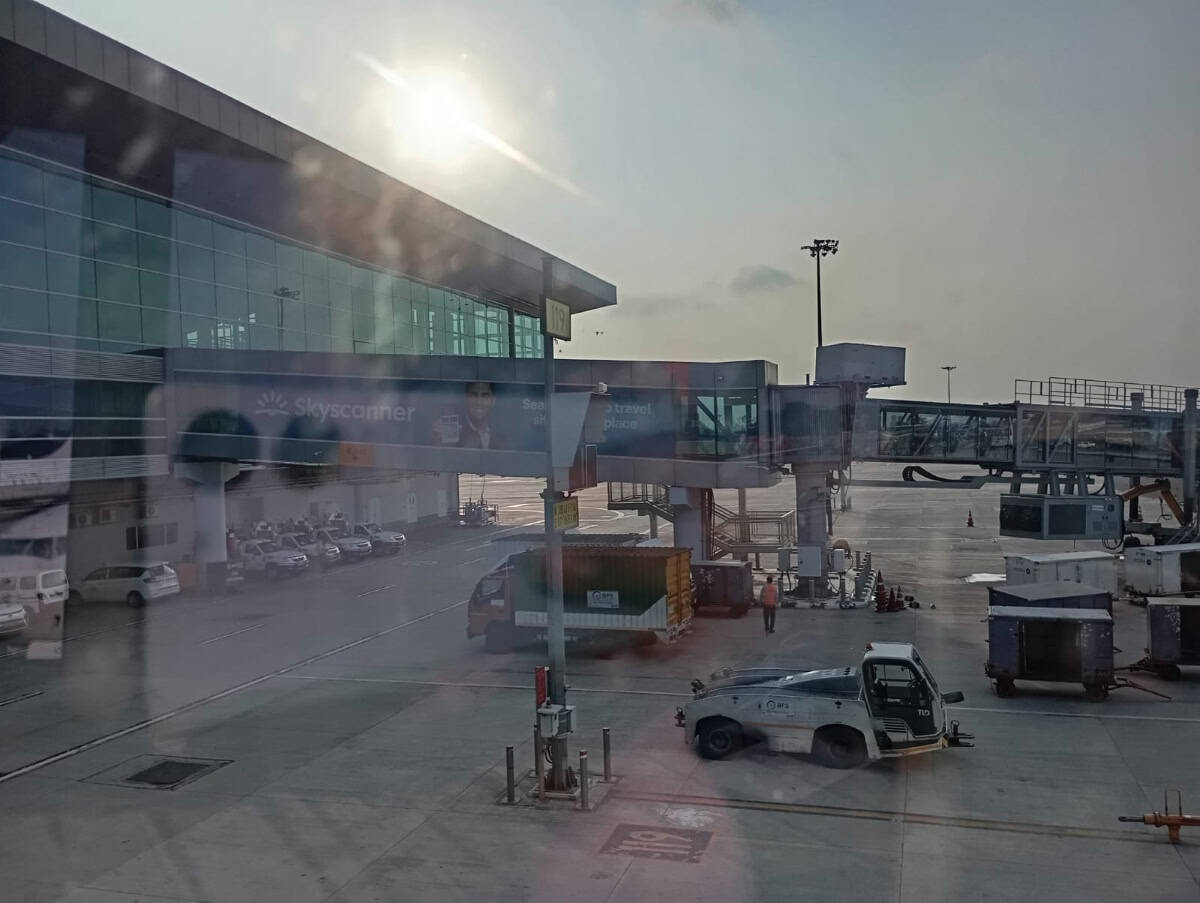
Hundreds of passengers face major travel disruption across the Middle East as 518 flight cancellations and 1,869 delays affect Jeddah, Erbil and several other airports. The widespread affect has unsettled regional air travel, leaving passengers facing missed connections, extended waiting times and sudden changes to their journeys. Meanwhile, escalating security tensions in Saudi Arabia, including reported Houthi missile and drone attacks, have forced airlines to review operations and suspend selected services. Consequently, temporary airport restrictions, precautionary flight adjustments and disrupted aircraft schedules have intensified the pressure on regional aviation networks. Furthermore, delays at major connecting hubs in Dubai, Doha, Istanbul and Cairo have complicated travel plans, although authorities have not confirmed a common cause behind every affected flight.
Saudi Arabia Faces Heavy Flight Cancellations as Major Airlines Report Disruptions across Middle East
Houthi Missile and Drone Attacks Disrupt Saudi Arabian Airports
Saudi Arabia has experienced a serious escalation in aviation security concerns following attacks on airport infrastructure in Riyadh and Abha.
A reputed media outlet reported on 7–8 October that Houthi attacks had affected Saudi airports, with the Saudi authorities reporting fatalities and injuries. The incidents were followed by additional missile threats and airline suspensions.
Associated Press reported that the Houthis claimed responsibility for an attack targeting King Khalid International Airport in Riyadh. Saudi authorities had not independently confirmed every detail of the group’s claims.
Advertisement
Advertisement
These developments help explain why Saudi Arabia features so prominently in the supplied cancellation data, particularly at King Khalid International Airport, King Abdulaziz International Airport and Abha Regional Airport.
Airlines Suspend Riyadh Flights Following Security Threats
Several international airlines have suspended services to Riyadh following the attacks.
Advertisement
Advertisement
Major media outlets reported that Lufthansa Group suspended Riyadh flights until 16 October, while Air India, IndiGo and Akasa Air also introduced temporary service suspensions or cancellations around 8–10 October. These decisions were connected to passenger and crew safety concerns amid the security situation
Cancelled international flights can also affect onward schedules because aircraft, crews and connecting passengers may no longer arrive where originally planned.
Saudi Government and Airport Advisories Confirm Operational Risks
King Khalid International Airport warned passengers about potential delays, cancellations and rescheduling following the attacks and associated airspace restrictions. Travellers were advised to check with their airlines before leaving for the airport.
Australia’s government also updated its Saudi Arabia travel advice on 9 October, warning of military strikes across the country, including Riyadh, and heightened risks in the southern provinces of Asir, Jazan and Najran.
These official warnings substantiate the security-related disruption in Saudi Arabia, but do not establish that every cancellation across the broader Middle East has the same cause.
Saudi Arabia emerges as the most heavily affected country in the Middle East for cancellations among the airlines listed. Saudia has reported 163 cancelled flights, representing 29% of its recorded services. Additionally, the airline has experienced 123 delays, accounting for 22% of operations.
Advertisement
Advertisement
Flyadeal has recorded 39 cancellations, representing 20%, alongside 60 delayed flights, equivalent to 31%. Meanwhile, Flynas has reported 34 cancellations, affecting 12% of its services, and 90 delays, representing 31%.
Riyadh Air has also reported 11 cancellations, corresponding to 39% of its recorded flights, and six delays, accounting for 21%. Although its cancellation count is lower than that of other Saudi carriers, its reported cancellation percentage is the highest among all 13 airlines.
Riyadh and Jeddah Face Significant Operational Pressure
Riyadh’s King Khalid International Airport (RUH) serves as the main hub for Riyadh Air and Flynas, while also handling Saudia and Flyadeal operations. Consequently, disruptions involving these carriers are particularly relevant to travellers using the Saudi capital.
Jeddah’s King Abdulaziz International Airport (JED) is another important hub for Saudia and Flyadeal. Passengers travelling through Jeddah and Riyadh should therefore pay close attention to airline notifications, particularly when their itineraries involve connecting services.
Across the four Saudi carriers, the supplied figures amount to 247 cancellations and 279 delays. This represents approximately 84% of all cancellations recorded across the 13 airlines.
Advertisement
Advertisement
UAE Airlines Experience Widespread Delays Across Dubai and Sharjah Impacting Middle East Travel
The United Arab Emirates is also experiencing considerable disruption among its listed airlines.
Emirates has recorded six cancellations, representing 1% of its flights, alongside 99 delays, equivalent to 18%. Meanwhile, Flydubai has reported 12 cancellations, affecting 3% of services, and 74 delays, accounting for 23%.
Air Arabia, operating primarily through Sharjah International Airport (SHJ), has reported four cancellations, representing 1%, and 86 delays, equivalent to 36% of its flights.
Dubai and Sharjah Passengers Face Potential Connection Problems
Dubai International Airport (DXB) is the main hub for both Emirates and Flydubai, making it an important point of concern for international passengers.
Together, the three UAE airlines have recorded 22 cancellations and 259 delays. Although cancellations are relatively limited compared with Saudi Arabian carriers, the high number of delayed services creates potential difficulties for passengers with onward connections.
Advertisement
Advertisement
Air Arabia’s 36% delay rate is particularly notable. It represents the highest reported delay percentage among all airlines in the supplied figures.
Qatar Airways Records 118 Delays at Its Doha Hub
Qatar Airways has reported four cancellations, displayed as 0% in the supplied figures, alongside 118 delayed flights, representing 19% of its services.
The airline operates from Hamad International Airport (DOH) in Doha, an important connecting hub for international travel.
Although its reported cancellation percentage is minimal, the number of delayed flights remains significant. Passengers travelling through Doha should monitor their schedules closely, especially when connecting between international services.
Importantly, the supplied information does not establish whether these delays originate in Doha or at other airports across Qatar Airways’ network.
Advertisement
Advertisement
Türkiye’s Turkish Airlines Records the Highest Number of Delayed Flights
Turkish Airlines has reported 158 delayed services, representing 10% of its recorded operations. This is the largest number of delays among the 13 listed carriers.
Meanwhile, the airline has recorded nine cancellations, displayed as 0% after rounding in the supplied data.
Istanbul Airport Remains a Key Connecting Point
Turkish Airlines operates through Istanbul Airport (IST), a major international hub connecting Türkiye with destinations across Europe, Asia and the Middle East.
Its substantial number of delayed flights makes Istanbul particularly relevant to passengers travelling between these regions.
Advertisement
Advertisement
However, the relatively low delay percentage indicates that delayed flights represent a smaller share of Turkish Airlines’ recorded operations than those of several other carriers. Therefore, the absolute number of disruptions should not be interpreted as evidence that Istanbul Airport has the highest disruption rate.
Egypt and Jordan Report Flight Disruptions at Cairo and Amman
EgyptAir has recorded seven cancellations, representing 2% of its flights, alongside 58 delays, equivalent to 20%. Cairo International Airport (CAI) is the airline’s main hub.
Meanwhile, Jordan’s Royal Jordanian has reported three cancellations, representing 2%, and 29 delays, accounting for 19%.
Jordan Aviation has recorded two cancellations and two delays, with each category representing 15% of its reported flights.
Both Jordanian airlines are associated with Queen Alia International Airport (AMM) in Amman.
Advertisement
Advertisement
Together, the two Jordanian carriers have recorded five cancellations and 31 delays. The figures suggest that delays, rather than cancellations, account for most reported disruptions involving these airlines.
Oman Air Reports Limited Cancellations but Continued Delays
Oman Air has recorded one cancelled service, displayed as 0% of its flights, and 20 delayed services, representing 17%.
The airline’s main hub is Muscat International Airport (MCT).
While the reported cancellation count is the lowest among the listed airlines, delayed flights remain a consideration for passengers travelling through Muscat.
| Airport (code) | Country/Region | Destination Cancelled % | Origin Cancelled % |
|---|---|---|---|
| Abha Regional (AHB) | Saudi Arabia | 32% | 20% |
| al-Jouf Domestic (AJF) | Saudi Arabia | 40% | — |
| Queen Alia Int’l (AMM) | Jordan | 6% | 2% |
| Bisha Domestic (BHH) | Saudi Arabia | 80% | — |
| Cairo Int’l (CAI) | Egypt | 3% | 1% |
| King Fahd Int’l (DMM) | Saudi Arabia | 9% | 5% |
| Hamad Int’l (DOH) | Qatar | 0% | 0% |
| Dubai Int’l (DXB) | UAE | 2% | 2% |
| Ha’il Regional (HAS) | Saudi Arabia | 21% | — |
| Istanbul Airport (IST) | Turkey | 1% | 1% |
| King Abdulaziz Int’l (JED) | Saudi Arabia | 10% | 8% |
| Prince Mohammad Bin Abdulaziz (MED) | Saudi Arabia | 6% | 4% |
| Arar Domestic (RAE) | Saudi Arabia | 60% | — |
| King Khalid Int’l (RUH) | Saudi Arabia | 28% | 42% |
| Sharjah Int’l (SHJ) | UAE | 1% | 1% |
| Sharm El Sheikh (SSH) | Egypt | 3% | — |
| Tabuk Regional (TUU) | Saudi Arabia | 16% | 10% |
| Gurayat Domestic (URY) | Saudi Arabia | 60% | 60% |
| Yanbu Domestic (YNB) | Saudi Arabia | 75% | 75% |
What Can Affected Passengers in Middle East Airports Do Now?
- Passengers travelling through Middle Eastern aviation hubs should check their flight status directly with their airline before leaving for the airport. Departure schedules may change, and flight-tracking information can differ from the latest updates provided by an operating carrier.
- Travellers whose flights have been cancelled should contact their airline to explore rebooking options, alternative departures or eligible refunds. Available remedies depend on the airline’s conditions of carriage, the applicable passenger-rights regulations and the circumstances of the disruption.
- Passengers facing lengthy delays should ask whether meals, refreshments, accommodation or ground transportation assistance is available. However, these benefits are not automatic in every country or situation.
- Those travelling on connecting itineraries should check whether their onward flights remain achievable. If an airline changes one part of a journey, passengers should seek clarification about the remaining sectors before making separate bookings.
- Travellers should also retain boarding passes, booking confirmations, cancellation notifications and receipts for any additional expenses. These documents may be useful when submitting reimbursement requests or travel insurance claims.
Data Verification Notice
Data Source and Editorial Verification
Advertisement
Advertisement
The flight disruption data presented in this report was carefully compiled and reviewed by our editorial team using real-time aviation records captured on 8 October at 5:38 pm US Eastern Time (9 October at 1:38 am GST).
Primary Sources: FlightAware and local correspondent reports.
Editorial Verification Process: Our editorial team independently examined and cross-checked the reported statistics to ensure accuracy and reliability. Timestamped aviation records, flight-tracking logs and data snapshots have been preserved in our internal archives to maintain editorial accountability, historical consistency and transparency.
Important Note: Flight-tracking information is continuously updated as airlines adjust schedules and airport operations evolve. Consequently, the number of cancellations and delays may differ slightly from figures displayed on airline websites, airport information systems or departure boards at the time of viewing.
You can check the complete disruptions across Middle East airports. Click here.
Advertisement
Verified by Tuhin Sarkar
