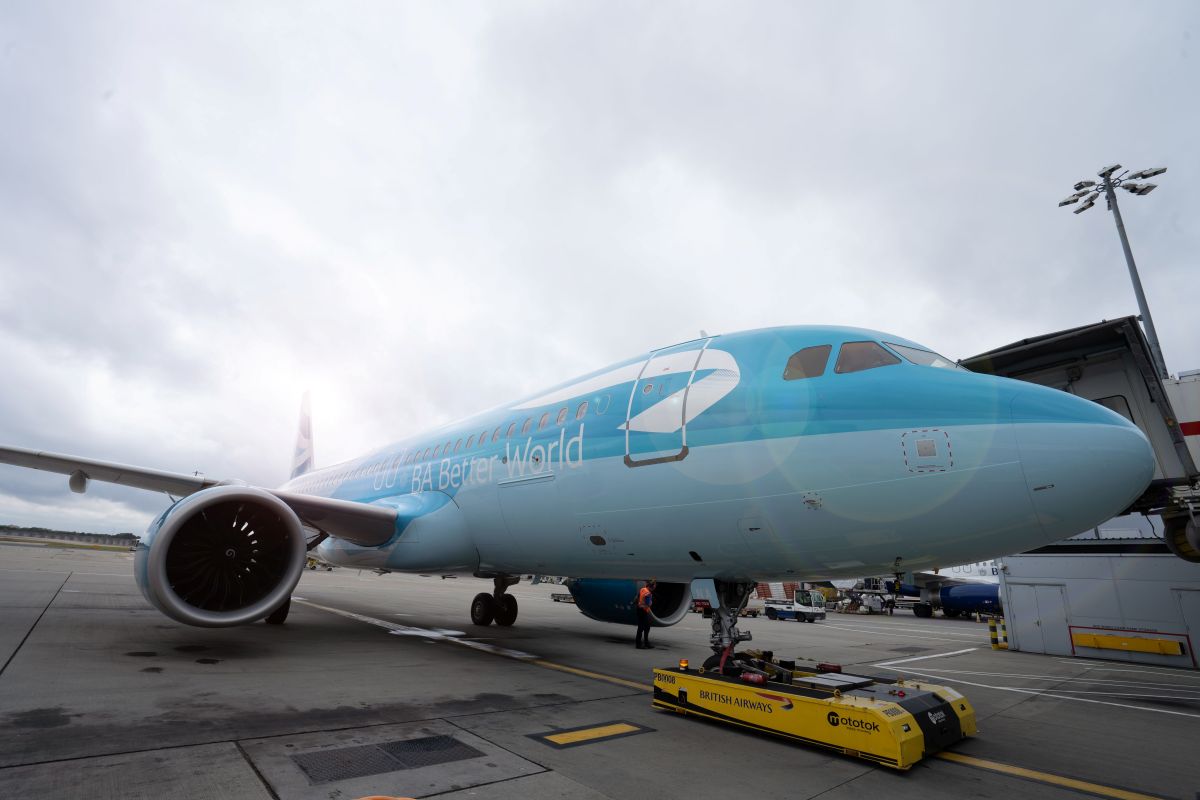
Image generated with Ai
Train services from Heathrow Airport have resumed following the disruption caused by the fire on the tracks between London Paddington and Heathrow. At around 4 pm on Saturday, 5th September, a fire by Scrubs Lane broke out and nearby power for the railway was destroyed. National Rail reported a major disruption for the line. This disruption affected Heathrow Express, Elizabeth line and Great Western Railway services. The London Fire Brigade sent 6 fire engines and about 40 firefighters. The fire was put out allowing normal services to resume on Sunday morning. However, services were operating on a delayed service so some disruption was still expected. Disruption was further delayed due to a separate grass fire on the southern perimeter of Heathrow runway which occurred earlier in the day.
The railway interruption exposed how quickly a local infrastructure incident can affect international travel. All lines between London Paddington and Heathrow’s terminals were blocked after fire damaged the electricity supply beside the railway.
Services towards Reading were also caught in the disruption. That widened the impact beyond airport passengers and into London’s wider commuter and regional network.
Great Western Railway cancelled services towards Reading during the disruption. Meanwhile, Heathrow Express and Elizabeth line trains stopped operating between Paddington and Heathrow.
Advertisement
Passengers gathered at Paddington as departure boards showed widespread cancellations and service interruptions. For travellers arriving in London, the disruption created an immediate problem at one of the capital’s busiest transport hubs.
The airport advised passengers to allow additional journey time. The Piccadilly line also experienced delays, limiting the number of straightforward alternatives.
National Rail reported that the fire had caused a failure of the electricity supply. Services were expected to remain affected into Sunday because trains had been displaced during the incident.
By Sunday morning, operators said the fire had been extinguished. Normal services then resumed, although separate planned engineering works also affected some early Heathrow Express and Elizabeth line services.
That distinction matters for travellers. The fire-related emergency had ended, but scheduled engineering works created another layer of disruption.
National Rail had already published planned engineering changes affecting the Paddington-Heathrow corridor on Sunday. Some early Heathrow Express services were unavailable before 07:25.
The incident carries particular significance because Heathrow is not simply an airport. It functions as the UK’s principal international aviation hub.
Heathrow handled 84.5 million passengers in 2025, according to its latest annual reporting. Passenger traffic rose from 83.9 million in 2024. The airport also recorded more than 475,000 aircraft movements during the year.
The scale makes reliable surface access strategically important. A disruption affecting one railway corridor can quickly create consequences for airlines, hotels, meetings and onward connections.
Heathrow’s 2025 passenger mix also demonstrates its international reach.Heathrow Passenger Market 2025 Passengers Year-on-Year Change Europe 34.0 million +0.6% North America 20.6 million -0.3% Asia Pacific 11.0 million +2.6% Middle East 8.8 million +2.8% Africa 3.4 million +2.1% Latin America 2.2 million -1.8% UK 4.6 million -1.7% Total 84.5 million +0.7%
The figures show why Heathrow’s transport resilience matters beyond London. The airport serves passengers connecting Europe with North America, Asia, the Middle East and Africa.
Heathrow also reported 40 million passengers during the first half of 2026, up 0.2% compared with the same period in 2025.
That continuing demand places greater importance on dependable airport access.
The rail failure did not remove every route to Heathrow. However, it significantly complicated journeys for passengers who normally rely on Paddington.
The Piccadilly line provides a separate Underground connection to Heathrow. Yet TfL reported severe delays on the Heathrow section during the Saturday disruption.
National Rail also authorised alternative travel arrangements for some affected Elizabeth line passengers. These included London Underground services, London buses and selected other rail operators.
The precise alternative depended on the ticket and journey. Travellers therefore needed to check their individual itinerary before switching services.Travel Option Main Heathrow Connection Role During Disruption Heathrow Express Paddington–Heathrow Suspended during fire disruption Elizabeth line Central London–Heathrow Suspended on affected section Great Western Railway Paddington–Reading and beyond Major disruption Piccadilly line Central London–Heathrow Available but delayed London buses Central London and west London Alternative accepted for eligible tickets Taxis/private hire London–Heathrow Available but vulnerable to road congestion
For travellers carrying substantial luggage, switching from rail to Underground services can also create practical difficulties.
Business travellers face another concern. A delayed airport transfer can affect meetings, connecting flights and hotel check-in times.
Therefore, passengers should treat airport transfer time as part of the flight itinerary, rather than as a separate journey.
The railway disruption was particularly notable because another grass fire had affected Heathrow earlier on Saturday.
A fire near the airport’s southern runway temporarily forced the runway to close while emergency crews responded. At least two flights were diverted elsewhere during the disruption.
The runway fire was extinguished quickly. However, its timing added an unusual second layer of operational pressure around the airport.
The incidents were separate. There is no evidence that the airfield fire caused the railway fire.
That distinction remains important because the two events involved different infrastructure and emergency responses.
Nevertheless, both incidents demonstrate the operational sensitivity of major transport hubs to fire risk.
Heathrow experienced another grass fire near its southern runway in August. London Fire Brigade reported that approximately one hectare of grassland was destroyed during that incident. Firefighters brought the blaze under control within about 30 minutes.
The recurrence gives the latest disruption a wider infrastructure context.
The latest incidents also underline continuing concerns about vegetation fires in parts of southern England.
The Met Office’s Fire Severity Index assesses the potential severity of wildfire conditions. The index can become particularly important around major transport infrastructure during periods of dry weather.
Fire risk does not automatically mean an airport or railway will experience operational disruption. However, vegetation fires near electrical equipment, runways or railway corridors can produce disproportionate consequences.
For transport operators, the challenge extends beyond extinguishing flames. Crews must also protect electrical systems, railway equipment and aviation operations.
That can make apparently small fires operationally significant.
For travellers, the lesson is straightforward. Weather-related transport disruption can occur even when the immediate forecast does not suggest extreme conditions.
Consequently, passengers should check live transport information shortly before leaving for the airport.
The latest disruption arrives as UK aviation continues to expand.
The UK Civil Aviation Authority recorded 302 million passenger journeys through UK airports during 2025. That represented a 2% increase from 2024 and marked a record year for UK aviation.
Heathrow accounted for a substantial share of that activity.
The airport’s own figures show that demand has already reached unprecedented levels. Heathrow exceeded 84 million annual passengers for the first time in 2025.
It also recorded more than eight million passengers in August 2025. That was the first time a European airport had exceeded that monthly threshold, according to Heathrow.
The figures strengthen the argument for resilient airport access.
An airport can maintain strong punctuality inside its terminals while passengers still struggle to reach it. That creates a different form of reliability risk.
The latest fire therefore highlights the importance of coordinating aviation infrastructure with rail resilience.
The episode also provides a useful industry lesson.
Heathrow has invested heavily in operational performance. Its 2025 reporting states that the airport invested £1.3 billion across its operations and infrastructure.
The airport also reported strong passenger-processing performance. More than 97% of passengers waited less than five minutes for security during 2025.
However, airport performance depends on more than terminal infrastructure.
Passengers must reach the airport. Airlines need crews and aircraft to arrive. Baggage systems need predictable passenger flows. Hotels depend on guests reaching their properties.
Therefore, the Heathrow disruption illustrates a broader principle for travel operators: transport resilience must extend beyond airport boundaries.
The railway, road network, Underground and airport form one connected travel ecosystem.
A failure in one component can create pressure across the others.
The latest incident differs from previous Heathrow disruptions because the principal failure occurred outside the airport’s airfield.
Earlier grass fires affected airport operations directly. The August incident, for example, involved grassland close to a runway.
The September railway incident instead affected the electricity supply serving the rail corridor.Incident Main Infrastructure Affected Immediate Travel Impact September 2026 trackside fire Railway electricity supply Heathrow rail services suspended September 2026 airfield fire Southern runway area Temporary runway closure and diversions August 2026 Heathrow grass fire Grassland near runway Airport emergency response and local disruption
The comparison shows why travellers should monitor both airport and transport-operator alerts.
An airport may be operating normally while its principal rail connection faces disruption.
Conversely, rail services may operate normally while an airport faces an airside incident.
This is especially relevant for international passengers with tight connection windows.
Passengers travelling through Heathrow should build additional time into their airport transfer.
The safest approach is to check the status of the intended rail route before leaving the hotel, home or connecting station.
Travellers using Heathrow Express should also check planned engineering works. National Rail has already published further scheduled alterations on the Paddington-Heathrow corridor later in September.
Passengers should keep their rail tickets available when disruption occurs. Compensation may be available where eligibility conditions are met.
National Rail advised affected passengers to retain their ticket and record the journey details when making a potential compensation claim.
For international travellers, arriving earlier can also protect against unexpected queueing or route changes.
The practical priority is not simply reaching Heathrow. It is reaching the correct terminal with enough time for check-in, security and boarding.Traveller Type Recommended Planning Approach Long-haul passenger Allow substantial transfer buffer before airport check-in Business traveller Avoid relying on the final possible rail connection Family traveller Allow additional time for luggage and route changes Connecting passenger Confirm minimum connection requirements with the airline First-time Heathrow visitor Check terminal and transport route before departure Early-morning traveller Check planned engineering works the previous evening
For London’s tourism economy, reliable airport connectivity has an importance that extends beyond individual journeys.
International visitors frequently arrive with hotel reservations, rail connections and pre-booked attractions. A major transport disruption can force them to alter several parts of an itinerary.
That creates secondary costs for visitors and tourism businesses.
Hotels can face delayed arrivals. Tour operators may need to modify pickup schedules. Corporate travel managers may need to rearrange meetings.
The wider effect is therefore operational rather than simply inconvenient.
Heathrow’s importance makes this particularly relevant to inbound tourism.
The airport served 34 million European passengers and 20.6 million North American passengers in 2025. It also handled 11 million Asia-Pacific passengers and 8.8 million passengers from the Middle East.
Those figures underline Heathrow’s role as a gateway for international tourism.
The fire has been extinguished and the services restored, but the event allows us to showcase the intricacy that exists in the modern airport accessibility and the significance of Heathrow’s operational level.
With a record-breaking number of passengers and additional plans to expand capacity, Heathrow forecasts 85 million expected passengers by 2026.
The additional passengers would prove the demand and urgency for safe transport options that are reliable and flexible which would enhance service and accessibility.
For the passengers, sometimes adapting and preparing for the unexpected is the only answer. Before travelling and while disruptions are imminent, check the real time status updates for the trains. Allocate for a longer travel time.
The travel industry needs to consider these impacts at a larger scale. Resiliency and flexibility that airport accessibility is capable of, especially at a service level across the accessibility modes, extends beyond runway capacity and terminal waiting time.
Heathrow has regained accessibility and service levels post disruption, but it is clear that the access and service levels will become imperative for the nation’s competitiveness in the global scale travel market.
Advertisement
Tags: Elizabeth line, heathrow airport, Heathrow Express, Heathrow rail disruption, london paddington
Advertisement
Advertisement













Sunday, September 6, 2026

Sunday, September 6, 2026

Sunday, September 6, 2026

Saturday, September 5, 2026

Saturday, September 5, 2026

Sunday, September 6, 2026

Sunday, September 6, 2026