
Philippines Reinvents Tourism Growth With Benguet and More Cities to Build Agrarian Human Infrastructure to Protect Popular Travel Destinations

Published
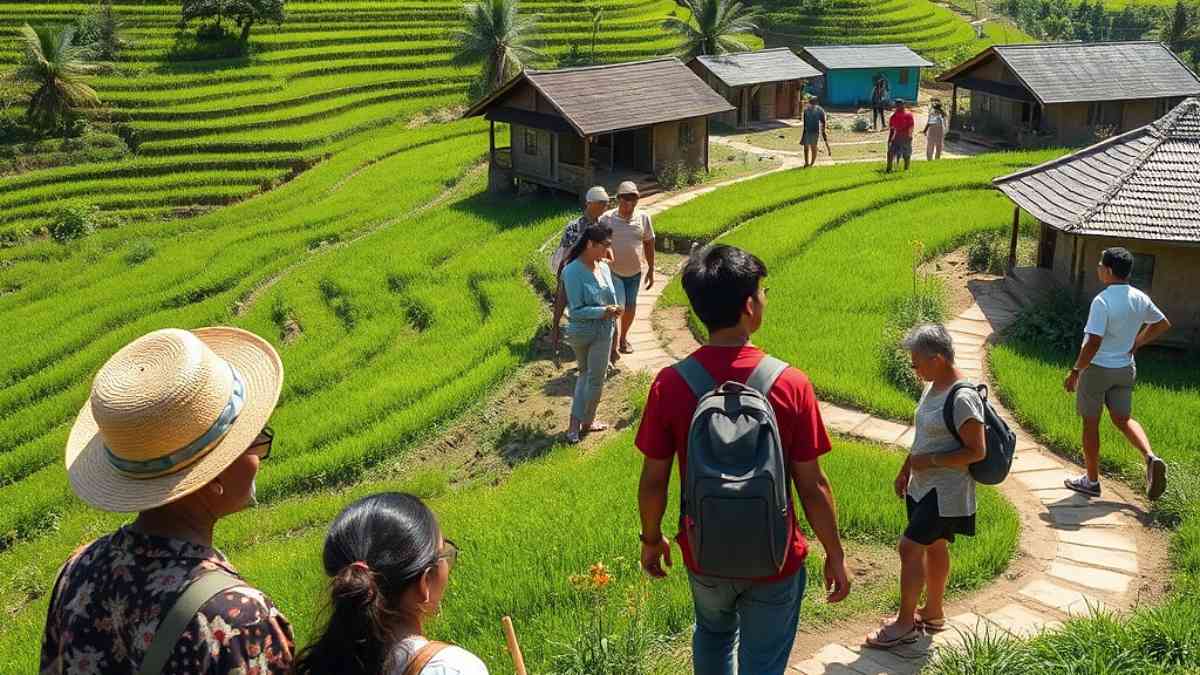
Image generated with Ai
There is massive degradation of environment, pressure on infrastructure, and dilution of culture in Asian countries owing to mass tourism in its coastal areas and cities. In order to respond to these pressures, there is a move towards developing economic systems based on agricultural human infrastructure. The agricultural province can be converted into an organized and sustainable eco-cultural corridor through the development of management skills, economic knowledge, and hospitality skills of the people engaged in agriculture in these areas. With the help of development financing by governments and universities, there is a diversion of large numbers of tourists from metropolitan cities.
The Urban-Coastal Saturation Crisis in Asian Tourism Destinations
Environmental Degradation and Municipal Infrastructure Strain in Premier Destination Hubs
Commercial tourism across South-East Asia and East Asia has historically developed through intense spatial concentration around major international entry ports, metropolitan centres, and fragile island destinations. While this spatial clustering initially accelerated economic growth and foreign exchange earnings, it has generated acute ecological imbalances, infrastructure bottlenecks, and severe public service deficits. Metropolitan gateways and coastal island resorts frequently experience systemic failure when seasonal visitor traffic exceeds the physical carrying capacity of municipal networks. Municipal solid waste processing plants, urban water distribution systems, electrical grids, and roadway networks are routinely pushed past operational thresholds, deteriorating the quality of life for resident populations while eroding the recreational value for visitors.
Advertisement
Advertisement
The environmental degradation of saturated destinations stems from a core structural imbalance: mass tourism models extract economic value from local natural assets without re-investing sufficient capital into long-term ecological stewardship or carrying capacity expansion. Commercial hubs undergo rapid land conversion, replacing agricultural buffers and coastal mangroves with high-density resorts, commercial strip malls, and parking infrastructure. This unchecked expansion intensifies urban heat island effects, accelerates untreated wastewater runoff into coastal ecosystems, and severely compromises localized biodiversity.
Quantifying Carrying Capacity Breaches: Empirical Evidence from Boracay, Baguio, and Tagaytay
The severe consequences of unmanaged visitor spikes are documented across premier destinations in the Philippines through official carrying capacity audits and environmental monitoring reports. On Boracay Island, comprehensive environmental assessments conducted by the Department of Environment and Natural Resources (DENR) established a strict carrying capacity threshold of 19,215 tourists present on the island at any given time. However, official monitoring during peak holiday periods revealed daily visitor counts exceeding 25,480 tourists. This systematic breach of carrying capacity accelerated coastal water contamination, overloaded municipal solid waste facilities, and necessitated emergency inter-agency interventions, including temporary island closures and strict daily visitor caps enforced by national task forces.
Advertisement
Advertisement
| Destination Site | Primary Over-Tourism Stressor | Official Carrying Capacity Limit | Documented Peak Visitor Spikes | Ecological & Municipal Impact |
| Boracay Island | Coastal infrastructure overload & beach overcrowding | 19,215 tourists at any given time | Exceeded 25,480 daily visitors during peak periods | Marine contamination, coral degradation, sewage facility overload |
| Baguio City | Vehicular traffic gridlock & severe water scarcity | Urban density limits exceeded urban carrying capacity | Extreme holiday congestion far above baseline population | Loss of urban air quality, slope instability, municipal waste spikes |
| Tagaytay Ridge | Weekend day-tripper land congestion & land conversion | Localized park overload at sites like Picnic Grove | Unchecked weekend urban vehicle influx from Metro Manila | Uncontrolled solid waste accumulation, ridge traffic gridlock |
| Mt. Gulugod Baboy | Trail erosion & sensitive mountain habitat disturbance | 150 summit climbers / 600 daily total visitors | Overcrowded hiking trails during peak holiday weekends | Severe soil compaction, native vegetation loss, trail littering |
A parallel structural crisis unfolds in highland destinations. Baguio City, situated 1,540 metres above sea level in the Cordillera Administrative Region, was originally designed as a high-altitude urban retreat for a small population. Strategic management audits indicate that Baguio has far exceeded its urban carrying capacity, suffering severe seasonal traffic gridlock, chronic municipal water shortages, and sprawling hill-slope urbanization.
Advertisement
Advertisement
In Tagaytay City, situated along the Taal Volcano ridge, unchecked weekend day-tripper surges from Metro Manila overcrowd public spaces such as Picnic Grove, straining municipal services and escalating environmental management challenges.
In natural trekking areas such as Mt. Gulugod Baboy in Batangas, ecological carrying capacity evaluations using Boullon’s mathematical formula demonstrate that the summit climbing area cannot support more than 150 hikers at one time, with total daily visits strictly capped at 600 individuals to prevent irreversible soil erosion and habitat destruction.
The Socio-Economic Crisis of Rural-to-Urban Youth Out-Migration
The concentration of commercial capital and infrastructure in urban-coastal tourism hubs creates a parallel socio-economic crisis in agricultural feeder provinces: rural-to-urban youth migration. As traditional primary agriculture faces fluctuating market prices, climate vulnerability, and declining profitability, rural youth increasingly view farming as economically unviable. Young demographics migrate en masse to metropolitan centers, seeking employment in low-wage service sectors, informal construction, or urban hospitality businesses.
This demographic outflow strips rural agricultural provinces of their productive human capital, leaving behind aging agricultural workforces and stagnant rural micro-economies. The resulting brain drain weakens the institutional capacity of agricultural cooperatives and local farmers’ associations. Without younger generations skilled in digital technology, business administration, modern agronomy, and hospitality management, agricultural communities remain trapped in low-value primary production. Mitigating over-tourism requires resolving this structural rural decline. By establishing alternative economic anchors in agricultural provinces, rural communities can retain young talent and convert primary farming land into high-value, sustainable tourism corridors.
The ARBO Cooperative Model vs Corporate Agritourism Enclaves
Commercial Agritourism and the Limitations of Private Enclave Ventures
Traditional agritourism models operate primarily through single private landowners, corporate resort developers, or foreign-backed leisure conglomerates. Under this private-venture paradigm, high-end farm resorts, boutique vineyards, and private botanical parks are established as isolated commercial enclaves. While these ventures generate private profits and offer luxury amenities, their broader socio-economic benefit to the surrounding rural population remains minimal.
Advertisement
Advertisement
Private commercial agritourism suffers from structural profit leakage. High-yield expenditures from luxury tourists flow back to corporate headquarters, urban investors, or external operators. Local community members are predominantly restricted to entry-level, low-wage operational roles such as land maintenance, basic housekeeping, or security.
Furthermore, single-owner developments rarely invest in upgrading the broader community’s institutional capabilities or managerial skills. When market shifts or economic shocks occur, private developers may liquidate assets or alter land uses, leaving the surrounding rural micro-economy without sustained infrastructure or capacity.
Collective Ownership via Agrarian Reform Beneficiaries Organisations (ARBOs)
The alternative paradigm advocated by agrarian reform strategists centres on collective, community-owned enterprise management directly led by agrarian reform beneficiaries organisations (ARBOs). Under the policy framework championed by the Department of Agrarian Reform (DAR), agrarian reform beneficiaries (ARBs)—farmers who received land titles through national land redistribution programs—are organized into formal legal cooperatives and associations.
The ARBO-led tourism model operates on shared equity, democratic governance, and local wealth retention. Rather than ceding land to external real estate developers, ARBOs aggregate their individual agricultural land parcels into unified eco-cultural tourism routes. Farmer-members maintain ownership of their agricultural lands while collectively operating visitor reception centers, organic processing facilities, tasting rooms, guided eco-trails, and farm-stay accommodations.
Profits derived from tourism services are credited back to the cooperative’s central treasury. These earnings are distributed among member-farmers as annual patronage dividends, reinvested in cooperative capital reserves, or deployed to fund vital community infrastructure, such as solar drying facilities, irrigation systems, and local healthcare funds.
Advertisement
Advertisement

Image generated with Ai
State-Backed Financing Frameworks: Republic Act 11901 and Agri-Agra Credit
Developing sustainable agrarian tourism infrastructure requires accessible capital adapted to the cash-flow cycles of rural agricultural cooperatives. Traditional commercial banks often deem smallholder agricultural cooperatives high-risk entities, imposing prohibitive interest rates or impossible collateral requirements.
In the Philippines, this structural financing gap is addressed through legislative mandates and state development finance institutions. Republic Act No. 11901, known as “The Agriculture, Fisheries and Rural Development Financing Enhancement Act of 2022”, formally repealed Republic Act No. 10000 (the Agri-Agra Reform Credit Act of 2009) to create a modernized rural financing framework. Under RA 11901, the state mandates that the entire banking system allocate credit facilities and financial services directly to agricultural modernization, rural infrastructure, and agritourism development.
The law explicitly tasks key government financial institutions—specifically the Development Bank of the Philippines (DBP) and the Landbank of the Philippines (LBP)—with providing low-interest wholesale lending, affordable basic deposit accounts, and direct development loans to ARBOs, smallholder farmers, and rural cooperatives. State-backed development financing under the DBP Agri-Agra framework grants ARBOs capital expenditure loans specifically designated for agritourism facilities. These capital allocations fund sanitary food-processing plants, farm-to-table culinary pavilions, educational farm signage, and heritage accommodations.
Crucially, RA 11901 couples capital credit with mandatory institutional capacity-building mechanisms, ensuring that loan proceeds are paired with technical training in business administration and financial compliance.
Comparative Economic Distribution: Profit Leakage vs Local Wealth Retention
| Evaluation Parameter | Traditional Commercial Agritourism | Agrarian Cooperative-Led Tourism (DAR-DBP Model) |
| Ownership Structure | Single private developer, corporate entity, or private landlord | Collective, democratic ownership by Agrarian Reform Beneficiaries Organisations (ARBOs) |
| Primary Capital Source | Private equity, commercial bank loans, private family investment | State-backed development financing (RA 11901 Agri-Agra funds via DBP/LBP) |
| Capacity-Building Mechanism | In-house employee training or private hospitality consultants | Structured institutional partnerships with State Universities and Colleges (SUCs) |
| Economic Revenue Distribution | Profits accrue to corporate executives and external shareholders | Revenue redistributed to local farmer-members via dividends and community funds |
| Local Community Integration | Low-wage service employment (housekeeping, maintenance) | Direct operational ownership, executive board governance, managerial leadership |
| Land Tenure Security | Susceptible to private corporate acquisition and land conversion | Agricultural land retained under agrarian reform beneficiary ownership |
| Tourism Yield Retention | High profit leakage to urban/foreign commercial entities | Maximum local wealth retention within the immediate rural micro-economy |
State Universities and Colleges: Operationalising Agrarian Human Infrastructure
University-Led Technical Training: The Role of SUC Partnerships
Physical infrastructure—such as paved farm roads, visitor pavilions, and processing machinery—is insufficient to build a sustainable rural tourism sector. Without strong organizational capabilities, agrarian cooperatives frequently suffer from financial mismanagement, operational collapse, and service failure. Building robust agrarian human infrastructure requires institutionalized human capital development.
Advertisement
Advertisement
To solve this operational challenge, national agrarian policies rely on formal partnerships between the Department of Agrarian Reform, state development banks, and State Universities and Colleges (SUCs). SUCs serve as regional technical training hubs, designing specialized curriculum modules tailored to the educational backgrounds and operational needs of agrarian reform beneficiaries.
A primary model of university-led cooperative training is executed by the University of the Philippines Los Baños (UPLB) through its Institute of Cooperatives and Bio-Enterprise Development (ICOPED), housed within the College of Economics and Management (CEM). ICOPED conducts systematic research, policy development, and capacity-building programs specifically designed for agrarian reform beneficiaries, smallholder farmers, and cooperative managers.
Similarly, Cavite State University (CvSU) has established the CvSU Agri-Eco Tourism Park in Indang, Cavite. This facility functions as an operational lab and training facility where coffee farming cooperatives and local ARBO leaders undergo hands-on instruction in agritourism management, post-harvest processing, cupping, barista services, and eco-tour facilitation.
Curricular Audits: Financial Stewardship, Digital Management, and Hospitality Operations
The technical curricula designed by SUCs like UPLB ICOPED and CvSU transition farmer-members from primary producers into enterprise managers. Training programs cover foundational operational disciplines:
- Financial Stewardship and Accounting: Cooperative leaders receive direct training in double-entry bookkeeping, cash-flow auditing, budgeting, tax compliance, and managing wholesale development loans provided by institutions like DBP.
- Digital Inventory and Supply Chain Logistics: Training modules instruct members on utilizing digital tools to track real-time crop yields, manage visitor reservations, monitor retail farm store inventory, and maintain product quality standards.
- Hospitality Administration and Sanitation: SUC faculty deliver practical training in customer service protocols, food safety compliance, hygiene standards for farm-to-table dining, and guest room management for farm-stay accommodations.
- Agro-Ecological Interpretation: Farmers are trained as certified eco-cultural guides, enabling them to convey complex agricultural concepts, crop histories, and environmental conservation principles to domestic and international visitors.
Quantitative Performance Metrics: Capacity Baselines, Loan Utilization, and Youth Retention
Evaluating the success of human infrastructure programs requires tracking specific quantitative performance metrics across participating agricultural communities:
Advertisement
Advertisement
- ARBO Capacity Baseline: Quantitative metrics track the total number of agrarian reform beneficiaries who successfully complete certified SUC training programs. Higher completion rates correlate directly with operational enterprise survival, improved loan repayment records, and expanded customer satisfaction ratings.
- Agri-Agra Loan Utilization Ratio: This metric measures the precise proportion of DBP and Landbank Agri-Agra credit allocations that ARBOs direct toward high-yield agritourism capital investments (e.g., visitor centers, food processing labs, sanitary tasting rooms) relative to traditional primary crop inputs.
- Youth Retention Index: The Youth Retention Index quantifies the percentage of young community members (ages 18–35) who choose to remain in their native agrarian municipalities rather than migrating to urban hubs. The introduction of cooperative agritourism creates skilled roles in digital marketing, hospitality management, culinary arts, and eco-tour operations. This rural youth retention preserves the demographic viability of agricultural provinces.
Strategic Spatial Decentralisation Corridors across Feeder Provinces
The Capital Region Feeder Corridor: Tagaytay to Cavite and Batangas Coffee and Dairy Circuits
The National Capital Region (Metro Manila) represents the primary domestic tourism source market in the Philippines. On weekends and public holidays, hundreds of thousands of urban residents travel south along major expressways toward Tagaytay City. This massive influx creates severe traffic gridlock along the Taal Ridge and overburdens municipal infrastructure in Tagaytay.
To intercept this tourist stream before it reaches saturated Tagaytay hubs, DAR and regional tourism authorities have established spatial decentralisation corridors. Agricultural feeder provinces in Cavite and Batangas leverage state-backed financing to establish high-value agritourism routes:
- Cavite Coffee and Dairy ARBO Circuit: Centered around municipalities like Indang, Amadeo, and Silang, coffee and dairy cooperatives operate coffee-tasting trails, barista workshops, and interactive farm-to-table creameries. Utilizing curriculum developed by Cavite State University, these ARBOs capture weekend travelers early in their transit route.
- Batangas Sugar and Organic Produce Trail: Agricultural cooperatives in inland Batangas divert visitors away from congested coastal beaches and toward organic vegetable harvesting circuits, heritage sugar mills, and rural culinary workshops. This spatial interception reduces vehicular congestion in urban Tagaytay while providing direct income to local smallholders.
The Visayas Eco-Cultural Circuit: Metro Cebu to Bohol and Southern Leyte Cacao and Coconut Trails
Metro Cebu serves as the main urban and maritime transit gateway for the Visayas region. Over-tourism in Cebu City, Lapu-Lapu City, and Mactan Island manifests in severe port bottlenecks, urban heritage crowd saturation, and environmental strain on coastal waters.
The Visayas Eco-Cultural Circuit diverts island-bound tourist traffic into adjacent agrarian feeder provinces:
- Bohol Coconut and Cacao ARBO Corridor: Utilizing DBP Agri-Agra development financing, coconut and cacao farmer cooperatives in Bohol have constructed integrated farm-stay circuits. Visitors arriving at regional transport hubs are routed directly to agrarian reform communities to participate in artisanal chocolate-making workshops, organic coconut farming demonstrations, and riverine eco-tours.
- Southern Leyte Agro-Marine Trail: Farming communities along coastal and inland Southern Leyte offer rural eco-tours owned and operated by local agrarian reform beneficiaries organizations. These routes divert high-value eco-tourists away from crowded urban Cebu heritage sites and into community-managed marine and agricultural reserves.
The Mindanao Agro-Industrial Trail: Davao City to Davao de Oro and Bukidnon Highland Farm-Stays
Davao City represents the commercial, administrative, and transportation center of Mindanao. Commercial beaches on adjacent Samal Island face acute seasonal overcrowding, liquid waste management strain, and coastal resort saturation.
Advertisement
Advertisement
The Mindanao Agro-Industrial Trail decentralizes tourist traffic across highland agricultural corridors:
- Davao de Oro Cacao and Fruit Circuit: High-altitude agricultural cooperatives in Davao de Oro—long recognized for premium cacao and tropical fruit production—have established specialized farm-stay accommodations and processing tours. Long-stay eco-tourists bypass coastal beach crowds to learn chocolate processing directly from ARBO farmer-owners.
- Bukidnon Highland Agricultural Route: Highland farming cooperatives in Bukidnon leverage cool climates and expansive agricultural landscapes to offer multi-day agritourism circuits. These routes capture travelers interested in sustainable agriculture, farm-to-table dining, and rural wellness retreats.
The Cordillera Heritage Route: Baguio City to Benguet and La Union Organic Harvest Routes
As the premier highland destination in Northern Luzon, Baguio City experiences extreme seasonal gridlock, water shortages, and urban overload during peak tourist months. The city’s geographic layout makes vehicular expansion virtually impossible, necessitating spatial diversion strategies.
The Cordillera Heritage Route redistributes day-trippers into the surrounding agricultural municipalities of Benguet and La Union:
- Benguet Cut-Flower and Highland Vegetable Circuit: Municipalities surrounding Baguio—such as La Trinidad, Tublay, and Atok—host organic cut-flower farms and high-altitude vegetable cooperatives. By establishing structured harvest tours and flower-tasting pavilions, ARBOs intercept tourists along the highway, allowing them to experience Cordillera agriculture without adding to Baguio’s urban gridlock.
- La Union Agri-Coastal Corridor: Agrarian reform cooperatives in inland La Union offer agro-forestry tours, organic farm experiences, and traditional weaving workshops. This inland diversion relieves overcrowding along La Union’s coastal surf towns and Baguio’s city center.
| Spatial Decentralisation Corridor | Saturated Commercial Destination | Feeder Agrarian Province | Dominant ARBO Crop & Activity | Local Wealth Retention & Foot-Traffic Impact |
| Capital Region Corridor | Tagaytay City & Metro Manila | Cavite & Batangas | Coffee trails, organic dairy, sugar workshop trails | High local retention; intercepts weekend day-tripper vehicle traffic |
| Visayas Eco-Cultural Circuit | Metro Cebu & Mactan Island | Bohol & Southern Leyte | Artisanal cacao processing, coconut agro-forestry | High direct payout to ARB families; relieves urban port bottlenecks |
| Mindanao Agro-Industrial Trail | Davao City & Samal Island | Davao de Oro & Bukidnon | High-altitude fruit stays, premium cacao circuits | Extends stay duration; captures eco-tourists away from crowded beaches |
| Cordillera Heritage Route | Baguio City urban center | Benguet & La Union | Highland organic cut-flower & vegetable harvesting | Diverts day-tripper crowds; reduces urban municipal resource strain |
Comparative Asian Regional Case Studies
Thailand: Redistribution via the Royal Agricultural Project Foundation in Chiang Mai
The challenge of urban over-tourism and rural economic stagnation is common across rapidly developing Asian economies. Thailand’s experience in Northern Thailand offers an instructive historical case study in using agricultural cooperatives to divert tourist foot traffic away from urban centers.
During the late 20th century, Chiang Mai emerged as the dominant commercial tourism hub of Northern Thailand, leading to urban congestion, heritage dilution, and environmental degradation. Concurrently, surrounding highland ethnic minority communities faced severe poverty, deforestation, and reliance on unstable primary crops.
Advertisement
Advertisement
To resolve these twin crises, the Thai state established the Royal Project Foundation. The foundation shifted mountain agricultural communities away from destructive land practices and into high-value temperate farming, cultivating Arabica coffee, tea, strawberries, and cold-climate flowers.
As these farming clusters matured, the Royal Project Foundation integrated community-based homestays, educational farm trails, and cooperative tasting centers directly into the agricultural villages.
The economic and spatial outcomes of the Royal Project framework demonstrate the efficacy of agrarian tourism decentralisation:
- Spatial Redistribution: Tens of thousands of domestic and international visitors who previously remained concentrated in Chiang Mai’s urban core are systematically routed into mountain cooperative trails.
- Economic Diversification: Highland cooperatives generate secondary revenue streams from eco-tours, specialty food sales, and hospitality services, reducing total economic reliance on raw crop harvests.
- Environmental Restoration: Sustainable agro-forestry practices promoted by project cooperatives restored critical watershed mountain slopes, proving that sustainable eco-cultural tourism can drive ecological conservation.
Japan: Diverting Urban Crowds Through MAFF’s Countryside “Nouhaku” Farm Stays
In East Asia, Japan faces an acute demographic crisis characterized by a rapidly aging national population, rural depopulation (kaso), and extreme over-tourism in primary urban historic centers such as Kyoto, Tokyo, and Osaka. International tourist arrivals concentrated heavily in historical urban districts, straining public transit networks and alienating local urban residents.
To counter urban saturation and revitalize declining rural villages, Japan’s Ministry of Agriculture, Forestry and Fisheries (MAFF) launched and promoted the national “Nouhaku” (農泊) policy initiative. Nouhaku translates directly to “rural stay travel”—a structured program where domestic and international travelers stay overnight in traditional farming, mountain, or fishing villages.
Advertisement
Advertisement
Key structural components of Japan’s MAFF Nouhaku initiative include:
- Traditional Housing Conversion: Under MAFF guidelines, traditional Japanese farmhouses (kominka), local inns (ryokan), and village homes are refurbished into high-quality tourist accommodations.
- Authentic Agricultural Engagement: Visitors participate directly in seasonal agricultural activities, such as rice planting, green tea harvesting, traditional sake brewing, and coastal fishing.
- Local Culinary Integration: Nouhaku operations prioritize local gastronomy, serving authentic regional dishes prepared entirely with ingredients grown by local farming cooperatives.
- Institutional Governance: MAFF funds local Nouhaku promotion councils—consisting of local farmers, tourism associations, and municipal authorities—to handle marketing, digital reservations, and international language support.
The Nouhaku strategy successfully diverts high-spending visitors away from congested metropolitan centers like Kyoto into pristine rural regions such as Hagi, Kakegawa, and Awaji Island. By providing steady hospitality income to rural households, Nouhaku preserves traditional agricultural landscapes (satoyama), maintains historic rural architecture, and encourages young families to relocate from crowded cities back to rural farming communities.
| Country & National Initiative | Directing State Agency | Core Financial & Governance Catalyst | Primary Decentralisation Target | Primary Human Capital Focus |
| Philippines (DAR-DBP ARBO Model) | Department of Agrarian Reform & DBP | RA 11901 Agri-Agra Credit & SUC Partnerships | Divert Manila, Cebu, Baguio traffic to feeder provinces | Financial stewardship, double-entry bookkeeping, hospitality |
| Thailand (Royal Project Foundation) | Royal Project Foundation & Dept of Agriculture | State foundation grants & royal development capital | Divert Chiang Mai city crowds to highland tea/coffee trails | Organic agronomy, coffee roasting, ethnic homestay management |
| Japan (Nouhaku Rural Stays) | Ministry of Agriculture, Forestry and Fisheries (MAFF) | MAFF countryside stay grants & promotion councils | Divert Kyoto/Tokyo over-tourism to rural farming villages | Traditional hospitality (omotenashi), culinary interpretation |

Image generated with Ai
LGU Spatial Governance, Land Use Plans, and Policy Roadmap
Protecting Agricultural Zones via Comprehensive Land Use Plans (CLUPs)
The long-term viability of agrarian human infrastructure depends on robust legal protection of rural lands. As agritourism corridors become economically successful, they risk attracting aggressive real estate developers seeking to acquire agricultural land for commercial resorts, golf courses, or suburban housing subdivisions. Unchecked land conversion destroys the authentic rural character that attracts eco-tourists and displaces smallholder farmers.
Preventing this requires local government units (LGUs) to update their legally mandated Comprehensive Land Use Plans (CLUPs). LGUs within strategic decentralisation corridors must enact strict zoning ordinances that protect agricultural zones while permitting low-impact agritourism activities.
Key spatial planning strategies include:
Advertisement
Advertisement
- Protected Agricultural Agritourism Zones: Designating prime agricultural lands as protected zones where land conversion is strictly prohibited, but ARBO-owned agritourism structures (e.g., eco-trails, farm-stay cottages, processing facilities) are legally authorized.
- Floor-Area Ratio and Building Density Caps: Imposing strict structural height and density limits on farm tourism sites to ensure that commercial buildings do not exceed 5% to 10% of total farm acreage, keeping over 90% of land dedicated to active agriculture.
- Enforceable Carrying Capacity Thresholds: Integrating formulas such as Boullon’s carrying capacity thresholds model directly into LGU municipal building and tourism operating permits, ensuring site visitor caps are legally enforceable.
Alignment with the National Tourism Development Plan 2023–2028
The strategic decentralisation of over-tourism via agricultural corridors directly supports macro-level national development goals. In the Philippines, the National Tourism Development Plan (NTDP) 2023–2028, formulated under Republic Act 9593 (the Tourism Act of 2009), explicitly prioritizes establishing sustainable, resilient, and inclusive tourism destinations.
The NTDP 2023–2028 establishes core strategic objectives that mirror the agrarian human infrastructure framework:
- Cross-Province Regional Circuits: Objective 2.3 of the NTDP mandates connecting remote tourism communities through multi-province regional circuits, ensuring tourist spending extends beyond primary entry ports.
- Human Capital and Digital Enhancement: Objective 2.2 focuses on enhancing internet connectivity, digital systems, and professional skills across rural destinations.
- Inclusive Stakeholder Expansion: Objective 7.6 emphasizes expanding industry accreditation and mainstreaming local community ownership in tourism master planning.
By aligning DAR-DBP agrarian reform initiatives with the Department of Tourism’s NTDP framework, regional planning authorities ensure that rural road investments, digital infrastructure, and national marketing campaigns directly support ARBO agritourism corridors.
Future Outlook and Strategic Policy Recommendations
To scale agrarian human infrastructure across emerging markets in Asia, development economists, agricultural ministries, and bank executives should execute the following policy recommendations:
- Mandate Combined Credit-Capacity Financing Packages: Legislative frameworks such as RA 11901 should enforce rules requiring that state development bank loans disbursed to rural cooperatives include a mandatory 5% to 10% allocation dedicated exclusively to SUC-led human infrastructure training.
- Establish SUC Regional Agritourism Academies: Expand dedicated institutions such as UPLB ICOPED and the CvSU Agri-Eco Tourism Park into accredited regional training centers, providing ongoing professional certification for ARBO board members and young cooperative leaders.
- Institutionalize Digital Spatial Routing Applications: Develop national, state-managed digital tourism platforms that provide real-time crowd updates at saturated destinations (e.g., Baguio, Tagaytay, Boracay) while recommending nearby ARBO agrarian trails as alternative travel destinations.
- Expand Youth Leadership Grant Programs: Provide direct financial subsidies, land tenure security guarantees, and equity stakes to young agrarian professionals who complete higher education degrees in agribusiness or hospitality management and return to manage their native ARBO cooperative enterprises.
Conclusion
Creating human infrastructures in agriculture is a revolutionary solution in combating over-tourism while at the same time boosting the capabilities of the rural communities engaged in agriculture. By combining financial support from the government in accordance with Republic Act 11901 with management training from universities, farming co-ops are transformed into eco-cultural destination centers with high economic value. Planning the decentralization corridors helps to divert tourists from the urban and coastal areas that suffer from over-tourism such as Baguio, Tagaytay, and Metro Cebu. This model of agritourism ensures the retention of money by locals, protection of the environment by planning, and prevention of migration of youth from these areas.
Advertisement
