
Ladakh Travel Craze Explodes As Markha Valley Trek And Chadar Frozen River Attract Bold Travellers Seeking Untamed Himalayan Thrills India

Published
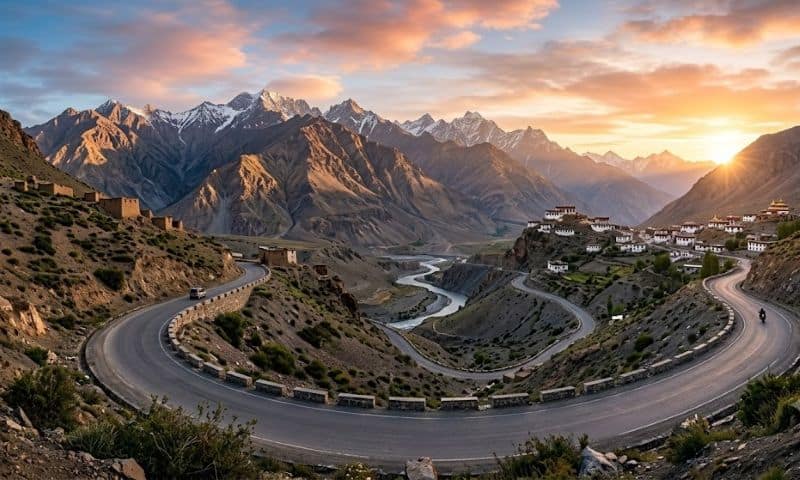
Image generated with Ai
It is widely conveyed that Ladakh stands as one of the most distinctive high-altitude adventure landscapes in India, where trekking experiences are consistently associated with extreme physical conditions, thin air environments, and deeply immersive cultural exposure. It is further understood that Ladakh is not solely defined by its dramatic Himalayan geography but is also shaped by a strong and enduring Buddhist cultural ecosystem, which influences everyday life, hospitality traditions, and the broader travel experience. Within this framework, it is often stated that trekking in Ladakh is interpreted as a dual journey involving both physical endurance and cultural immersion, where travellers are believed to navigate terrain that tests stamina, adaptability, and perception simultaneously.
It is further explained that iconic trekking routes such as the Markha Valley Trek and the Chadar Frozen River Trek are regularly presented as defining elements of Ladakh’s adventure tourism identity. These routes are described as traversing remote valleys, high-altitude deserts, frozen river systems, and isolated settlements where human habitation remains minimal yet remarkably resilient. The landscape is consistently characterised as harsh, unpredictable, and visually compelling, making it highly attractive to experienced trekkers seeking intense expedition experiences.
Advertisement
Advertisement
At the same time, it is indicated that Ladakh continues to gain increasing global recognition as a rare destination where extreme adventure tourism intersects with spiritual geography. Travellers are said to be drawn not only to physical challenges but also to encounters with ancient monasteries, traditional homestays, and isolated mountain communities that continue to survive under extreme climatic and geographical constraints. This combination is increasingly influencing global travel demand patterns, particularly within niche adventure tourism markets seeking authenticity and depth.
Markha Valley Trek: Remote Himalayan Ecosystems and Evolving Travel Demand
Advertisement
Advertisement
It is widely reported that the Markha Valley Trek is regarded as one of the most iconic trekking routes in Ladakh, offering a structured yet demanding journey through remote Himalayan settlements and expansive barren terrain. The route is described as passing through river crossings, elevated mountain passes, and deep valleys framed by the Zanskar Range and the Ladakh Range, with each segment introducing distinct ecological transitions that significantly test physical endurance and environmental adaptability.
It is further observed that travellers undertaking this trek are believed to pass through villages where traditional homestays serve as essential accommodation points. These settlements are characterised by limited accessibility, seasonal isolation, and lifestyles shaped by extreme environmental conditions. It is explained that such encounters provide insight into how local communities have adapted over generations to survive in some of the most challenging living environments on Earth, where agriculture, mobility, and infrastructure remain tightly bound to seasonal cycles.
Advertisement
Advertisement
It is also frequently highlighted that Buddhist monasteries, prayer flags, and sacred sites form an integral part of the cultural landscape throughout the route. These elements are said to reinforce the spiritual dimension of the journey, creating a trekking experience that is not purely physical but also reflective and culturally enriching. Travellers are often described as developing a deeper understanding of resilience, simplicity, and coexistence with nature, which contributes significantly to the trek’s growing international appeal.
It is further stated that the Markha Valley Trek is increasingly perceived as a balanced combination of endurance-based adventure and cultural immersion, where long trekking hours across rugged terrain are interspersed with moments of stillness in isolated village environments. This evolving perception is influencing global travel patterns, with the adventure tourism industry increasingly prioritising authenticity, experiential depth, and human connection over conventional sightseeing formats.
Chadar Frozen River Trek: Winter Extremes and Global Adventure Recognition
It is widely stated that the Chadar Frozen River Trek represents one of the most extreme winter trekking experiences in India, conducted during peak winter months when the Zanskar River transforms into a solid frozen pathway. The route is described as a continuously shifting ice corridor, where temperatures are believed to drop to severe levels, creating one of the harshest trekking environments in the Himalayan region.
It is further explained that participants are required to walk directly over the frozen river surface, where constantly changing ice formations, cracks, and unstable sections create an unpredictable and highly demanding terrain. This dynamic environment introduces significant physical and psychological pressure, as trekkers are required to continuously adapt to shifting conditions while maintaining balance, endurance, and situational awareness.
It is also observed that the Chadar Frozen River Trek is widely regarded as one of the most challenging trekking routes in India, primarily due to the combined effects of freezing temperatures, geographical isolation, and unstable ice conditions. Despite these difficulties, it continues to attract growing international attention, particularly among experienced adventure travellers seeking rare and high-intensity expedition experiences.
Advertisement
Advertisement
It is further noted that the uniqueness of this trek lies in its seasonal transformation, where a flowing river becomes a temporary frozen pathway accessible only for a limited period each year. This rarity significantly enhances its global appeal, positioning it as one of the most distinctive winter trekking experiences in the world.
Global Travel Industry Impact: Market Transformation and Adventure Tourism Expansion
It is increasingly reported that trekking routes such as the Markha Valley Trek and the Chadar Frozen River Trek are playing a significant role in reshaping global adventure tourism trends. The international travel industry is said to be witnessing a sustained increase in demand for destinations that offer physically demanding, environmentally unique, and culturally immersive experiences. This shift is particularly evident among travellers who are moving away from conventional leisure tourism models toward more experiential and challenge-oriented journeys.
It is further explained that Ladakh is being strategically positioned within global tourism discourse as a high-value adventure destination due to its combination of rugged natural landscapes and preserved cultural authenticity. The region is believed to appeal strongly to niche tourism segments, including high-altitude trekking enthusiasts, endurance travellers, and cultural immersion seekers. This positioning is increasingly influencing how travel planners, experience designers, and destination strategists conceptualise Himalayan tourism products.
From a global perspective, it is indicated that trekking experiences in Ladakh are reshaping traveller expectations regarding adventure destinations. There is a growing emphasis on authenticity, isolation, physical engagement, and environmental intensity, with destinations like Ladakh increasingly regarded as benchmarks for extreme travel experiences. This trend is also expected to strengthen global interest in sustainable tourism practices, as rising visitor numbers raise concerns regarding ecological preservation and cultural protection in fragile mountain ecosystems.
It is also suggested that international trekking communities are increasingly referencing Ladakh as a standard-setting destination for high-altitude expeditions. The combination of winter river trekking and valley-based Himalayan routes is believed to offer a rare diversity of adventure experiences within a single geographic region. This diversity is contributing to longer planning cycles, increased expenditure per traveller, and a rise in professionally guided expedition travel.
Advertisement
Advertisement
Cultural Continuity, Sustainability, and the Future of Trekking in Ladakh
It is understood that beyond its physical challenges, the trekking landscape of Ladakh continues to reflect a deeper cultural continuity where Buddhism, environmental adaptation, and geographical isolation intersect. It is observed that monasteries, prayer sites, and traditional settlements remain essential components of trekking experiences, reinforcing the idea that adventure tourism in Ladakh cannot be separated from its cultural identity.
It is further indicated that as global interest in the region expands, greater emphasis is being placed on ecological sustainability and the preservation of fragile mountain ecosystems. The increasing popularity of routes such as the Markha Valley Trek and the Chadar Frozen River Trek is expected to generate additional pressure on local infrastructure, seasonal resources, and environmental management systems.
At the same time, it is suggested that this growth also creates opportunities for structured tourism development, improved safety frameworks, and enhanced global positioning of Ladakh as a premier adventure destination. It is increasingly understood that modern travellers are no longer motivated solely by scenic landscapes but are seeking transformative experiences that integrate endurance, culture, and isolation into a single journey.
Ultimately, it is concluded that Ladakh continues to emerge as a rare global destination where extreme geography and deep cultural heritage coexist, and where trekking is no longer perceived as a simple physical activity but as a multidimensional experience that is actively reshaping global definitions of adventure travel.
Advertisement
