
How Paraguay’s Hydro-Powered Electric Road Network Is Creating The Most Futuristic Green Travel Experience In The Americas

Published
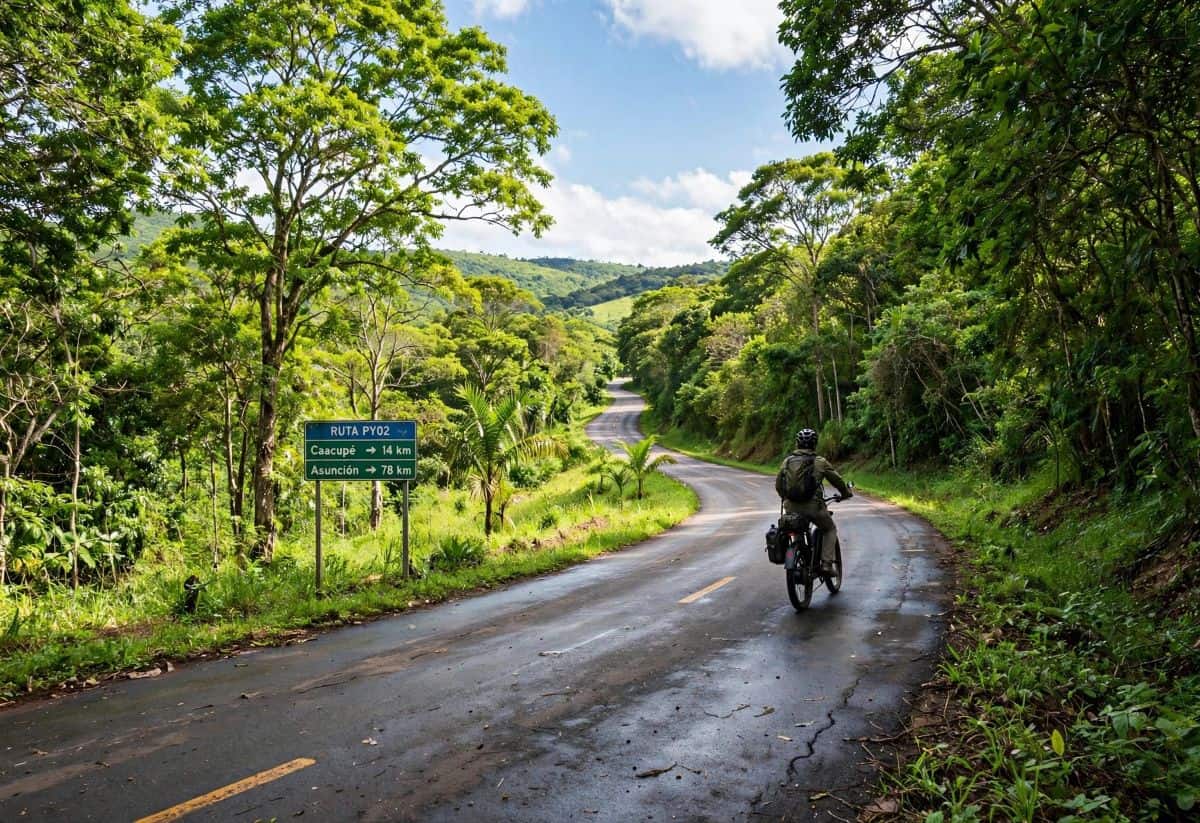
Image generated with Ai
You’re going on a trip to see South America’s best hills only to find out you have to drive on gravel. That was driving in Paraguay. Now it’s not. Along with most adventures, there are long, boring, and tough parts of getting there. That’s going to be in the past soon. Construction using the latest designs, a large civil work project funded by the government, and a total transportation system redesign of the entire country is going to make getting around Paraguay a lot less annoying. There will be bypasses around what were previously the most annoying parts of driving with transportation corridors and futuristic rest stops. Driving in South America will never be the same after the changes in Paraguay.
They aren’t just focusing on transportation infrastructure. They are creating a system using the hydroelectric energy to power the transportation infrastructure and creating an electric charging network that spans from Asuncion to the Brazilian and Argentinian borders. Paraguay is setting the technology standard of the area. Hopefully you are ready for some of the most amazing infrastructure on the road in South America.
How is Paraguay’s radical highway transformation redefining South American transit tourism?
Paraguay is executing a grand transport revolution, converting standard state roads into high-speed economic arteries through coordinated public-private initiatives. By modernising core transit routes like Ruta PY02 and the Corredor Bioceánico with dual carriageways, ultra-fast charging points, and full-service plazas, this landlocked nation is establishing itself as South America’s most dynamic travel crossroads.
Advertisement
Advertisement
How is Paraguay’s radical highway transformation redefining South American transit tourism? Through a sweeping modernization program led by national infrastructure authorities, Paraguay is turning historic choke points into seamless, high-speed transit arteries. This radical highway transformation relies on expanding single lanes into dual carriageways, implementing green energy corridors, and erecting multi-functional rest plazas across key regions. By connecting primary commercial hubs to international borders, the country is actively redefining South American transit tourism for long-distance drivers and freight operators alike.
Advertisement
Advertisement
How is Paraguay’s radical highway transformation redefining South American transit tourism? Strategic public-private partnerships have unlocked billions in infrastructure investment, replacing outdated tarmac with durable, four-lane expressways. The Ministry of Public Works and Communications (MOPC) has orchestrated this massive effort alongside energy bodies to ensure seamless cross-country travel. Consequently, journeys that once took full days are now completed in hours, drastically improving safety, vehicle efficiency, and tourist accessibility across the country.
What makes the complete duplication of Ruta PY02 Paraguay’s ultimate civil engineering benchmark?
How does the complete duplication of Ruta PY02 link Asunción to Ciudad del Este? Running directly from the capital of Asunción to the bustling border city of Ciudad del Este, Ruta PY02 forms the undeniable economic spine of the nation. Through a landmark public-private partnership managed by Rutas del Este, over 149 kilometres between Ypacaraí and Caaguazú were widened into a modern four-lane dual carriageway. This extensive civil engineering victory creates a continuous, high-speed express route connecting central urban centers to the eastern Brazilian border.
Advertisement
Advertisement
Why are modern bypass routes around Caacupé and Coronel Oviedo essential for transit? To protect local communities and eliminate severe traffic congestion, engineers constructed expansive bypass routes around key cities, including Ypacaraí, Caacupé, Eusebio Ayala, Itacurubí de la Cordillera, and Coronel Oviedo. The impressive Caacupé bypass dramatically cuts through the rugged Cordillera de la Altos, offering travelers striking elevated views over the Ypacaraí Lake basin. These specialized bypasses divert heavy commercial traffic away from city centres, ensuring smooth, uninterrupted cross-country journeys.
How will the ambitious Public-Private Partnership for Ruta PY01 reshape southern transit?
Advertisement
Advertisement
How will the duplication of Ruta PY01 upgrade travel between Ypané and Quiíndy? Heading south toward the riverfront city of Encarnación, Ruta PY01 serves as the primary route to the Argentine border. Under a comprehensive private concession, the government initiated the complete expansion and long-term operation of a crucial 108-kilometre stretch from the Cuatro Bocas intersection in Ypané down to Quiíndy. This engineering project integrates elevated viaducts, modernized interchanges, and feeder access corridors that seamlessly streamline passenger traffic.
How does the expansion of Ruta PY01 improve access to San Bernardino and Lake Ypacaraí? By separating heavy commercial trucks from private passenger vehicles, the upgrade dramatically enhances road safety and reduces transit times for holidaymakers. Drivers heading toward the popular lakeside resort town of San Bernardino, as well as nearby destinations like Luque and Areguá, experience far fewer bottlenecks. The modernized highway layout effortlessly absorbs peak weekend tourist surges, transforming the regional holiday circuit into an easily accessible getaway.
What makes the Bioceanic Road Corridor across the Gran Chaco a game-changer?
How does the Corredor Bioceánico in the Gran Chaco connect Atlantic and Pacific ports? Slicing across the wild, expansive landscapes of the Gran Chaco, the Corredor Bioceánico (PY15) is designed to link Atlantic deep-water ports in Brazil with Pacific shipping terminals in Chile and Peru. Backed by substantial international funding from the Inter-American Development Bank, key sections near Mariscal Estigarribia and Loma Plata are engineered specifically for high-tonnage freight. This immense transcontinental axis fundamentally alters South American trade routes while opening remote wilderness areas to adventurous motorists.
How do specialized wildlife underpasses on Highway PY15 protect Chaco biodiversity? Navigating the vast distances of northern Paraguay requires purpose-built infrastructure capable of operating independently in harsh environments. Modern rest plazas along Highway PY15 integrate self-contained solar power grids, satellite tolling systems, and robust structural materials designed for extreme climate variations. Crucially, engineers incorporated dedicated eco-passages and wildlife underpasses beneath the asphalt, allowing native fauna to navigate their natural habitats without risking highway collisions.
Advertisement
Advertisement
How are modern highway service plazas transforming roadside stops into true destinations?
How do multi-functional service plazas cater to passenger motorists and tourists? Old, isolated refueling pumps are rapidly being replaced by multi-functional highway service plazas managed by major regional energy retailers. Operators like Petrobras, Shell, Puma Energy, and Copetrol have constructed expansive sites featuring air-conditioned food courts, international coffee outlets, high-speed Wi-Fi workstations, and immaculate family rest areas. These welcoming passenger zones sit beneath protective solar-panel canopies, turning routine refueling stops into comfortable, relaxing destinations.
How do dedicated logistics zones support long-haul truckers across Mercosur trade routes? To maintain safety and operational efficiency, these modern plazas completely separate passenger car traffic from heavy commercial logistics. The dedicated freight zones feature high-flow diesel fuel islands, secure overnight parking bays, repair facilities, and comfortable lounges designed specifically for long-haul drivers. By providing specialized amenities for interstate transport operators, these facilities keep critical Mercosur commercial traffic moving smoothly across the country.
What role does the “Ruta Verde” network play in powering zero-emission travel?
How does the “Ruta Verde” electric corridor harness energy from the Itaipú Dam? Paraguay benefits from a clean national electricity grid supplied almost entirely by massive hydroelectric dams like Itaipú, Yacyretá, and Acaray. To maximize this renewable energy surplus, national legislation established targeted tax incentives for electric vehicles and accelerated the rollout of highway charging infrastructure. The landmark “Ruta Verde” (Green Route) initiative leverages this clean energy, offering zero-emission travel along major commercial routes.
Advertisement
Advertisement
Where are ultra-fast DC charging stations located along Ruta PY02 and Ruta PY01? Spanning the entire length of Ruta PY02 from Asunción through Coronel Oviedo to Ciudad del Este and extending along Ruta PY01 to Encarnación the network features high-capacity DC fast chargers. Ranging from 50 kW to over 150 kW, these stations can replenish an electric vehicle’s battery in under 30 minutes. Private energy networks continue expanding these charging stations, cementing Paraguay’s reputation as a pioneer in green transit.
How do upgraded bypasses and green corridors boost local travel and tourism?
How do reduced travel times on Ruta PY02 benefit weekend road trips from Asunción? Modernized expressways have cut travel times on core routes like Ruta PY02 by well over an hour, making domestic road trips vastly more appealing. Weekend travelers departing from Asunción can comfortably visit historical towns, local artisanal markets, and natural attractions without facing agonizing delays. The enhanced connectivity encourages spontaneous travel, directly benefiting local hospitality businesses and regional tourism operators.
How does highway expansion improve access to Ybycuí National Park and Monday Falls? Upgraded secondary corridors and bypasses streamline travel to signature natural attractions, including the lush rainforests of Ybycuí National Park and the spectacular Monday Falls near Hernandarias. Travelers can seamlessly combine cultural visits to Caacupé with eco-tourism adventures in the eastern border regions. By making remote natural parks easily accessible via pristine highways, Paraguay has opened its diverse geography to international and domestic tourists.
How Is Paraguay’s USD 5.5 Billion Infrastructure Master Plan Reshaping National Transit and Economic Productivity Across South America?
Advertisement
Advertisement
Paraguay is orchestrating a structural economic transformation by deploying a massive capital fund under its national transportation infrastructure plan managed by the Ministry of Public Works and Communications. Representing roughly four per cent of the national gross domestic product, this strategic financial commitment actively pivots the inland nation away from its historical dependency on basic agricultural roads and toward world-class, high-capacity economic corridors. Public investment funds work alongside private concessions to eliminate long-standing transit delays, lower cargo shipping costs, and streamline international vehicular crossings across the southern cone of the continent.
Beyond major national arteries, state-backed capital initiatives are targeting regional economic connectivity and river basin infrastructure. Over three hundred million dollars in targeted funding, supported by state reserves and international funding partnerships like the Japan International Cooperation Agency, is actively upgrading routes such as Highway PY20. These targeted regional public civil works stimulate peripheral economies, generate thousands of technical jobs, and ensure local agricultural producers gain direct access to national expressways. Economic analysts project that these civil engineering projects directly underpin a robust national GDP expansion rate of 3.7 per cent by drastically boosting overall national productivity.
Why Are Rapidly Rising Tourist Arrivals and Regional Transit Revenues Accelerating Paraguay’s Highway Service Revolution?
The nationwide modern road network is experiencing unprecedented operational demand, driven by a sharp rise in regional tourism and cross-border travel. Official international visitor figures highlight a baseline of over 1.06 million international tourist arrivals annually, generating roughly 766 million dollars in direct visitor spending. Driven by a remarkable 53 per cent surge in visitors from neighboring South American countries, Paraguay has rapidly gained recognition as one of the fastest-growing travel destinations in the region.
The physical expansion and duplication of primary national routes are directly responsible for transforming how visitors explore the country. On the core arterial corridor of Ruta PY02, express road duplication has sliced transit times between the capital city of Asunción and the commercial border hub of Ciudad del Este by more than sixty minutes. This drastic reduction in travel time has catalyzed domestic road trips, encouraging travelers to explore previously hard-to-reach scenic regions and historical cultural centers. As a direct result, private fuel station operators are heavily investing in modern rest stops to capture high-spending road transit travelers.
Advertisement
Advertisement
How Does Paraguay’s 100% Clean Hydroelectric Grid Power the Most Decarbonised Electric Vehicle Highway Network in the Americas?
Paraguay holds a unique structural advantage in clean mobility due to its abundant domestic hydroelectric energy reserves. Powered entirely by massive hydroelectric installations—including the world-renowned Itaipú Dam, the Yacyretá Dam, and the Acaray Dam—the national electrical grid operates on 100 per cent renewable electricity. Unlike standard international electromobility networks that draw power from fossil fuel plants burning natural gas or coal, Paraguayan highway charging stations supply genuine zero-emission power directly from domestic river currents.
To capitalize on this sustainable power advantage, state power authorities and technology institutes established the “Ruta Verde” (Green Route) electromobility initiative. This clean transit highway network features high-power direct current fast-charging stations, ranging from 50 kilowatts up to 150 kilowatts, spaced every 60 to 70 kilometers along primary travel corridors like Highway PY02. Battery electric vehicles can routinely recharge up to eighty per cent of their full capacity in twenty to thirty minutes. This seamless charging network gives drivers complete confidence to cross the entire country using zero-emission hydroelectric power.
What Impact Will the Corredor Bioceánico Have on Multi-Billion-Dollar Mercosur Freight Flows Between Brazil, Chile, and Argentina?
Stretching across the vast landscapes of the northern Gran Chaco region, the Corredor Bioceánico (Highway PY15) represents one of the most ambitious transcontinental infrastructure megaprojects in South America. Backed by over two hundred million dollars in international financing from the Inter-American Development Bank, this modern shipping corridor creates a direct overland bridge connecting Atlantic ocean ports in Brazil with Pacific deep-water terminals in Chile and Peru.
Advertisement
Advertisement
The economic implications for continental trade logistics are profound. By routing transcontinental freight through northern Paraguay, international shipping fleets can bypass the lengthy Cape Horn maritime sea route, shaving up to fourteen full days off sea transit times between South America and major Asian consumer markets. Engineered specifically to carry thousands of heavy multi-axle freight trucks weekly, the highway integrates automated digital satellite tolling systems and high-durability pavement, establishing Paraguay as a crucial logistics nexus for Mercosur trade.
How Are Major Energy Retailers Transforming Standard Petrol Stations Into High-Tech Highway Service Plazas Across Paraguay?
The rapid expansion of modernized national highways has prompted a commercial revolution within the private energy retail sector. Major corporate energy distributors—including market leaders such as Petrobras/Nextar, Shell/Enex, Puma Energy, and Copetrol—are executing multi-million-dollar capital expansion programs to construct large-scale highway service plazas along primary passenger and freight routes. These facilities replace basic refueling stops with vibrant travel plazas that serve as lifestyle destinations for road travelers.
Modern station engineering utilizes a dual-zone spatial layout designed to separate long-distance commercial freight operations from light passenger vehicle traffic. Passenger zones feature solar-panel shaded canopies, high-speed electric vehicle charging bays, gourmet coffee franchises, air-conditioned dining halls, and comfortable co-working lounges equipped with fast wireless internet. Concurrently, commercial logistics zones offer heavy-duty high-flow diesel pumps, secure overnight truck parking, driver facilities, and vehicle maintenance bays. Reflecting broader consumer shifts, app-based station services and digital contactless card payments are surging at annual growth rates near forty per cent across these plazas.
How Is Eco-Sensitive Highway Design and Fauna Underpass Engineering Safeguarding the Wild Gran Chaco Ecosystem?
Advertisement
Advertisement
Constructing a high-capacity logistics corridor through the ecologically sensitive Gran Chaco environment required advanced eco-protection civil engineering. To safeguard native wildlife populations across the corridor, highway designers integrated specialized subterranean wildlife fauna underpasses and elevated eco-bridges along key stretches of Highway PY15. These animal passages allow endangered mammals, such as jaguars, giant anteaters, and tapirs, to move safely beneath the high-speed roadway without risking collisions with heavy transit traffic.
In addition to protecting biodiversity, these modern rest stops are designed for energy independence in remote areas. In isolated Chaco territories where grid connections are limited, service stations operate off-grid by pairing rooftop solar photovoltaic arrays with high-capacity battery energy storage systems. Furthermore, fully automated digital tolling systems keep traffic moving smoothly, cutting unnecessary engine idling at toll plazas and reducing overall vehicle exhaust emissions along the highway.
In What Ways Are Elevated Highway Viaducts and Regional Bypasses Unlocking Tourist Travel to San Bernardino and Lake Ypacaraí?
Suburban road modernization initiatives around the Asunción metropolitan region are reshaping local weekend leisure travel and heritage tourism. Under the extensive Public-Private Partnership concession for Ruta PY01, over 108 kilometers of access corridors stretching from Ypané down to Quiíndy are undergoing major expansion and duplication. The civil project introduces elevated viaducts, multi-level traffic interchanges, and smooth access roads designed to route heavy commercial freight away from dense urban centers and historic towns.
This modernized access infrastructure connects major suburban arteries directly to popular lakeside cultural destinations, including Luque, Areguá, Ypacaraí, and the resort town of San Bernardino. By constructing dedicated bypass expressways around historic bottleneck towns like Caacupé and Eusebio Ayala, regional traffic delays during peak weekend travel periods have plummeted by up to 45 per cent. Local holidaymakers can now travel smoothly from urban centers to scenic lake basins and artisanal villages, driving tourism growth in surrounding rural communities.
Advertisement
Advertisement
The Final Horizon
What Paraguay has achieved on its highways is more than a feat of engineering and shows genuine excitement. In the old days, Paraguay’s lands were landlocked and their isolation was defined by distance and the limit of traveler’s endurance. Now, from the Ypacaraí service plaza where there are now green pastures, a view of electric cars heading to Lake Ypacaraí and transcontinental trucks to Chaco, as well as the fast, clean rivers, is something that is new. The ancient isolation has been replaced by the modern spirit with fast, clean streams. What Paraguay has done is to build an urbane, highway system that preserves the system and the land it traverses. Sunset in the Bioceanic Corridor means something different. Paraguayan’s opened highway system will connect people, inspire trips, and hop towns in order to fulfill the country’s bright future.
Frequently Asked Questions
What are the main highways undergoing major expansions in Paraguay? The primary highways receiving major expansions are Ruta PY02 connecting Asunción to Ciudad del Este, Ruta PY01 running south to Encarnación, and Ruta PY15, also known as the Corredor Bioceánico, stretching across the Gran Chaco region.
How does the “Ruta Verde” network support electric vehicles? The Ruta Verde project strategically places multi-standard DC fast chargers (50 kW to 150 kW+) at major highway service plazas, enabling drivers to recharge electric vehicle batteries up to 80% capacity within 20 to 30 minutes using clean hydroelectric power.
What amenities do modern highway service plazas offer travelers? Modern plazas feature completely separated passenger and commercial zones equipped with air-conditioned dining areas, coffee shops, high-speed Wi-Fi, solar-shaded parking, and EV fast charging alongside dedicated long-haul trucker lounges and high-flow diesel pumps.
Advertisement
