
Zimbabwe Aligns With Mozambique and Other African Countries as South Africa Drives Seamless Cross-Border Tourism Through Digital Overhaul

Published
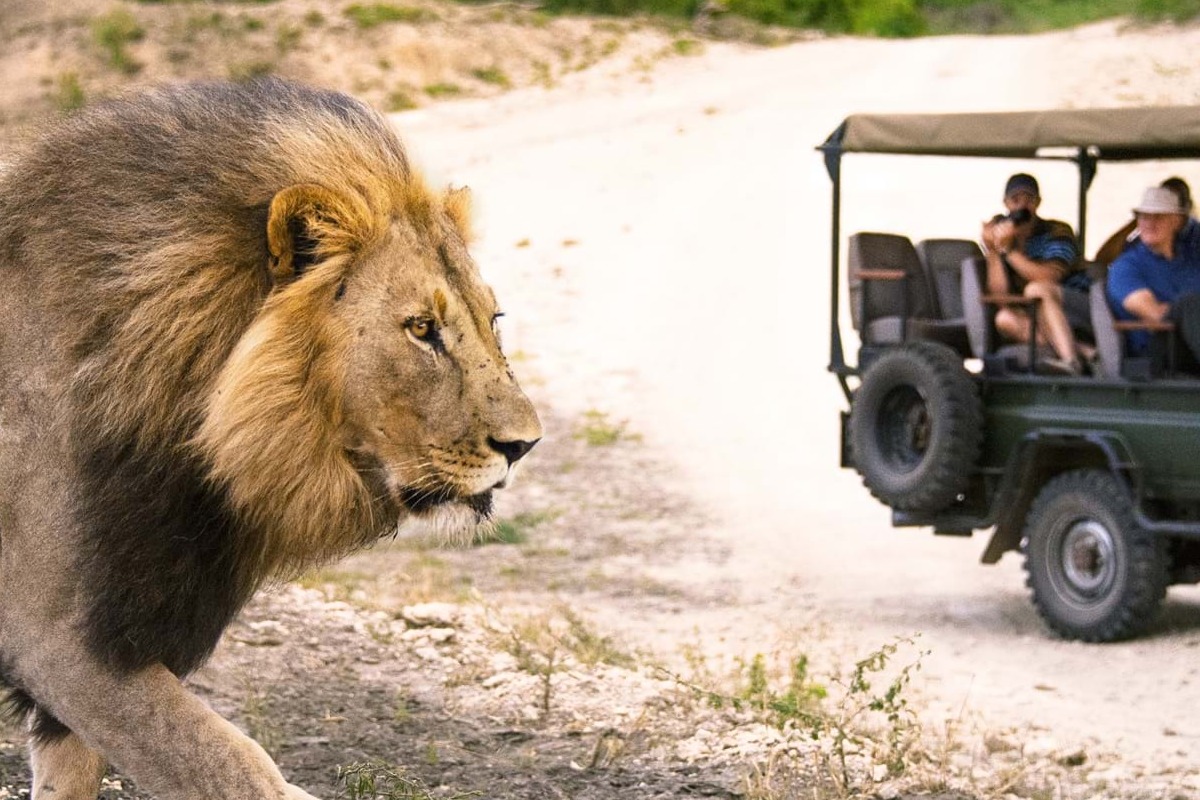
Zimbabwe aligns with Mozambique and other African countries as South Africa drives seamless cross-border tourism through a digital overhaul, combining smarter identity systems, biometric checks, Electronic Travel Authorisation and major border upgrades to make regional journeys more efficient, predictable and connected.
The transformation matters beyond South Africa. Its busiest land crossings sit at the heart of regional tourism, trade, family travel and multi-country road journeys. Zimbabwe’s Beitbridge, Mozambique’s Lebombo, Eswatini’s Oshoek, Botswana’s Kopfontein and the Lesotho corridors at Maseru Bridge and Ficksburg are all included in the redevelopment programme.
Together, the six border posts handle more than 80% of South Africa’s land-border passenger and trade flows. If the programme delivers the intended improvements, crossing a border could become a less cumbersome part of travelling across Southern Africa, strengthening the region’s ability to sell several neighbouring destinations as one connected journey.
South Africa’s Digital Border Transformation at a Glance
| Major reform | Scale or deadline | Potential travel significance |
|---|---|---|
| Border redevelopment | R12.5 billion | Modernises major regional gateways |
| Priority border posts | 6 | Targets high-volume corridors |
| Share of land-border flows | More than 80% | Concentrates improvements at key crossings |
| Green ID production ends | 31 March 2027 | Accelerates Smart ID migration |
| Green ID validity ends | 31 March 2028 | Creates a firm transition deadline |
| Green ID-only population | About 14.7 million | Shows scale of conversion programme |
| Bank Smart ID network | 515 branches | Expands access beyond government offices |
| Bank-service users | More than 822,500 | Indicates uptake of decentralised services |
| ETA processing | Up to 24 hours for approved applications | Could reduce visa-processing friction |
What is changing?
- South Africa is shifting identity services away from legacy paper systems.
- Smart ID access is expanding through participating banks.
- Biometric technology is becoming more important to identity and immigration processing.
- ETA moves relevant immigration checks online before arrival.
- Six major land borders are being physically redeveloped.
- One-stop-border concepts could reduce duplicated processing.
- Tourism could benefit from more predictable regional road journeys.
Zimbabwe Moves With South Africa Through the Beitbridge Gateway
Zimbabwe stands at the centre of South Africa’s border transformation because Beitbridge is one of the region’s most important land gateways. The corridor carries tourists, families, workers, buses and commercial vehicles between the two countries while also forming part of a wider north-south route into Southern Africa. South Africa has included Beitbridge among the 6 border posts being redeveloped under the R12.5 billion programme. For tourism, better infrastructure and more integrated processing could make road journeys between South Africa and Zimbabwe easier to plan, particularly for travellers combining Johannesburg and northern South Africa with Victoria Falls, Hwange National Park, Bulawayo and other Zimbabwean destinations.
Advertisement
Advertisement
Zimbabwe tourism impact
- Priority crossing: Beitbridge
- Main connection: South Africa–Zimbabwe
- Tourism opportunity: Multi-country road and safari itineraries
- Key Zimbabwe attractions: Victoria Falls, Hwange and Great Zimbabwe
- Potential benefit: More predictable border processing
- Wider role: Major passenger and freight corridor into Southern Africa
| Zimbabwe factor | Tourism significance |
|---|---|
| Border gateway | Beitbridge |
| South African programme | Included |
| Tourism traffic | Road trips, coaches, safari itineraries |
| Infrastructure focus | Integrated modern border facilities |
| Potential result | Easier South Africa-Zimbabwe itinerary planning |
Beitbridge Could Make Multi-Country Tourism Easier to Sell
The tourism significance of Beitbridge extends beyond the number of people crossing it. It is effectively a gateway between two substantial Southern African tourism economies. Zimbabwe offers Victoria Falls, Hwange National Park, Great Zimbabwe and other cultural and wildlife attractions, while South Africa provides one of the continent’s largest international aviation gateways and extensive road-tourism infrastructure. Improving the connection between the two could strengthen overland itineraries rather than treating each destination as an isolated holiday. The redevelopment does not mean queues will immediately disappear, and exact reductions in crossing times cannot yet be guaranteed. The important development is that infrastructure is being redesigned around more integrated movement rather than continued dependence on ageing facilities.
Why Beitbridge matters
- It connects two major Southern African tourism markets.
- It supports both leisure and commercial traffic.
- Johannesburg can act as an international arrival point for regional itineraries.
- Zimbabwe adds world-famous waterfall, wildlife and heritage experiences.
- Improved reliability could help tour operators build tighter cross-border schedules.
Mozambique Gains From the Transformation of the Lebombo Corridor
Mozambique has an equally important stake through Lebombo, the principal road corridor connecting South Africa with southern Mozambique. It carries a distinctive mixture of tourism and commercial traffic, including South African holidaymakers travelling towards Maputo and coastal destinations. Pressure becomes particularly visible during peak holiday periods. Official figures show Lebombo handled 184,398 more travellers during the 2025-26 festive period than in the comparable previous period. Its inclusion in the redevelopment programme therefore addresses a genuine regional mobility challenge. More efficient infrastructure could improve journeys between Gauteng, Mpumalanga and Mozambique, supporting road tourism while making one of Southern Africa’s busiest cross-border holiday corridors more manageable.
Advertisement
Advertisement
Mozambique tourism impact
- Priority crossing: Lebombo
- Main tourism link: Gauteng and Mpumalanga to southern Mozambique
- Key destination connection: Maputo and coastal tourism areas
- Peak-period challenge: Heavy holiday traffic
- Potential benefit: More predictable road access
- Additional festive-period travellers: 184,398
| Mozambique factor | Tourism significance |
|---|---|
| Border gateway | Lebombo |
| Redevelopment status | Included in six-port programme |
| Main visitor market | Regional road travellers |
| Major pressure | Seasonal congestion |
| Tourism opportunity | Stronger South Africa-Mozambique coastal itineraries |
Mozambique Could Turn Easier Road Access Into Tourism Opportunity
For Mozambique, smoother border movement has particular tourism value because South Africa represents both a major neighbouring market and a gateway for international visitors travelling around the region. Maputo, coastal resorts and beach destinations can be combined with Johannesburg, Mpumalanga and wildlife itineraries in northeastern South Africa. Yet road-border congestion can undermine the appeal of such combinations, especially during holidays when traffic surges. The Lebombo redevelopment offers an opportunity to address the physical bottleneck alongside broader digital processing reforms. It will not remove every delay associated with customs, immigration or vehicle movements, but more predictable processing could make cross-border itineraries easier for tour operators to package and more attractive for independent travellers.
What Mozambique could gain
- Easier holiday movement from South Africa.
- Better connections between safari and beach tourism.
- More practical self-drive itineraries.
- Improved access to Maputo and southern coastal destinations.
- Greater potential for combined South Africa-Mozambique packages.
Eswatini Steps Into the Digital Border Shift Through Oshoek
Eswatini connects to the programme through Oshoek, another of the 6 gateways selected for redevelopment. Unlike a crossing dominated exclusively by holidaymakers, Oshoek serves tourism, shopping, business, family visits and other regular movements. This makes efficiency particularly important. The redevelopment is expected to proceed in phases, with construction planned over roughly 2 years. Modern facilities and more integrated processing could help make travel between South Africa and Eswatini more predictable. For tourism, that strengthens the possibility of combining South African destinations with Eswatini’s wildlife reserves, cultural experiences and mountain landscapes without allowing the border itself to become an outsized logistical obstacle.
Advertisement
Advertisement
Eswatini tourism impact
- Priority crossing: Oshoek
- Development period: Approximately 2 years
- Main travel types: Tourism, shopping, family and business trips
- Tourism strength: Wildlife, culture and landscapes
- Regional opportunity: South Africa-Eswatini-Mozambique itineraries
| Eswatini factor | Tourism significance |
|---|---|
| Gateway | Oshoek |
| Programme status | Included |
| Travel pattern | Frequent short-haul cross-border movement |
| Tourism advantage | Easy addition to regional road itineraries |
| Potential improvement | More predictable processing |
Eswatini Could Benefit From Short Cross-Border Tourism
Eswatini’s geographical position gives it an opportunity to benefit from travellers already moving through northeastern South Africa. It can be incorporated into road itineraries involving Mpumalanga, KwaZulu-Natal and neighbouring Mozambique, creating a natural multi-country tourism circuit. Border efficiency becomes especially important for shorter journeys because travellers may be reluctant to add another country when doing so creates uncertain delays. A more dependable Oshoek crossing could therefore have an impact beyond simply moving existing travellers faster. It could make adding Eswatini to an itinerary easier to justify, transforming the international border from a perceived inconvenience into a manageable transition between neighbouring tourism experiences.
Potential tourism gains
- More attractive short stays.
- Easier multi-country road trips.
- Stronger cultural tourism opportunities.
- Better integration with South African safari routes.
- Greater potential to combine Eswatini with Mozambique.
Lesotho Gains Two Strategic Gateways From South Africa’s Overhaul
Lesotho occupies a unique position because it is entirely surrounded by South Africa. Border efficiency is therefore fundamental to almost every form of international land travel involving the country. Two crossings serving Lesotho — Maseru Bridge and Ficksburg — are included in South Africa’s 6-port redevelopment programme. That gives Lesotho the largest number of directly affected gateways among the neighbouring countries. Their importance goes beyond leisure travel, covering employment, commerce, family connections and daily economic movement. For tourism, improved infrastructure could strengthen access to Lesotho’s mountain landscapes, adventure tourism and highland communities while making it easier for visitors already travelling through South Africa to add the country to their itineraries.
Lesotho tourism impact
- Priority gateways: Maseru Bridge and Ficksburg
- Number included: 2
- Tourism strengths: Mountains, adventure and culture
- Structural advantage: Direct road access through South Africa
- Potential gain: Easier inclusion in South African itineraries
| Lesotho factor | Tourism significance |
|---|---|
| Maseru Bridge | Major national gateway |
| Ficksburg | Additional strategic crossing |
| Borders in programme | 2 |
| Main tourism dependence | Road connectivity |
| Opportunity | Stronger mountain and adventure itineraries |
Lesotho Could Turn Easier Crossings Into Stronger Mountain Tourism
Tourism in Lesotho depends heavily on road access because international visitors commonly enter through South Africa. That makes the border part of the destination experience itself. Complicated or unpredictable processing can discourage travellers with limited time, while smoother crossings can make short stays and multi-destination holidays more practical. Modernisation at Maseru Bridge and Ficksburg could therefore support more than administrative efficiency. It could improve the viability of itineraries linking South African cities and provinces with Lesotho’s highlands, cultural attractions and adventure experiences. This is particularly significant because Lesotho does not possess the same scale of direct international aviation connectivity as South Africa, making dependable land access a fundamental part of its tourism proposition.
Botswana Connects Through the Kopfontein Tourism Corridor
Botswana’s connection to the programme comes through Kopfontein in South Africa’s North West province. The crossing provides an important route towards Botswana and forms part of the broader network supporting movement between the two countries. Its inclusion has particular relevance for regional tourism because Botswana is one of Africa’s most established high-value wildlife destinations. Travellers frequently build Southern African itineraries involving both South Africa and Botswana rather than visiting either country in isolation. More integrated border facilities could make those combinations easier to operate. The objective remains broader than tourism, covering the movement of people and goods as well as migration management and security, but visitor mobility could become an important beneficiary.
Advertisement
Advertisement
Botswana tourism impact
- Priority gateway: Kopfontein
- Tourism strength: High-value wildlife and safari travel
- Important source gateway: Johannesburg
- Key opportunity: Combined South Africa-Botswana holidays
- Potential benefit: More reliable overland transfers
| Botswana factor | Tourism significance |
|---|---|
| Border gateway | Kopfontein |
| Programme status | Included |
| Tourism segment | Safari and wildlife |
| Regional role | Multi-country itineraries |
| Potential outcome | More predictable road connections |
Botswana Could Strengthen Cross-Border Safari Tourism
The potential tourism effect is particularly clear in the safari market. South Africa provides major international aviation access through Johannesburg, while Botswana offers internationally recognised wilderness and wildlife experiences. This creates a natural foundation for multi-country travel. Border reliability matters because premium itineraries often operate to tightly controlled schedules involving lodges, transfers and onward connections. Modernising Kopfontein could reduce some of the uncertainty associated with the land component of these journeys. Digitalisation should not be interpreted as eliminating legitimate immigration and customs procedures. Instead, the objective is to make those procedures more efficient and better integrated. For tourism businesses, greater predictability may ultimately prove as valuable as outright speed.
Namibia Remains Important but Outside the Six-Border Project
Namibia is an important part of the wider Southern African tourism network, particularly for self-drive holidays linking South Africa with desert, wildlife and coastal destinations. However, it must be separated from the current R12.5 billion border redevelopment programme. None of the 6 border posts included in this particular public-private partnership is on the South Africa-Namibia frontier. Namibia can still be affected by South Africa’s wider transition towards digital immigration, identity verification and modernised travel systems, but it would be inaccurate to suggest that a Namibian gateway is receiving investment under this specific programme.
Namibia position
- Included in six-port PPP: No
- Direct project investment: None under this programme
- Wider relevance: Regional digital travel reform
- Tourism strength: Self-drive, desert, wildlife and coastal travel
- Important distinction: Wider digital reform does not equal inclusion in the R12.5 billion border project
Six Priority Gateways Could Reshape Regional Tourism
| Country | Border gateway | Tourism opportunity | Programme status |
|---|---|---|---|
| Zimbabwe | Beitbridge | Safari, Victoria Falls and regional road trips | Included |
| Mozambique | Lebombo | Beach, city and holiday road tourism | Included |
| Eswatini | Oshoek | Culture, wildlife and short stays | Included |
| Lesotho | Maseru Bridge | Mountain and adventure tourism | Included |
| Lesotho | Ficksburg | Regional and highland access | Included |
| Botswana | Kopfontein | Safari and multi-country tourism | Included |
| Namibia | None | Wider regional touring | Not part of six-port PPP |
South Africa Takes the Green ID Book Towards Retirement
Behind the border changes sits another enormous digital transition inside South Africa. The government plans to stop producing its legacy green ID book on 31 March 2027, followed by the end of its validity as identification on 31 March 2028. Around 14.7 million citizens and permanent residents were still relying exclusively on the green document, illustrating the scale of migration required. The reform is important because modern digital public services depend on reliable identity verification. Moving people towards more secure identification can reduce dependence on vulnerable legacy documentation, although the Smart ID transition should not be confused with passports, visas or permission to cross an international border.
Green ID transition
- Production ends: 31 March 2027
- Validity ends: 31 March 2028
- Green ID-only population: Around 14.7 million
- Main replacement: Smart ID
- Wider objective: Modernised and more secure identity management
More Than 500 Bank Branches Become Identity Service Points
South Africa is accelerating the transition by moving identity services beyond traditional government offices. By October 2026, the expanded partnership with commercial banks had reached 515 branches, while more than 822,500 people had used bank-based Home Affairs services. The approach changes the physical geography of public-service delivery. Instead of requiring every applicant to depend on a conventional Home Affairs office, participating banking infrastructure provides additional locations through which eligible customers can access Smart ID services. With 14.7 million people still relying on the old document, expanding processing capacity is essential if the government wants to avoid creating a major administrative bottleneck before the final deadline.
| Smart ID indicator | Figure |
|---|---|
| Participating bank branches | 515 |
| People who used bank services | More than 822,500 |
| Green ID-only population | About 14.7 million |
| Production deadline | 31 March 2027 |
| Final validity deadline | 31 March 2028 |
Electronic Travel Authorisation Moves Checks Before Arrival
Electronic Travel Authorisation brings another part of the transformation directly into international travel. Instead of depending entirely on manual processes after a traveller reaches South Africa, ETA allows relevant checks to take place electronically before arrival. Home Affairs says the technology checks 40 parameters when verifying passports and uses biometric tools, including liveness detection, to help establish whether an applicant matches the passport photograph. Approved applications can be processed within 24 hours for travellers covered by the system. By May 2026, more than 75,000 applications had been processed, producing more than 71,000 approvals and nearly 4,500 rejections while the programme was still operating on a limited basis.
ETA by the numbers
- Passport verification parameters: 40
- Processing target for approved applications: 24 hours
- Applications processed by May 2026: More than 75,000
- Approvals: More than 71,000
- Rejections: Nearly 4,500
- Key technology: Biometric matching and liveness detection
What Changes for Travellers?
South Africa’s reforms cover different parts of the journey, meaning travellers should not treat Smart ID, Digital ID, ETA and border redevelopment as interchangeable programmes.
Advertisement
Advertisement
| Stage of journey | Reform | Main purpose |
|---|---|---|
| Domestic identification | Smart ID | Replaces legacy identification |
| Digital identity | Digital ID | Supports future electronic verification |
| Before international travel | ETA | Pre-arrival authorisation for eligible travellers |
| At border | Biometric verification | Confirms identity and travel status |
| Physical crossing | Border redevelopment | Improves infrastructure and processing |
| Regional movement | One-stop border approach | Seeks to reduce duplicated formalities |
How the Overhaul Could Support Tourism
- Faster pre-travel processing could reduce administrative uncertainty.
- Better border infrastructure could improve road-tourism reliability.
- More predictable crossings could support multi-country packages.
- Zimbabwe could benefit through Beitbridge and north-south itiner
Zimbabwe aligns with Mozambique and other African countries as South Africa drives seamless cross-border tourism through digital overhaul, using smarter border systems, biometrics and upgraded gateways to ease regional travel.
In conclusion, Zimbabwe aligns with Mozambique and other African countries as South Africa drives seamless cross-border tourism through digital overhaul, because biometric checks, electronic travel systems and upgraded border gateways can make regional journeys faster, more predictable and easier to combine across Southern Africa.
Advertisement
