
UK Moves Alongside France and More to Reshape Transatlantic Tourism as Flight Limits, Rising Levies and Rail Redefine European Travel

Published
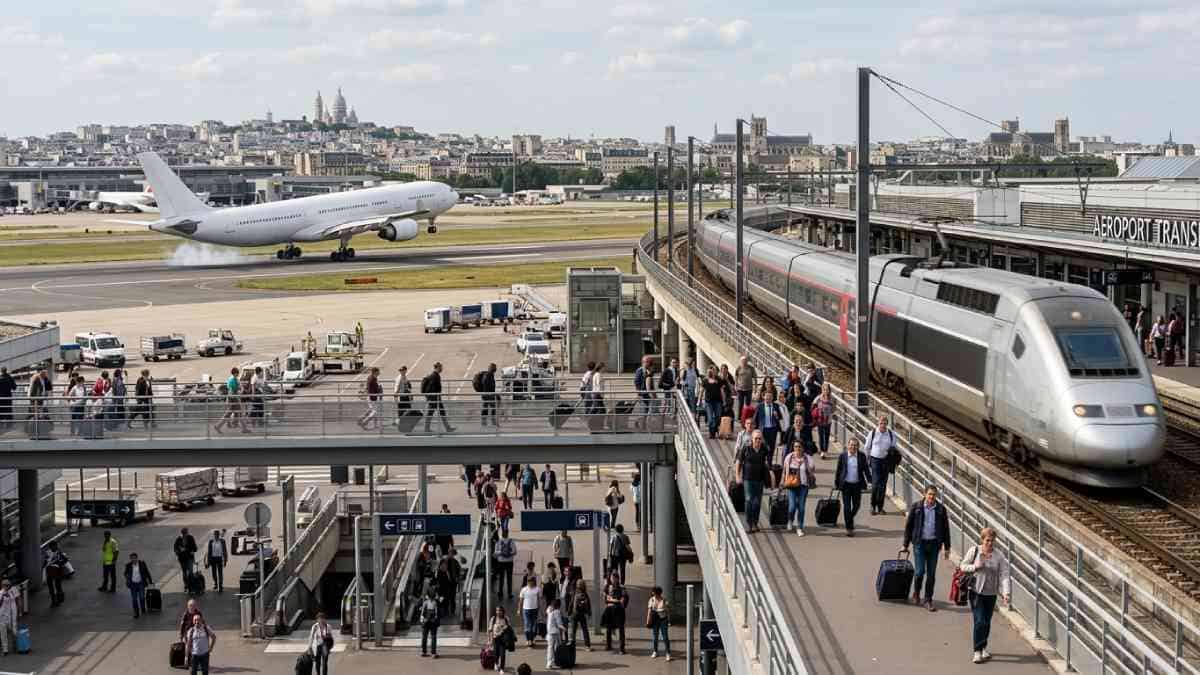
Transatlantic tourism is undergoing a significant phase of restructuring due to increased air taxes, congestion at airports, regulatory frameworks for the tourist industry, and increased accessibility via railways, all impacting how tourists from North America visit and tour through Europe. The classic gateway cities like London, Paris, and Frankfurt have been experiencing growing threats to their dominance due to environmental considerations, congestion at airport slots, constraints on hotel rooms, and increased cost of transportation. In contrast, Vienna, Prague, Budapest, and Warsaw are emerging as important gateways to culture. High-speed trains are being used as part of long-distance flights, and cities are moving from quantity to quality tourism.
The Structural Architecture of Transatlantic Tourism
For nearly four decades, intercontinental travel between North America and the European continent operated on a predictable commercial framework. Saturated primary gateways—predominantly London Heathrow, Paris Charles de Gaulle, and Frankfurt Airport—served as high-frequency catchment funnels. Inbound passengers disembarked from widebody aircraft and either remained in dense metropolitan capitals or transferred onto short-haul regional flights to reach Mediterranean holiday destinations. This network structure delivered robust volume for network carriers and municipal hospitality sectors, but it was also accompanied by severe operational bottlenecks, carbon liabilities, and urban friction.
Advertisement
Advertisement
By late 2026, this legacy operational model has been fractured by composite economic and administrative strains. Escalating operating costs, rising departure taxes, and severe hub airport slot constraints are being faced by airlines. At the destination level, mass tourism is being actively deterred by popular historic cities through regulatory restrictions, municipal entry taxes, and strict holiday rental bans. Consequently, transatlantic tourism is no longer driven by unrestrained capacity additions into Tier 1 hubs, but by targeted aviation yield management, regulatory cost ceilings, and intermodal transport integration.
Fiscal Levies and Entry Barriers Affecting Long-Haul Travellers
Entering Europe is no longer the frictionless administrative experience that was encountered by international visitors in previous decades. Supranational border digitisation and rising passenger taxation have introduced new financial and administrative considerations for inbound long-haul travellers.
Advertisement
Advertisement
| Regulatory Authority / Jurisdiction | Statutory Measure | Fee / Charge Trajectory | Administrative Scope & Enforcement Mechanism |
| European Union / Schengen | European Travel Information and Authorisation System (ETIAS) | Adjusted fee: €20 (originally proposed at €7) | Mandatory pre-travel digital vetting for visa-exempt third-country nationals; valid 3 years. |
| United Kingdom (HM Treasury) | Air Passenger Duty: Band B (2,001–5,500 miles from London) | Standard rate: £244 (up from £216); Higher rate: £1,097 | Statutory excise duty on long-haul departures; applies to premium cabins over 40-inch pitch. |
| United Kingdom (HM Treasury) | Air Passenger Duty: Band C (Exceeding 5,500 miles from London) | Standard rate: £253 (up from £224); Higher rate: £1,141 | Levied on ultra-long-haul premium departures; impacts West Coast North American flights. |
| Municipality of Venice | Venice Access Fee (Contributo di Accesso) | €5 standard advance; €10 last-minute surcharge | Digital QR validation across 60 peak dates; €50 to €300 non-compliance fines. |
| Municipality of Barcelona | Regional & Municipal Tourist Surcharge (Recàrrec Municipal) | Progressive per-night hotel fee scaled by property category | Direct fiscal charge added to overnight accommodation bills in Catalonia. |
The Entry/Exit System and ETIAS Electronic Border Authorisation
Automated biometric recording—including facial recognition and digital fingerprint capture—was established across external European borders by the deployment of the Schengen Area’s Entry/Exit System (EES). Following this transition, the rollout of the ETIAS framework was structured by the European Commission under Regulation (EU) 2018/1240. Designed to screen visa-exempt travellers from more than 50 third countries before departure, the mandatory application fee was adjusted to €20 by the European Commission. This adjustment was made to account for inflation and the operating costs of cross-referencing global security watchlists.
The authorization is valid for three years or until passport expiry, providing multi-entry access for stays up to 90 days within any 180-day window. While simple for compliant travellers, mandatory pre-travel checks are introduced by the system, eliminating spontaneous long-haul trips and creating carrier liabilities that require digital status to be verified by airlines prior to boarding.
Advertisement
Advertisement
HM Treasury Air Passenger Duty Revisions and UK Aviation Costs
In the United Kingdom, inbound and outbound travel costs have been affected by legislative revisions to Air Passenger Duty. Long-haul APD rates were increased by HM Treasury across the 2025/2026 and 2026/2027 fiscal periods under Section 30 of the Finance Act 1994.
For Band B journeys covering distances between 2,001 and 5,500 miles—which encompasses the United States East Coast and Midwest—the standard rate levied on commercial flights with seat pitches exceeding 40 inches was raised from £216 to £244 per passenger, while private jet departures were increased to £1,097. For Band C journeys exceeding 5,500 miles, covering the American Pacific West Coast, standard rates were increased from £224 to £253 per ticket, with higher rates reaching £1,141.
A considerable tax burden is placed by these duties on premium transatlantic itineraries originating or connecting through British airports, encouraging international passengers to explore direct European mainland routes or intermodal transfers.
Western European Core Hubs: Capacity Ceilings and Air-Rail Substitution
Physical infrastructure limits at London and Paris airports have accelerated the integration of aviation and high-speed rail systems. With airport slot growth capped, existing capacity is being optimised by carriers.
London Heathrow and Paris Charles de Gaulle Capacity Constraints
London Heathrow (LHR) continues to be operated near its statutory planning limit of 480,000 air transport movements per year. Coordinated by Airport Coordination Limited (ACL) under strict 80:20 slot usage requirements, little room is offered by the airport for frequency expansion during morning transatlantic arrival banks. British Airways has responded by up-gauging aircraft on key routes, utilising high-density Airbus A350-1000 and Boeing 777-300ER configurations to maximize passenger throughput without requiring additional runway movements.
Across the Channel, Paris Charles de Gaulle (CDG) is faced with regulatory scrutiny under French carbon-reduction mandates, which prohibit domestic flights when a rail alternative under two and a half hours exists. This statutory limitation prompted a redesign of the domestic feeder strategy by Air France-KLM, replacing regional aircraft operations with rail capacity.
Advertisement
Advertisement
Operational Structure of Air France-SNCF “Train + Air” Intermodality
The commercial partnership between Air France and SNCF Voyageurs was expanded to encompass all OUIGO services calling directly at Paris-Charles de Gaulle Airport, as well as classic TGV INOUI lines. Connecting international travellers to 28 stations across France and Belgium, a single booking that includes both train and flight segments is provided by the system.
It was noted by Jérôme Laffon, Managing Director of OUIGO, that consumer demand for simpler, more competitive journeys is met by combining TGV INOUI and OUIGO within the Train + Air product. By transferring over a quarter-million annual passengers onto rail, landing slots at CDG are freed up by Air France-KLM for long-haul routes while short-haul emissions are reduced.
Regulatory Containment in Southern Europe: The Luxury and Length-of-Stay Pivot
Visitor growth has been contained by Southern European municipal governments. In Catalonia, the Veneto, and Tuscany, residential displacement, environmental strain, and overcrowding are being addressed by municipal leaders through strict administrative controls.
Barcelona and the Phased Elimination of Private Tourist Apartments
In Barcelona, plans to phase out short-term holiday flats were confirmed by Mayor Jaume Collboni and the Ajuntament de Barcelona. Enabled by regional housing legislation and supported by Spain’s Constitutional Court, none of the city’s 10,101 tourist apartment licences will be renewed when they expire in November 2028. The initiative was designed to return tourist apartments back to local residential housing stock.
Accommodation options in the Catalan capital are being reshaped by this regulatory transition. With private rentals facing elimination, self-catering options in the city centre are declining, prompting clients to be directed toward licensed hotels by tour operators. In response, inventory is being repositioned toward the premium segment by accommodation providers, prioritising extended stays and high-spending cultural travellers over high-turnover budget groups.
Venice and the Institutionalisation of the Contributo di Accesso
In Venice, the pilot entry fee was turned into a permanent fixture of urban management by municipal authorities. 60 peak dates between April and July 2026 were designated by the Comune di Venezia where the Contributo di Accesso must be paid by day visitors between 08:30 and 16:00.
Advertisement
Advertisement
Advance planning is encouraged by the structure of the fee. A standard fee of €5 per person is paid by travellers booking at least four days ahead. €10 is paid by those registering within three days of entry, while fines between €50 and €300 are faced by unverified day-trippers.
Crucially, overnight guests staying at registered accommodation who already pay the local tourist tax, as well as commuters, students, and regional residents, are exempted from the fee. By targeting day visitors who contribute little to the local economy while adding to peak congestion, overnight hotel stays and experiential tourism are being prioritized by the city.
Florence and UNESCO Zone Short-Term Rental Prohibitions
In Florence, policies to protect the city’s historic fabric from tourism pressures were instituted by Mayor Sara Funaro and the Giunta Comunale. Leveraging Tuscan Regional Law 61/2024, new short-term holiday rental registrations were prohibited within the historic UNESCO World Heritage perimeter by the administration. Restrictions were further extended by the municipal council into surrounding residential neighbourhoods such as Campo di Marte, Gavinana, and Libertà.
Minimum unit sizes of 28 square metres for single-person lets were introduced by the regulation, safety measures including carbon monoxide detectors and fire extinguishers were mandated, and five-year licences that expire upon sale of the property were created. Real estate speculation is meant to be curbed and residential rental supply protected by these policies.
Combined with regional tourist taxes, the economics of budget city breaks in Italy and Spain have been altered by these measures. Hospitality providers in Tuscany and Veneto are responding by packaging extended cultural itineraries and promoting shoulder-season travel, focusing on higher yield per visitor rather than sheer headcount.
Central European Feeder Economics and Network Calibration
In Central Europe, long-haul feeder networks are being optimized by network carriers using intermodal transport links. An example of how high-speed rail can be integrated with long-haul operations by airlines is provided by Germany’s dual-hub strategy.
Advertisement
Advertisement
Lufthansa Group Dual-Hub Balancing Between Frankfurt and Munich
Facing rising domestic fees and national aviation levies, fleet distribution was calibrated across the Frankfurt and Munich hubs by the Lufthansa Group. Long-haul aircraft equipped with the new Allegris cabin interior—including Boeing 787-9s at Frankfurt and Airbus A350-900s at Munich—have been deployed onto select routes serving secondary US markets, including Raleigh-Durham (RDU) and Minneapolis-Saint Paul (MSP).
By serving these secondary North American cities directly, regional US travellers are connected into Europe by Lufthansa while congested East Coast transatlantic hubs are bypassed. At the same time, widebody deployment has been balanced across its network by the carrier to serve expanding markets across Latin America and the Asia-Pacific region, protecting overall network yields.
Intermodal Expansion: The Deutsche Bahn and Lufthansa Express Rail Network
To feed passengers into Frankfurt and Munich without operating costly, high-emission domestic flights, the intermodal partnership with Deutsche Bahn was expanded by Lufthansa. Frankfurt Airport’s long-distance railway station (Frankfurt Flughafen Fernbahnhof) is connected with 27 train stations across Germany, including Stuttgart, Cologne, Düsseldorf, and Nuremberg, by the Lufthansa Express Rail network.
An extension of the airline’s flight schedule is provided by the service. A Deutsche Bahn City-Ticket valid across local public transport in 26 German cities is included in Express Rail itineraries, mileage accrual on rail segments is provided, and flight rebooking in the event of rail delays is guaranteed. By shifting short-haul domestic passengers to ICE trains, regional flying can be reduced by Lufthansa while feeder traffic into its intercontinental long-haul network is protected.
Geographic Substitution: The Rise of Central and Eastern European Corridors
As regulatory hurdles and accommodation costs climb across Western Europe, a growing share of international travellers is being attracted by Central and Eastern European destinations. Accessible, well-connected alternatives for culture-focused long-haul visitors are offered by cities including Vienna, Prague, Budapest, and Warsaw.
This geographic shift is revealed by Eurostat figures and European Travel Commission analyses. While visitor growth was flattened in some Western capitals, substantial increases in international arrivals were experienced by Central and Eastern destinations. Foreign overnight stays were increased by 46% in Warsaw and 43% in Vienna, supported by double-digit arrival gains across Czechia and Hungary.
Advertisement
Advertisement
Vienna’s Visitor Economy Strategy: Prioritising Quality Over Headcount
A structured approach to sustainable urban destination management has been implemented by the Vienna Tourist Board. Under Chief Executive Norbert Kettner, the “Visitor Economy Strategy” was adopted by the city, measuring success through net accommodation revenues, resident sentiment, and sustainable operations rather than gross arrival numbers.
Clear commercial results have been delivered by the strategy. 20 million overnight stays and record hotel revenue were recorded by Vienna, with the United States emerging as the city’s third-largest source market behind Austria and Germany. It was noted by Kettner that high-spending travellers are appealed to by the city’s focus on upscale accommodation, delivering broader benefits across the metropolitan visitor economy.
The role of the city as a Central European travel hub is enhanced by its position within regional transport networks. Long-haul visitors arriving at Vienna International Airport (VIE), or transferring from Frankfurt and Munich, can connect across the region using Austria’s Federal Railways (ÖBB). Vienna is linked directly to Prague, Budapest, and Bratislava by high-speed Railjet services, allowing international travellers to visit multiple heritage destinations without domestic flights.
Cross-Border Rail Alliances: The Baltic Express and Regional Intercity Corridors
Intercity rail connectivity has been expanded through joint initiatives between national rail operators. A prominent example is the “Baltic Express” (Ex32), operated jointly by České dráhy (ČD) and Poland’s PKP Intercity. Four daily round-trips connecting Prague Main Station (Praha Hlavní Nádraží) to Wrocław, Poznań, and Gdynia on Poland’s Baltic coast are run by the service.
It was highlighted by Janusz Malinowski, Chairman of PKP Intercity, that more than 800 kilometres are covered in nine hours by the service, demonstrating the value of international rail partnerships. Modern rolling stock featuring Wi-Fi, power outlets, accessible compartments, and integrated digital ticketing via the ČD and PKP portals is benefited from by passengers.
At the same time, regional operations have been expanded by private open-access carriers such as Leo Express and RegioJet, adding connections across the Warsaw–Kraków–Prague and Prague–Brno–Vienna axes. In Prague, where 85.7% of all accommodation guests are accounted for by international visitors, this expanded rail network has been used by CzechTourism to disperse travellers from the historic centre into regional destinations.
Advertisement
Advertisement
Multi-city heritage packages across Central Europe have been enabled for international tour operators by these cross-border links. Travel through Warsaw, Prague, Vienna, and Budapest can be undertaken by train by international visitors, avoiding the rising airport fees, aviation duties, and rental restrictions of Western European hubs while alternative cultural destinations are discovered.
Industry Impact, Policy Implications, and Strategic Takeaways
European travel is being reshaped by the combination of airline capacity adjustments, urban tourism regulations, and cross-border rail investment. Structural shifts across several key operational areas are being generated by these developments.
Market Segmentation Across Western and Eastern Corridors
An outcome of these trends is the economic segmentation of European city tourism. In Western cities like London, Paris, and Barcelona, the minimum cost of a city break has been raised by the loss of self-catering holiday rentals and the introduction of tourist fees. Premium, high-spending travellers who can absorb higher nightly rates and entry surcharges are increasingly catered to by these destinations.
Conversely, travel is being redirected toward Central and Eastern Europe by budget-conscious and mid-market travellers. Quality dining, cultural attractions, and historic architecture are provided by destinations like Prague, Budapest, and Warsaw at price points that offset international flight costs, balancing visitor distribution across the continent.
Network Carrier Integration and Intermodal Efficiencies
Airline route development is being shifted away from simple hub-and-spoke models. With national governments increasing aviation taxes and restricting domestic feeder flying, high-speed rail is treated by airlines as an integral feeder network rather than a commercial competitor.
The viability of intermodal connectivity is demonstrated by the success of Air France-SNCF Train + Air and Lufthansa-Deutsche Bahn Express Rail. By replacing short-haul feeder flights with high-speed trains, fuel burn and carbon obligations under the EU Emissions Trading System (ETS) are reduced by airlines while valuable takeoff and landing slots at primary hubs are freed up for intercontinental flights.
Advertisement
Advertisement
The Evolution of Destination Success Metrics
Priorities are being shifted from volume to value by destination management organisations. As demonstrated by Vienna’s Visitor Economy Strategy, tourism performance is increasingly evaluated by net accommodation spending, regional distribution, and local resident support rather than sheer visitor arrivals.
How coordinated transport investment can disperse tourism benefits across a wider geographic area is shown by cross-border rail developments—including the České dráhy and PKP Intercity Baltic Express. By linking primary gateways with secondary and tertiary regional centres, sustainable tourism development is supported by rail corridors while pressure on overvisited metropolitan centres is relieved.
Future Outlook: The Next Phase of European Inbound Travel
Further development of intermodal transport networks across the continent will be seen in the coming decade. As the full rollout of its digital border architecture is completed by the European Union and tighter environmental standards are implemented by member states, the cost and administrative requirements of international travel will continue to formalise.
Airlines will be encouraged by these structural shifts to further refine their intercontinental networks, expanding point-to-point services between secondary North American cities and alternative European entry points. Meanwhile, multi-country, overland itineraries will be made an increasingly popular choice for long-haul travellers by continuous improvements in high-speed rail.
Cities that manage tourism proactively—balancing resident quality of life with quality visitor experiences—will be best positioned to succeed. By combining managed urban access with integrated rail and air networks, an operational model that safeguards historic cultural centres while supporting a resilient, sustainable visitor economy is being established by Europe.
Conclusion
The permanent departure from the traditional high density mass transit system is reflected in the development of transatlantic tourism industry. As a result of the application of strict environmental slot caps, fiscal air duties, and aggressive housing protections in major Western gateways, the economics of transatlantic travel to Europe have undergone a fundamental transformation. Via reassignment of aircraft capacity from major American gateways, integration of air rail feeders, and development of rail connections in Central and Eastern Europe, the tourism economy of the continent becomes decentralized. The destinations that put sustainability before the volume of tourists will prosper in the future.
Advertisement
