
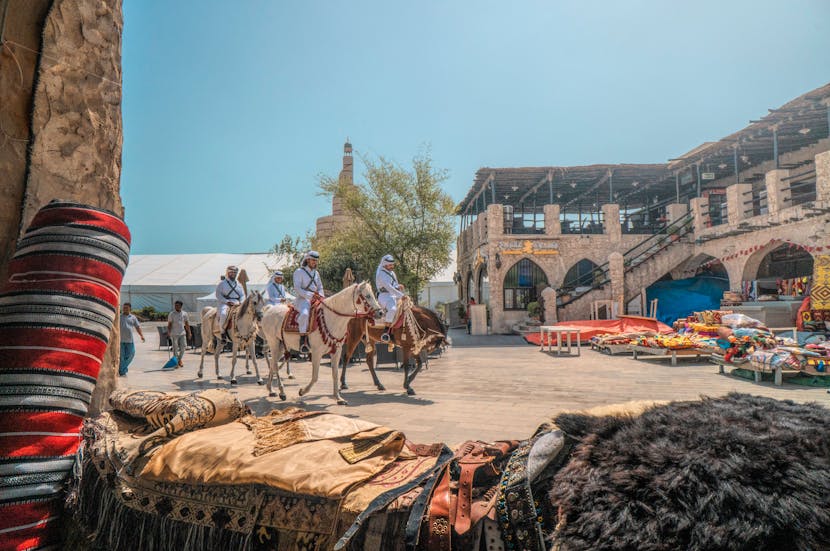
Image generated with Ai
Qatar’s tourism industry is set to make a significant leap over the next several years, with plans to increase its contribution to the country’s GDP from 7.0% in 2023 to 12.0% by 2030. The country aims to attract over 6 million visitors annually by the end of the decade, according to a report by Alpen Capital. These ambitious targets are part of Qatar’s broader strategy to position itself as a leading global travel destination, further solidifying its presence on the international tourism map following the success of the FIFA World Cup 2022.
In 2022, Qatar saw a remarkable surge in international tourist arrivals, recording 2.6 million visitors, a significant increase from the 0.6 million recorded in 2021. This growth represented an impressive 119.8% of 2019’s pre-pandemic arrival figures, making Qatar the only country in the Gulf Cooperation Council (GCC) to exceed pre-COVID-19 tourism levels. Major events like the FIFA World Cup, Lusail Super Cup, Darb Lusail Festival, and the Qatar Motor Cycle Grand Prix contributed to this sharp rise in visitor numbers.
Following the success of these global events, Qatar Tourism launched several international marketing campaigns, including the high-profile “Feel More in Qatar” campaign in December 2022. This initiative was designed to highlight Qatar’s diverse tourism offerings and promote the country as a must-visit destination for travelers around the world. The campaign’s impact was quickly felt, as Qatar recorded a 58.4% increase in international tourist arrivals in 2023, reaching a five-year high of 4.1 million visitors.
The FIFA World Cup, in particular, was a game-changer for Qatar’s tourism industry, attracting millions of football fans and showcasing the country’s ability to host large-scale international events. Although the tournament brought a temporary spike in tourist numbers, Qatar has continued to see consistent visitor growth in the post-World Cup period, positioning itself as a year-round travel destination.
Advertisement
To accommodate the anticipated rise in visitors, Qatar has invested heavily in its hospitality infrastructure. By the end of 2023, the country had over 36 hotel projects under construction, adding a total of 8,922 rooms to its accommodation capacity. These developments are critical to meeting the growing demand for high-quality lodging, particularly as Qatar aims to attract 6 million visitors annually by 2030.
Despite the increased supply of hotel rooms ahead of the FIFA World Cup, Qatar’s occupancy rates have remained relatively stable over the past three years, averaging around 57%. However, the additional hotel capacity has ensured that the country can meet the surge in demand from international tourists, even as occupancy levels continue to rise gradually.Hotel Name Location Estimated Opening Number of Rooms Developer/Operator Waldorf Astoria Doha West Bay West Bay, Doha 2024 283 Hilton Worldwide The St. Regis Marsa Arabia Island The Pearl-Qatar 2024 207 Marriott International Raffles Doha Lusail City 2025 132 Accor Fairmont Doha Lusail City 2025 362 Accor Four Seasons Resort and Residences The Pearl-Qatar 2025 161 Residences Four Seasons Rosewood Doha Lusail City 2024 185 Rosewood Hotels & Resorts The Ritz-Carlton Sharq Village Ras Abu Abboud, Doha 2024 200+ (Renovation) Marriott International Andaz Doha West Bay, Doha 2024 318 Hyatt Hotels JW Marriott Lusail Lusail City 2025 257 Marriott International Mandarin Oriental Hotel West Bay West Bay, Doha 2024 249 Mandarin Oriental Hotel Group
Qatar’s strategic efforts to enhance its tourism sector are expected to significantly boost its economy. In 2022, the country’s tourism industry contributed 7.0% to the national GDP, and the government has set an ambitious target of increasing this figure to 12.0% by 2030. The substantial growth in tourist arrivals and new hotel developments are key drivers behind this expected increase in GDP contribution.
Moreover, Qatar’s tourism sector has seen a sharp rise in its Revenue per Available Room (RevPAR) metrics, which jumped from $56.2 in 2020 to $116.5 in 2022. This growth was largely driven by the spike in demand during the FIFA World Cup, which also pushed the country’s Average Daily Rate (ADR) to new highs. As a result, Qatar has emerged as one of the top performers in the GCC in terms of hotel revenue growth.
Looking ahead, Qatar’s travel industry is poised to continue its upward trajectory, supported by a strong calendar of major events, ongoing marketing efforts, and new hotel developments. While the influx of tourists and hotel supply continues to rise, experts predict that it may take some time for the excess capacity to be fully absorbed by the market.
Nevertheless, the long-term outlook for Qatar’s tourism sector is overwhelmingly positive. Alpen Capital’s report notes that Qatar’s consistent growth in international tourist arrivals, along with the country’s strategic investments in hospitality, will help it reach its target of 6 million visitors by 2030. As the GCC region continues to host high-profile events and enhance its tourism infrastructure, Qatar is well-positioned to maintain its competitive edge in the global travel trade.
In summary, Qatar’s tourism industry is on track to become a key contributor to the country’s economic growth, with an ambitious goal of achieving 12% of GDP by 2030. The combination of increased international tourist arrivals, new hotel projects, and strategic marketing campaigns will ensure that Qatar remains a top destination for travelers from around the world.
| Region | Airlines Connecting to Qatar |
|---|---|
| India | Qatar Airways, Air India, IndiGo, Vistara, Air India Express |
| Europe | Qatar Airways, British Airways, Lufthansa, Air France, KLM |
| Thailand | Qatar Airways, Thai Airways, Bangkok Airways |
| Vietnam | Qatar Airways, Vietnam Airlines |
| China | Qatar Airways, China Southern Airlines, Air China |
Qatar’s strategic geographic location has made it a key hub for travelers from across the world. The country is well-connected by its national carrier, Qatar Airways, which offers direct flights to major cities in India, Europe, Thailand, Vietnam, and China. These connections support the country’s growing tourism sector, making it easy for international visitors to access Qatar’s world-class attractions and events.
As Qatar continues to invest in its tourism industry, these airline connections will play a critical role in facilitating the flow of visitors and supporting the country’s ambitious travel and tourism goals.
Advertisement
Tags: fifa world cup, GCC tourism, global tourism, hotel projects, QATAR, Qatar Airways, Qatar hotels, Qatar Tourism, Tourism, Tourism industry, tourist arrivals, Travel, travel industry, Waldorf Astoria Doha West Bay
Advertisement
Advertisement













Friday, September 4, 2026

Friday, September 4, 2026

Friday, September 4, 2026

Friday, September 4, 2026

Thursday, September 3, 2026

Wednesday, September 2, 2026

Friday, September 4, 2026



