
Peru’s Machu Picchu Faces Chile’s Atacama Desert in South America’s Premier Tourism Attraction Race

Published
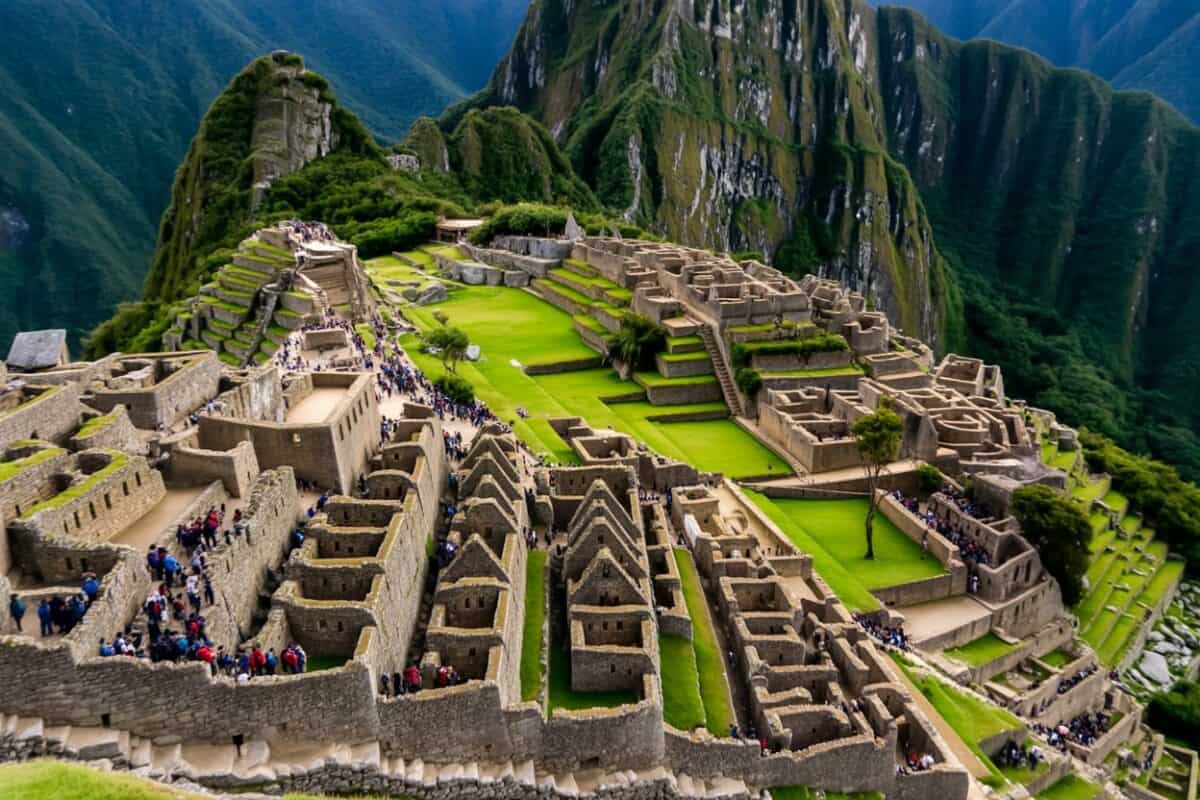
Image generated with Ai
Two of South America’s most recognisable landscapes are again drawing international attention in 2026, with Peru’s Machu Picchu and destinations associated with Chile’s Atacama Desert highlighting the strength of the continent’s cultural, nature and adventure tourism.
Machu Picchu enters 2026 with considerable international recognition behind it. Peru’s government noted at the start of the year that the Inca citadel had been recognised as the World’s Leading Tourist Attraction at the 2025 World Travel Awards.
Advertisement
Advertisement
Chile, meanwhile, continues to position the Atacama Desert as one of the country’s defining international attractions. Official tourism promotion describes it as the driest desert in the world, combining salt flats, geysers, high-altitude lagoons, archaeology, Indigenous culture and some of the world’s clearest skies.
However, one factual distinction is important: the claim that voting was “finalised today” and that Machu Picchu and the Atacama Desert are formally head-to-head finalists comes from the World Travel Awards rather than a government source. Because this article is restricted to government and government-verified material, that specific competition status should be separately verified before publication.
Advertisement
Advertisement
Machu Picchu Enters 2026 With Its Global Tourism Reputation Intact
Machu Picchu remains Peru’s flagship international tourism attraction and one of South America’s most recognisable heritage destinations.
Advertisement
Advertisement
The Peruvian government entered 2026 working to strengthen conservation, security, visitor management, ticketing and transport around the archaeological site.
Official figures show the scale of demand. Peru recorded 1,585,262 visitors to Machu Picchu in 2019, its pre-pandemic record. By September 2025, approximately 1,404,492 tickets had already been sold for that year, putting the destination on course to challenge or surpass its earlier benchmark.
That level of demand explains why visitor capacity remains carefully controlled.
Advertisement
Advertisement
For 2026, Peru has retained different limits according to the tourism season.
Peru Caps Machu Picchu at 5,600 Daily Visitors During Peak Periods
The Peruvian Ministry of Culture has established a maximum capacity of 5,600 visitors per day during designated high-demand periods in 2026.
Advertisement
Advertisement
The higher capacity applies on 1 January, from 2–5 April, from 19 June–2 November, and from 30–31 December 2026. During the remainder of the year, the standard maximum remains 4,500 visitors per day.
The restrictions demonstrate the difficult balance surrounding Machu Picchu.
Peru wants tourism to continue supporting the economy of Cusco and surrounding communities, but visitor numbers must be managed against the conservation requirements of an exceptionally sensitive archaeological and natural site.
| Machu Picchu 2026 Indicator | Figure |
|---|---|
| Standard daily visitor capacity | 4,500 |
| Peak daily visitor capacity | 5,600 |
| High-capacity period | 19 June–2 November |
| 2019 visitors | 1,585,262 |
| Tickets sold by September 2025 | 1,404,492 |
| Inca Trail reopening visitors, 1 March 2026 | 200+ |
Inca Trail Reopens With Visitors From Seven Countries
Machu Picchu’s tourism strength extends beyond the archaeological city itself.
On 1 March 2026, Peru officially reopened the Inca Trail network following conservation and maintenance work carried out during February.
Advertisement
Advertisement
More than 200 domestic and international visitors began the journey from Piscacucho at kilometre 82. The first international travellers of the new season included visitors from the United States, France, Italy, China, Japan and Brazil, alongside Peruvian tourists.
The reopening demonstrates the international diversity of demand surrounding Machu Picchu.
For many travellers, the attraction is not simply the final archaeological site. The journey through Andean landscapes and historic routes forms a central part of the experience.
Peru Introduces a New Conservation and Visitor Management System
Managing that popularity is becoming increasingly sophisticated.
In July 2026, Peru’s Ministry of Environment and Ministry of Culture agreed to integrate the entrance tariff for the Historic Sanctuary of Machu Picchu into the country’s TuBoleto electronic visitor-management system.
Advertisement
Advertisement
The objective is broader than making ticket purchases easier.
The system is intended to improve visitor-flow controls, strengthen conservation financing and improve essential visitor services.
Peru has also approved the Machu Picchu Historic Sanctuary Master Plan for 2026–2031, establishing a longer-term framework for managing the site’s cultural heritage.
The approach reflects the pressure that accompanies global tourism success: greater recognition can increase demand precisely when authorities need to protect the attraction from excessive pressure.
Chile’s Atacama Desert Offers a Completely Different Tourism Experience
Across the Andes, Chile offers a rival tourism proposition built almost entirely around extreme natural landscapes.
Advertisement
Advertisement
The Atacama Desert is promoted by Chile’s official tourism organisation as the world’s driest desert.
Rather than a single archaeological monument, Atacama represents an enormous collection of experiences involving deserts, mountains, salt flats, volcanoes, lagoons, Indigenous heritage and astronomy.
San Pedro de Atacama acts as the principal tourism gateway.
Visitors can use the town as a base for exploring the Valle de la Luna, Tatio Geysers, high-altitude lagoons, salt flats and archaeological landscapes.
That diversity gives Atacama a different competitive strength from Machu Picchu: travellers can construct multi-day itineraries around several natural attractions rather than visiting one dominant landmark.
Advertisement
Advertisement
Tatio Geysers Take Travellers Above 4,300 Metres
The Tatio Geysers illustrate the extreme geography behind Atacama’s international appeal.
The geothermal field sits at more than 4,300 metres above sea level and is described by Chile’s official tourism organisation as the third-largest geothermal field in the world.
Visitors commonly arrive around sunrise, when the cold high-altitude air makes the geothermal steam particularly visible.
The surrounding ecosystem also supports vicuñas, birds and specialised vegetation.
Other Atacama attractions push travellers above 4,000 metres, reinforcing the region’s identity as an adventure and high-altitude destination.
Advertisement
Advertisement
Atacama Builds Its Appeal Around Nature, Stars and Ancient Culture
The Atacama tourism proposition extends well beyond desert scenery.
Chile promotes stargazing, observatories, Indigenous tourism, archaeology, hot springs, mountain experiences, wildlife observation and outdoor adventure across the region.
Piedras Rojas, for example, combines red rock formations with salt flats and high-altitude lagoons. The landscape also preserves traces of ancient caravan routes and temporary settlements associated with pre-Columbian Andean cultures.
This mixture of landscape and heritage allows Chile to position Atacama across several tourism categories simultaneously.
For international travellers, it can function as an astronomy holiday, adventure journey, photography destination, cultural experience or wider exploration of northern Chile.
Advertisement
Advertisement
Machu Picchu and Atacama Represent Two Different Faces of South American Tourism
The comparison between the two destinations demonstrates why South America has such a powerful tourism portfolio.
| Tourism Feature | Machu Picchu, Peru | Atacama Desert, Chile |
|---|---|---|
| Primary appeal | Inca heritage and archaeology | Desert landscapes and nature |
| Major gateway | Cusco/Machu Picchu Pueblo | San Pedro de Atacama |
| Peak visitor capacity | 5,600 daily | No equivalent single-site figure |
| Major experience | Inca Trail | Valle de la Luna |
| High-altitude attraction | Andean archaeological landscape | Tatio Geysers, 4,300m+ |
| Tourism strengths | Heritage, culture, hiking | Astronomy, adventure, nature, archaeology |
| International recognition | World’s Leading Tourist Attraction 2025 | Major flagship attraction of northern Chile |
| Management challenge | Visitor capacity and conservation | Remote access and fragile desert ecosystems |
Global Recognition Could Strengthen Tourism Beyond the Two Attractions
The importance of international awards extends beyond trophies.
Recognition for Machu Picchu can strengthen Peru’s wider tourism economy by encouraging travellers to combine the archaeological site with Cusco, the Sacred Valley and other Andean destinations.
Atacama can perform a similar role for Chile.
Travellers attracted initially by San Pedro de Atacama can extend their journey towards high-altitude landscapes, archaeological sites and other destinations across northern Chile.
Advertisement
Advertisement
That creates a wider economic opportunity for accommodation providers, restaurants, transport businesses, guides and communities surrounding the headline attractions.
Peru and Chile Showcase South America’s Tourism Strength in 2026
Machu Picchu and the Atacama Desert ultimately represent very different reasons for travelling to South America.
Peru offers one of the world’s most celebrated archaeological landscapes, supported by controlled visitor capacity of up to 5,600 people per day during peak periods, a historic Inca Trail and an increasingly sophisticated conservation system.
Chile offers the world’s driest desert, geothermal fields above 4,300 metres, extraordinary stargazing conditions, salt flats, high-altitude lagoons and landscapes shaped by both geology and ancient cultures.
Both destinations also face the challenge that accompanies international popularity: tourism must grow without damaging the cultural and natural assets responsible for attracting travellers in the first place.
The available government evidence firmly establishes the tourism importance of both destinations. However, because the World Travel Awards is not a government body, the claim that voting was finalised on 13 August 2026 and specifically reduced to a Machu Picchu-versus-Atacama contest should be attributed to the awards organisation rather than presented as a government-confirmed development.
Advertisement
