
Greece Stands with Spain and Others as Foreign Tourists Drive Europe’s Most Tourism Dependent Hotspots

Published
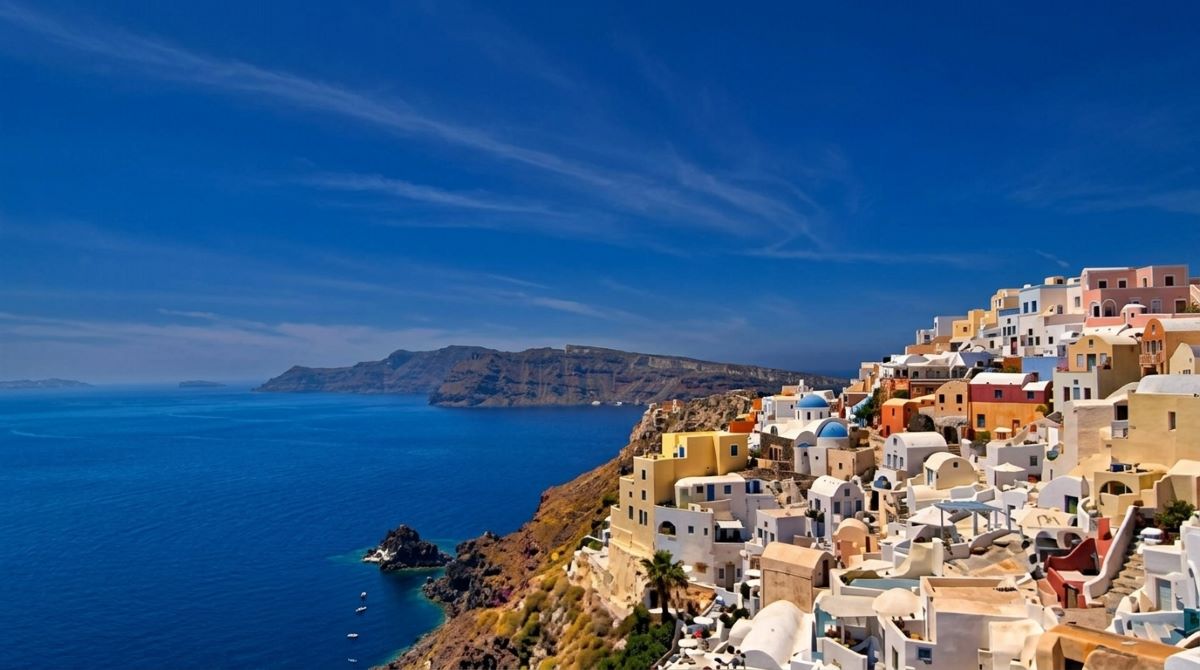
Today foreign visitors are a key pillar of the tourist economy of some of the most visited islands, coastal areas and mountain regions in Europe. Several major tourism regions stand out in terms of the international demand that accounts for over nine out of ten nights in accommodation, in particular Greece, Spain, Malta, Cyprus, Croatia and Austria. That reliance brings tremendous advantages including increased hotel demand and spending, greater international transport connections, and more. However, it puts pressure as well. These destinations can feel the impact of these changes in their flight capacity or sourcemarket demand or traveller confidence in a very short period of time. New data from Eurostat’s regional evidence and recent data from the governments of 2026 reveals where foreign-tourism dependence is greatest and what this means for travellers.
Europe’s Most Tourism-Dependent Hotspots Rely Heavily on Foreign Visitors
Eurostat’s Regions in Europe 2026 publication provides the clearest comparable measure of international tourism dependence across EU regions. The regional accommodation figures mainly refer to 2024 and therefore act as a structural benchmark rather than a snapshot of current 2026 arrivals.
Advertisement
Advertisement
The contrast with the EU average is striking. Foreign tourists generated more accommodation nights than domestic travellers in 65 of 244 EU regions, equal to 26.6% of regions with available data.
Among the most internationally dependent major destinations were:
Advertisement
Advertisement
| European destination | Country | Foreign share of accommodation nights |
|---|---|---|
| Kriti | Greece | 94.4% |
| Malta | Malta | 93.7% |
| Ionia Nisia | Greece | 93.5% |
| Cyprus | Cyprus | 92.5% |
| Notio Aigaio | Greece | 92.2% |
| Jadranska Hrvatska | Croatia | 92.0% |
| Tirol | Austria | 90.8% |
| Illes Balears | Spain | 90.2% |
These figures reveal something important for travellers: international tourism is not merely an extra source of demand in these destinations. In many cases, it is the foundation of the visitor economy.
Also Read: Europe Tourism Hotspots Drive Record Regional Travel Demand
Advertisement
Advertisement
Greece Tourism Gains More Value from International Travel in 2026
Greece has one of Europe’s clearest concentrations of foreign-led tourism. Crete, the Ionian Islands and South Aegean all record international visitor shares above 92%.
South Aegean also recorded the EU’s highest tourism intensity at 126,899 accommodation nights per 1,000 residents, highlighting how visitor demand can become enormous relative to the local population.
Fresh 2026 Bank of Greece data add another dimension. From January through July:
- Inbound travellers increased 8.6%
- Travel receipts climbed 12.0%
- Average expenditure per trip increased 2.9%
- Total travel receipts reached €13.52 billion
July provides an especially useful insight. Traveller numbers slipped 3.1% year on year, yet tourism receipts increased 7.2% to €4.72 billion as average spending per journey rose.
Author insight: Greece is shifting from volume towards value
The most meaningful signal is not simply that more people are visiting Greece. Revenue is rising faster than arrivals.
That suggests the Greek tourism economy is extracting greater value from each international trip. For travellers, this can translate into a market where accommodation, dining and premium experiences command stronger demand even when overall visitor growth slows.
Advertisement
Advertisement
Spain’s Balearic Islands Show What Peak Tourism Pressure Looks Like
Spain’s Balearic Islands remain one of Europe’s clearest examples of tourism concentration.
International visitors generated 90.2% of accommodation nights in the Eurostat regional comparison. Fresh 2026 data from Spain’s National Statistics Institute confirm that foreign demand remains exceptionally strong.
During January-July 2026, the Balearics received 9.16 million international tourists, up 1.8% year on year.
In July alone:
- International arrivals reached 2.57 million
- Foreign visitor spending hit €4.145 billion
- Spending increased 8.3%
- Visitor numbers were almost unchanged from the previous year
By August, the Balearic Islands accounted for 33% of all hotel nights generated by non-residents in Spain. Mallorca alone recorded more than 8.5 million hotel nights, while the Balearics achieved Spain’s highest hotel bed occupancy rate at 90.3%.
Traveller takeaway
An occupancy rate above 90% has practical consequences.
Advertisement
Advertisement
Travellers visiting Mallorca, Ibiza or other Balearic destinations during the busiest summer weeks may face:
- less accommodation choice
- higher demand for popular hotels
- more crowded transport hubs
- stronger competition for attractions and dining
- reduced flexibility for last-minute changes
The data therefore provide a powerful case for shoulder-season travel rather than simply measuring tourism success.
Malta’s Tourism Boom Pushes Foreign Dependence Above 95%
Malta currently offers one of Europe’s strongest examples of foreign-driven tourism growth.
Eurostat recorded international visitors generating 95.2% of all Malta accommodation nights during H1 2026, the highest share among EU countries.
The Maltese National Statistics Office then recorded further growth through July.
Between January and July 2026:
Advertisement
Advertisement
- inbound tourists reached 2.62 million
- arrivals increased 18.6%
- visitors generated 14.9 million nights
- tourism expenditure reached €2.334 billion
- tourism spending increased 15.8%
July alone brought 489,494 inbound visitors, an increase of 20.8%.
British, Italian and Polish travellers together accounted for 45.1% of July arrivals.
Another revealing figure is that more than 64% of July tourists visited Gozo and Comino, including both overnight and day visitors.
Why this matters
Malta’s tourism growth spreads well beyond its main hotel districts. Heavy international demand reaches ferries, beaches, smaller islands and excursion routes.
This makes connectivity a central part of Malta’s tourism economy. Any major change in air capacity from the UK, Italy or other key European markets can quickly affect visitor flows.
Cyprus Shows the Other Side of International Tourism Dependence
Foreign dependence does not always guarantee growth.
Advertisement
Advertisement
Cyprus provides the strongest counterpoint.
Foreign visitors generated 92.6% of Cyprus accommodation nights during H1 2026, yet total accommodation nights fell 7.7%, among the steepest declines recorded in the EU.
Cyprus Statistical Service data show that tourist arrivals reached 2.82 million between January and August 2026, down 7.0% year on year.
August arrivals fell another 3.3%.
The destination also relies strongly on a small group of source markets:
| Source market | Share of August arrivals |
|---|---|
| United Kingdom | 30.5% |
| Israel | 23.3% |
| Poland | 6.3% |
| Germany | 4.4% |
| Sweden | 3.0% |
The UK and Israel alone supplied more than half of August visitors.
Advertisement
Advertisement
Expert analysis: concentration creates hidden exposure
Cyprus shows why foreign-tourism dependence should not be viewed only as a strength.
When a large share of demand comes from a small number of countries, changes in airline schedules, economic conditions, regional security or consumer confidence can affect the tourism economy more quickly than in destinations with a broader domestic market.
Croatia’s Adriatic Summer Depends Overwhelmingly on International Travellers
Croatia’s tourism economy becomes particularly international during summer.
In July 2026, Croatia recorded 25.26 million commercial accommodation nights. Foreign travellers generated 23.41 million, equal to 92.7% of the national total.
Germany and Slovenia together produced 30.3% of all foreign nights during the month.
Germany alone accounted for 4.4 million nights.
Advertisement
Advertisement
Regional concentration was also significant:
- Istria: 7.5 million nights
- Split-Dalmatia: 5.3 million nights
Croatia’s dependence differs slightly from that of island destinations because road mobility plays a major role. German, Slovenian, Austrian, Polish and Czech travellers can reach the Adriatic by car as well as air.
For visitors, that means road congestion and cross-border travel conditions can matter almost as much as flight schedules during the peak summer period.
Tirol Proves Tourism Dependence Extends Beyond Europe’s Beaches
Austria’s Tirol shows that international dependence is equally important in alpine tourism.
Eurostat placed the region’s foreign share at 90.8%.
Tirol government data show 17.67 million overnight stays during the 2026 summer season through August, up 2.0%.
Advertisement
Advertisement
Germany dominates the market:
- Germany: 9.85 million nights
- Netherlands: 1.62 million
- Switzerland and Liechtenstein: 771,748
- Italy: 571,521
- Belgium: 566,894
Germany alone generated 55.8% of Tirol’s overnight stays.
The region therefore depends heavily on neighbouring European economies and efficient road and rail access, rather than air travel alone.
What Foreign-Tourism Dependence Means for Travellers
These numbers form a practical map of where visitor demand is most concentrated across Europe.
The implications differ by destination:
- Greece: international tourism is delivering stronger receipts and higher trip value.
- Spain: the Balearics combine huge foreign demand with extremely high hotel occupancy.
- Malta: rapid inbound growth is spreading visitor pressure across the islands.
- Cyprus: falling arrivals expose the risks of relying heavily on a few overseas markets.
- Croatia: foreign road and air travel dominate the summer tourism economy.
- Austria: Tirol depends heavily on nearby European markets, especially Germany.
One further caution matters. Eurostat notes that conventional accommodation statistics do not capture every visitor. Day-trippers, people staying with friends and relatives and users of some second homes can add further pressure that is not fully visible in headline tourism-night figures.
Advertisement
Advertisement
For travellers, this makes timing increasingly important. Visiting outside the busiest weeks can offer more accommodation choice, less crowded transport and greater flexibility.
For destinations, the challenge is more complex. International tourism brings revenue, employment and connectivity, but extreme reliance on overseas visitors can also magnify external shocks.
That is the defining lesson from Europe’s most tourism-dependent hotspots in 2026: foreign travellers remain one of the continent’s greatest tourism strengths, but destinations that depend on them most also need the strongest resilience, diversification and visitor-management strategies.
In conclusion, Greece stands with Spain and others as foreign tourists drive Europe’s most tourism dependent hotspots, reinforcing how strongly international travel shapes regional economies across the continent. Foreign tourists contribute to the hotel and transport sector, to restaurants and local spending and are welcomed on the islands of Greece, on the Balearics in Spain, as well as on Malta, Cyprus, Croatia and Austria. But this dependence also means exposure to risk of fluctuations in air capacity, source-market demand and travel disruption. The trend shows how important “when”, “where” and “how” are for travellers and how tourist authorities are under increasing pressure to develop tourism while building up resilience, infrastructure and responsible destination management.
Advertisement
