Image generated with Ai
Florida saw an 8.7% decline in tourism, joining California, New York, Nevada, and Illinois in confronting billions in lost revenue, with thousands of flight cancellations and a visitor plunge amid the ongoing US shutdown, which began on October 1, 2025. Federal agencies like the FAA and TSA are understaffed, leading to delays and cancellations. This has had a significant financial impact, particularly in tourism-dependent states like Florida, as international and domestic travel has dropped sharply, contributing to the broader economic fallout.

Image generated with Ai
The ongoing U.S. government shutdown, which began on October 1, 2025, has caused significant disruptions across various sectors, especially in travel and tourism. Federal agencies such as the Federal Aviation Administration (FAA) and the Transportation Security Administration (TSA) are severely impacted, with over 13,000 air traffic controllers and 50,000 TSA officers working without pay. This has led to absenteeism, flight delays, and cancellations at major airports nationwide. International air bookings, especially from Canada, have dropped by over 35%. The shutdown is projected to cost the U.S. economy approximately $650 million in lost travel revenue, forcing airlines and hotels to adjust their operations.
Advertisement
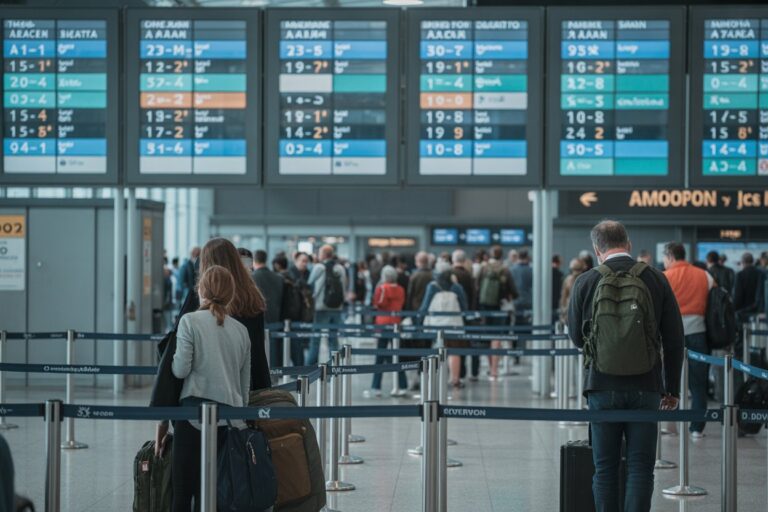
Image generated with Ai
In October 2025, U.S. air travel saw a 1.7% decline in passenger demand compared to 2024. International bookings were 10% to 14% lower, with Canadian travel dropping by up to 43%. The ongoing government shutdown, which began on October 1, worsened these challenges, leading to an estimated $650 million in losses across the travel and hospitality sectors. Despite these setbacks, luxury hotels like the Four Seasons and Ritz-Carlton saw a surge in bookings, with nightly rates rising from $900 to $1,500-$2,500. The hotel industry remains cautiously optimistic, though occupancy rates are still below pre-pandemic levels.

Image generated with Ai
In September and October 2025, U.S. hotel occupancy dropped to 68.5%, a 2.4% decrease from the previous year. The decline is due to reduced international tourism and cautious consumer spending, worsened by the ongoing federal government shutdown. The shutdown led to fewer bookings and cancellations, resulting in an estimated $650 million loss. Despite this, luxury hotels like the Four Seasons and Ritz-Carlton saw increased bookings, with rates rising from $900 to $1,500–$2,500. The hotel industry remains cautiously optimistic, expecting a slight increase in occupancy, but still falling short of pre-pandemic levels.
Advertisement
Advertisement
Decline in Hotel Occupancy Across KEY US Cities in October 2025City Occupancy Decline Factors Contributing to Decline New York City, New York 0.5% Global uncertainty, rising hotel prices, fewer international events Las Vegas, Nevada 21.3% Reduced international visitors, economic challenges New Orleans, Louisiana 18.7% Economic uncertainty, reduced international travel, weather effects Houston, Texas 5.6% Slowdown in business travel, aftermath of Hurricane Beryl Miami, Florida 12% Tough comparison to 2024 events, fewer international visitors Los Angeles, California 50% Wildfires, political unrest, decline in Canadian visitors Boston, Massachusetts 7% Fewer large events, economic uncertainty, reduced international travel

Image generated with Ai
Florida: In 2025, Florida saw an 8.7% decline in tourism, with 17.7 million arrivals, attributed to rising travel costs, economic uncertainty, and competition from other destinations.
Texas: Texas experienced an 8.6% drop in tourism, with 95.8 million arrivals, due to rising travel costs and competition from other popular destinations.
Kentucky: Kentucky’s tourism dipped by 4% in August, but strong performances in earlier months, like the Kentucky Derby, helped the state maintain recovery potential.
Advertisement
Advertisement
Michigan: Michigan saw a 20.8% decline in tourism in 2025, with 8.4 million arrivals, impacted by economic uncertainty, rising costs, and increased competition.
Illinois: Illinois experienced a modest 3% drop in tourism in August, with Chicago remaining a key draw despite overall reduced numbers in the state.
New Mexico: New Mexico saw a mild 3% decline in August, reflecting shifting travel patterns and competition from other destinations.
California: California experienced a 1.43% drop in tourism, with mixed results, including notable dips in places like Los Angeles during June and February.
Colorado: Colorado faced a significant 40% drop in tourism, especially in Aspen and Breckenridge, due to changing travel preferences and rising costs.
Hawaii: Hawaii saw a 5.56% decrease in tourism, continuing the broader trend of reduced visitor numbers, especially from international markets.
Idaho: Idaho experienced a 7.2% decline in tourism, impacted by shifting preferences and competition from other destinations offering better deals.
Mississippi: Mississippi faced a sharp 17.9% drop in tourism, needing urgent recovery efforts to regain visitor interest and bookings.
Missouri: Missouri experienced an 8.81% decline in tourism, reflecting consistent declines across months, particularly in spring and summer.
Montana: Montana saw a 4.56% drop in tourism, influenced by declines in both May and August, alongside competitive destinations.
New Jersey: New Jersey experienced an 8.57% reduction in tourism, driven by decreases in February and October, impacting local businesses.
Nevada: Nevada saw an 11.3% drop, with significant declines in Las Vegas, exacerbated by economic uncertainty and increased competition.
New York: New York faced a 10.5% drop in tourism, with an 11.6% decrease in August, reflecting the impact of global economic factors.
Ohio: Ohio had an 8.4% decline in tourism, particularly in April, due to fewer visitors and the competitive allure of neighboring states.
Vermont: Vermont experienced a 28.6% decline in tourism, largely due to rising costs and competition from more affordable destinations.
Virginia: Virginia saw an 8.6% tourism decline, pressured by challenges faced by businesses and shifting visitor preferences.
Washington: Washington had a 16.2% decline, especially noted in March and July, which affected local tourism and event-driven traffic.
Wisconsin: Wisconsin faced a 3% decline, with mixed trends, showing slight losses in some months despite its year-round appeal.

Image generated with Ai
In October 2025, U.S. aviation faced severe disruptions, with over 4,700 flight cancellations and 35,000 delays, largely due to the ongoing government shutdown, staffing shortages, and an IT outage. These issues particularly impacted major airports across the country. Meanwhile, international tourism to the U.S. took a significant hit, with countries like Canada, Germany, and China seeing the sharpest declines in visitor numbers. Factors such as rising costs, visa delays, and geopolitical tensions contributed to the downturn, affecting retail, hospitality, and cultural tourism, leading to major financial losses and job risks across various sectors.

Image generated with Ai
In October 2025, U.S. aviation faced major disruptions, with over 4,700 flight cancellations and 35,000 delays, largely due to the ongoing government shutdown. Staffing shortages and an IT outage worsened the situation, particularly affecting major airports.Disruption Number Cause Flight Cancellations 4,700+ Staffing shortages, IT outage Flight Delays 35,000+ Federal government shutdown

Image generated with Ai
The U.S. saw a significant decline in international tourism in 2025, with Canada, Germany, and China experiencing the sharpest drops. Factors like rising costs, visa delays, and geopolitical tensions contributed to the overall downturn, impacting sectors like retail, hospitality, and cultural tourism.Country Tourism Decline (%) Key Contributing Factors Impact on U.S. Tourism Canada 34% Border security, U.S. dollar strength, political tensions $29 billion revenue loss, 140,000 jobs at risk Germany 28% U.S. immigration policies, rising costs Loss of high-spending visitors, impact on luxury retail Brazil 4.6% Visa delays, rising costs, perception issues Loss in retail, dining, tourism sectors Mexico 7.4% Border security, rising costs, preference for other countries Decline in shopping, dining, entertainment revenue India 8% Stricter visa rules, rising costs Impact on retail, hospitality, entertainment sectors UK 15% Political instability, stronger U.S. dollar, rising costs Drop in tourism spending, especially in shopping and culture South Korea 15% Rising costs, immigration concerns Impact on U.S. cities like LA, New York, and San Francisco Spain 25% Strong U.S. dollar, rising costs, political instability Shift in interest to Europe, Latin America Japan 15% Strong U.S. dollar, rising costs, immigration concerns Economic impact in California and Hawaii China 20% Geopolitical tensions, visa delays, rising costs Major loss in retail and luxury tourism spending

Image generated with Ai
The recent hike in U.S. visa fees is significantly contributing to a slowdown in U.S. tourism. The increase in visa costs, particularly with the introduction of the $100,000 fee for H-1B applicants and additional charges for other visa types, is creating financial barriers for potential visitors and skilled professionals. As visa applications become more expensive, travelers and workers from countries with high demand for U.S. visas, such as India, China, and several European nations, are facing greater difficulties in affording the increased fees. This added financial burden is discouraging tourists, business travelers, and professionals from pursuing opportunities in the U.S., particularly in the face of competing destinations that offer more affordable travel options. Consequently, the U.S. is seeing a decline in both tourism and skilled labor migration, which could hinder its global standing as a prime destination for business, leisure, and education.

Image generated with Ai
The U.S. has intensified its border crackdown, leading to increased delays and financial barriers for travelers from Canada and Mexico. These measures, aimed at controlling immigration, are creating challenges for lawful visitors, disrupting tourism, trade, and cross-border movement.
Canada: Strained Relations and Border Delays
Canada is experiencing longer border wait times and increased scrutiny, discouraging many Canadians from visiting the U.S. for leisure, business, or education. Stricter checks are negatively impacting tourism and trade, creating a bottleneck that hampers the free flow of people and goods.
Mexico: Increased Costs and Diminished Travel Opportunities
The U.S. border crackdown has raised travel costs and visa delays for Mexican citizens, reducing tourism to U.S. cities like Los Angeles and Miami. Stricter measures are making it harder for Mexicans to access opportunities in the U.S., straining cultural and economic connections.

Image generated with Ai
Political tensions in the U.S. have intensified the ongoing government shutdown. Deep divides between political parties, especially over issues like federal spending and immigration reform, have led to legislative gridlock. As a result, negotiations stall, essential government services are halted, and the economy suffers. This division is creating uncertainty for federal workers, disrupting vital services, and further fueling economic instability. The shutdown highlights the growing challenges of bipartisan cooperation and the long-term effects of political polarization on the country’s governance.
Florida saw an 8.7% decline in tourism, joining California, New York, Nevada, and Illinois in facing billions in lost revenue, with thousands of flight cancellations and a visitor plunge since the October 1 US shutdown.
Florida, alongside California, New York, Nevada, and Illinois, has been hit hard by the ongoing US government shutdown, which began on October 1, 2025. These states are confronting billions in lost tourism revenue, with thousands of flight cancellations and a significant plunge in visitor numbers. The shutdown has caused severe disruptions across the travel and tourism industries, with agencies like the FAA and TSA facing staffing shortages and operational delays, further exacerbating the situation. As a result, major tourist destinations are seeing a direct financial toll, while airlines and hotels struggle to adjust to the decline in bookings and cancellations. The shutdown’s far-reaching effects underscore the critical impact of federal government disruptions on the nation’s tourism economy.
Advertisement
Advertisement
Advertisement












Wednesday, September 2, 2026

Tuesday, September 1, 2026

Wednesday, September 2, 2026

Wednesday, September 2, 2026

Tuesday, September 1, 2026

Tuesday, September 1, 2026

Wednesday, September 2, 2026

Tuesday, September 1, 2026