
US Cities Join Europe and Other Regions In Global Crackdown As International Inbound Travel Declines And Hotspots Fight Mass Tourism

Published
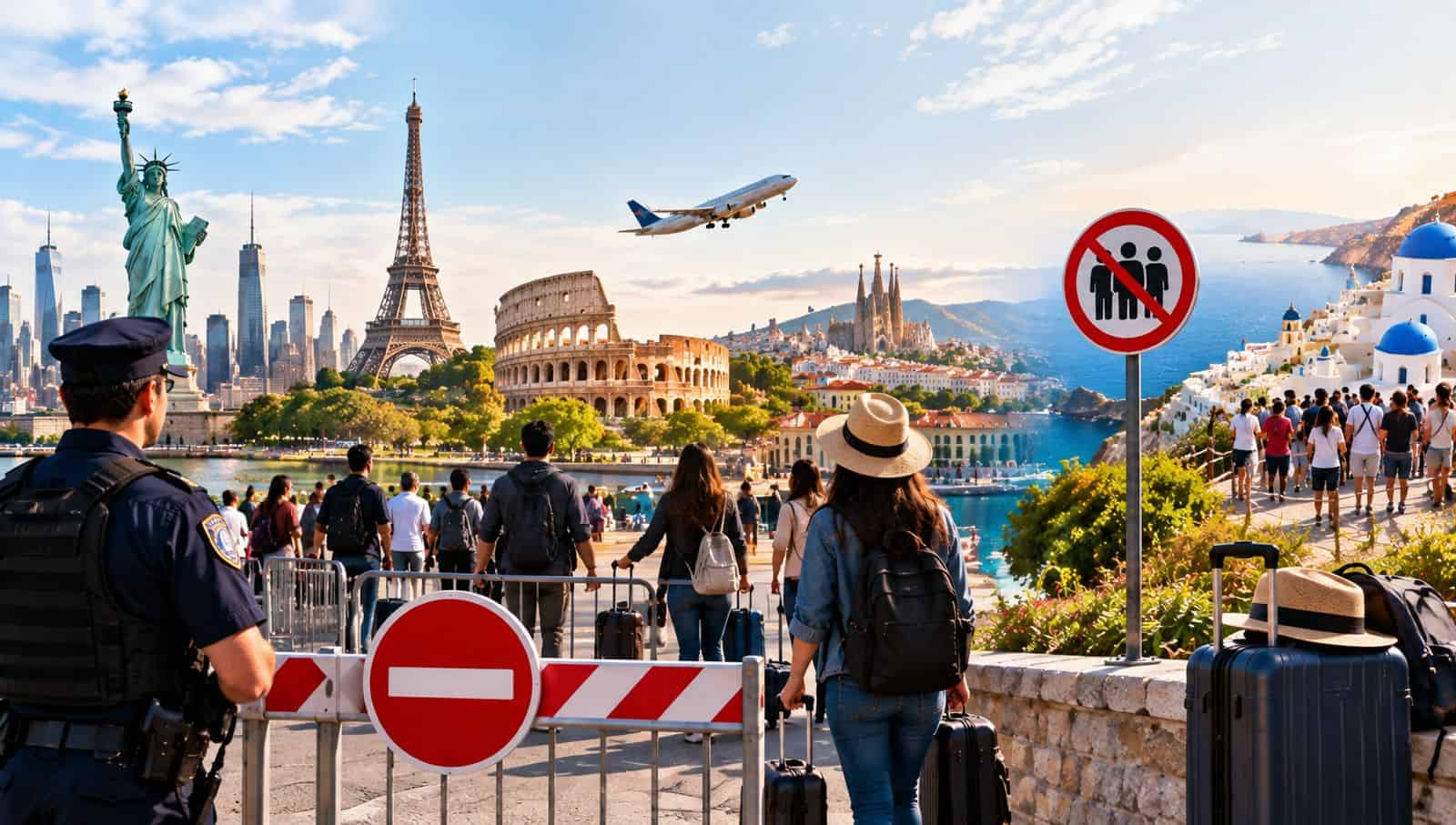
As the global tourism industry undergoes a massive structural transformation, US cities find themselves at the nexus of international destinations confronting industry disruptions. As economic friction mounts, international inbound traffic dwindles in major North Americans hubs.
Europe and other areas are aggressively enforcing a global crackdown on overtourism via municipal levies or visitor caps. Hotspots find themselves in the balancing act of urban capacity limits and shifting overseas visitor flows.
As the global tourism industry undergoes a massive structural transformation, US cities find themselves at the nexus of international destinations confronting industry disruptions. As economic friction mounts, international inbound traffic dwindles in major North Americans hubs.
Europe and other areas are aggressively enforcing a global crackdown on overtourism via municipal levies or visitor caps. Hotspots find themselves in the balancing act of urban capacity limits and shifting overseas visitor flows.
Advertisement
Advertisement
For official inbound tourism statistics and federal policy data, consult the National Travel and Tourism Office (NTTO).
Why Are Major U.S. Cities Facing A Sharp Decline In International Inbound Travel?
While bustling metropolitan centres across the United States continue to absorb substantial daily foot traffic, macro-level industry data reveals a concerning slide in overseas visitors. According to recent figures from the U.S. Travel Association, inbound international tourism faces continuous headwinds that threaten economic recovery across hospitality sectors. Traditional feeder markets, including substantial percentage drops from Western European nations and Canada, have pulled back significantly due to persistent economic pressures. This unexpected divergence proves that local crowding does not equate to healthy international market growth for American urban destinations.
Advertisement
Advertisement
The broader macroeconomic environment has made long-haul travel to North America considerably less attractive for the average middle-class consumer abroad. Consequently, tourism boards are scrambling to re-evaluate marketing strategies to entice overseas wanderers back to iconic American cityscapes.
“The current landscape of global travel is experiencing an unprecedented structural transformation. As international borders fluctuate and economic pressures mount, iconic destinations face severe sustainability challenges. Municipal leaders worldwide are implementing strict regulatory frameworks, balancing economic revenue with community preservation. From stringent rental caps in European capitals to shifting visitor demographics across North American urban centers, the hospitality sector must adapt. Travelers can ultimately expect a transformed journey ahead, where ecological protection and long-term infrastructure stability take absolute precedence over sheer visitor volume.”
Advertisement
Advertisement
— Anup Kumar Keshan, Founder and Editor-in-Chief, Travel And Tour World
How Is Europe Combating Overtourism Through Punitive Taxes And Strict Bans?
European cultural capitals have reached a historic breaking point with mass visitor volumes, forcing municipal governments to transition from passive management to active deterrence. Cities like Amsterdam and Barcelona have rolled out aggressive financial levies, with Dutch accommodation taxes soaring alongside newly doubled municipal surcharges in Catalonia. Furthermore, structural bans are dismantling the traditional short-term holiday rental market to rescue residential housing availability for local citizens. These aggressive policy transformations signal the end of cheap, unregulated city breaks across the continent.
Travelers must now heavily factor these soaring ancillary costs and administrative access restrictions into their holiday planning budgets. Ultimately, this regulatory pivot aims to shift the tourism paradigm toward sustainable models that protect heritage infrastructure over sheer visitor volume.
| Destination / Region | Primary Trend | Key Statistics & Data Indicators | Major Policy or Market Driver |
| United States Cities | Inbound International Decline vs. Domestic Crowding | Projected deficit of millions of overseas visitors; significant drops from key feeders like Canada (down over 20%), Germany (down 16%), and France (down 15%). | Strong dollar, macroeconomic pressures, and shifting trade/travel policies. |
| Barcelona, Spain | Aggressive Overtourism Containment | Managing nearly 30 million annual visitors against a local population of 1.7 million. | Complete phase-out of all short-term tourist apartment licenses legislated for late 2028. |
| Venice, Italy | Active Deterrence & Visitor Caps | Over 30 million annual visitors straining fragile lagoon ecosystems and residential zones. | Implementation of a daily entry fee system for peak traffic windows and tour group size limits. |
| Amsterdam, Netherlands | Sustainable Restructuring | Limiting mass rowdy tourism in the historic core and curbing inner-city congestion. | Severe reduction of short-term rental operational nights to 15 days a year and new hotel construction bans. |
The main reason for this worldwide trend is the overloading of local infrastructure, a deterioration in the state of housing, and more stringent immigration measures. The direct reason is the policy of limiting the flow of tourists through tightening fiscal policy, banning private hospitality, and restricting access to countries. The deeper reason is to preserve the integrity of the local ecosystem, maintain property in good condition, and change the very nature of tourism as a sustainable source of income rather than a short-lived boom.
In effect, the tourism industry is returning to a sustainable system because an unregulated flow of visitors cannot be infinite. Both American suburbs and European capitals must understand that they must adapt their economies to meet macroeconomic challenges and respond to shifting visitor behavior trends. The future of the world’s hotel business depends on striking the right balance between maintaining good earning capacity and caring for the local environment.
Advertisement
