
United States Premium Cruise Market Moves Beyond Mass-Port Tourism as Oceania Connects Miami with Basseterre, Philipsburg, Willemstad and Fort-de-France on Boutique Caribbean Voyages, but a Late-2026 Booking Exception Means the Adults-Only Experience May Not Be Entirely Child-Free

Updated
Published
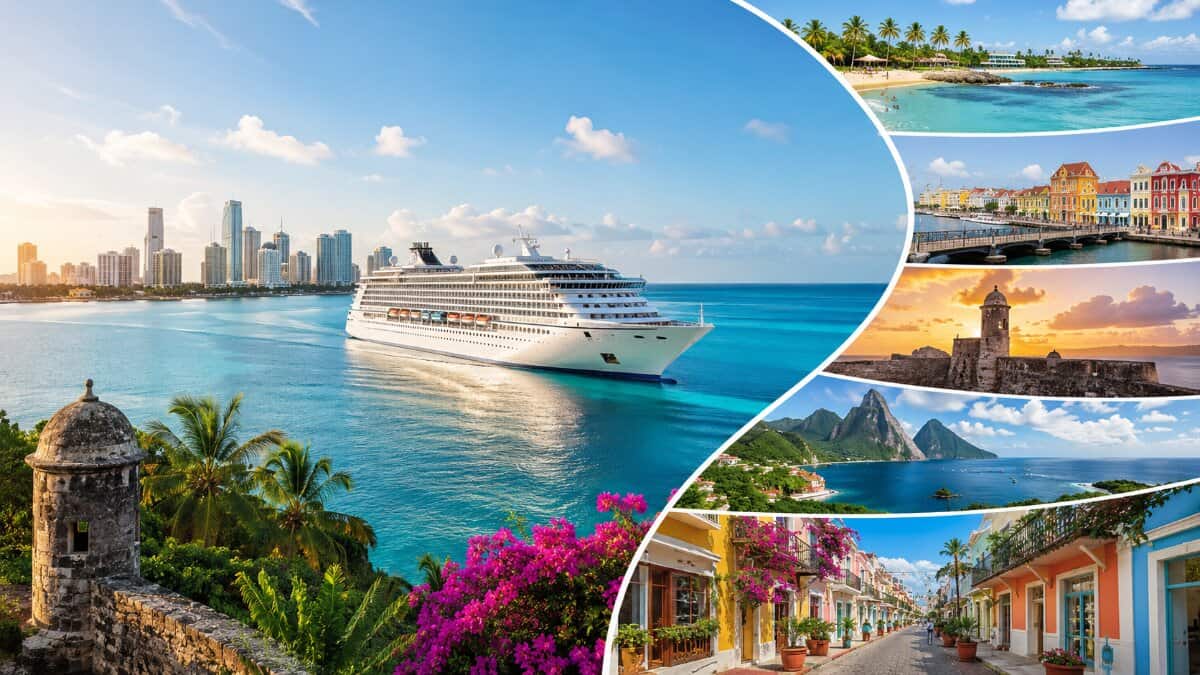
Image generated with Ai
Oceania Cruises is concentrating five late-2026 Caribbean voyages around Miami, smaller ships, destination-rich routes and limited-group cultural experiences. However, an important booking-policy exception means these sailings cannot be described as guaranteed child-free departures. Reservations containing travellers under 18 that were confirmed before 7 January 2026 remain valid for departures through the end of 2026, even though all new reservations now require guests to be at least 18 at embarkation.
Oceania Caribbean Voyages Carry an Overlooked Adults-Only Exception
The most important new development for travellers and travel sellers is not simply the deployment of Marina, Vista and Allura. It is the gap between the adults-only brand position and the transitional reality aboard some 2026 departures.
Advertisement
Advertisement
Oceania began accepting only guests aged 18 and above for new reservations from 7 January 2026. However, the company’s official terms preserve existing bookings involving younger travellers when those reservations were made before the policy took effect. Those bookings are being honoured throughout the 2026 departure year.
Consequently, the Miami Caribbean departures scheduled for November and December 2026 could include a small number of guests under 18. No official source identifies how many qualifying reservations exist or whether any are attached to the five highlighted voyages.
Advertisement
Advertisement
This distinction matters for honeymooners, adult groups, premium leisure travellers and clients specifically purchasing a calm, child-free environment. Agents should position the programme as operating under Oceania’s adults-only policy while disclosing that previously confirmed family bookings may still be present during the transition year.
From the 2027 departure year onward, the published exception covering pre-policy bookings no longer applies. The late-2026 Caribbean season therefore represents the final transitional period rather than the fully settled version of Oceania’s adults-only model.
Advertisement
Advertisement
Miami Becomes the Distribution Hub for Five Port-Rich Voyages
Oceania’s official Caribbean programme highlights five round-trip Miami voyages between 11 November and 22 December 2026. They range from seven to 14 days and use Vista, Allura and the refurbished Marina.
The ships serve established cruise cities alongside smaller ports and locally focused experiences. Oceania specifically associates the programme with culinary tours, farms, markets, wildlife, heritage sites and community enterprises rather than relying exclusively on conventional sightseeing circuits.
| Departure | Ship | Duration | Principal destinations | Strategic travel appeal |
|---|---|---|---|---|
| 11 November 2026 | Vista | 14 days | George Town, Falmouth, Oranjestad, Willemstad, St George’s, Bridgetown, Basseterre and Castries | Links Western, Southern and Eastern Caribbean markets in one itinerary |
| 2 December 2026 | Allura | 10 days | Charlotte Amalie, Gustavia, Philipsburg, Frederiksted and Tortola | Premium Eastern Caribbean route with several smaller island ports |
| 10 December 2026 | Marina | 12 days | Charlotte Amalie, Gustavia, St John’s, Fort-de-France, Basseterre, Philipsburg and Tortola | French-Caribbean, culinary and heritage emphasis |
| 21 December 2026 | Allura | Seven days | Costa Maya, Roatán, Harvest Caye and Cozumel | Short festive itinerary combining Mexico, Honduras and Belize |
| 22 December 2026 | Marina | 14 days | George Town, Montego Bay, Oranjestad, Willemstad, Kralendijk, Fort-de-France, Basseterre and Philipsburg | Extended festive sailing covering the Western and Southern Caribbean |
The five itineraries account for 57 voyage nights, 32 destination calls and 21 distinct destinations. These figures have been calculated from Oceania’s official route descriptions and exclude Miami embarkation and disembarkation movements.
Three Small Ships Create More Than Six Thousand Premium Berth Opportunities
Vista and Allura each accommodate approximately 1,200 guests at double occupancy, while Marina carries 1,250. The five highlighted departures therefore represent a theoretical maximum of approximately 6,100 double-occupancy passenger places if every voyage sails full.
That calculation comprises 1,200 places on Vista, 2,400 across Allura’s two departures and 2,500 across Marina’s two departures. It measures potential capacity, not confirmed bookings or actual passenger volumes.
| Ship | Highlighted departures | Official guest capacity | Maximum berth opportunities across listed voyages |
| Vista | One | Approximately 1,200 | Approximately 1,200 |
| Allura | Two | 1,200 | Approximately 2,400 |
| Marina | Two | 1,250 | Approximately 2,500 |
| Total | Five | — | Approximately 6,100 |
This controlled scale is central to the itinerary design. Smaller passenger volumes can be divided among specialist shore products without requiring every destination to absorb several thousand visitors from one vessel simultaneously.
Advertisement
Advertisement
It also creates a commercial constraint. Beekeeping visits, farm tours, culinary workshops and artisan-market experiences cannot necessarily accept every passenger. The ship may have sufficient berths, but the most distinctive onshore products can have significantly lower operational capacity.
Early excursion reservation is therefore likely to be more important than on conventional beach-transfer itineraries.
Basseterre and Philipsburg Emerge as Repeat Boutique-Port Anchors
Basseterre and Philipsburg appear on three of the five highlighted voyages, making them the most frequently repeated cities in the schedule. Willemstad, Fort-de-France, George Town, Oranjestad, Charlotte Amalie, Gustavia and Tortola each feature twice.
| City or port | Calls across the five highlighted voyages | Role within the programme |
| Basseterre | Three | Repeat Eastern Caribbean anchor and boutique-port component |
| Philipsburg | Three | Repeat cultural, culinary and shopping destination |
| Willemstad | Two | Dutch-Caribbean heritage and gastronomy |
| Fort-de-France | Two | French-Caribbean culture, food and historic interpretation |
| Oranjestad | Two | Southern Caribbean leisure and cultural stop |
| George Town | Two | Western Caribbean gateway |
| Charlotte Amalie | Two | Eastern Caribbean access point |
| Gustavia | Two | Smaller premium island port |
| Tortola | Two | Farm, food and coastal excursion market |
Pointe-à-Pitre also appears prominently in Oceania’s destination narrative as a boutique port associated with an artisanal village experience. However, it is not listed within the five detailed sample itineraries in the 15 July announcement. It should therefore be treated as part of the wider 2026 Caribbean portfolio rather than automatically added to every published route summary.
That distinction is important for accurate travel publishing. The campaign promotes more than 20 destinations, while the five fully described voyages provide the clearest operational schedule.
The New Strategy Is Economic Dispersal, Not Simply More Cruise Calls
The commercial significance lies in where passenger expenditure may travel after guests leave the ship.
Advertisement
Advertisement
Oceania’s promoted activities include a beekeeping collective in Saint Lucia, an artisanal village in Guadeloupe, an organic farm in Tortola, culinary experiences in Curaçao and Martinique, and local food activities in Antigua and Cozumel.
These products potentially distribute visitor spending across farmers, cooks, guides, market traders, transport providers and small cultural enterprises. That is structurally different from a port call dominated by a large coach transfer, private beach enclosure or high-volume retail district.
Actual local expenditure has not been published. It would therefore be inaccurate to assign a monetary impact to Oceania’s programme. The stronger evidence-based conclusion is that the excursion design creates more points at which local operators can participate in the cruise visitor economy.
The trade opportunity extends beyond cruise fares. Agencies can build pre-cruise Miami accommodation, airport transfers, restaurant bookings, travel insurance and post-cruise stays around every departure because all five voyages begin and end in Miami.
Record PortMiami Traffic Strengthens the United States Gateway
PortMiami handled a record 8,564,225 cruise passengers in fiscal year 2025, up from 8,233,056 in the preceding year. This represented annual growth of 4.02 per cent. The port contributes approximately US$61 billion to the economy and supports more than 340,000 jobs in Florida, according to Miami-Dade County.
| Official market indicator | Latest reported performance | Relevance to Oceania’s programme |
| PortMiami cruise passengers | 8,564,225 in FY2025 | Provides a large and established embarkation market |
| PortMiami annual passenger growth | 4.02 per cent | Shows continuing demand at the homeport |
| Caribbean cruise visits | Approximately 35.5 million in 2025 | Confirms regional cruise demand has moved beyond recovery |
| Caribbean cruise growth | 5.2 per cent in 2025 | Supports additional premium and specialist capacity |
| Growth over 2019 | 16.7 per cent | Indicates cruise volumes exceed pre-pandemic levels |
| Caribbean stay-over arrivals | Approximately 35 million in 2025 | Creates opportunities for pre-cruise and post-cruise combinations |
| United States stay-over source market | Approximately 17 million visitors | Demonstrates the importance of US demand to Caribbean tourism |
The Caribbean Tourism Organization recorded approximately 35.5 million cruise visits in 2025, an increase of 5.2 per cent and 16.7 per cent above 2019. The region also received around 35 million international stay-over arrivals, up 2.5 per cent, while the United States remained its largest source market with approximately 17 million visitors.
Advertisement
Advertisement
Oceania’s programme therefore enters a growing cruise market. Its differentiation comes from passenger profile, smaller vessels, longer itineraries and excursion depth rather than simple volume expansion.
Port Infrastructure Supports Premium Small-Ship Operations
PortMiami operates a dedicated boutique facility, Cruise Terminal J, designed for smaller vessels and luxury cruise operations. The port also offers shore-power capability at five berths, although ship compatibility and berth assignment determine whether an individual vessel can connect.
Shore power enables compatible ships to switch off their engines while berthed and can reduce related emissions by up to 98 per cent. PortMiami can connect three vessels simultaneously.
The port’s scale creates advantages but also operational pressure. Record passenger volumes increase demand for airport transfers, hotel rooms, terminal transport and baggage handling during busy sailing periods.
Travel agents should avoid scheduling tight same-day flight connections where possible, particularly for international passengers. A pre-cruise hotel night can reduce exposure to flight disruption, missed embarkation and baggage delays.
November Sailing Retains Weather-Rerouting Exposure
Vista’s 11 November departure begins before the official Atlantic hurricane season ends on 30 November. NOAA defines the Atlantic season as running from 1 June through 30 November and notes that tropical activity can occasionally occur outside those dates.
Advertisement
Advertisement
The December voyages sit outside the official season, but weather, sea conditions, port congestion and operational restrictions can still produce itinerary alterations.
Boutique-port itineraries can be especially sensitive to changes because a substituted port may not offer an equivalent small-group excursion. Insurance policies should be checked for missed-port provisions, itinerary changes, medical disruption and additional accommodation rather than assuming that a changed call automatically produces compensation.
Critical Operational Takeaways for Agents and Tour Operators
- Qualify the adults-only claim: Explain that new bookings require guests to be at least 18, but qualifying reservations involving younger passengers made before 7 January 2026 remain valid for 2026 departures.
- Do not guarantee a completely child-free ship: Oceania has not published the number or distribution of grandfathered family reservations.
- Reserve specialist excursions early: Farms, culinary workshops, community enterprises and small-group tours may have materially lower capacity than the ships.
- Separate confirmed ports from promotional examples: Pointe-à-Pitre features in the wider campaign but not in the five fully detailed sample itineraries.
- Build Miami buffer time: A pre-cruise stay protects clients against aviation disruption and creates additional hotel, transfer and destination revenue.
- Recommend passport books: US authorities advise cruise passengers to carry passport books because air repatriation following illness, injury or disruption cannot be completed using a passport card.
- Check every destination requirement: Closed-loop cruise rules for re-entering the United States do not remove the need to review the entry rules of individual Caribbean jurisdictions.
- Protect November bookings against weather disruption: Vista’s departure overlaps the final weeks of the official Atlantic hurricane season.
- Avoid unsupported economic claims: The programme can widen local participation, but no verified expenditure or community-income forecast has been released.
Outlook for Caribbean Premium Cruise Growth
Oceania’s late-2026 deployment points towards a broader segmentation of Caribbean cruising. High passenger numbers will continue to support large ships and major terminals, but premium travellers increasingly require product differentiation through culinary access, cultural interpretation, smaller groups and less standardised port experiences.
Miami remains the indispensable gateway. Yet the commercial value of the programme will be determined by what happens in Basseterre, Philipsburg, Willemstad, Fort-de-France, Tortola and the other destinations after passengers disembark.
The long-term opportunity is not merely to move more people through Caribbean ports. It is to connect controlled passenger volumes with enterprises that can retain more visitor expenditure locally.
For 2026, however, the industry must describe the product accurately. These voyages operate under Oceania’s adults-only policy, but the transition exception means some late-2026 departures may not be entirely free of under-18 guests. That operational detail is likely to matter more to the intended premium customer than the adults-only label alone.
Advertisement
Advertisement
FAQs
1. Which Oceania Cruises ships will operate the late-2026 Caribbean voyages?
Oceania Cruises will deploy Marina, Vista and Allura on the highlighted Caribbean programme. The ships will operate round-trip voyages from Miami and visit a combination of major cruise destinations, smaller island ports and culturally focused Caribbean cities.
2. Are Oceania Cruises Caribbean voyages completely adults-only?
New Oceania Cruises reservations require every passenger to be at least 18 years old at embarkation. However, bookings containing guests under 18 that were confirmed before 7 January 2026 remain valid for departures during 2026. Agents should therefore avoid guaranteeing a completely child-free environment on every late-2026 sailing.
3. How long are the featured Caribbean itineraries?
The five highlighted voyages range from seven to 14 days. They include shorter Western Caribbean sailings and longer itineraries covering the Eastern and Southern Caribbean, allowing travellers to visit several island destinations during one journey.
4. Which city is the homeport for these Oceania Cruises voyages?
Miami is the embarkation and disembarkation city for the five featured cruises. Its international airport network, large hotel inventory, cruise infrastructure and established tourism economy make it a major gateway for Caribbean voyages.
5. Which Caribbean cities appear most frequently in the programme?
Basseterre in Saint Kitts and Nevis and Philipsburg in Sint Maarten appear on three of the five highlighted voyages. Willemstad, Fort-de-France, Oranjestad, George Town, Charlotte Amalie and Gustavia also feature across multiple itineraries.
6. What makes these cruises different from conventional mass-market Caribbean sailings?
The programme combines smaller ships, longer itineraries and destination-focused shore experiences. Oceania highlights culinary tours, farms, artisan enterprises, cultural sites, local markets and limited-group activities rather than relying only on high-volume beach transfers or standard port excursions.
Advertisement
Advertisement
7. How many passengers could travel on the five highlighted departures?
Based on the ships’ published double-occupancy capacities, the five voyages could provide approximately 6,100 passenger places if every departure sails full. This is a theoretical capacity estimate and does not represent confirmed bookings or final passenger totals.
8. Why should travellers book shore excursions early?
Many of the promoted experiences involve small farms, culinary workshops, cultural enterprises and locally operated tours with restricted capacity. These activities may sell out faster than conventional coach-based excursions, particularly on longer voyages with strong demand for specialist experiences.
9. Is weather disruption possible during the late-2026 Caribbean season?
Yes. Vista’s 11 November departure falls within the official Atlantic hurricane season, which ends on 30 November. December voyages operate outside the formal season, but strong winds, rough seas, port congestion and local operating restrictions can still cause itinerary changes or missed calls.
10. What should travel agents check before confirming an Oceania Caribbean booking?
Agents should verify the adults-only transition exception, passport validity, entry requirements for every destination, travel insurance coverage, flight schedules, Miami hotel arrangements and shore-excursion availability. They should also explain that ports and itineraries may change because of weather, safety or operational conditions.
Advertisement
