
Namibia Tightens Sossusvlei Tourism Focus as Desert Conservation Takes Centre Stage

Published
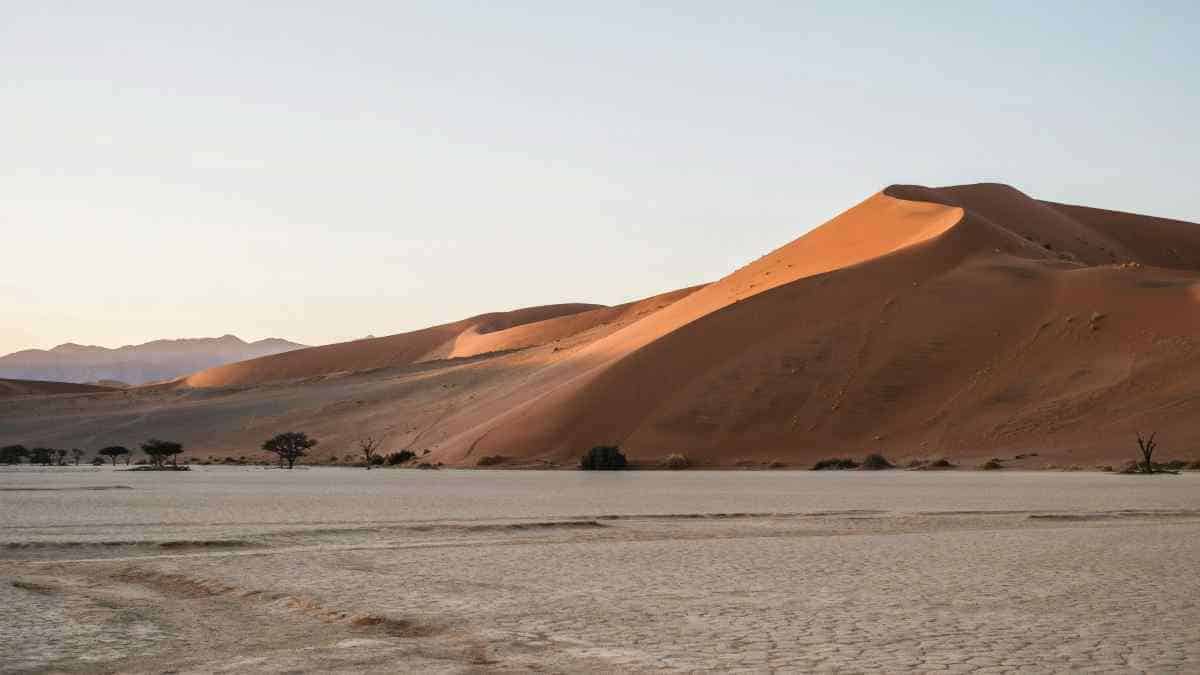
Image generated with Ai
Namibia’s amazing Sossusvlei and Dead Vlei areas continue to be among the most recognisable desert sites in southern Africa, but their fame is bringing about greater focus on how tourists and safari tour groups traverse one of the most delicate places on earth. As part of a September 29 briefing, there is a description of carrying capacity directives issued by Namibia’s Ministry of Environment, Forestry and Tourism that involve daily vehicle numbers for concessionaires, and a move towards electric safari vehicles in order to gain access in the early morning hours. Although vehicle quotas and the use of electric vehicles were not independently verified in the latest official information available, current tourism and conservation information from Namibia indicates that controlled access and protected routes have been a concern for years in the Namib-Naukluft area.
Sossusvlei Remains Namibia’s Desert Showpiece
Advertisement
Advertisement
Sossusvlei sits within the Namib-Naukluft National Park, a vast protected landscape defined by towering dunes, gravel plains, salt and clay pans and extremely desert conditions.
The attraction is particularly famous for the contrast between the pale clay floor of Sossusvlei, orange-red dunes and the dark, skeletal camelthorn trees of nearby Dead Vlei.
Advertisement
Advertisement
Visitors generally enter the park through Sesriem, where access to the dune area is controlled. The final approach to Sossusvlei requires a transfer over sand, making the management of vehicles and visitor movement an important part of protecting the landscape.
The desert may appear empty, but it supports highly specialised life adapted to extreme heat, limited rainfall and shifting sand.
Advertisement
Advertisement
Dead Vlei Shows Why Access Matters
Dead Vlei is one of the most photographed locations in Namibia. Its ancient camelthorn trees, believed to have died centuries ago after the nearby river changed course, create an unusually dramatic landscape.
The attraction’s visual appeal has also made it vulnerable to concentrated visitor activity. Foot traffic around the clay pan, dunes and surrounding areas can disturb surfaces that recover extremely slowly.
That is why designated routes and visitor guidance matter in desert environments. Damage that appears minor to a traveller can remain visible for years because natural regeneration is exceptionally slow.
The exact September directive concerning daily vehicle limits could not be verified, but the principle of limiting pressure around highly concentrated attractions is consistent with the conservation requirements of the area.
Sesriem Is the Gateway to a Sensitive Landscape
Advertisement
Advertisement
Sesriem serves as the main gateway for visitors entering the Sossusvlei area and is also a key accommodation and logistics base.
Many travellers arrive before sunrise to reach the dunes during the cooler hours of the day. Early access is part of the attraction because the changing light produces dramatic shadows across the landscape.
This creates a management challenge. Large numbers of vehicles arriving within a narrow window can increase congestion precisely when visitors are trying to experience the desert in relative solitude.
Any future shift towards lower-emission or quieter transport could therefore have implications beyond carbon reduction. It could also change the soundscape and the overall character of the visitor experience.
Solitaire and Maltahöhe Connect the Wider Route
Solitaire has become a familiar stop for travellers crossing the central Namibian desert, particularly those travelling between Windhoek, Sossusvlei and the Atlantic coast.
Advertisement
Advertisement
Maltahöhe, further south, provides another connection to the wider tourism geography around the Namib and southern Namibia.
These communities matter because sustainable tourism is not only about protecting the headline attraction. Accommodation, fuel, food, guiding, transport and local services along the route all form part of the tourism economy.
Spreading visitor spending across these places can make the wider region less dependent on a single attraction while encouraging longer stays.
Swakopmund Extends the Desert Journey
Swakopmund provides another major gateway into Namibia’s desert tourism economy, although it sits hundreds of kilometres from Sossusvlei.
The coastal town is closely associated with adventure tourism, including desert excursions, sandboarding, quad biking and trips into the surrounding Namib landscape.
Advertisement
Advertisement
Its position also allows travellers to combine the desert dunes with Namibia’s Atlantic coast. A longer itinerary can therefore connect Swakopmund with Sossusvlei, creating a broader desert journey rather than a single-point excursion.
For tourism planners, this wider circuit can help distribute visitor activity and economic benefits.
Electric Safari Vehicles Could Change the Experience
The reported requirement for silent-running electric safari tenders has not been independently confirmed. Namibia’s wider tourism sector is nevertheless increasingly exposed to the global push for lower-impact travel.
Electric vehicles could eventually reduce local exhaust emissions and engine noise around sensitive landscapes. In a desert environment, quieter mobility could also offer visitors a more immersive experience.
However, electric safari transport presents practical challenges. Charging infrastructure, extreme temperatures, long distances and limited grid connections can complicate deployment in remote conservation areas.
Advertisement
Advertisement
That means any transition would require careful planning rather than simply replacing conventional vehicles overnight.
Namibia’s Desert Tourism Is Built Around Conservation
This is how Namibia’s Namib-Naukluft landscape illustrates the importance of Namibia’s tourism model’s focus on conservation. Namibia’s wilderness tourism relies on the preservation of the very landscapes people spend thousands of miles reaching in order to see. The exact September 29 guidelines provided by the briefing have yet to be confirmed, specifically regarding daily quotas and electric tender use. However, the general conservation logic is obvious: fragile desert tourist destinations require restricted access, appropriate behaviour of tourists and corresponding infrastructure. For the tourists visiting Namibia’s Sossusvlei and Dead Vlei areas, the future will probably mean less cars, restricted mobility and the need to pay special attention to the desert environment where these unique dunes are located.
Advertisement
