
Singapore and Malaysia Face Fresh Aviation Disruption as Singapore Airlines’ Boeing 737 MAX 8 Suffers Double Tyre Burst at Kuala Lumpur International Airport, Triggering Hours-Long Runway Closure and Travel Delays—Here’s What to Know

Published
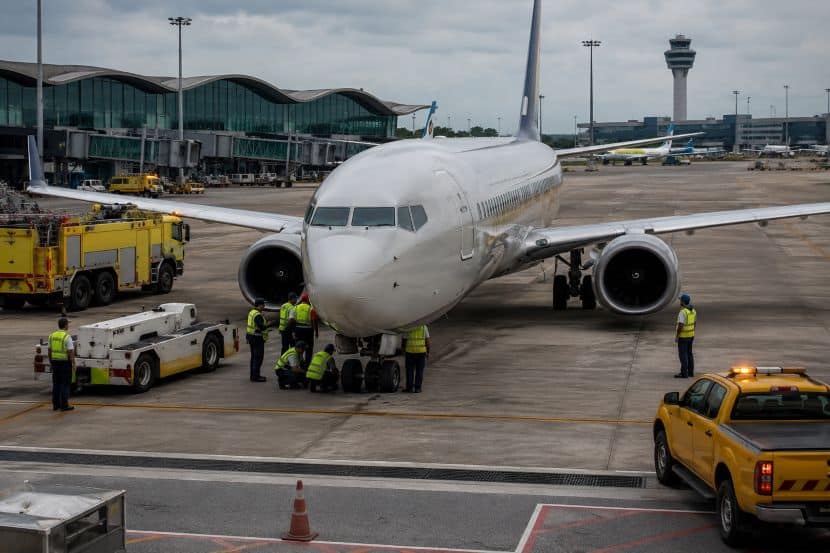
Image generated with Ai
A routine regional journey between Singapore Changi Airport and Kuala Lumpur International Airport (KUL) turned into a significant operational challenge for one of Southeast Asia’s busiest aviation corridors after a Singapore Airlines Boeing 737 MAX 8 suffered a tyre failure during landing in Malaysia. Although the aircraft landed safely and no injuries were reported, the incident forced airport authorities to close a runway for approximately six hours, creating knock-on delays across the airport network and affecting travellers moving through one of Asia’s most important aviation gateways.
The aircraft, operating as flight SQ114 from Singapore to Kuala Lumpur, remained stranded on the runway after multiple tyres reportedly burst during touchdown. Consequently, airport engineers and recovery teams were required to conduct a complex removal operation before the runway could safely reopen. While the event did not escalate into a safety emergency, it highlighted how even a relatively contained technical occurrence can disrupt airport capacity, airline schedules and passenger connections. For travel professionals, airlines and airport operators, the incident serves as another reminder of the delicate balance required to maintain smooth operations across high-frequency international routes linking Singapore and Malaysia, two countries that collectively handle tens of millions of air passengers annually.
Flight Incident Overview: What Happened at Kuala Lumpur International Airport?
The affected aircraft was a Boeing 737 MAX 8 operating a scheduled Singapore Airlines regional service. Following touchdown at Kuala Lumpur International Airport, a tyre failure rendered the aircraft unable to vacate the runway independently.
As a result, Runway 14R/32L was temporarily closed while technical teams assessed the aircraft, replaced damaged components and coordinated the recovery process. Airport personnel subsequently inspected the runway surface for debris before normal operations resumed.
Advertisement
Advertisement
Key Incident Details
| Category | Information |
|---|---|
| Airline | Singapore Airlines |
| Flight Number | SQ114 |
| Route | Singapore (SIN) – Kuala Lumpur (KUL) |
| Aircraft Type | Boeing 737 MAX 8 |
| Incident | Multiple tyre failure upon landing |
| Injuries Reported | None |
| Runway Affected | Runway 14R/32L |
| Estimated Closure Duration | Approximately 6 hours |
| Operational Impact | Flight delays and air traffic adjustments |
The safe outcome reflected modern aviation design standards, where aircraft are engineered to remain controllable even when tyre-related failures occur during landing operations.
Advertisement
Advertisement
Why a Single Runway Closure Can Disrupt an Entire Travel Hub
For travellers, a runway closure may appear to be a localised issue. However, in the aviation industry, runway availability directly influences airport capacity, departure sequencing and arrival management.
Kuala Lumpur International Airport is among Southeast Asia’s busiest aviation hubs, serving both long-haul and regional traffic. According to airport and industry data, KUL handles tens of millions of passengers annually and functions as a major connecting gateway linking Asia, the Middle East, Europe and Oceania.
When one runway becomes unavailable, airports often experience:
Advertisement
Advertisement
| Operational Challenge | Impact on Travellers |
|---|---|
| Reduced runway capacity | Delayed departures and arrivals |
| Aircraft holding patterns | Longer flight times |
| Increased taxi congestion | Extended ground delays |
| Connection disruptions | Missed onward flights |
| Airline scheduling pressure | Aircraft rotation delays |
Even though other runways remained operational, air traffic controllers had to carefully manage movements to prevent further congestion.
Understanding Aircraft Tyre Failures and Why They Occur
While tyre failures often attract public attention, aviation experts note that such events are relatively uncommon considering the enormous number of commercial landings conducted globally each day.
Advertisement
Advertisement
Aircraft tyres endure extraordinary stress during operations. A commercial jet can touch down at speeds exceeding 240 km/h while carrying substantial weight loads.
Several factors may contribute to tyre failures:
| Potential Cause | Explanation |
|---|---|
| Wear and tear | Tyres have finite operational cycles |
| Foreign object debris | Sharp objects on runways can damage tyres |
| Excessive heat | High temperatures can affect tyre integrity |
| Hard landings | Increased stress during touchdown |
| Manufacturing defects | Rare but possible component issues |
| Maintenance-related factors | Inspection or replacement timing |
Importantly, modern airliners are designed with multiple-wheel landing gear assemblies that allow pilots to maintain control even if one or more tyres fail.
The Boeing 737 MAX 8 and Its Expanding Role in Regional Travel
The aircraft involved was a Boeing 737 MAX 8, one of the most widely used next-generation narrow-body aircraft operating today.
The type has become particularly important across Asia because it offers airlines improved fuel efficiency and lower operating costs compared with earlier-generation aircraft.
Advertisement
Advertisement
Boeing 737 MAX 8 Snapshot
| Specification | Details |
|---|---|
| Aircraft Family | Boeing 737 MAX |
| Typical Seating Capacity | 162–210 passengers |
| Range | Up to approximately 6,570 km |
| Primary Use | Short and medium-haul routes |
| Key Advantage | Improved fuel efficiency |
| Common Operators in Asia | Singapore Airlines, Lion Air Group, Akasa Air, Flydubai and others |
Since returning to service following its worldwide grounding several years ago, the aircraft type has operated millions of passenger journeys globally under enhanced regulatory oversight.
Why This Matters for Southeast Asian Tourism and Business Travel
The Singapore–Kuala Lumpur air corridor ranks among the busiest international routes in the world.
The route serves not only leisure travellers but also business executives, conference attendees, government delegations and transit passengers connecting to long-haul services.
Singapore–Kuala Lumpur Travel Significance
| Travel Metric | Importance |
|---|---|
| Tourism Traffic | Strong two-way visitor flows |
| Business Travel | Major corporate and financial links |
| Transit Connectivity | Access to global long-haul networks |
| Airline Competition | Multiple daily services |
| Economic Importance | Supports regional commerce and trade |
Consequently, any operational disruption on this route can have wider implications across airline networks and passenger itineraries.
Travel agents and corporate travel managers closely monitor such incidents because disruptions often ripple through connecting schedules throughout the region.
Advertisement
Advertisement
What Travellers Should Learn From the Incident
Although the event ended safely, it offers practical lessons for travellers navigating major international hubs.
Passengers travelling through busy airports such as Kuala Lumpur, Singapore, Bangkok or Jakarta should consider allowing additional connection time during peak travel periods. Furthermore, mobile airline applications and airport notification systems remain valuable tools for receiving real-time updates when unexpected operational events occur.
Travel insurance policies covering missed connections and delays may also prove beneficial for passengers travelling on complex multi-segment itineraries.
Importantly, the swift recovery effort demonstrated the aviation industry’s layered safety systems. From aircraft engineering and airport emergency procedures to runway inspections and airline response teams, multiple safeguards worked together to minimise risk and restore operations.
Beyond The Runway: What Aviation Investigators Will Examine Next
The Singapore Airlines 737 MAX 8 tyre failure is expected to undergo routine technical review to determine the precise cause of the incident. Investigators typically analyze aircraft maintenance records, tyre condition history, operational data and runway environments to identify contributing factors.
Advertisement
Advertisement
Such investigations rarely indicate broader systemic concerns. Instead, they frequently generate valuable operational insights that help airlines, airports and manufacturers improve maintenance practices and reduce the likelihood of similar occurrences in the future.
For the travel industry, the event serves as a reminder that while modern aviation remains one of the safest forms of transport, even minor technical issues can briefly disrupt major international gateways. Nevertheless, the safe landing, absence of injuries and rapid restoration of airport operations underscore the resilience of the systems that underpin global air travel and keep millions of passengers moving between Singapore, Malaysia and destinations worldwide every year.
Advertisement
