

Ghana’s December Tourism Push Puts Longer Stays and Local Spending in Focus

Published
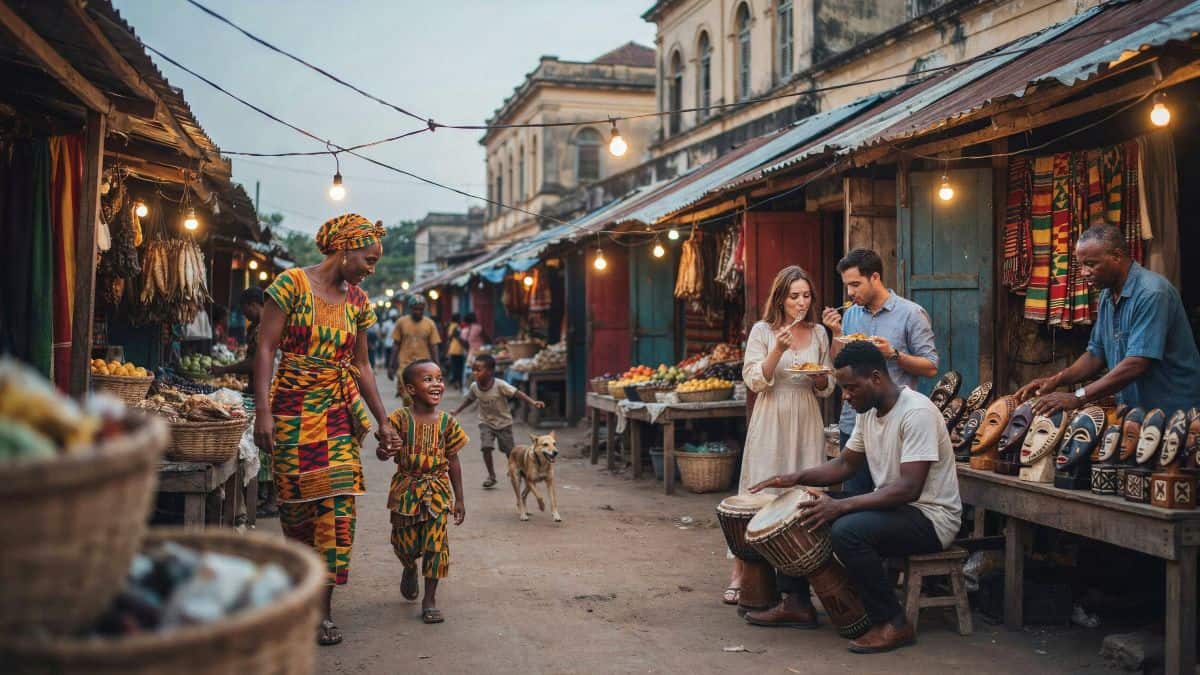
Ghana gears up for its tourism festival season with a larger overnight tourism target. Ghana is planning an all-Ghana December event from 1 December 2026 to 3 January 2027. It would be a blend of culture, creativity, entertainment and heritage for tourists and the people of Ghana. But the acid test would come once the festivities commence. Would there be hotel bookings, prolonged stays and visiting of other locations than the urban centers? Recent numbers regarding hospitality would help in providing useful pointers to what has happened in the past and where there are shortcomings. Hence, this report would look at how Ghana could translate festival interest into overnight stays.
Ghana’s December Programme Sets the Scene
Ghana plans to welcome visitors through its December in GH programme, which will run from 1 December 2026 to 3 January 2027. The calendar will bring together events linked to culture, creativity, entertainment and heritage. Organisers say the programme will showcase experiences across the country. That gives Ghana a strong starting point for a wider tourism story. The question is how these events may shape travel plans. Will people stay longer? Will they visit more than one place? And can communities outside the capital share in the extra spending? The answers will matter as the festive season approaches.
A National Calendar Could Spread Visitor Interest
A programme that features different parts of Ghana may encourage visitors to look beyond one city. That could create new reasons to travel between regions. Yet a list of events does not prove that visitors will make those journeys. Travellers also need clear transport links, suitable places to stay and enough time between activities. An event in a smaller town may attract attention, but guests may still return to a major city for the night. Ghana’s 2026 programme creates a chance to test whether event planning can guide people towards overnight stays across more destinations.
Ghana Has Room to Ask a Bigger Question
Ghana’s latest accommodation survey offers a useful starting point. It covered November 2024 to February 2025. Room use reached its highest point in December 2024, when about 2.42 million room nights were occupied. The national room occupancy rate stood at 46.6 per cent that month. The survey also found that available capacity exceeded occupied capacity in each month it measured. These figures do not show what will happen in December 2026. They do show why organisers and tourism businesses should ask how festive travel can make better use of existing rooms.
Advertisement
Advertisement
Empty Rooms Do Not Tell the Whole Story
A national occupancy figure can hide big local differences. Rooms may sit empty in one region while popular areas face strong demand. Some properties may cost too much for families, while others may lack the right transport links. Travellers may also prefer to stay with relatives or choose a home rental. So, the 46.6 per cent figure does not mean that every visitor will find a room nearby. It also cannot tell us whether accommodation is affordable. Ghana’s data are most useful when readers see them as a broad baseline, not a promise about conditions at each destination.
Events Must Encourage Overnight Visits
An event can attract people without adding nights to their trips. Local residents may attend and go home the same day. Tourists may already be in a city for another reason. Some guests may visit several events during one short stay. To understand the real travel effect, organisers need to ask where visitors live, where they sleep and how long they remain. They should also find out whether an event changed a person’s travel plan. These details help separate local attendance from tourism. They can show whether a festive programme brings new overnight guests or mainly gives existing visitors more things to do.
Advertisement
Advertisement
Visitors Staying with Family Still Spend
Paid hotel bookings matter, but they do not capture every overnight visitor. Many people stay with friends or relatives. These guests may still pay for taxis, meals, shopping and entry to attractions. They may also visit places beyond the home where they are staying. That spending can support local businesses even when no hotel records the night. Ghana’s festive story should therefore include family visits as well as commercial accommodation. Researchers should explain which types of stays their figures include. Without that detail, a report may miss some travellers or wrongly suggest that all overnight tourism appears in hotel data.
Durban Offers a Useful Seasonal Example
South Africa gives the article a completed festive-season example. The municipality of eThekwini, which includes Durban, reported about 1.2 million visitors during the 2025–26 festive period. It also reported that accommodation occupancy rose to 77 per cent, compared with 72 per cent in the previous comparison. These are city figures, not national totals. They do show how a local authority can report visitor numbers alongside accommodation use. The figures do not tell us how many visitors came because of one event, how many stayed with family or how much each group spent. Those questions need separate evidence.
Visitor Numbers and Room Nights Measure Different Things
A visitor count tells us how many people came. A room-night figure tells us how many rooms were used over time. One family can count as several visitors but use one room. One guest can stay for several nights and create several room nights. These measures answer different questions. They should not be placed side by side as if they mean the same thing. Durban’s reported visitor total and occupancy rate offer useful context, but they do not reveal the precise number of extra nights created by the festive programme. Good reporting should name each measure and explain its limits.
South Africa’s Latest Data Add Another Clue
Statistics South Africa’s July 2026 accommodation figures show the value of looking at several measures at once. Stay-unit nights sold rose by 7.4 per cent compared with July 2025. Accommodation income increased by 7 per cent. Average income for each stay-unit night sold slipped by 0.3 per cent. In simple terms, more nights were sold while the average income per night edged down. These figures cover the national accommodation industry and do not measure Christmas or festive events. Still, they show why tourism growth should not be described through revenue alone. The number of nights and average price also matter.
Mauritius Shows Why Length of Stay Matters
Mauritius offers a clear example of how travel choices can relate to different stay lengths. In 2025, visitors travelling without a package tour stayed an average of 13.4 nights. Package travellers stayed an average of eight nights. Visitors in non-hotel accommodation stayed an average of 17.8 nights, compared with eight nights for hotel guests. These figures come from a national survey for the full year. They do not describe festive travel alone, and they do not prove that one type of booking causes a longer stay. They do suggest that accommodation type and travel arrangements deserve attention in a story about overnight tourism.
A Longer Holiday Can Support More Destinations
A longer stay may give travellers time to visit several places. It may also give them more chances to eat at local restaurants, use transport services and join cultural activities. But length alone cannot show how much local businesses earn. A visitor may spend most of their budget at one hotel or on a pre-paid package. Another may arrange each part of the trip independently. Mauritius’s findings give writers a reason to ask how visitors plan their journeys and where they spend. They do not justify claiming that longer stays always benefit every community.
Advertisement
Advertisement
Visitor Markets Do Not Move in the Same Way
Mauritius recorded 668,471 tourist arrivals in the first half of 2026, a rise of 1.5 per cent from the same period in 2025. Arrivals from South Africa grew by 7.1 per cent. Arrivals from Germany rose by 13.4 per cent, while arrivals from the United Kingdom fell by 16 per cent. This mix shows that one national total can conceal different patterns among visitor markets. It does not prove that European travellers are replacing one destination with another. For the article, the useful point is that tourism planners need to understand who is travelling, not only how many people arrive.
Kenya Puts Domestic Tourism in Focus
Kenya’s 2026 Economic Survey reported 11.56 million occupied hotel bed nights in 2025, an increase of 12.6 per cent. Kenyan residents accounted for 45 per cent of those occupied nights. This makes domestic travel an important part of the country’s accommodation picture. It also offers a useful reminder for other destinations: local residents can contribute to tourism demand alongside international visitors. The annual figures do not isolate Christmas, school holidays or special events. A stronger festive-season analysis would look at when residents travel, which regions they choose and whether they book paid accommodation or stay with family.
Kenya’s Newer Report Needs Careful Reading
A Kenyan tourism ministry report issued in August 2026 contains conflicting figures for domestic bed nights. One section describes 5.7 million as an achieved result. A performance table instead lists about 5.1 million achieved against a 5.7 million target. Another part gives a figure of 5.14 million. These differences mean the numbers need clarification before publication. The issue does not erase the value of Kenya’s wider tourism data. It shows why writers should check tables against summaries and ask officials to explain mismatches. A small difference in wording can change whether a figure describes a goal or a result.
Morocco Shows Why Timing Needs Context
Morocco recorded rising tourism activity in the first part of 2026. By the end of May, international arrivals had grown by 7 per cent, travel receipts had increased by 21 per cent and overnight stays in classified accommodation had risen by 9 per cent. These figures point to growth across several measures, but they do not identify the reason for each visit. Morocco also hosted the Africa Cup of Nations from 21 December 2025 to 18 January 2026. The tournament overlapped with Christmas and New Year. Sports travel is therefore an important factor when examining demand during that period.
One Busy Season Can Have Many Causes
A rise in overnight stays does not prove that a Christmas event caused the increase. People may travel for family visits, school holidays, sports, weddings or business. New flights and more available rooms can also change the numbers. Morocco’s football tournament makes this especially clear. A visitor arriving during the holiday period may have come mainly to watch a match, enjoy a break or see relatives. Without asking travellers why they came, researchers cannot tell these groups apart. Event organisers should collect simple information about trip purpose and stay length so that later reports can give a more reliable picture.
Local Businesses Need a Place in the Story
Accommodation is only one part of the visitor economy. Travellers may buy food from local restaurants, use taxis, hire guides or shop at markets. Cultural events may also create work for performers and craftspeople. But these benefits need evidence. High attendance does not automatically show that nearby businesses earned more. A useful article can ask which businesses took part, what visitors bought and whether local residents found new work. It can also explore how events direct guests towards small businesses. These questions help readers see the difference between a busy programme and a tourism season that supports a wider group of people.
Advertisement
Advertisement
Travellers Need Clear Plans Between Events
The tourism impact also depends on the experience visitors face. Travellers need to know where events take place, how to reach them and where they can stay. A packed calendar may sound exciting, but unclear travel details can make a multi-stop trip difficult. Families may need lower-cost rooms and activities suitable for children. Visitors arriving from abroad may need practical information about transport and booking. These are questions for organisers and tourism authorities as they prepare the 2026 season. The research does not establish that every destination has solved these issues. It shows why useful visitor information should sit alongside event promotion.
Governments Can Measure More Than Attendance
A better festive tourism report should count the things that answer real questions. Authorities can record how many event visitors travelled from outside the area, how many stayed overnight and how many nights they booked. They can ask whether people visited other regions and what types of businesses received their spending. They should also track room availability and occupancy by area and accommodation type. These measures would help planners see where demand is rising and where rooms remain unused. They could also guide future event schedules. A simple, consistent survey would give organisers stronger evidence than a large attendance figure alone.
A Fair Comparison Needs the Same Measures
Countries cannot be compared fairly when each uses a different definition of visitor, stay or accommodation. One report may count international arrivals. Another may count bed nights, while a city report estimates visitors during a holiday period. Each figure can be useful, but only if its meaning stays clear. Writers should include the place, time period and type of measure whenever they report a number. They should also explain whether the figure covers hotels, guesthouses or other stays. That care helps readers understand what has changed. It prevents a local estimate from being presented as a national trend.
December 2026 Is Still Ahead
Ghana’s December programme is scheduled for December 2026 and early January 2027. Its final tourism impact cannot yet be measured. The same is true of the season’s future bookings and room use. The existing evidence provides a baseline and several useful comparisons. Ghana’s accommodation survey shows the level of room use in late 2024 and early 2025. South Africa and Mauritius provide newer industry and visitor data. Kenya and Morocco add important lessons about domestic demand and competing travel reasons. The next step is to gather fresh figures after the festive season and compare them with a clear, consistent baseline.
Africa’s Festive Tourism Story Is About the Nights
It remains to be seen whether events in Africa the capacity will have to encourage tourists to stay for longer periods of time. In December, Ghana offers an interesting opportunity to address this issue. South Africa provides the basis of comparison, and in addition, the case of Mauritius highlights the importance of decisions made by travelers in determining the duration of their visit. It is clear that overnight stays have the potential to support the businesses of local merchants, tour guides, eateries and transportation providers. However, it needs to be understood that every country has its own way to go, which means that increased visitor numbers alone are not enough to draw conclusions.
Advertisement
