
Greece Teams Up with Italy, Malta and Others as Mediterranean Tourism Defies Taxes, Overtourism Pressure and Economic Uncertainty with Powerful 2026 Growth

Published
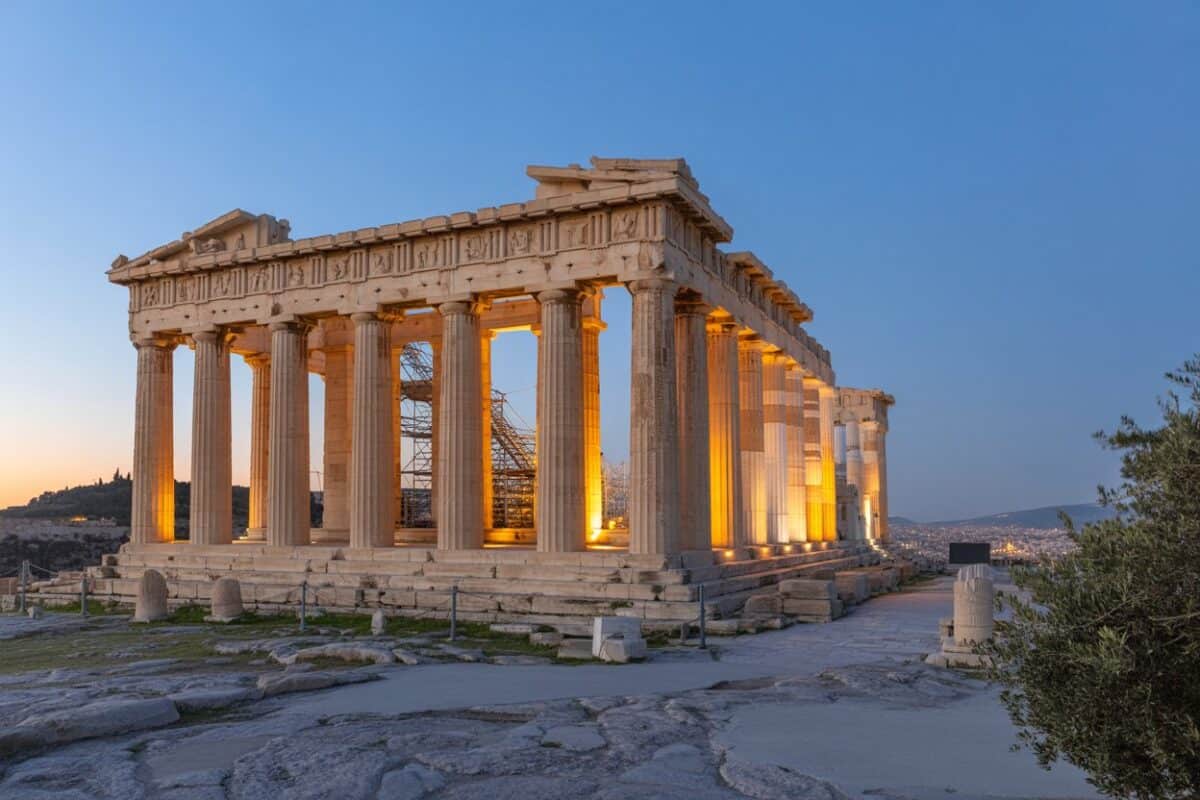
Image generated with Ai
Greece has gone hand in hand with Italy, Malta and other Southern European destinations in delivering one of the strongest tourism performances recorded across Europe during the opening months of 2026.
The latest European Tourism: Trends & Prospects Q2 2026 report shows that international tourist arrivals across reporting European destinations increased by 5% year on year. Overnight stays also rose by 4.8%, indicating that tourism demand remained resilient despite rising travel prices, geopolitical uncertainty and changing consumer confidence.
Almost 80% of reporting European destinations recorded an increase in international arrivals. Around one in five achieved double-digit growth, confirming that the recovery was not limited to a small number of countries.
Northern Europe recorded the fastest regional percentage growth, but Southern and Mediterranean Europe produced the largest increase in actual visitor numbers. Greece, Italy, Malta, Portugal and Spain continued attracting substantial international demand because of their extensive air networks, established tourism infrastructure, beaches, cultural heritage and broad range of accommodation.
Advertisement
Advertisement
The results suggest that Mediterranean tourism continues to operate as one of Europe’s most important economic engines even as some destinations introduce higher tourist taxes, visitor caps and tighter controls on holiday accommodation.
Advertisement
Advertisement
Greece Emerges as Europe’s Fastest-Growing Destination
Greece recorded the strongest arrival growth among destinations covered by the European Travel Commission’s reporting data.
International arrivals increased by approximately 38.3% during the reporting period, while travel spending rose by an exceptional 64.3%. The difference between the two figures suggests that visitors were not only arriving in larger numbers but were also generating considerably more revenue per trip.
Official data from the Bank of Greece also confirm the strength of the country’s tourism economy, although the figures cover a different reporting period and methodology.
Between January and April 2026, non-resident arrivals to Greece increased by 27.1% compared with the same four months of 2025. Travel receipts rose even faster, increasing by 36.9%.
In April alone, arrivals increased by 10.6%, while travel receipts grew by 9.5%. International arrivals at Greek airports rose by 5.7% during the first five months of the year, and international passenger traffic at Athens International Airport increased by 5%.
Advertisement
Advertisement
The differing figures from the ETC and Bank of Greece should not be treated as contradictory. They reflect different datasets, timeframes and reporting sources. Together, however, they show that Greece entered the 2026 travel season with exceptionally strong momentum.
Why Greece Is Attracting More International Travellers
Several factors are helping Greece outperform many competing destinations.
The country has expanded air connectivity from European and long-haul markets. Athens continues to strengthen its position as an international gateway, while direct seasonal services are bringing more visitors to destinations such as Crete, Rhodes, Corfu, Mykonos, Santorini and Thessaloniki.
Greece has also intensified efforts to promote travel outside the busiest July and August period. Spring and autumn holidays are becoming more attractive to visitors seeking milder temperatures, lower accommodation costs and less crowded attractions.
The country’s tourism strategy increasingly promotes mainland destinations, mountain communities, cultural routes and secondary islands rather than relying entirely on its most famous resorts.
Advertisement
Advertisement
This wider geographical distribution is important because popular locations such as Santorini and Mykonos face pressure from cruise traffic, housing demand, water consumption and seasonal overcrowding.
Italy Delivers the Second-Strongest Arrival Growth
Italy recorded the second-largest increase among the leading European destinations, with international arrivals rising by 21.1%.
However, travel spending increased by only 4.3%, meaning expenditure grew much more slowly than visitor volumes. The ETC said this points to softer average spending per visitor despite the sharp rise in arrivals.
Italy’s performance reflects continued demand for its major cities and cultural centres. Rome, Venice, Florence, Milan and Naples remain among Europe’s most recognisable urban destinations.
At the same time, international demand continues to expand across Sicily, Sardinia, Tuscany, Lake Como, the Amalfi Coast, Puglia and the Italian Alps.
Advertisement
Advertisement
Strong air connectivity from North America, Europe, the Middle East and Asia has supported the market. Regional authorities are also promoting smaller towns, rural experiences, food tourism and year-round cultural travel to reduce dependence on the traditional summer season.
Italy’s challenge is now to convert higher visitor volumes into stronger and more evenly distributed economic value.
Malta Strengthens Its Position in the Mediterranean
Malta recorded approximately 16% growth in international arrivals, making it Europe’s third-fastest-growing destination in the ETC comparison.
The island nation has several advantages. It is well connected with major European cities, offers a warm Mediterranean climate and combines beaches with historic attractions, festivals, diving and English-language accessibility.
Valletta’s architecture, Malta’s coastal resorts, the ancient city of Mdina and the islands of Gozo and Comino give the country a varied tourism offering within a relatively compact area.
Advertisement
Advertisement
Malta has also developed a broad tourism season extending beyond summer. Cultural events, sports tourism, language travel, conferences and winter sun holidays are helping the destination attract visitors during traditionally quieter periods.
Its continued growth demonstrates that smaller destinations can compete successfully when they combine accessibility, clear tourism positioning and strong international air connections.
Portugal and Spain Continue Driving Visitor Numbers
Portugal and Spain did not lead Europe’s percentage rankings, but both remained central to the Mediterranean and Southern European tourism economy.
Spain continues to benefit from strong demand for Barcelona, Madrid, the Balearic Islands, the Canary Islands, Andalusia and its Mediterranean coastline.
Portugal remains attractive because of Lisbon, Porto, the Algarve, Madeira, the Azores and its reputation for safety and value.
Advertisement
Advertisement
Both countries are increasingly directing tourism promotion towards secondary cities, inland regions and off-season travel.
This strategy is designed to protect crowded destinations while ensuring that more communities receive tourism income.
Growth Continues Despite Higher Travel Costs
Europe’s strong performance has come during a period of considerable financial pressure.
Airfares, hotel rates, restaurant prices and local transport costs remain elevated in many destinations. Tourist taxes have also increased or expanded across major cities and coastal areas.
The European Travel Commission said weaker consumer confidence has made travellers more selective. Visitors increasingly favour destinations regarded as safe, accessible and reasonably priced. Many are also choosing shorter journeys and travelling closer to home.
Advertisement
Advertisement
Affordability is becoming a more important factor in destination selection. This helps explain growing interest in parts of Central and Eastern Europe, where travellers may find lower accommodation and dining costs than in established Mediterranean hotspots.
Nevertheless, demand for Southern Europe remains extremely strong, showing that travellers are still willing to prioritise Mediterranean holidays even when costs rise.
Heatwaves and Wildfires Add New Risks
Climate-related disruption has become an increasingly important challenge for Mediterranean tourism.
Extreme summer temperatures can reduce demand for daytime sightseeing, hiking and outdoor excursions. Wildfires can affect roads, airports, national parks and coastal resorts, sometimes requiring evacuations or temporary closures.
Greece, Italy, Spain, Portugal and France are all strengthening heat-response and wildfire-prevention measures.
Advertisement
Advertisement
Tourism operators are also adapting by promoting morning and evening activities, indoor attractions and travel during the cooler spring and autumn periods.
The changing climate may eventually reshape the traditional Mediterranean season. Instead of concentrating travel in July and August, more visitors may choose April, May, September and October.
Overtourism Protests Have Not Stopped Demand
The growth figures arrive at a time when protests against mass tourism have intensified in several destinations.
Residents in parts of Spain, Italy and other Southern European countries have raised concerns about housing affordability, short-term rentals, overcrowded public spaces and pressure on local infrastructure.
Cities are responding with tighter accommodation rules, visitor charges and capacity controls.
Advertisement
Advertisement
Barcelona is working to reduce the number of cruise terminals and intends to end existing tourist-apartment licences by 2028. Venice continues applying an access fee on selected peak dates. Other destinations are limiting tour groups, controlling access to beaches and requiring reservations for fragile natural attractions.
These measures have not prevented tourism growth. Instead, they indicate that authorities are trying to change the structure of demand rather than eliminate it.
The aim is to attract visitors who stay longer, travel outside peak periods and spend more within local economies.
Northern Europe Records the Fastest Regional Growth
Although the Mediterranean generated the largest increase in visitor numbers, Northern Europe achieved the strongest percentage performance.
International arrivals to Northern European destinations increased by 10%, while overnight stays rose by 8.4%.
Advertisement
Advertisement
Central and Eastern Europe also performed strongly. Arrivals grew by 5.2%, while overnight stays increased by 6.9%.
These results show that travellers are exploring a broader range of European destinations. Some are choosing northern countries to escape extreme summer heat, while others are searching for less crowded and more affordable alternatives.
However, the Mediterranean remains dominant in terms of total visitor volumes and global recognition.
Geopolitical Disruption Creates Uneven Results
Europe’s tourism performance was not equally strong across all destinations.
Cyprus recorded a 17.9% decline in arrivals, while Türkiye reported a fall of 2.1%. The ETC linked these declines partly to traveller concerns connected with conflict in the Middle East and its effect on aviation and destination perceptions.
Advertisement
Advertisement
European air passenger activity remained strong during the first quarter of 2026, with revenue passenger kilometres increasing by 7%. However, growth slowed to just 1% in April as disruption affected flights between Europe and several medium- and long-haul markets.
This demonstrates that tourism growth remains vulnerable to geopolitical events, flight suspensions and sudden changes in consumer confidence.
Mediterranean Tourism Is Moving Towards Higher-Value Growth
The strongest message from the 2026 figures is that tourism demand remains resilient, but destinations can no longer focus only on attracting greater numbers.
Greece’s sharp increase in visitor spending illustrates the value of generating stronger revenue from each trip. Italy’s slower spending growth, despite a large increase in arrivals, shows why visitor numbers alone do not provide a complete picture.
Future tourism strategies are likely to focus on longer stays, higher local expenditure, off-season visits and better geographical distribution.
Advertisement
Advertisement
Mediterranean governments must continue balancing economic opportunity with environmental limits, housing needs and residents’ quality of life.
Despite these challenges, Greece, Italy, Malta, Portugal and Spain remain at the centre of European tourism. Their combination of accessibility, culture, climate and established hospitality infrastructure continues to attract millions of travellers.
The Mediterranean is therefore not losing its tourism leadership. It is entering a new stage in which growth, sustainability and visitor management must operate together.
Advertisement
