
Singapore Airlines Adds 8 Jakarta Relief Flights as Indonesia Reopens Airport After Volcanic Ash Crisis

Published
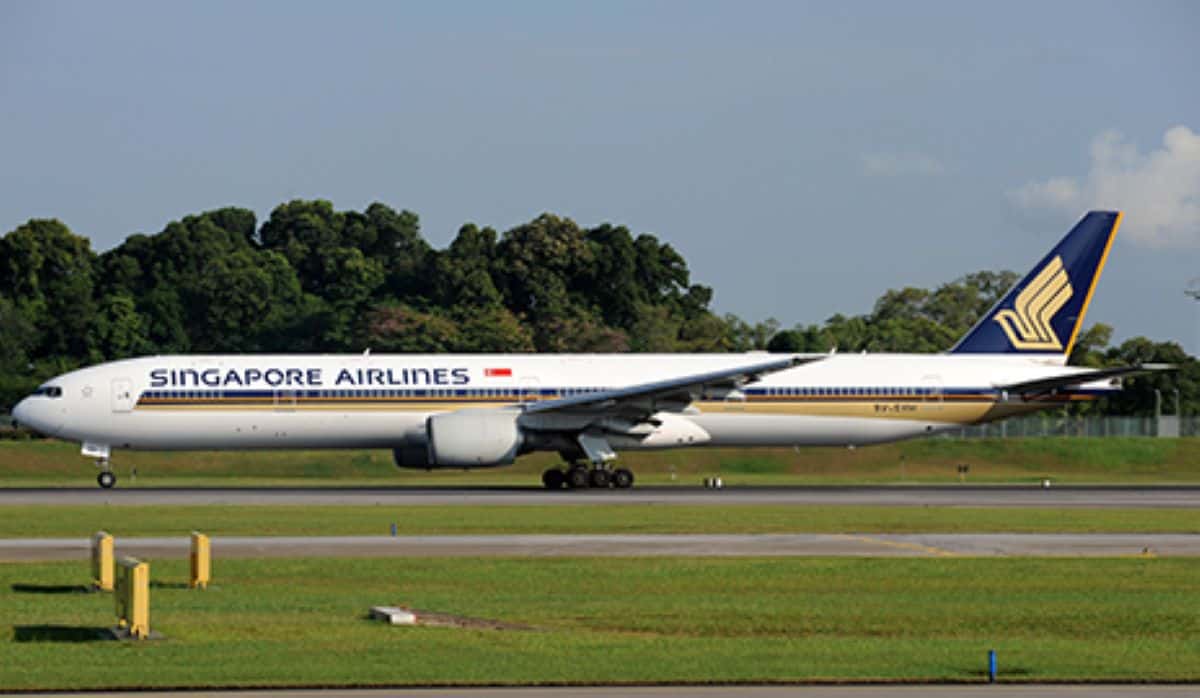
There will be eight additional relief flights scheduled for September 8 by Singapore Airlines, between Singapore and Jakarta, following Indonesia’s decision to reopen part of the Soekarno-Hatta International Airport, after the closure that was caused by disruptions due to volcanic ash. Singapore Airlines will fly four relief flights each way if there are sufficient available seats. Singapore Airlines will rebook affected customers on the first available flights, and airlines are allowed to do that during the period of disruptions caused by the eruption of Anak Krakatau, that has sent volcanic ash to cover western Indonesia. Mountains of ash affecting air traffic and operations continue to affect more than 341,000 passengers, and over 2,961 flights. The eight airports are currently closed. There is some relief about Jakarta’s reopening, but schedules remain uncertain. Singapore Airlines has already cancelled eighteen flights and rescheduled six.
Eight Relief Flights Target Stranded Travellers
Singapore Airlines is adding capacity precisely as Jakarta’s main international gateway resumes operations. The carrier will operate four additional services from Singapore to Jakarta and four return flights on Tuesday. However, SIA has stressed that seats remain subject to availability.
The additional flights are designed primarily to move passengers affected by the earlier disruption. SIA said it would progressively rebook customers onto the next available flight. That approach should help reduce pressure on already crowded regional services.
The airline’s wider schedule remains under close review. SIA cancelled 18 flights on Monday after the ash crisis intensified around Jakarta. It also cancelled another Jakarta departure scheduled early Tuesday.
Advertisement
Advertisement
Six Tuesday morning flights were subsequently retimed into the afternoon. SIA’s published advisory shows significant changes across both directions. Travellers should therefore avoid relying on earlier schedules saved in booking confirmations.
| SIA disruption and recovery measure | Latest position |
|---|---|
| Relief flights | 8 additional flights |
| Date | 8 September 2026 |
| Singapore–Jakarta | 4 additional flights |
| Jakarta–Singapore | 4 additional flights |
| Seat availability | Subject to availability |
| Rebooking | Progressive rebooking onto next available flight |
| Flights cancelled Monday | 18 |
| Tuesday morning flights retimed | 6 |
| Operating status | Most other services scheduled to operate |
The development marks an important operational step for the Singapore-Jakarta corridor. Yet, it does not represent a complete return to normality.
Advertisement
Advertisement
Volcanic activity remains the decisive variable. Flight schedules can change quickly when ash movement affects aviation routes or airport operations.
Jakarta Reopens After A Major Aviation Shock
Soekarno-Hatta International Airport has resumed operations following a prolonged closure linked to volcanic ash. Indonesia had temporarily closed eight airports across Jakarta, Java and Sumatra during the disruption.
The affected airports included Soekarno-Hatta and Halim Perdanakusuma in the Jakarta area. Radin Inten II, Husein Sastranegara, Budiarto, Pondok Cabe, Taufik Kiemas and Atung Bungsu were also affected.
The scale of the disruption quickly moved beyond routine delays. Indonesia’s Transport Ministry reported 2,961 affected flights, comprising 2,339 domestic and 622 international services. Around 341,000 passengers were affected.
The figures underline Jakarta’s importance within Indonesia’s aviation network. A disruption at its principal international gateway can rapidly affect connecting services across the archipelago.
It can also disrupt regional itineraries involving Singapore, Bali, Australia and other Southeast Asian destinations. That makes the reopening particularly significant for international travellers.
Advertisement
Advertisement
| Impact indicator | Reported figure |
|---|---|
| Flights affected | 2,961 |
| Domestic flights affected | 2,339 |
| International flights affected | 622 |
| Passengers affected | Approximately 341,000 |
| Airports initially affected | 8 |
| Maximum reported ash altitude | Up to 50,000 feet |
These figures represent the disruption accumulated through Monday afternoon. They should not be interpreted as a forecast of additional cancellations.
Instead, they show how quickly volcanic ash can create a network-wide aviation problem.
Why Volcanic Ash Disrupts Aircraft
The aviation response is rooted in safety rather than simple weather disruption. Volcanic ash contains abrasive particles that can seriously affect aircraft engines and other systems.
The International Air Transport Association notes that ash encounters can cause engine malfunction or failure. They can also affect electrical, pneumatic and hydraulic systems.
The International Civil Aviation Organization maintains dedicated guidance for volcanic ash and international air navigation. Its International Airways Volcano Watch supports the exchange of eruption and ash-cloud information.
That explains why an airport can reopen only after conditions improve. Airlines and authorities must consider ash concentration, wind direction, runway conditions and aircraft exposure.
Advertisement
Advertisement
Indonesia’s meteorological agency has been monitoring the eruption continuously. BMKG identified ash clusters extending across Banten, Jakarta, West Java and Bengkulu.
BMKG also issued aviation weather warnings after the initial eruption. It had issued 18 SIGMETs by 6 September to support aviation safety.
The agency continued to track ash at different atmospheric levels. On 7 September, ash was detected from the surface up to 15,000 feet. Higher concentrations extended between 15,000 and 50,000 feet.
For airlines, therefore, reopening an airport does not automatically eliminate operational risk.
SIA Schedule Changes Require Close Attention
Travellers on Singapore Airlines should check their flight status immediately before leaving for the airport. The carrier’s latest advisory records several substantial timetable changes on 8 September.
For example, SQ950 shifted from 06:20 to 13:10. SQ952 moved from 07:40 to 13:40, while SQ956 moved from 09:05 to 19:30.
Advertisement
Advertisement
Return services also experienced sizeable changes. SQ953 shifted from 08:05 to 14:50, while SQ955 moved from 09:25 to 15:35. SQ957 was pushed from 11:00 to 21:25.
One Jakarta-Singapore service, SQ951, was cancelled. SIA nevertheless stated that other flights were operating as scheduled at the time of its advisory.
That distinction matters for travellers. An airport reopening does not mean every airline schedule immediately returns to its original timetable.
Aircraft, crews and passengers can remain displaced after a closure. Airlines must then rebuild rotations across multiple airports.
| Traveller situation | Recommended approach |
|---|---|
| Flight is confirmed | Recheck status before travelling |
| Flight has been retimed | Follow the new departure time |
| Flight is cancelled | Contact SIA for rebooking options |
| Connecting itinerary | Check every sector separately |
| Airport transfer arranged | Allow additional contingency time |
| Uncertain flight status | Use the airline’s official flight-status channel |
The safest approach is to treat Tuesday as a recovery day, rather than assuming full schedule normality.
Alternative Airports Cushion The Disruption
Indonesia also moved quickly to increase capacity elsewhere. Authorities extended operating hours at five alternative airports to support passenger mobility.
Advertisement
Advertisement
The facilities included Kertajati, Ahmad Yani in Semarang, Juanda in Surabaya, Yogyakarta International Airport and Adi Soemarmo in Solo. These airports were opened for 24-hour operations during the disruption.
The strategy provided airlines with additional options when Jakarta-area operations were constrained. It also created alternative pathways for passengers unable to reach their intended airports.
InJourney Airports additionally arranged ground transportation for stranded passengers. Bus services connected Soekarno-Hatta with destinations including Yogyakarta, Solo, Semarang and Surabaya.
That response highlights an increasingly important feature of aviation disruption management. Recovery depends on ground transport as much as aircraft capacity.
A flight may be available from an alternative airport. Yet passengers still need a reliable way to reach it.
Jakarta’s Tourism Role Raises The Stakes
The disruption has particular significance for Indonesia’s international tourism economy. Soekarno-Hatta is one of the country’s principal gateways for overseas visitors.
Advertisement
Advertisement
Indonesia’s statistics agency recorded 307,051 international arrivals through Soekarno-Hatta in July 2026 alone. That represented a substantial share of Indonesia’s 1.13 million international air arrivals that month.
The airport therefore serves more than Jakarta’s local market. It supports business travel, leisure journeys and onward connections across Indonesia.
For context, Soekarno-Hatta recorded 212,826 international arrivals in January. July’s figure was considerably higher.
| 2026 month | International arrivals through Soekarno-Hatta |
|---|---|
| January | 212,826 |
| February | 205,165 |
| March | 157,262 |
| April | 227,830 |
| May | 235,207 |
| June | 240,681 |
| July | 307,051 |
The July figure demonstrates the gateway’s significance during Indonesia’s busy travel season. Consequently, even a short closure can create substantial knock-on effects.
Hotels can face late arrivals and cancellations. Tour operators may need to rearrange transfers. Domestic airlines can also face displaced passengers.
The effects therefore extend well beyond the airport terminal.
Advertisement
Advertisement
Travellers Face A Gradual Recovery
For travellers, the immediate priority is certainty rather than speed. Jakarta’s reopening is positive, but aviation networks rarely recover instantly after a major closure.
Aircraft inspections can add another layer of complexity. Authorities have been checking aircraft exposed to ash before returning them to service.
That process can affect aircraft rotations even after airport operations restart. A traveller may therefore encounter delays caused by an aircraft’s previous location.
Passengers with onward connections should build additional time into their itineraries. This is especially important when separate tickets cover different airlines.
Travellers should also retain receipts for essential disruption-related expenses. However, reimbursement eligibility depends on airline conditions and the circumstances of each disruption.
Most importantly, passengers should use official airline and airport channels. Social media updates can become outdated quickly during a rapidly changing volcanic event.
Advertisement
Advertisement
What Travellers Should Check Before Departure
Travellers heading between Singapore and Jakarta should approach Tuesday’s operations cautiously. The additional SIA flights create more capacity, but seats remain limited and schedules remain vulnerable to change.
First, passengers should check the latest airline flight status. They should then verify their terminal and revised departure time.
Second, travellers with connections should check the status of every flight. A confirmed Singapore-Jakarta sector does not guarantee an unaffected onward domestic connection.
Third, passengers should allow extra time at the airport. Rebooking and recovery operations can create longer queues than normal.
Finally, travellers should monitor official aviation and meteorological updates. BMKG continues to track ash dispersion and atmospheric conditions around the affected region.
The practical message is simple: reopening is encouraging, but flexibility remains essential.
Advertisement
Advertisement
Industry Lessons From The Disruption
The Anak Krakatau crisis offers a wider lesson for Southeast Asian aviation. Volcanic events can generate disproportionate disruption because modern airline networks depend on tightly synchronised aircraft rotations.
A closure in Jakarta can therefore affect flights elsewhere. Aircraft may be stranded, crews can exceed planned duty patterns, and connecting passengers can miss onward services.
The response also demonstrates the importance of diversified airport capacity. Alternative airports gave authorities and airlines additional operational flexibility during the closure.
There is also a broader lesson in international coordination. ICAO‘s volcanic ash framework brings together meteorological agencies, volcano observatories, air traffic services and aviation stakeholders.
That structure helps airlines make risk-based decisions. It also explains why flight cancellations can occur even when skies appear visually clear to passengers.
For travel businesses, contingency planning should therefore include alternative airports and surface transport. Tour operators should also maintain flexible transfer arrangements during volcanic events.
Advertisement
Advertisement
A Recovery, Not Yet A Return To Normal
Singapore Airlines’ additional capacity gives affected passengers an important route back into the network. Eight relief flights can help absorb displaced demand after two days of disruption.
However, the broader recovery will depend on volcanic activity and ash dispersion. Indonesia’s authorities continue to monitor Anak Krakatau closely, while aviation operators assess conditions dynamically.
The disruption has already affected nearly 3,000 flights and 341,000 passengers. That scale illustrates the operational reach of a single volcanic event.
For international travellers, Jakarta’s reopening is therefore welcome news. Yet the sensible approach remains cautious. Check the latest flight status, allow additional time and keep alternative arrangements in mind.
SIA’s relief operation restores much-needed capacity, but the final return to normal depends on the volcano, not the timetable.
Frequently Asked Questions
How many relief flights is Singapore Airlines adding to Jakarta?
Singapore Airlines is adding eight relief flights between Singapore and Jakarta on 8 September 2026. Four flights will operate from Singapore to Jakarta, with another four flying back to Singapore.
Advertisement
Advertisement
Why is Singapore Airlines adding extra Jakarta flights?
The additional services will help accommodate passengers affected by flight cancellations and schedule disruptions caused by volcanic ash from Mount Anak Krakatau. SIA is progressively rebooking affected customers onto the next available flights.
Has Soekarno-Hatta International Airport reopened?
Yes. Soekarno-Hatta International Airport in Jakarta has reopened after operations were suspended because of volcanic ash from the Anak Krakatau eruption. However, flight schedules remain subject to operational changes.
Are all Singapore Airlines flights between Singapore and Jakarta operating normally?
Not entirely. SIA has cancelled some services and retimed others as the airline rebuilds its schedule. Travellers should therefore check the latest flight status before heading to the airport.
How many flights were affected by the Anak Krakatau eruption?
Indonesia’s Transport Ministry reported 2,961 affected flights, including 2,339 domestic and 622 international services, by Monday afternoon. Approximately 341,000 passengers were affected.
Why can volcanic ash cause flight cancellations?
Volcanic ash can damage aircraft engines and affect critical aircraft systems. Airlines therefore rely on aviation authorities, meteorological data and ash-dispersion forecasts when deciding whether flights can operate safely.
Is Mount Anak Krakatau still affecting flights?
The aviation situation remains fluid because authorities continue monitoring volcanic ash dispersion. Ash concentration, altitude and wind direction can influence flight operations, even after an airport reopens.
Advertisement
Advertisement
What should passengers travelling from Singapore to Jakarta do?
Passengers should check their airline’s latest flight status before travelling. They should also allow additional time for possible queues, rebooking and schedule changes at the airport.
Can affected passengers automatically take one of the eight extra SIA flights?
Not necessarily. The additional flights are subject to seat availability, while SIA is progressively rebooking affected passengers onto available services. Travellers should follow the airline’s rebooking instructions.
Could Jakarta flight disruptions affect onward travel in Indonesia?
Yes. Travellers connecting through Jakarta may face knock-on effects if their incoming flight is delayed or cancelled. Passengers with separate domestic or international tickets should check each sector individually.
Which other Indonesian airports were affected?
Eight airports suspended operations during the disruption, including Soekarno-Hatta and Halim Perdanakusuma in the Jakarta area. Authorities also used alternative airports to help maintain passenger connectivity during the disruption.
Advertisement
