
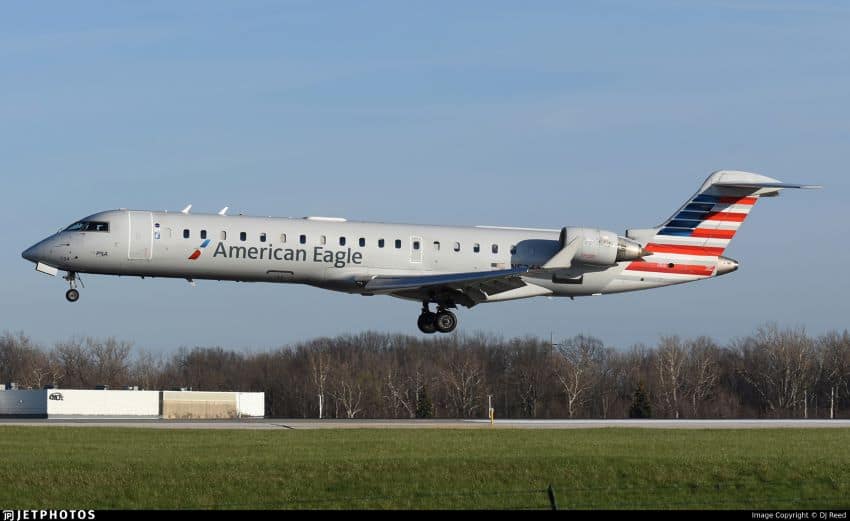
A PSA operated American Airlines JIA5358 regional flight, utilizing a Mitsubishi CRJ-701ER from Dallas to Montgomery on 11th July, suddenly diverted at Hartsfield-Jackson Atlanta International Airport. Drama unfolded minutes before the flight diversion over the US. The journey started with a Scheduled Time of Departure (STD-21:30), but an Actual Time of Departure (ATD- 22:09) delayed the takeoff. Consequently, an unexpected layout forced an early arrival at the alternate hub (STA- 23:28). Pilots rapidly changed course due to escalating operational anomalies. Terrified passengers watched the flight path shift drastically away from their final destination.
Commercial aviation parameters mandate that regional operations maintain absolute adherence to strict safety margins when encountering unexpected environmental changes. The regional PSA flight, operating under the designated banner of American Airlines JIA5358, experienced an abrupt en-route alteration when the atmospheric conditions surrounding the destination aerodrome deteriorated rapidly.
Advertisement
Severe summer thunderstorms began flashing across the deep southern flight corridors, directly blocking the standard descent path into Alabama. Because the regional hub lacked the high-tier instrument landing infrastructure required to navigate zero-visibility microbursts safely, the flight crew made the command decision to prioritize safety.
Aviation tracking networks indicated that the flight crew evaluated local radar outputs before initiating a sharp banks away from their original path. Passengers tracking the real-time flight telemetry observed the aircraft banking smoothly towards the east to avoid the convective cellular storm activity. The flight crew worked closely with regional controllers to secure a new clearance towards a massive, multi-runway alternative hub.
Advertisement
Advertisement
The technical crew controlling the flight deck faced an escalating set of meteorological complications as they drew nearer to their intended destination. Navigating the modern skies requires continuous weather monitoring, a task that became critical for the crew operating the regional PSA service on that turbulent evening.
As the twin-engine regional jet cruised closer to Montgomery, live meteorological terminal reports indicated that ground visibility had suddenly plummeted far below acceptable regulatory levels. High-velocity wind shear and dense cloud layers created an environment where executing a stable approach became impossible for the flight crew.
Faced with a shrinking window of opportunity, the flight crew operating American Airlines JIA5358 meticulously weighed their active operational options. Because regional jets operate with calculated fuel reserves, staying in a prolonged holding pattern over a stormy airfield introduces unnecessary risk. The captain quickly determined that continuing the approach would compromise the standard safety boundaries established by corporate and federal aviation doctrines.
Every commercial aircraft has specific operational parameters that dictate how it responds to adverse weather and structural delays. The flight was utilizing a twin-engine Mitsubishi CRJ-701ER from Dallas to Montgomery on 11th July, which is a highly reliable regional workhorse designed for short to mid-range domestic routes.
Advertisement
Advertisement
While this specific airframe excels at connecting regional hubs, smaller regional jets inherently carry smaller absolute fuel loads than massive wide-body airliners. When severe weather systems force an aircraft to delay its landing, the available fuel onboard begins to dictate the timeline of the pilot’s decision-making process.
The flight deck crew managing the regional PSA flight monitored their burning fuel gauges alongside the deteriorating radar screens. As the regional jet cruised through the evening sky, the operational limits of the regional aircraft made a diversion the most logical strategy. The flight crew calculated their distance to the nearest massive airport equipped with extensive maintenance infrastructure and long runways. Ultimately, the mechanical constraints of the airframe under pressure forced the crew of American Airlines JIA5358 to abandon the original flight plan completely.
When a domestic flight aborts its original landing plan, selecting a suitable alternate airport requires a balance of proximity, infrastructure, and passenger accommodation. The flight diverted at Hartsfield-Jackson Atlanta International Airport because that specific megahub offers unparalleled logistical capabilities during severe weather disruptions.
Atlanta features multiple parallel runways equipped with advanced Category III Instrument Landing Systems, allowing planes to touch down safely even in near-zero visibility conditions. The massive airport acted as a safe haven for the regional jet as storms battered the smaller surrounding airfields.
Choosing this global aviation hub allowed the regional PSA crew to secure immediate landing priority from air traffic control authorities. The massive hub provides expansive ground operations, meaning that the regional airline could easily access maintenance teams and gate agents. Stranded travelers on American Airlines JIA5358 benefited from the hub’s extensive network of replacement flights and hotel accommodations. By steering the aircraft toward Georgia, the captain ensured that the flight ended safely at a well-equipped facility.
The sudden operational shift of the flight stems from severe convective weather conditions and strict fuel reserve protocols over the southeastern United States. When localized thunderstorms rolled over Alabama, Montgomery Regional Airport rapidly dropped below safe legal landing minimums. Air Traffic Control immediately placed the aircraft into a holding pattern. However, regional jets carry tight fuel contingency margins.
Because the crew faced extended holding delays, the captain made a decisive command choice to divert. They chose Atlanta due to its superior all-weather instrument landing systems and extensive emergency response infrastructure. Consequently, the aircraft landed safely in Georgia, preventing a low-fuel emergency. American Airlines quickly re-accommodated the stranded travelers onto replacement flights and provided ground transportation. Ultimately, strict aviation safety regulations and proactive crew management successfully averted a critical crisis, ensuring all passengers and crew members arrived safely on the ground without further incident.
Advertisement
Tags: American Airlines, Dallas, flight diversion, Hartsfield-Jackson Atlanta International Airport, JIA5358
Advertisement
Advertisement













Friday, September 4, 2026

Friday, September 4, 2026

Friday, September 4, 2026

Friday, September 4, 2026

Thursday, September 3, 2026

Wednesday, September 2, 2026

Friday, September 4, 2026