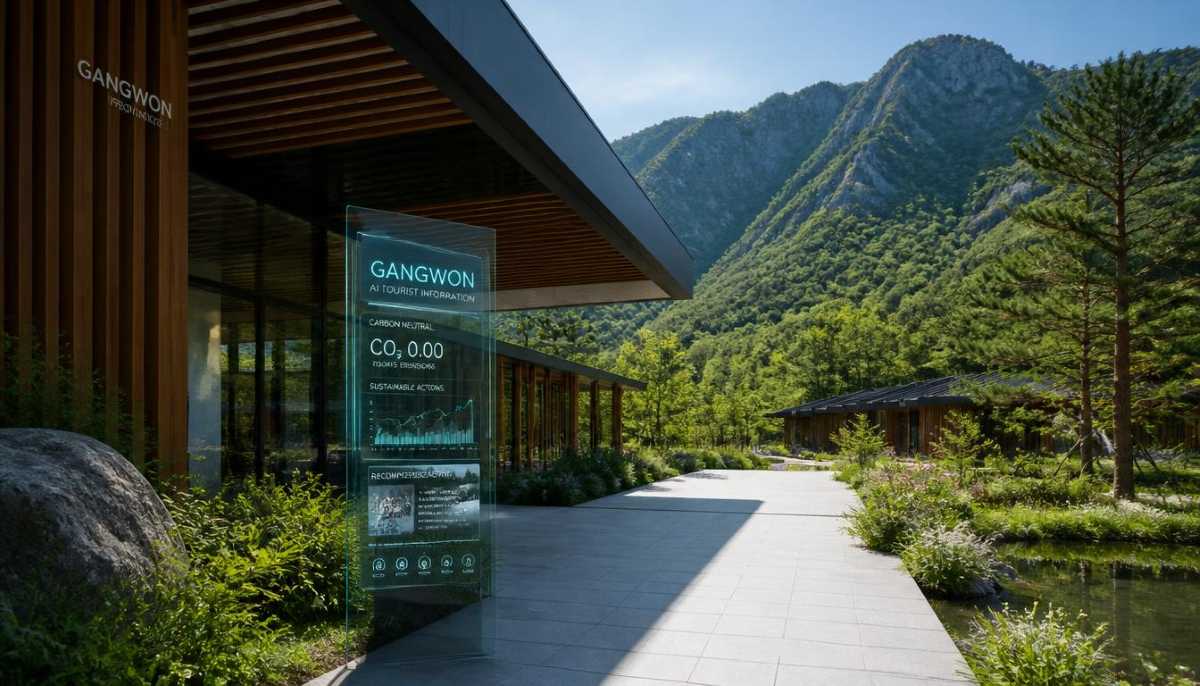
Image generated with Ai
Modern travellers are increasingly looking for destinations that blend ecological preservation with technological convenience, and it’s important to understand this process, as international coalitions are shaping the future of travel. Global environmental problems are increasing, and the need for concerted international action has never been more urgent. It forces travellers and industry players to think about how regional alliances are responding to these shifting paradigms. Gangwon Province, the foundation pillar and Secretariat host of the East Asia Inter-Regional Tourism Federation (EATOF), has taken great strides forward. This scenic area in South Korea is setting a standard for international collaboration. The province will spearhead a joint declaration on sustainable tourism cooperation in a bid to redefine cross-border travel with an unwavering dedication to ecological responsibility and cutting-edge innovation.
The newly announced joint declaration centres heavily on two transformative priorities: achieving carbon neutrality and implementing AI-powered smart tourism infrastructure across member states. Member provinces within South Korea and international counterparts are urged to transition away from traditional, resource-heavy operational models. Instead, a collaborative framework is established to deploy data-driven solutions that track environmental metrics and minimize waste. Through these measures, regional authorities expect to mitigate the ecological degradation often associated with mass tourism while simultaneously upgrading the visitor experience. Strategic resource allocations are being directed toward green lodging, low-emission transit systems, and community-led conservation projects that preserve local heritage.
Advertisement
Advanced predictive analytics and machine learning tools are being integrated into regional tourism planning to address seasonal fluctuations and visitor congestion throughout South Korea’s premier destinations. Intelligent resource optimization allows destination management organizations to regulate foot traffic dynamically, thereby protecting sensitive natural habitats, national parks, and cultural landmarks from over-tourism. Furthermore, automated energy monitoring systems driven by artificial intelligence are deployed across lodging and transit networks to curb unnecessary power consumption and lower greenhouse gas emissions. These technological interventions ensure that economic growth in the tourism sector does not come at the expense of environmental degradation.
Commitments to carbon neutrality require a synchronized approach among all EATOF member states, ranging from local government initiatives in South Korea to private sector participation globally. Renewable energy integration, such as utilizing regional wind, solar, and biomass capabilities, forms the backbone of this green transition. By aligning environmental standards, the coalition ensures that member provinces do not operate in silos. Shared accountability mechanisms are established to track carbon reduction milestones, ensuring that the collective tourism economy achieves net-zero targets over the coming decades. Carbon offsetting programmes tied directly to local reforestation efforts in Gangwon Province further reinforce these systemic changes.
Advertisement
Advertisement
Transitioning toward a green economy requires active engagement from local communities, small businesses, and hospitality providers. The joint declaration emphasizes inclusive growth, ensuring that regional artisans, eco-lodges, and sustainable tour operators directly benefit from international marketing campaigns. By shifting consumer demand toward eco-friendly itineraries, South Korea and its EATOF partners cultivate a resilient economic ecosystem that withstands external shocks, such as global health crises or economic downturns. Emphasis is placed on capacity building, training local tourism workers in green management practices, and educating visitors on responsible travel ethics.
The joint declaration signed between Gangwon Province and the EATOF member states marks a significant turning point for travel in East Asia and South Korea’s wider environmental agenda. This region’s approach is a great example for destination management worldwide, blending artificial intelligence with ecological preservation. As the initiative transitions from policy agreements to tangible, technology-driven ground execution, travellers and policymakers alike are encouraged to follow these developments closely. Such forward-thinking blueprints are the way forward for travel, demonstrating that economic vibrancy and environmental responsibility can thrive side by side.
Advertisement
Advertisement
Advertisement













Friday, September 4, 2026

Friday, September 4, 2026

Friday, September 4, 2026

Friday, September 4, 2026

Thursday, September 3, 2026

Wednesday, September 2, 2026

Friday, September 4, 2026