

Why a SkyWest diverted United Airlines Flight SKW5831 at Des Moines International Airport that highlights growing nightmare across US skies! Travelers tracking the scheduled STA 12:14 EST arrival faced sudden chaos when bad weather and strict air traffic control holds forced an immediate regional reroute. Consequently, thousands of frustrated passengers were left stranded, sparking intense outrage nationwide.
SkyWest Airlines operated this regional United Express service under demanding regional conditions. However, severe convective storms and severe airspace congestion rapidly overwhelmed midwestern flight corridors. Aviation safety analysts confirm that sudden diversions are now escalating rapidly due to nationwide pilot shortages, overcrowded hub schedules, and volatile summer weather patterns across America.
Advertisement

The primary trigger for the unexpected routing of SkyWest Flight SKW5831 was a sudden convergence of intense midwestern convective thunderstorms and severe air traffic control constraints around the destination airport. As SkyWest Flight SKW5831 approached its scheduled arrival area, unexpected weather cells forced local controllers to implement holding patterns that quickly consumed planned fuel margins.
Cockpit crews operating SkyWest Flight SKW5831 are strictly required under federal aviation rules to maintain sufficient reserve fuel to reach a designated alternate airport and continue flying for forty-five minutes. Facing prolonged holding vectors and dwindling reserve limits, the pilots of SkyWest Flight SKW5831 executed a standard safety protocol by diverting smoothly to Des Moines International Airport.
Advertisement
Advertisement
The operational detour of SkyWest Flight SKW5831 highlights how thin regional scheduling margins have become across busy American airways during peak travel periods. When a single regional service like SkyWest Flight SKW5831 encounters minor delays, the knock-on effects ripple rapidly through connected hub networks and crew management assignments.
Regional carriers operating routes like SkyWest Flight SKW5831 routinely navigate tight connecting windows and staffing limitations across crowded airspace sectors. The necessity to divert SkyWest Flight SKW5831 to Des Moines International Airport illustrates how localized weather events can instantly cascade into broader nationwide travel friction.
Federal aviation regulations strictly govern how captain teams manage fuel loads aboard every journey like SkyWest Flight SKW5831. When flight planning teams dispatch SkyWest Flight SKW5831, they calculate required trip fuel alongside specific safety buffers designed for unexpected holding or bad weather diversions.
During the journey of SkyWest Flight SKW5831, pilots continuously evaluate real-time fuel burn against distance remaining to ensure absolute regulatory compliance. The moment holding patterns over Lincoln threatened those mandatory safety minimums, the crew of SkyWest Flight SKW5831 prioritized passenger safety and touched down at Des Moines International Airport without incident.
Passengers onboard SkyWest Flight SKW5831 experienced immediate schedule adjustments as ground operations at Des Moines International Airport coordinated refueling and revised flight plans. Although arriving at an unintended airport creates understandable frustration, the diversion of SkyWest Flight SKW5831 protected everyone on board from operating in unsafe weather conditions.
Airlines managing interrupted trips like SkyWest Flight SKW5831 must rapidly coordinate ground transportation, re-seat travelers, or arrange secondary short-haul flights to final destinations. The sudden arrival of SkyWest Flight SKW5831 at Des Moines International Airport serves as a vivid reminder of how unpredictable regional air travel can be during storm seasons.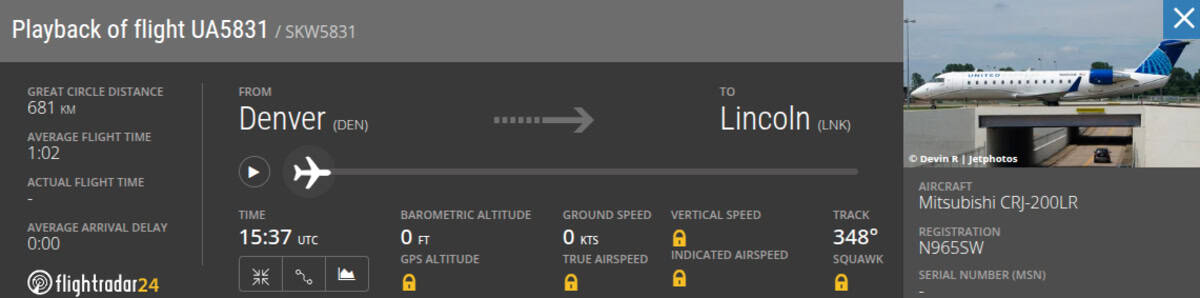
The dramatic reroute of United Express service operated by SkyWest Airlines brings systemic regional aviation challenges into sharp focus. The underlying cause of the unexpected diversion to Des Moines International Airport stems directly from intense regional thunderstorm cells intersecting with localized airspace congestion along the Denver to Lincoln corridor. When destination holding patterns threatened strict FAA emergency fuel reserve minimums, pilots made the necessary safety-first decision to divert immediately to an alternate airport.
However, the definitive reason this localized incident resonated so deeply across the country is the ongoing pressure on regional carriers. SkyWest Airlines and major partners like United Airlines constantly navigate razor-thin scheduling buffers, severe air traffic controller shortages, and volatile midwestern weather. Ultimately, this single diverted flight highlights a growing nightmare across US skies: a fragile aviation infrastructure where minor regional disruptions quickly cascade into widespread passenger travel nightmares.
Advertisement
Advertisement
Advertisement













Saturday, September 5, 2026

Saturday, September 5, 2026

Saturday, September 5, 2026

Saturday, September 5, 2026

Saturday, September 5, 2026
Saturday, September 5, 2026

Saturday, September 5, 2026

Saturday, September 5, 2026



