
Canada Tightens Coastal Travel Near Sidney and Victoria as Park Lands Close but Mooring Buoys Stay Open

Published
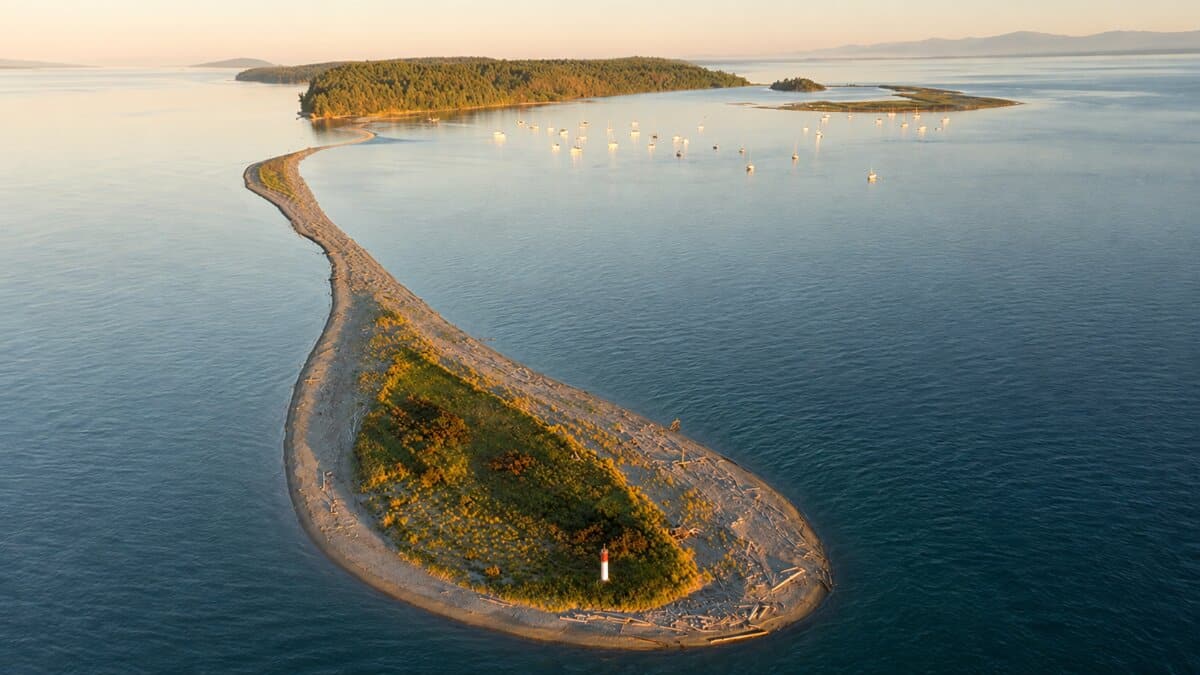
Canada will close Parks Canada lands on Sidney Island from 15 October 2026 until 14 February 2027, while keeping 11 Sidney Spit mooring buoys available to vessels. The unusual arrangement means boaters can remain offshore but visitors cannot access Parks Canada beaches, day-use areas, washrooms or dock facilities. More importantly for autumn trip planning, a general Parks Canada safety page still describes an annual Sidney Spit closure beginning on 1 November, while the specific 2026 closure order starts 17 calendar days earlier.
Sidney Island Is About to Hit a Little-Known October Travel Access Cliff
Travellers planning an autumn boating or kayaking journey through British Columbia’s southern Gulf Islands face an unusually specific access restriction from 15 October.
According to the formal area-closure bulletin issued by Parks Canada on 15 September 2026, all Gulf Islands National Park Reserve lands administered by Parks Canada on Sidney Island will close to public traffic and travel until 14 February 2027. Parks Canada states that the measure is being implemented for public safety while facilitating First Nations hunting.
The important travel angle lies in what does not close.
Advertisement
Advertisement
Parks Canada’s mooring buoys remain available. Visitors, however, cannot use the Parks Canada beaches, day-use areas, washrooms or dock facilities. That effectively separates marine access from terrestrial visitor access. A boat can reach the destination’s federal mooring infrastructure, but its occupants cannot treat Sidney Spit as an ordinary shore stop during the closure.
That distinction matters most to sailors, powerboaters, kayakers, private charter clients and other independent marine travellers who may assume an available mooring means associated shore facilities are also available.
Advertisement
Advertisement
It does not.
A 17-Day Information Gap Could Catch Autumn Travellers Out
There is an additional issue that makes the 2026 announcement more important than a routine seasonal closure.
Parks Canada’s current general trip-planning guidance says a portion of Sidney Spit closes annually from 1 November through the end of February to facilitate traditional hunting by Coast Salish First Nations. Yet the newer, date-specific 2026 closure bulletin covers Parks Canada lands on Sidney Island from 15 October 2026 until 14 February 2027.
That creates a consequential 17-calendar-day period from 15 to 31 October during which a traveller consulting only the generic annual guidance could expect the traditional November closure schedule rather than the earlier 2026 restriction.
For travel agents, yacht-charter firms and itinerary planners, the correct operational document is therefore the latest dated Parks Canada closure bulletin rather than a broad evergreen planning reference.
The difference is small on a calendar but significant on the water. Autumn cruising itineraries can depend on individual overnight anchorages, landing opportunities, washroom access, sheltered stops and alternative locations if weather changes.
Advertisement
Advertisement
What Travellers Can and Cannot Do From 15 October
The current Parks Canada pages create an unusually clear distinction between offshore infrastructure and land-based tourism.
| Sidney Island travel element | Position for the 2026–27 period | What it means for travellers |
|---|---|---|
| Parks Canada lands | Closed 15 October 2026–14 February 2027 | No recreational public travel on affected federal lands |
| Sidney Spit beaches | No visitor access during closure | Boaters cannot use the beach as a shore stop |
| Day-use areas | Closed | Picnicking and ordinary land-based recreation are unavailable |
| Washrooms | No visitor access | Marine users must plan without on-island visitor washroom access |
| Dock facilities | No visitor access; winter dock removal also applies | Travellers should not plan a dock landing |
| Sidney Spit mooring buoys | Remain open | Vessels can continue using designated offshore moorings |
| Number of Sidney Spit buoys | 11 | Capacity remains inherently limited |
| Mooring allocation | First come, first served | Availability is not guaranteed |
| Standard overnight buoy fee | C$24 per night | Parks Canada lists a fee after 3 pm |
| Seasonal passenger ferry | 2026 season ended 7 September | Ordinary walk-on visitor traffic has already finished |
| Sidney Spit frontcountry season | Ends 30 September | Regular camping is already outside its operating season before the closure begins |
| Winter dock period | Removed 1 October–14 May | The closure begins after normal winter dock removal |
Sources: Parks Canada closure, boating, camping, fees and visitor-planning information.
The Closure Mainly Changes Private Marine Travel, Not Regular Ferry Tourism
The timing reveals another important distinction.
For most conventional summer tourists, Sidney Spit’s visitor season has already ended by the time the new restriction takes effect.
According to Parks Canada, the 2026 Sidney Spit passenger ferry season ran from 15 May through 7 September. Frontcountry camping operates from 15 May through 30 September. Parks Canada also states that the docks at Sidney Spit and Princess Bay are removed for winter from 1 October to 14 May.
Consequently, the 15 October closure does not principally remove a conventional ferry-based day-trip product during its operating season.
Advertisement
Advertisement
Its greater travel significance concerns the off-season marine market.
Parks Canada identifies Sidney Island as a destination accessible by private vessel and popular with kayakers. Its wider boating guidance promotes the Southern Gulf Islands for sailing, powerboating, paddling and water-taxi access.
That is why the mooring-versus-landing distinction deserves far greater visibility than the closure date alone.
A marine itinerary can still appear physically possible while its shore component has become legally unavailable.
Eleven Mooring Buoys Stay Available but the Shore-Based Payment Guidance Raises a Practical Question
Sidney Spit has 11 Parks Canada mooring buoys. Parks Canada’s published boating rules state that buoys operate on a first-come, first-served basis, that only one vessel may use each buoy, and that rafting is prohibited.
The agency also publishes vessel-size guidance. Boats of up to 15 metres or 50 feet may use the buoys when winds are below 30 knots. The guideline reduces to 12 metres or 40 feet when winds reach 30–37 knots.
Advertisement
Advertisement
The standard fee page lists C$24 per night for a mooring buoy, with fees applying after 3 pm.
There is, however, a practical information issue that travel sellers should recognise.
The boating page currently directs users to pay buoy fees at red self-registration vaults located on shore, while the 2026 closure order says visitors will have no access to beaches, day-use areas, washrooms or dock facilities. The publicly available pages reviewed on 6 October do not explain a closure-specific alternative payment process for people remaining on the open mooring buoys.
That does not mean payment is waived. Nor should travellers land simply to reach a payment vault.
It means operators planning overnight moorage during the closure should confirm the applicable procedure directly with Gulf Islands National Park Reserve before departure. Parks Canada lists its Sidney operations centre and visitor-information contacts on its official park page.
For the travel trade, this is perhaps the most useful operational question produced by the unusual offshore-open, shore-closed arrangement.
Advertisement
Advertisement
This Is Not a Closure of the Entire Sidney Island
Accuracy is particularly important in describing the geographical scope.
The federal announcement should not be rewritten as Canada closing the entire island.
The order applies to Gulf Islands National Park Reserve lands on Sidney Island. A separate notice in the same bulletin closes Parks Canada program-support lands on the island. The first closure operates under Section 36(1) of the National Parks General Regulations, while the program-support lands are covered through British Columbia’s Trespass Act framework.
Federal regulations allow a park superintendent to close an area to public use or traffic when a seasonal or temporary danger requires it. They also prohibit people from entering a closed park area without the superintendent’s permission during the closure period.
Parks Canada’s Sidney Island notice warns that breaching the federal closure may result in fines or prosecution under the Canada National Parks Act. It also states that peace officers may enforce the no-trespassing provision covering program-support lands.
For travellers, the safest interpretation is straightforward: an offshore mooring does not create permission to enter closed Parks Canada land.
Advertisement
Advertisement
The 2026 Timing Differs From Previous Sidney Island Closures
Sidney Island has experienced seasonal restrictions before, but the purpose and calendar have changed between years.
| Season | Official closure period | Stated Parks Canada purpose |
|---|---|---|
| 2023–24 | 12 October 2023–29 February 2024 | Public safety while facilitating First Nations hunting |
| 2024–25 | 1 November 2024–15 April 2025 | Sidney Island Ecological Restoration Project |
| 2025–26 | 1 November 2025–28 February 2026 | Public safety while facilitating First Nations hunting |
| 2026–27 | 15 October 2026–14 February 2027 | Public safety while facilitating First Nations hunting |
The latest window lasts 123 calendar days when both boundary dates are counted. It starts 17 days earlier than the 2025–26 closure but ends two weeks earlier.
This history is important because the current restriction should not simply be described as an extension of the recent invasive-deer eradication operation.
Travellers Should Not Confuse the Current Hunting Closure With the Former Deer Eradication Project
Parks Canada confirms that the SḰŦÁMEN QENÁȽ,ENEȻ SĆȺ Sidney Island Ecological Restoration Project ended in March 2026. The programme addressed ecological damage associated with invasive European fallow deer and included invasive-plant removal, native vegetation restoration and long-term planning for deer management.
Almost 15,000 deer had been hunted or culled on private portions of Sidney Island between 1981 and 2023, according to Parks Canada’s project history. During the first eradication phase in 2023, 84 deer were removed, with Indigenous harvesters recovering usable materials including an estimated 800 kilograms of meat.
The restoration project subsequently concluded.
Advertisement
Advertisement
The September 2026 closure notice does not identify the species involved in the upcoming First Nations hunting period. A responsible travel report should therefore not present the new closure as another fallow-deer eradication operation unless Parks Canada issues additional information establishing that connection.
That distinction prevents an older conservation story from being incorrectly attached to a new visitor-access decision.
Sidney and Victoria Make This More Than an Isolated Island Restriction
The closure sits within an established visitor economy centred on Sidney and the wider Victoria region.
The Town of Sidney describes itself as a tourism destination and transportation hub. Its official information identifies tourism as one of the community’s major economic sectors and highlights an important local marine industry encompassing marinas, boatbuilding and marine suppliers. Sidney is also closely connected with downtown Victoria and the wider Greater Victoria transport network.
The municipality specifically identifies itself as the summer gateway to Sidney Island, with walk-on passengers travelling from Sidney towards Sidney Spit in Gulf Islands National Park Reserve.
Parks Canada similarly directs ordinary summer visitors to Sidney Spit through the Town of Sidney while describing other areas of Gulf Islands National Park Reserve as accessible by kayak, powerboat or sailboat. It also notes access to several Southern Gulf Islands from Swartz Bay, 31 kilometres from Victoria.
Advertisement
Advertisement
That makes the restriction commercially relevant to marine-tourism businesses operating around the Saanich Peninsula and Greater Victoria, even though no official agency has published a local revenue-loss estimate for this closure.
Why This Matters to Canada’s Wider Protected-Area Travel Economy
The broader context is substantial.
Parks Canada reported 26.2 million visitors across its administered places in 2025–26. Those visitors spent C$6.5 billion in communities in or near Parks Canada destinations, supporting an estimated C$5.9 billion contribution to Canadian GDP.
Those figures are national and must not be presented as Sidney Island-specific economic impacts.
They do, however, illustrate why accurate access information matters to the tourism industry. Protected-area tourism is connected with accommodation, transport, marine services, guiding, food businesses and gateway communities. A relatively small access rule can therefore matter operationally even when the affected destination represents only a fraction of national visitation.
Sidney Island demonstrates an increasingly important principle for nature-based travel: open water does not necessarily mean an open destination.
Advertisement
Advertisement
The Exclusive Industry Angle Is the Separation of Arrival From Access
The deeper significance of this change lies in itinerary design.
Traditional destination planning tends to treat access as binary. A site is open or closed. Sidney Island instead produces several simultaneous states: the passenger ferry is out of season, camping has finished, the seasonal dock has been removed, federal land is closed, but designated mooring infrastructure remains available.
That creates a layered access model.
For travel companies, this requires product descriptions to distinguish between reaching the vicinity of a protected destination, securing overnight marine infrastructure and obtaining lawful permission to go ashore. Those are no longer interchangeable assumptions.
It also highlights a digital-information challenge. Static destination pages may describe normal annual operating patterns while a newer legal bulletin establishes different dates for a particular season. Automated itinerary systems, artificial-intelligence trip planners and travel-agent databases that ingest evergreen content without checking live bulletins could therefore produce incorrect recommendations.
The information-gain opportunity for the travel industry is clear: protected-area itineraries increasingly require date-specific verification at facility level, rather than a single destination-level open or closed status.
Advertisement
Advertisement
For Sidney Island this autumn, the traveller can potentially reach a buoy without being able to use the shore beside it.
That is the rule travel sellers need to communicate.
Critical Operational Takeaways for Travel Agents and Tour Operators
- Use 15 October 2026 as the effective land-access cut-off, not the generic 1 November date appearing on the wider Parks Canada trip-planning guidance.
- Do not describe the entire Sidney Island as closed. Specify Parks Canada lands and program-support lands covered by the official notices.
- Do not promise shore excursions from the open mooring buoys. Beaches, day-use areas, washrooms and dock facilities are unavailable to visitors during the closure.
- Treat the 11 mooring buoys as limited marine inventory. They operate first come, first served, with one vessel per buoy and no rafting.
- Check vessel suitability against Parks Canada’s wind-dependent size guidance before incorporating Sidney Spit moorage into sailing products.
- Verify overnight mooring payment procedures directly with Parks Canada. Current public boating guidance identifies shore-based self-registration vaults, while the closure prohibits visitor shore access.
- Do not build autumn itineraries around the seasonal passenger ferry. Its 2026 operating period ended on 7 September.
- Do not assume the closure is part of the former fallow-deer eradication programme. Parks Canada says that ecological restoration project ended in March 2026, while the new bulletin identifies First Nations hunting without specifying a species.
- Build alternative shore stops into yacht, charter and paddling products so weather, buoy availability or access restrictions do not leave travellers dependent on Sidney Spit.
- Recheck Parks Canada’s Important Bulletins immediately before departure, particularly for water-based journeys where facilities and access conditions can change.
What Happens Next for Marine and Sustainable Tourism
The Sidney Island restriction offers a useful preview of how travel management may increasingly work in environmentally and culturally sensitive destinations.
Rather than completely removing marine access, Parks Canada is maintaining a narrow offshore use while suspending public access to federal land for a defined period. That allows different uses of the same geographical space to operate under different rules.
For the tourism industry, this requires greater precision.
Travel advisers cannot rely only on whether a destination appears on a map, whether a mooring remains operational or whether a park is generally described as open year-round. They increasingly need to verify individual beaches, docks, campsites, trails, landing rights and seasonal notices.
Advertisement
Advertisement
For Canada, Sidney and nearby Victoria, the immediate message is much simpler.
From 15 October 2026, Sidney Island remains reachable by water, but Parks Canada’s shore is not an ordinary visitor destination. Its offshore buoys remain open. Its affected federal lands do not.
That distinction is the critical travel development travellers and marine-tourism businesses need to understand before entering the 2026–27 winter season.
Advertisement
