
Australia Opens New Pimba and Upgraded Arcoona Rest Areas to Make Outback Road Travel Safer

Updated
Published
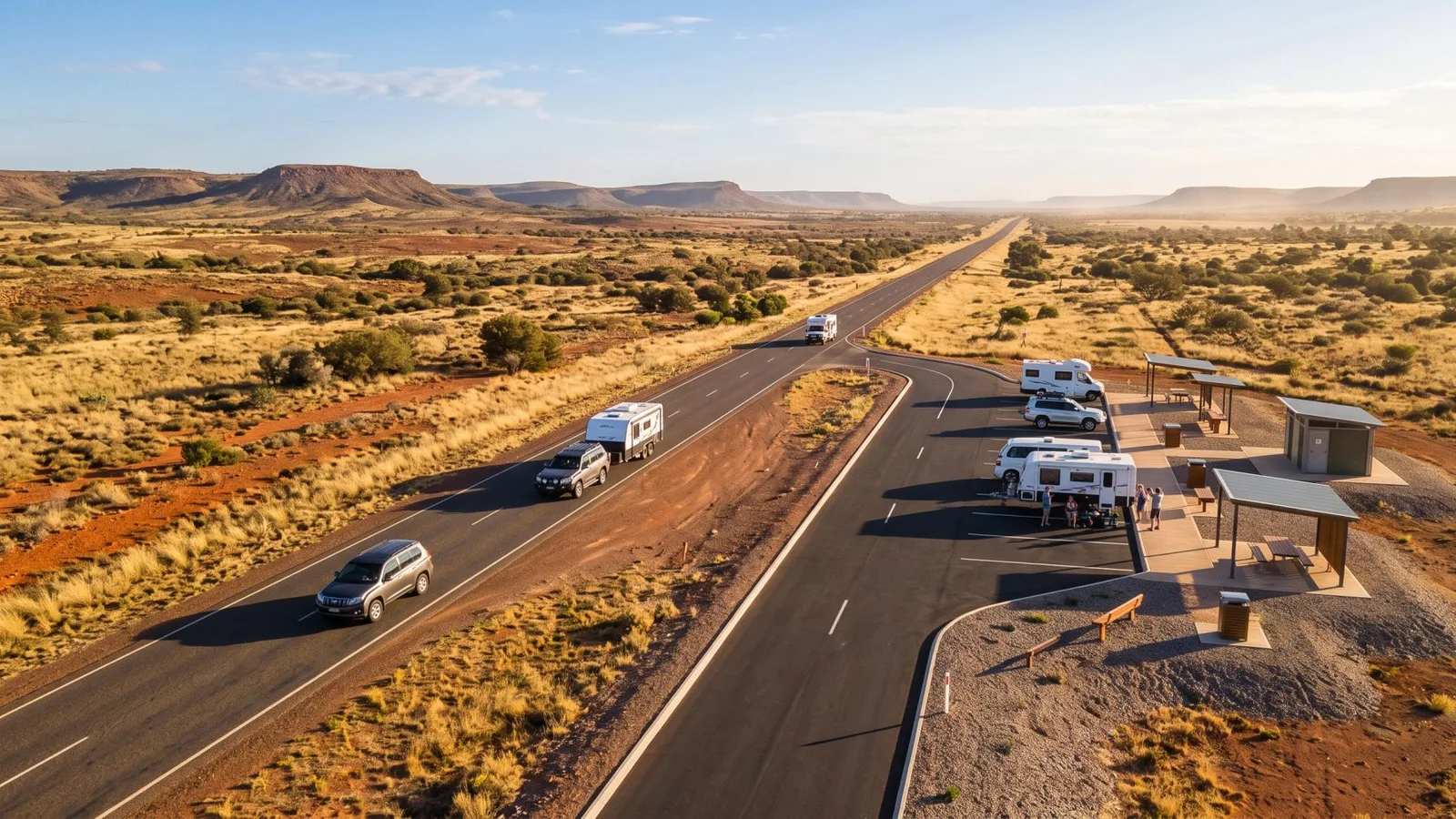
South Australia has opened two important rest areas in its far north, giving truck drivers and other motorists more places to stop safely on long outback journeys. The new facility at Pimba, on Olympic Dam Highway, and the upgraded stop at Arcoona, on Stuart Highway, are now ready for use.
Announced as complete on 23 October 2026, the jointly funded project aims to tackle driver fatigue while supporting freight movement and Australia outback road travel. For people covering vast distances between towns, the change is practical and welcome. A proper stopping place can make a demanding journey easier to manage.
Two Outback Rest Areas Bring a Welcome Safety Boost
The Australian and South Australian governments have completed the A$4.25 million Stuart Highway Rest Areas project. It combines a purpose-built heavy vehicle stop at Pimba with improved facilities at Arcoona. Both sites offer space for large freight combinations and separate parking for smaller vehicles.
The Australian Government’s official completion announcement, issued on 23 October 2026, places driver fatigue at the heart of the investment. This is not simply about providing somewhere to park. It is about giving drivers a practical chance to break up long shifts and return to the road more alert, especially where stops are otherwise far apart.
Advertisement
Advertisement
Pimba Gains a Purpose-Built Stop Beside Olympic Dam Highway
At Pimba, construction has created a new heavy vehicle rest area beside Spud’s Roadhouse. The location serves motorists using Olympic Dam Highway and connecting with the wider Stuart Highway network. The completed works include new pavement and improved drainage. During construction, South Australia’s Department for Infrastructure and Transport also specified a shelter, bench, landscaping and protective bollards in its design scope.
Those items formed part of the published plan, although the final October announcement did not list each one separately. The new space should help drivers choose a designated stopping point rather than depend on less suitable unmarked roadside areas.
Advertisement
Advertisement
Arcoona’s Upgrade Creates a Better Northbound Break
Arcoona already had a rest area, but the government has now improved its usefulness for road users. Located on Stuart Highway near Island Lagoon Lookout, the northbound stop has better access and a sealed parking area. It also has a new shelter, picnic table and seating. Earlier government construction notices covered drainage improvements, pavement works and perimeter fencing.
The difference matters in a remote setting, where the condition of a parking surface can affect the ease of entering, stopping and leaving. A rest area with a clear layout also gives drivers a more inviting reason to pause for a moment.
Advertisement
Advertisement
Four Triple Road Trains Can Use Each Site
Both the Pimba and Arcoona rest areas can accommodate four triple road trains at the same time. That capacity is a crucial feature, not a minor detail. These very long vehicle combinations need enough room to enter, manoeuvre and park without crowding smaller road users. The design also provides separate parking for light vehicles.
This arrangement allows tourist cars and other motorists to take breaks without relying on bays intended for heavy freight. Availability will still depend on how busy each individual site becomes. Drivers should therefore treat the new facilities as valuable options, not guaranteed spaces on every journey.
A$4.25 Million Partnership Funds the Improvements
The two governments have shared the A$4.25 million project cost equally under the Heavy Vehicle Rest Area Initiative. The federal infrastructure investment register identifies an Australian Government contribution of A$2.125 million, matched by South Australia. That 50–50 arrangement shows how national freight priorities and state road management can meet in one practical project.
The investment covers two different needs: creating fresh capacity at Pimba and improving an existing stop at Arcoona. Authorities expect the work to strengthen safety and freight productivity, but they have not published a measured reduction in crashes or transport costs since opening at either location yet.
Advertisement
Advertisement
Daily Traffic Explains Why These Locations Matter
Government figures suggest about 950 vehicles collectively pass the two locations every day. Around 330 of these are heavy vehicles. Those figures describe traffic at the sites combined, not the number that actually stops or a separate total for each facility. Even so, they show why additional rest opportunities matter.
Trucks share these corridors with holidaymakers, local motorists and other road users. When everyone travels across long stretches of remote country, safe stopping places become part of the transport network itself. The Pimba and Arcoona rest areas are positioned to serve that mix without treating every vehicle or journey alike.
Stuart Highway Links Two Vast Parts of Australia
Stretching about 2,700 kilometres between Port Augusta and Darwin, Stuart Highway is one of Australia’s major north–south transport links. It connects South Australia with the Northern Territory and supports long-distance movement through remote country. The South Australian Department for Infrastructure and Transport describes it as important for freight and tourism, with access to regional centres along the route.
Its role explains why even modest roadside improvements can matter far beyond their immediate surroundings. Trucks, caravans and cars all rely on a corridor where alternative stopping places can be widely spaced. Reliable rest infrastructure helps make that distance far more manageable.
Freight, Mining and Agriculture Need Dependable Routes
The highway network carries freight linked to mining, agriculture and other regional industries. Olympic Dam Highway adds an important connection through Pimba, while Stuart Highway supports movement between South Australia and the north. For transport operators, a suitable rest stop can make route planning more realistic.
Drivers need to match delivery schedules with appropriate breaks, vehicle size and conditions on the road. Better rest infrastructure may also reduce pressure to continue towards a distant stopping point when tiredness begins. The governments describe safer freight movement and network reliability as goals. They have not yet quantified any measurable new productivity gains.
Advertisement
Advertisement
Driver Fatigue Remains the Core Road Safety Concern
Fatigue is more than feeling sleepy at the wheel. It can slow reactions, weaken judgement and make it harder to control a vehicle safely. Those risks matter particularly when a heavy truck shares the road with other traffic. Rest areas cannot remove fatigue by themselves, but they offer somewhere suitable to stop when a break is needed.
The new South Australian facilities therefore address a part of prevention. Drivers still need sensible work schedules, enough rest and the freedom to stop when unfit to continue. Safer Australia outback road travel depends on those choices as well as the roadside infrastructure.
National Regulator Figures Show the Problem Is Growing
Fresh figures from the National Heavy Vehicle Regulator put the issue into perspective. On 20 October 2026, it reported 5,835 fatigue-related offences nationally during the 2025–26 financial year. That compared with 5,039 in the previous year, an increase of almost 16 per cent.
The regulator also received 365 fatigue-related calls to its confidential reporting line, up from 326. Complaints included pressure to miss breaks or work excessive hours. These are national figures, not counts for Pimba or Arcoona. They underline why safe rest areas and responsible employment practices both matter for road safety. This matters particularly across remote freight routes.
New 2026 Rules Strengthen Driver Fitness Obligations
The opening also comes after changes to Heavy Vehicle National Law took effect in August 2026. The updated rules strengthen duties around fitness to drive, including situations where fatigue, illness or other conditions make continued driving unsafe. The National Heavy Vehicle Regulator says drivers must not continue when they are unfit, and employers have duties to support informed, safe decisions.
Prescribed work and rest requirements still apply where relevant. In that setting, physical rest areas play a supporting role. They cannot replace legal compliance, but they can give drivers another suitable place to stop before problems become much more serious.
Advertisement
Advertisement
South Australia Road Safety: Historic Crash Figures Highlight the Stakes
The government’s October announcement reports 51 crashes on Stuart Highway between Tarcoola Road at Glendambo and Eyre Highway at Port Augusta during 2020–2024. Those crashes caused four deaths and eight serious injuries. The figures show the seriousness of road safety across this section of the corridor. They do not establish that fatigue caused all those incidents, or that they happened at the two rest-area locations.
Nor can the newly completed facilities already claim to have prevented a specific number of crashes. Their value lies in improving the opportunity to manage risk before another dangerous situation develops on this important corridor.
Construction Progressed in Stages Throughout 2026
Work at Arcoona began on 13 April 2026, according to a South Australian government works notice. Major construction at Pimba followed on 14 June. Temporary closures and traffic arrangements allowed crews to work safely, while alternative stopping locations remained available. A project update published in September said the Pimba site was approaching final sealing and line marking, with opening anticipated later that month.
The governments confirmed both facilities were ready for use on 23 October. That final announcement settles their current operating status, although it does not give the individual first-opening date of each rest area. Precise dates remain unavailable.
Better Pavement and Drainage Matter in Remote Country
Improved surfaces may sound less exciting than a new building, but they are essential for heavy vehicle parking. Large freight combinations put considerable demands on road pavement, especially when entering, turning or standing in one place. The 2026 government notices identified pavement and drainage improvements at both sites.
They described shelter and seating provisions, alongside fencing at Arcoona and landscaping and bollards at Pimba. Together, these elements aim to make the rest areas more usable and durable. The authorities have not separately confirmed every planned amenity in the October opening release, so travellers should check before assuming particular services exist.
Advertisement
Advertisement
Regional Construction Jobs Add a Direct Local Benefit
The project supported 15 local jobs during construction, according to the joint government announcement. That is an immediate local economic contribution in a part of South Australia where infrastructure work can support regional skills and employment. It also helps explain why road investment matters beyond the drivers who use a facility once it opens.
Local businesses and workers may benefit when contractors complete projects in remote areas. However, the confirmed number refers to construction employment. It does not mean 15 permanent jobs have been created at the rest areas. Longer-term economic gains remain possible, but have not yet been measured.
Tourists Gain More Opportunities to Stop Safely
The benefits are not restricted to professional drivers. Separate light-vehicle parking means families, touring motorists and other travellers can also use the two sites for a break. Stuart Highway is an important route for visitors exploring Australia’s interior or travelling between South Australia and the Northern Territory.
A safe opportunity to stop can make a long driving day less demanding, especially for people unfamiliar with outback conditions. Yet these are rest areas, not confirmed full-service tourist centres. The government has not verified dedicated toilets, showers, drinking water or charging facilities at both locations. Travellers should carefully plan those needs separately.
Opening Ahead of Christmas Brings Timely Relief
The October completion announcement arrives before the summer holiday travel period. Senator Karen Grogan highlighted the relevance for families using Stuart Highway to visit loved ones over Christmas. That seasonal angle broadens the story beyond freight operations. Commercial drivers will continue moving goods while more leisure traffic may share the road during holiday journeys.
Extra stopping opportunities can help both groups make safer travel decisions. Nevertheless, rest areas are only one part of preparation. Motorists still need to check weather, road conditions, fuel availability and the distance to their next suitable stop before leaving one of the region’s major centres.
Advertisement
Advertisement
A Wider National Programme Is Expanding Rest Options
Pimba and Arcoona form part of the Australian Government’s wider Heavy Vehicle Rest Area Initiative. The national programme provides A$140 million across ten years to support new facilities and upgrades. A federal update in September 2026 reported commitments exceeding A$59 million.
It also identified further South Australian rest areas planned for Gosse Range and Five Mile on Stuart Highway. Those later projects are separate from the facilities now open at Pimba and Arcoona. That programme supports heavy vehicle rest stops in Australia, building a more dependable national network. Future benefits will depend on consistent delivery, reliable maintenance and practical access.
Drivers Should Plan Breaks and Check Conditions
For truck drivers, the opening provides two more options for managing long journeys, but parking can fill and vehicle restrictions still matter. Operators should check approved heavy vehicle routes through guidance and confirm suitable alternatives before setting out. Other motorists should follow South Australia’s outback road warnings, carry appropriate supplies and stop whenever tiredness affects concentration.
Neither facility should be assumed to offer every amenity found at a major service centre. The enduring promise of the Pimba and Arcoona upgrades is simple: when drivers have more suitable places to pause, they have a better chance to continue their journeys safely.
Advertisement
