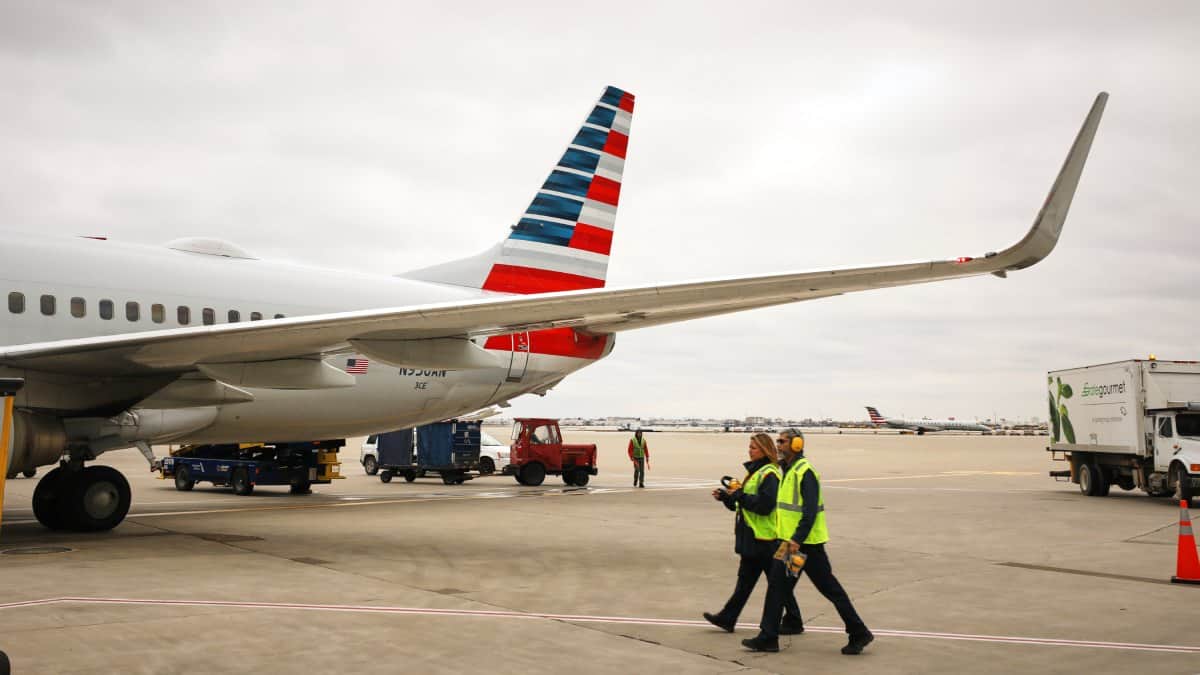
American Airlines is preparing for another significant adjustment to its US network as new, returning and seasonal services take effect from October through the winter. The changes touch major hubs including Charlotte, Chicago, Los Angeles, Miami and Phoenix, giving travellers more options while allowing the airline to fine-tune capacity around business demand, regional connectivity and the busy winter travel season.
The latest schedule changes show how American Airlines is continuing to adjust its domestic network rather than relying solely on large-scale route launches. Some services involve regional aircraft and smaller markets, while others restore important connections or add temporary capacity during periods when leisure demand traditionally rises.
Advertisement
This approach is particularly relevant as American continues to use its major hubs to distribute passengers across the United States. The airline operates a large network through hubs including Charlotte, Chicago, Los Angeles, Miami and Phoenix, with regional carriers providing connections from smaller communities into those larger gateways.
Charlotte Douglas International Airport continues to play an important role in American’s network, with additional regional flying scheduled to begin during the autumn. The schedule supplied for October shows new service beginning on October 5 with twice-daily regional operations using PSA Airlines Embraer ERJ145 aircraft.
Advertisement
Advertisement
The smaller aircraft are significant because they allow American to serve markets where demand may not justify the capacity of a larger mainline aircraft. Regional aviation remains an important part of American’s strategy, with PSA, Envoy, Republic and SkyWest among the carriers operating American Eagle services.
Chicago O’Hare is also at the centre of American’s autumn adjustments. The airline has continued to strengthen its position at the airport, where it plans more than 500 daily departures during the summer period and has announced additional domestic destinations as part of its broader hub strategy.
The October schedule includes additional regional flying from O’Hare beginning October 5, with three daily services planned using SkyWest CRJ700 aircraft. The use of regional jets indicates a focus on connecting smaller and mid-sized markets with one of the country’s largest aviation hubs.
O’Hare is not simply another airport in the American network. It is one of the carrier’s principal hubs and provides a critical connection point for passengers travelling between the Midwest and other parts of the United States.
American’s Chicago strategy has expanded beyond maintaining existing routes, with the airline recently announcing new service to Charlottesville, Virginia, and Ontario, California, while also preparing a new Chicago–Tokyo Narita route for March 2027.
Los Angeles International Airport is another major focus of the autumn schedule. American is scheduled to resume service from LAX to Cleveland, Columbus, Pittsburgh and Washington Dulles from October 5 after a temporary suspension.
The return is particularly relevant for travellers because these are major domestic markets linking Los Angeles with important business and population centres in the Midwest and East. American’s broader LAX strategy also includes year-round Cleveland and Washington service in its published network announcements, demonstrating the importance of Los Angeles as a long-haul and domestic gateway.
Temporary route suspensions can affect both business and leisure travellers because passengers often depend on nonstop service for time-sensitive journeys. Restoring connections gives travellers more choice and can reduce the need to connect through another American hub.
For Los Angeles, maintaining direct links with cities such as Cleveland, Columbus, Pittsburgh and Washington also helps strengthen the airport’s position as a major transcontinental gateway. The airline has separately described its new LAX routes as part of a strategy to provide broader connectivity across the United States.
The schedule becomes more varied as November approaches. American is planning further regional operations from Chicago O’Hare beginning November 1, while Philadelphia International Airport is scheduled to receive a Saturday-only regional service beginning November 7.
The Philadelphia operation is particularly suited to travellers with flexible weekend plans because Saturday-only flying can provide additional access without committing the airline to a full daily schedule. Such limited-frequency services can also allow an airline to test demand before deciding whether a route warrants additional capacity.
The aircraft involved in these changes illustrate the different layers of American’s network. Embraer ERJ145s, CRJ700s and CRJ900s have substantially less capacity than American’s mainline Boeing and Airbus aircraft, but they allow the airline to maintain connectivity to markets where larger aircraft would be less commercially efficient.
American’s own corporate reporting makes clear that regional airlines are an integral component of its network, particularly for feeding traffic into major hubs from lower-density markets. That structure gives the carrier the flexibility to match aircraft size with demand while maintaining connections across a much larger geographic area.
The most substantial changes arrive in December, when American begins adding seasonal flying for the peak winter period. The schedule supplied includes additional services from Miami, Chicago and Phoenix, alongside a Saturday-only seasonal operation from Boston.
Winter is strategically important for US airlines because leisure demand can shift dramatically as travellers head towards warmer destinations, visit family during the holidays or take advantage of school breaks. Airlines therefore frequently increase capacity on selected routes for a defined period rather than operating the same schedule throughout the year.
American’s Miami network is particularly important during the winter because South Florida becomes one of the country’s strongest leisure and international travel markets. The December schedule includes daily Boeing 737-800 operations beginning December 17 and continuing into early January.
Miami is already a major American hub and plays an important role in the carrier’s network to the Caribbean and Latin America. American has also announced additional seasonal international flying from Miami, including new and expanded services to destinations in the Caribbean and other nearby markets.
American has announced that its Miami operation will reach a milestone of 100 destinations in Mexico, the Caribbean and Latin America, with additional services including Antigua and seasonal flying to destinations such as Exuma and St Kitts.
That wider network makes the domestic capacity added around Miami particularly important. Passengers arriving from other US cities can use Miami as a gateway to international leisure destinations, while visitors from Latin America and the Caribbean can connect onward into American’s domestic network.
Chicago’s winter schedule also includes a significant long-haul component. American has announced daily Boeing 787-8 service from O’Hare to Kahului, Hawaii, beginning December 17 and continuing through March 27, 2027.
The route is a strong example of how seasonal network planning can connect a major mainland hub with a high-demand leisure destination. Hawaii traditionally attracts substantial winter holiday traffic, making larger aircraft particularly appropriate when demand is concentrated around the peak travel season.
The winter schedule also includes additional Boeing 737-800 flying from Chicago beginning December 17. While regional aircraft are useful for connecting smaller markets, the use of mainline Boeing aircraft signals a different demand profile and allows American to carry substantially more passengers on selected routes.
O’Hare’s importance to American means these additions can also have a network effect. Passengers from smaller cities can connect through Chicago, potentially turning a single seasonal route into part of a much larger itinerary.
Phoenix Sky Harbor International Airport is another important part of American’s winter network. The schedule provided indicates daily regional service beginning December 17 using SkyWest CRJ700 aircraft.
Phoenix is a major American hub and an important gateway to the US Southwest. Winter demand can be particularly strong in Arizona because the region attracts visitors escaping colder weather, while the airport also provides connections for residents travelling to other parts of the country.
Boston Logan International Airport is also scheduled to receive a Saturday-only seasonal operation beginning December 19 using an Airbus A321neo. The aircraft is significantly larger than the regional jets used on many of the other autumn additions, indicating a different capacity requirement.
Saturday-only service is often useful for leisure markets because weekend departures can align with holiday and short-break travel patterns. For travellers, it can provide an additional nonstop option during the most commercially important part of the winter season.
Taken together, these changes show an airline using several different tools to manage its network. Regional aircraft support thinner markets, restored routes return previously suspended connections, and larger aircraft are deployed where seasonal demand is expected to be strongest.
That flexibility is increasingly important in a competitive domestic aviation market. Airlines need to respond quickly to changes in fuel costs, passenger demand, aircraft availability and seasonal travel patterns while maintaining enough connectivity to support their hub operations.
The temporary suspension of selected Los Angeles services also highlights the role that operating economics can play in route planning. Airlines continually assess whether a route can generate sufficient revenue to justify the aircraft, crew, fuel and airport costs associated with operating it.
When those economics improve or market conditions change, a suspended route can return. The planned October restoration of the LAX services therefore illustrates how schedules can evolve even when the underlying demand for a city pair remains.
For passengers, the practical impact is straightforward: several markets will gain additional or returning nonstop options during the autumn and winter. However, travellers should distinguish between year-round services and seasonal operations because some of the announced flights are designed specifically around winter demand.
Seasonal schedules can also change after their initial operating period. Passengers planning holidays should therefore check American’s current booking information before finalising accommodation, onward transport or other non-refundable arrangements.
Advertisement
Advertisement
Advertisement












Tuesday, September 1, 2026

Tuesday, September 1, 2026

Tuesday, September 1, 2026

Tuesday, September 1, 2026

Tuesday, September 1, 2026

Tuesday, September 1, 2026

Tuesday, September 1, 2026