
Hundreds of Travelers Stranded at Punta Cana International Airport in the Dominican Republic as 101 Flights Are Delayed and 4 Canceled, Disrupting Holiday Plans for Tourists Flying on Major Carriers Including American Airlines, Delta, United Airlines, JetBlue, Spirit Airlines, With Routes To and From Key Cities Such as New York, Miami, Fort Lauderdale, Atlanta, Toronto, Montreal, Madrid, and London Affected

Published
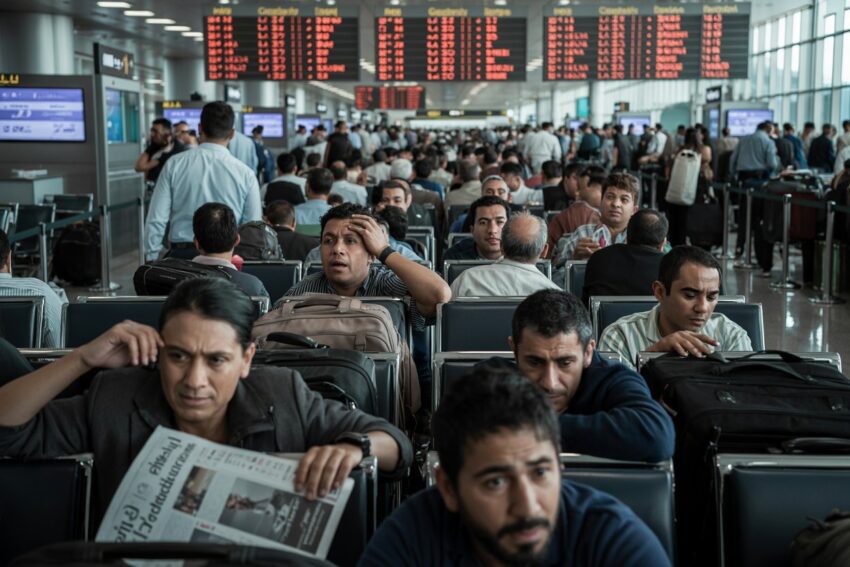 Image generated with Ai
Punta Cana, the Dominican Republic’s flagship beach destination, woke up today to scenes of frayed nerves, crowded departure halls, and confused families staring at departure boards flashing “DELAYED” again and again, as more than 100 flights ran late and several were cancelled at Punta Cana International Airport. For many holidaymakers, what was meant to be a smooth Caribbean escape turned into an anxious wait as airlines, air traffic controllers, and airport teams scrambled to manage a sudden surge in disruptions. Parents tried to soothe restless children stretched out on suitcases, while couples refreshed airline apps in the hope that their long‑planned getaway—or long‑awaited flight home—would eventually move to “boarding.”
101 Delays and Multiple Cancellations: An Unusually Disruptive Day
According to live operational data, Punta Cana International (IATA: PUJ) is facing an unusually high‑impact day, with reports indicating around 101 delayed flights and at least 4 cancellations across arrivals and departures. While the airport remains open and fully operational, this volume of disruption is far above a normal busy day for one of the Caribbean’s leading tourism gateways, suggesting a mix of upstream weather issues, aircraft rotations, and regional congestion cascading into the Dominican Republic. Punta Cana is a critical hub for North American and European leisure traffic, meaning schedule problems at major hubs can ripple quickly into the resort‑packed east coast of the country.
Role of Dominican Aviation Authorities
Behind the departure boards, the Dominican Republic’s civil aviation and air navigation system plays a central role in keeping traffic moving when conditions are strained. The Instituto Dominicano de Aviación Civil (IDAC), the autonomous state agency that regulates and promotes civil aviation and provides air navigation services, oversees air traffic services across the Santo Domingo Flight Information Region under a safety management framework aligned with ICAO standards. On high‑disruption days like this, IDAC’s air traffic controllers and technical teams must manage flows into and out of Punta Cana while maintaining safety and trying to absorb delays triggered by airline operations, weather, and congestion at foreign airports.
Tourism Authorities Watching Punta Cana Closely
Tourism officials, meanwhile, are closely watching the situation given Punta Cana’s outsized role in the Dominican Republic’s visitor economy. The Ministry of Tourism (MITUR), which is responsible for planning and regulating the tourism industry and promoting the country through its “Go Dominican Republic” platform, describes tourism as a key national growth engine, backed by extensive air connectivity to North America, Latin America, and Europe. When disruptions strike a primary gateway like Punta Cana, the effects spill beyond the terminal: delayed hotel check‑ins, missed resort transfers, rescheduled excursions, and interruptions to cruise and multi‑destination itineraries that depend on tight flight connections.
Advertisement
Advertisement
How Peak Season Pressures Turn Problems Into Chaos
While the precise triggers behind today’s spike in disruptions at Punta Cana are still unfolding, recent winter season briefings for the Dominican Republic have highlighted how quickly operational issues can escalate during peak leisure periods. Aviation specialists note that high seasonal demand, limited ramp space, and the tight scheduling of charter and scheduled flights can leave little margin when large source markets—especially the United States and Canada—experience weather, staffing, or air traffic control delays. In this context, a single storm system or ground delay program at a major hub can echo through the system and eventually land in overcrowded Caribbean terminals hours later.
Government Commitment to Safety and Reliability
Government agencies and tourism authorities have consistently underlined their commitment to ensuring that air transport remains both safe and reliable, even as passenger numbers climb. IDAC stresses that it manages air navigation services with a focus on safety, compliance with national regulations and ICAO Annex 19, and continuous improvement of technical and human resources to support a thriving tourism industry. MITUR, for its part, promotes air connectivity and works with airlines and airports to sustain and expand routes that feed destinations like Punta Cana, Bávaro, La Romana, and Santo Domingo. Today’s heavy delays offer a reminder of how dependent the Dominican Republic’s tourism machine is on stable, well‑coordinated aviation operations across several countries and control centers.
Advertisement
Advertisement
What Affected Travelers in Punta Cana Should Do
For travelers currently affected, the immediate advice remains practical. Passengers are being urged to check their flight status directly with airlines and through real‑time airport information tools before leaving for the airport, build in extra time for security and immigration, and stay alert for rebooking or rerouting options in case disruptions extend through the day. Tourism authorities also encourage visitors with package holidays to coordinate with tour operators, who may organize alternative transfers, hotel arrangements, or later departures when delays become prolonged. Many hotels and resorts in the Punta Cana area are experienced in handling arrival and departure disruptions and may offer flexible check‑in or check‑out where occupancy allows.
Long‑Term Resilience for Dominican Republic Aviation
At a broader level, today’s disruption at Punta Cana raises questions about long‑term resilience as the Dominican Republic’s visitor numbers continue to grow. With IDAC responsible for air navigation and MITUR responsible for tourism strategy and destination management, coordination between aviation and tourism planners will be critical to ensure that infrastructure, staffing, and contingency plans keep pace with the reality of more flights and more frequent climate‑linked weather events in source markets. Industry experts argue that investment in technology, additional apron and gate capacity, and more flexible scheduling windows could help reduce the risk of cascading delays that turn one bad day at distant hubs into a full‑blown meltdown at a Caribbean gateway.
Behind Every Delay in Punta Cana Is a Human Story
Yet even on a day of 101 delays and multiple cancellations, the human side of Punta Cana’s travel story remains front and center. In the check‑in lines, families clutching beach towels, honeymooners holding hands, and returning workers flying back to North America all share the same quiet hope: that the boards will shift from red to green, that boarding will be called, and that the long hours in fluorescent‑lit halls will give way to blue water and white sands—or simply a much‑needed arrival home. As Dominican aviation authorities and tourism leaders work to steady operations and protect the country’s reputation as one of the Caribbean’s most reliable sun destinations, today’s stranded passengers are a vivid reminder that behind every delay statistic lies a personal journey put on hold.
Advertisement
