

Uzbekistan Stuns Tourism World as ADB Backs 34 New Master Plans and 31 Major Projects Across the Country

Published
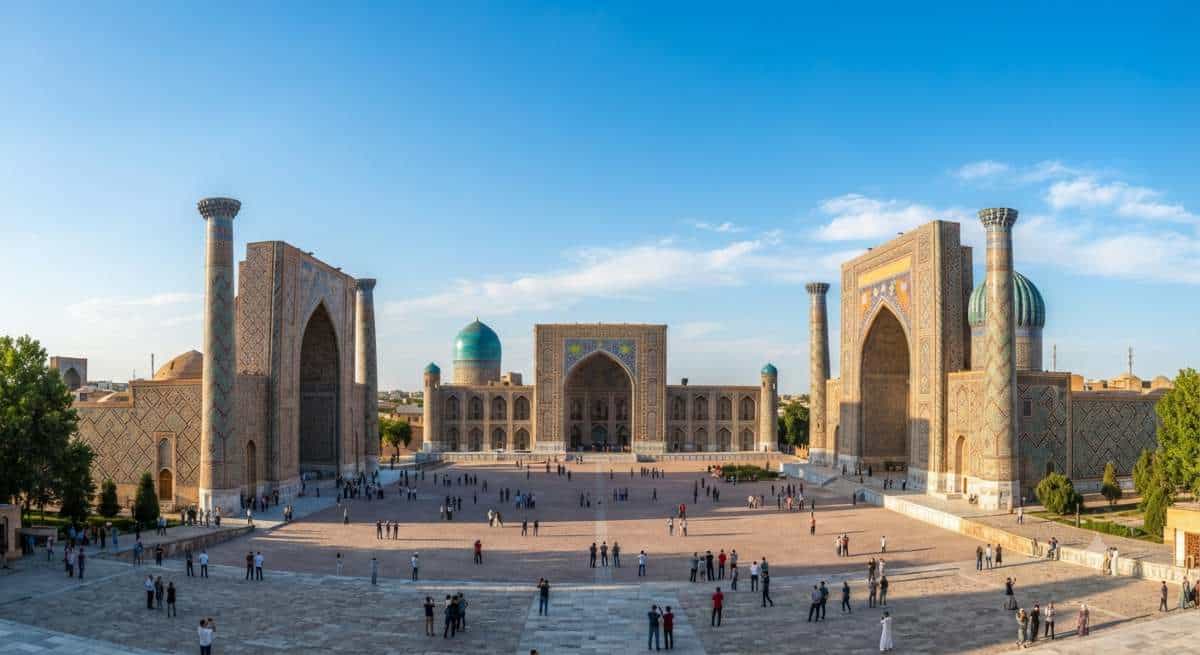
Uzbekistan tourism is entering a major development phase, with the Asian Development Bank (ADB) and the country’s Tourism Committee exploring grant financing, technical assistance and lending resources to support 34 tourism master plans across Uzbekistan’s regions.
The cooperation could significantly reshape the country’s tourism infrastructure between 2026 and 2027, while creating a wider pipeline of investment opportunities beyond Uzbekistan’s best-known destinations. Alongside regional master planning, 31 tourism projects are scheduled for implementation during the same period, potentially strengthening accommodation, attractions, transport links and other infrastructure required to support international and domestic visitors.
The discussions demonstrate Uzbekistan’s intention to use international financial resources and structured regional planning to build a more diversified tourism economy.
Why Is Uzbekistan Developing 34 Regional Tourism Master Plans?
The planned 34 tourism master plans are intended to establish a structured framework for tourism development across Uzbekistan’s regions.
Advertisement
Advertisement
Rather than allowing tourism infrastructure to develop unevenly, the master plans are expected to identify priorities, investment opportunities and infrastructure requirements for individual destinations.
The initiative is scheduled to take place during 2026–2027, following a presidential resolution adopted in April 2026.
Advertisement
Advertisement
Regional planning can help determine where new tourism infrastructure should be developed, which destinations have the strongest investment potential and what supporting facilities are needed to turn tourism assets into commercially viable destinations.
How Could ADB Financing Support Uzbekistan Tourism?
The discussions between Uzbekistan and the Asian Development Bank focused on the potential use of several forms of international financial support.
Advertisement
Advertisement
These include grant financing, technical assistance and lending resources.
Each mechanism can serve a different purpose in tourism development. Grants can support preparatory or capacity-building activities, technical assistance can provide expertise for planning and project development, while lending can help finance larger infrastructure investments.
The combination could provide Uzbekistan with a more comprehensive framework for moving tourism projects from planning to implementation.
For regional destinations, access to international development resources could also help overcome some of the financial and technical barriers associated with large-scale infrastructure development.
Advertisement
Advertisement
Who Participated in the Uzbekistan-ADB Tourism Meeting?
The discussions brought together representatives from Uzbekistan’s Tourism Committee and the Asian Development Bank.
J. Turaev, deputy director of the Project Office for Tourism Infrastructure Development under the Tourism Committee, participated in the meeting alongside Tatiana Kopelman, an ADB representative, and other Tourism Committee officials.
The meeting focused on regional tourism infrastructure, master-plan preparation and the mobilisation of international financial resources.
The involvement of the Tourism Committee’s infrastructure development project office highlights the importance being placed on turning regional tourism planning into practical development programmes.
What Are the 31 Tourism Projects Planned for 2026–2027?
In addition to the 34 regional master plans, 31 tourism projects are planned for implementation during 2026–2027.
The projects are being developed around a destination-development principle linking several components:
Advertisement
Advertisement
Attractive destination → project → infrastructure → entrepreneur → promotion → tourist.
This approach places infrastructure and private-sector participation within a broader tourism-development chain.
The objective is not simply to construct individual tourism facilities. Instead, projects are intended to connect attractive destinations with infrastructure, entrepreneurs, marketing and ultimately visitor demand.
Such an integrated approach can be particularly important in emerging destinations where tourism attractions may already exist but supporting infrastructure and commercial services remain limited.
How Could Regional Planning Change Uzbekistan Tourism?
Uzbekistan is internationally recognised for destinations such as Samarkand, Bukhara and Khiva, which form an important part of the country’s cultural tourism identity.
However, regional tourism development could expand the visitor experience beyond these established destinations.
Advertisement
Advertisement
Master plans can help identify lesser-known cultural, natural and creative tourism resources and determine how they can be connected to established tourism routes.
This could encourage visitors to extend their stays and explore multiple regions rather than concentrating their trips around a small number of historic cities.
Longer and more geographically distributed travel could also create economic opportunities for smaller communities.
Why Is the Fergana Valley Important to the Tourism Strategy?
The meeting also addressed the continuation of an ADB technical assistance project focused on mapping creative and intangible cultural tourism resources in the Fergana Valley.
The mapping initiative is designed to identify cultural and creative assets that could be developed into new tourism products and destinations.
The Fergana Valley has considerable potential for tourism based on cultural traditions, crafts, creative industries and intangible heritage.
Advertisement
Advertisement
Systematic mapping can help identify resources that may not yet be fully integrated into mainstream tourism programmes.
Once these assets are documented and evaluated, they can potentially support new experiences, routes and destination products.
Can Creative Tourism Create New Visitor Experiences?
Creative and intangible cultural tourism can provide destinations with experiences that are difficult to replicate elsewhere.
Traditional crafts, local artistic practices, cultural knowledge and community-based activities can give visitors opportunities to engage with a destination beyond conventional sightseeing.
For Uzbekistan, this could complement its established reputation for Silk Road heritage and historic architecture.
The Fergana Valley mapping project could therefore help broaden the country’s tourism proposition by connecting cultural resources with tourism entrepreneurship and infrastructure.
Advertisement
Advertisement
This approach can also create opportunities for local communities to participate directly in the tourism economy.
Why Is Infrastructure Critical to Uzbekistan’s Tourism Growth?
Tourism attractions alone are rarely sufficient to generate sustained visitor growth.
Travellers also require reliable transportation, accommodation, visitor facilities, public infrastructure, digital connectivity and other supporting services.
This makes infrastructure planning central to Uzbekistan’s regional tourism ambitions.
The proposed master plans can help identify infrastructure gaps before projects are developed, potentially allowing investment to be directed towards areas where it can generate the greatest tourism impact.
Better infrastructure could also improve connections between established destinations and emerging tourism areas.
Advertisement
Advertisement
How Could International Investment Expand Uzbekistan’s Tourism Pipeline?
The involvement of ADB provides an international development-finance dimension to Uzbekistan’s tourism strategy.
By mobilising grants, technical assistance and lending, the country can potentially create a stronger pipeline of projects capable of attracting additional public and private investment.
International financial institutions can also provide technical expertise in areas such as project preparation, infrastructure planning and investment structuring.
For private investors, clearly defined master plans can make regional tourism opportunities easier to assess.
A well-prepared project pipeline can therefore help bridge the gap between government tourism ambitions and commercially viable investment.
What Could the Tourism Projects Mean for Local Entrepreneurs?
The 31-project programme explicitly incorporates entrepreneurs into the destination-development model.
Advertisement
Advertisement
This is important because tourism infrastructure ultimately needs businesses capable of operating hotels, restaurants, attractions, tours, cultural experiences and other visitor services.
Regional development could create opportunities for local entrepreneurs to participate in tourism value chains.
Small and medium-sized businesses may benefit from increased visitor numbers if they are able to provide authentic experiences and services aligned with regional tourism products.
The model could therefore support both infrastructure development and broader local economic participation.
Uzbekistan Positions Regional Tourism for the Next Growth Phase
Uzbekistan is building a more structured foundation for tourism development by combining regional master planning, international financing, infrastructure investment and cultural-resource mapping.
The development of 34 tourism master plans during 2026–2027 is intended to provide a strategic framework for tourism infrastructure and investment opportunities across the country’s regions.
Advertisement
Advertisement
At the same time, 31 tourism projects are planned for implementation, using a model that connects attractive destinations with infrastructure, entrepreneurs, promotion and tourists.
The continuation of ADB technical assistance in the Fergana Valley adds another important dimension by identifying creative and intangible cultural resources that could become future tourism products.
The partnership between Uzbekistan and the ADB could consequently play a significant role in shifting the country’s tourism development from a concentration on established destinations towards a broader regional model.
If the planned master plans and projects are successfully implemented, Uzbekistan could see a wider geographical distribution of tourism investment, stronger infrastructure and a larger portfolio of destinations available to international travellers.
The strategy ultimately points towards a more connected and investment-ready Uzbekistan tourism sector, where regional infrastructure, cultural assets, private enterprise and international financing are brought together to create the next generation of tourism destinations.
Advertisement
