
Cuba Emerges Alongside Jamaica Trinidad and More With Hidden Caribbean Rail Wonders

Published
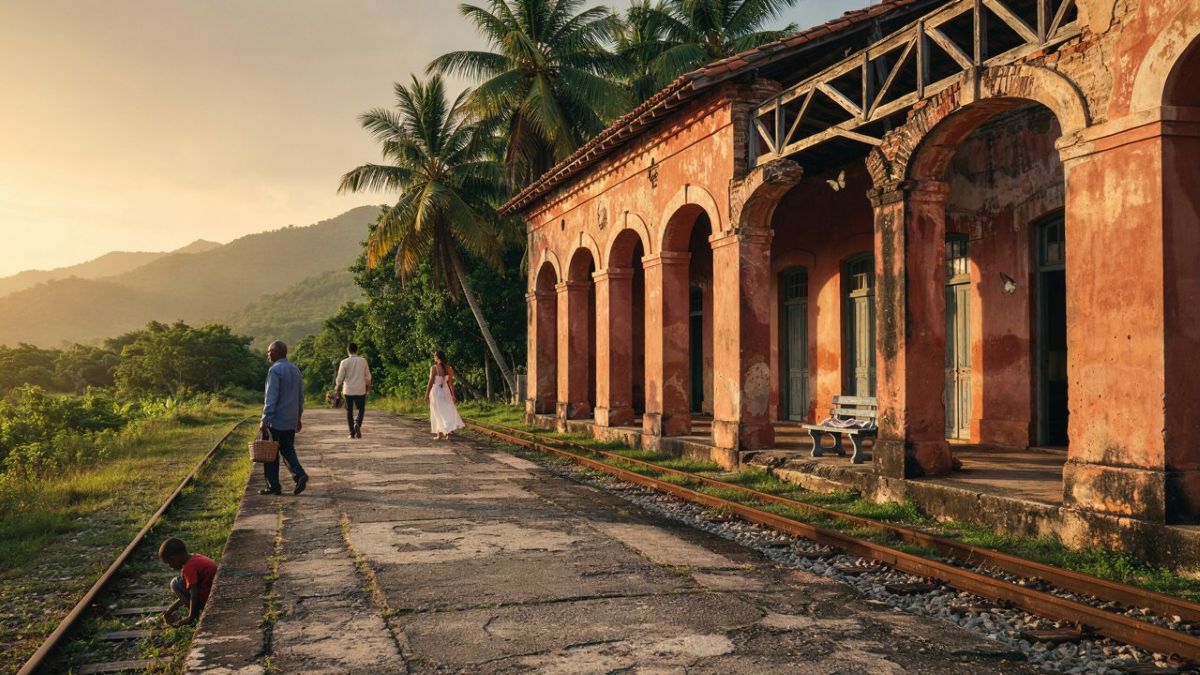
Image generated with Ai
The Caribbean is famous for beaches, ships and bright blue seas. Yet another travel story waits behind old station walls. Historic railway stations in Jamaica, Trinidad and Tobago, Cuba and Puerto Rico now offer art, museums, local businesses and powerful stories from the past. These places show how travel can go beyond a resort or a beach day.
Many Caribbean railways once carried people, sugar, goods and workers across islands. Roads later took over. Trains stopped. Some stations were left behind. A small number survived. Today, they give travellers a new reason to slow down and see the region in a different way.
Jamaica Port Antonio Station Turns Rail Heritage Into Local Life
Port Antonio Railway Station in Jamaica is one of the clearest examples of old rail space finding a new role. The station once formed part of Jamaica’s railway network. It connected communities at a time when the train was vital for travel and trade.
Today, the historic building has moved away from its old transport job. It has housed small businesses, including a flower shop, an art gallery and a life centre. This makes the station more than an old building. It is part of daily life in Port Antonio.
For visitors, this creates a different kind of heritage stop. A traveller can see the old station fabric while also meeting artists, local traders and people who use the space. The building tells two stories at once. One story is about the railway age. The other is about a town keeping an old place active.
Port Antonio is already known for its green hills, quiet coves and relaxed mood. The station adds an urban heritage layer to a trip. It can work well for visitors who want to look beyond the coast and understand Jamaica’s wider history.
Trinidad and Tobago Keeps an Industrial Railway Story Alive
Pointe-a-Pierre Railway Station in Trinidad and Tobago offers a strong industrial heritage experience. The station was built in 1885. It helped link Pointe-a-Pierre with Port of Spain and San Fernando. It also played an important role in moving workers, goods and equipment connected with the nearby refinery.
The railway closed in 1965. However, the station did not disappear. The building was restored and became the Petroleum History Museum. This gives visitors a clear view of how rail, energy and work helped shape the area.
The museum setting matters because it preserves more than old objects. It protects a place that explains how people travelled to work and how an oil-based economy developed. The station was once a busy gateway. Its reuse keeps that memory visible.
This is a useful stop for travellers who enjoy museums with a real sense of place. It is not a theme attraction. Its strength is its honesty. The station remains connected to the story of the community around it.
Cuba Offers a Railway Museum With Big Historical Weight
Cuba has one of the Caribbean’s richest railway histories. Railways played a major part in moving sugar and building links between cities. Havana’s Museo del Ferrocarril gives visitors a focused way to explore that history.
The museum displays old steam, diesel and electric locomotives. It also has railway photographs, signalling items and a recreated operations room. Visitors can see how trains were managed before modern digital systems. The museum also holds specialist railway records and model displays.
This is a strong choice for travellers who want more than a quick photo stop. It explains how transport changed Cuba over many years. It also shows the skill involved in running a railway. Signals, engines and track systems all had to work together.
Havana is often explored through old streets, music and classic cars. A railway museum adds another side of the city. It reminds visitors that Cuba’s transport history was shaped by both rail and road.
Travellers should always check current opening times before making a special journey. Heritage sites can change their schedules. This is especially important when planning a detailed Cuba itinerary.
Advertisement
Advertisement
Puerto Rico Preserves a Rare Railway Landmark in Aguada
In Aguada, Puerto Rico, Antigua Estación del Tren remains a rare surviving part of the island’s old rail system. The station helped connect western municipalities with San Juan. Its last train departed in 1950 as roads became the main way to travel.
The building now stands as a heritage landmark on Avenida Nativo Alers. It is not promoted as a large museum or food market. That does not make it less important. Its value comes from survival.
For travellers, Aguada station is a short but meaningful stop. It can fit into a west-coast journey that includes beaches, local food and small-town culture. It gives visitors a chance to picture an earlier Puerto Rico, when railways tied distant communities together.
This kind of site also shows why preservation matters. Once a station disappears, a part of local memory disappears with it. Aguada keeps a visible link with the island’s transport past.
Port of Spain Shows the Scale of Trinidad Rail Travel
Port of Spain’s Old Railway Station, also known as City Gate, is another major landmark. The building was completed in 1924 and served as the main hub for Trinidad Government Railway routes. It linked the capital with many areas of the island.
The railway closed in 1968. The building now houses the Public Transport Service Corporation. It remains part of the city’s public transport landscape and is accessible as a heritage landmark.
This is not a museum or hotel. Still, it deserves attention. Its large design shows how important rail travel once was to Trinidad. It is a reminder that stations were often built as symbols of progress, trade and movement.
| Rank | Country or Territory | Historic railway station | Location | Railway heritage | Current visitor role | What travellers can do | Editorial status |
|---|---|---|---|---|---|---|---|
| 1 | Jamaica | Port Antonio Railway Station | Port Antonio, Portland | Part of Jamaica’s historic island railway system | Repurposed for local commercial and creative use | See the historic building and explore businesses including a flower shop, art gallery and life centre | Strongest Caribbean example of adaptive reuse |
| 2 | Trinidad and Tobago | Pointe-a-Pierre Railway Station | Pointe-a-Pierre | Built in 1885; linked communities and the refinery with Port of Spain and San Fernando | Petroleum History Museum | Explore railway, refinery and energy-history displays in the restored station | Strong museum and industrial-heritage story |
| 3 | Cuba | Museo del Ferrocarril | Havana | Preserves Cuba’s major railway legacy, shaped by sugar transport and early island development | Railway museum | View locomotives, signalling equipment, railway records, models and an operations-room display | Strong rail-history attraction; verify opening hours before travel |
| 4 | Puerto Rico | Antigua Estación del Tren | Aguada | Helped link western Puerto Rico with San Juan; last train departed in 1950 | Preserved heritage landmark | Photograph the building and include it in a west-coast heritage road trip | Good short stop, not confirmed as a full museum or retail venue |
| 5 | Trinidad and Tobago | Old Railway Station or City Gate | Port of Spain | Completed in 1924 as the hub of Trinidad Government Railway routes | Public transport headquarters and heritage landmark | View important colonial-era railway architecture in the capital | Strong architectural stop, not a museum or food hall |
| 6 | Jamaica | Kingston Railway Station | Kingston | Built in 1845; reflects Kingston’s former importance in trade and rail travel | Protected heritage building | View Jamaica Georgian architecture and railway-era design | Preservation story; no verified visitor conversion |
| 7 | Jamaica | Spanish Town Railway Station | Spanish Town, St Catherine | Part of Jamaica’s early railway network, which began in the nineteenth century | Heritage railway building | See a historic brick station building during a Spanish Town heritage visit | Heritage landmark; no verified museum or commercial reuse |
| 8 | Jamaica | Old Harbour Railway Station | Old Harbour, St Catherine | A two-storey Jamaica Georgian railway structure | Heritage building | Include in a local architecture and transport-history route | Heritage value; visitor facilities not confirmed |
| 9 | Jamaica | Cambridge Railway Station | Cambridge, St James | Historic Jamaica Georgian station with traditional timber details | Heritage building | View a surviving rural railway structure | Suitable for a specialist heritage itinerary |
| 10 | Jamaica | Montpelier Railway Station | St James | Jamaica Georgian station with Victorian elements | Heritage building | Explore historic station design near Jamaica’s north-west tourism region | Heritage landmark; no confirmed public reuse |
| 11 | Jamaica | Kingston Railway Station | Kingston | Main historic city station from 1845 | Proposed heritage renewal site | View from outside where access allows and follow future restoration news | Future potential, not a current museum or market |
| 12 | Trinidad and Tobago | San Fernando Railway Station | San Fernando | Established in 1882 under Trinidad Government Railway | Historic station building | View an important southern Trinidad rail landmark | Restoration potential; not confirmed as a visitor museum |
| 13 | Trinidad and Tobago | Caparo Train Station and Water Tank | Caparo | Part of the Caparo Valley railway line | Preserved railway site | See one of Trinidad’s better-preserved former station sites | Specialist heritage stop |
| 14 | Trinidad and Tobago | Flanagin Town Railway Station | Trinidad | Former station on the Trinidad Government Railway network | Preserved historic site | Explore a lesser-known railway remnant | Specialist heritage stop |
| 15 | Bermuda | Former Flatts Railway Station | Hamilton Parish | Former stop on the Bermuda Railway | Available for lease after closure of its earlier museum use | View from outside where permitted; follow redevelopment plans | Future reuse story, not a current museum |
| 16 | Bermuda | Former Aquarium Railway Station | Near Flatts Village | Former Bermuda Railway stop near the aquarium area | Former railway museum site | Combine Railway Trail exploration with Flatts Village heritage | Museum is not confirmed as currently operating |
| 17 | Cuba | Havana Central Railway Station | Havana | Major terminal built in 1912 and central to Cuba’s rail network | Working historic terminal | Admire the façade and use it as a starting point for Havana transport history | Important historic terminal; not a repurposed museum or market |
| 18 | Cuba | Morón Railway Terminal | Morón, Ciego de Ávila | Historic central-Cuba rail junction with notable architecture | Historic railway terminal | View one of Cuba’s most elegant railway buildings outside Havana | Useful railway-architecture stop; current visitor services require checking |
Caribbean Rail Heritage Offers a New Travel Route
The Caribbean does not yet have many railway terminals turned into major food halls, luxury hotels or large indoor markets. That is an important fact. Travellers should not expect the same scale found in Europe or North America.
But the smaller story is more interesting. In Port Antonio, a former station supports local business and art. In Pointe-a-Pierre, a station has become a museum. In Havana, railway history has been collected and shared. In Aguada and Port of Spain, historic buildings still hold their place in the landscape.
These stations offer travellers a fresh reason to explore. They invite people to step away from the beach for an hour and discover how the Caribbean moved, worked and changed.
Advertisement
Advertisement
Advertisement
