

Palau Builds Babeldaob Heritage Tourism Beyond Koror With Rael Kedam Trails and Ngchesar Alii Pass

Published
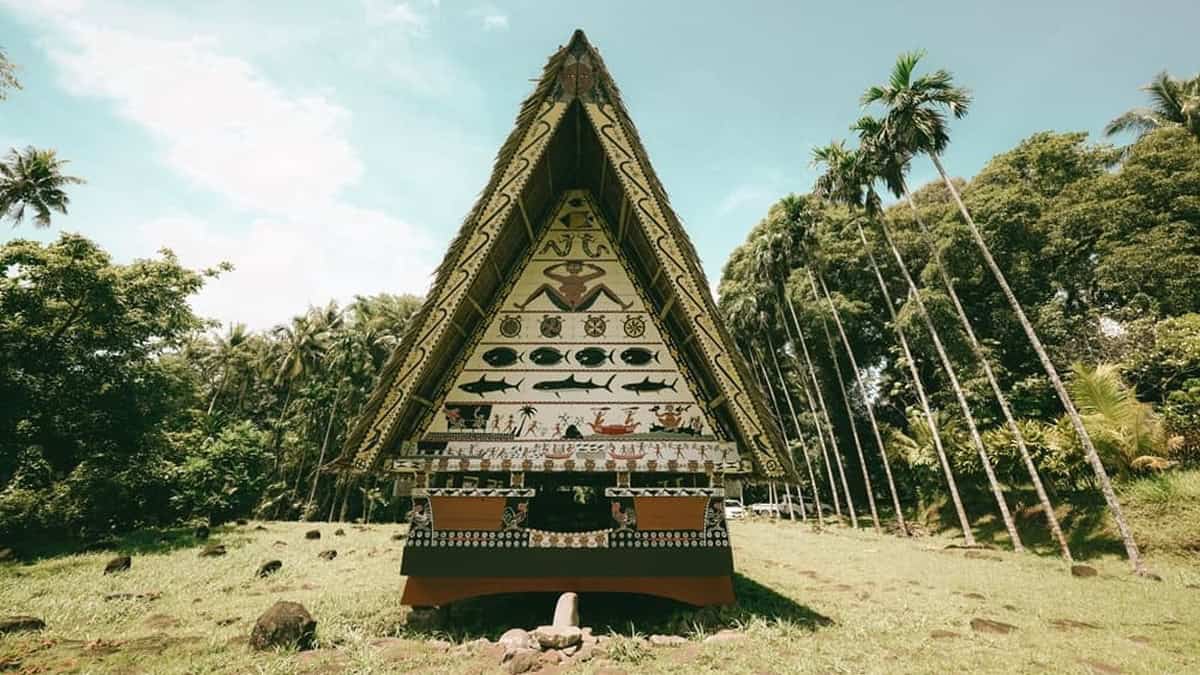
Palau is entering a more consequential phase of tourism diversification on Babeldaob. Initial funding for interconnected historical hiking trails, a US$135,000 living-heritage project in Airai, tourism-product assessment in Ngchesar, a 36-month Japan-related heritage programme and improved Koror–Babeldaob public transport are beginning to turn longstanding land-tourism plans into practical visitor infrastructure. The timing matters: Palau recorded 58,605 visitors from January through August 2026, up 26% year on year, while sightseeing and cultural or historical touring ranked among August’s five leading visitor activities.
Babeldaob Tourism Has Moved Beyond Another Marketing Campaign
The important development for travel businesses is not simply that Palau wants tourists to discover Babeldaob. That ambition has existed for years. What changed during 2026 is that several separate pieces of the visitor economy began moving simultaneously from policy into funded development, site assessment and product design.
On 8 May, Palau’s Ministry of Human Resources, Culture, Tourism and Development, working through its cultural-preservation and tourism bureaux, entered an agreement with Airai, Aimeliik and Ngchesar governments and the Palau Visitors Authority to develop and maintain interconnected hiking trails. The programme includes sections of the historic Rael Kedam trail system. Initial funding was subsequently awarded to the three states to begin the Landmark Hiking Trail Initiative.
Crucially, the official material does not announce a completed, fully bookable long-distance trail. For the travel trade, the accurate interpretation is that Palau has entered the implementation stage of creating a connected terrestrial tourism product.
Advertisement
Advertisement
| 2026 tourism development | Geography | Verified position | Current development stage | Potential trade significance |
|---|---|---|---|---|
| Landmark Hiking Trail Initiative | Airai, Aimeliik, Ngchesar | Initial funding awarded; interconnected network includes sections of Rael Kedam | Implementation beginning | Creates basis for guided hiking, history and cultural itineraries |
| Ngcheschang Living Heritage Village | Airai State | US$135,000 one-year programme | Funded implementation | Adds structured community-led cultural experiences |
| Alii Pass assessment | Ngchesar State | Visitor access, guides, interpretation, safety, infrastructure and food assessed | Product-development stage | Could convert dispersed attractions into sellable experiences |
| Japan-related historical heritage programme | Koror State and Babeldaob | JICA technical cooperation and master planning | 36-month planning programme | Adds heritage mapping, interpretation and tourism-use framework |
| Phase 2 public bus expansion | Koror and Babeldaob | Additional Koror–Melekeok trips introduced | Operational | Reduces some transport friction but does not replace organised tours |
Sources: Palau Visitors Authority, Palau Ministry of HRCTD and JICA.
Airai’s US$135,000 Investment Adds Physical Visitor Infrastructure
A particularly important piece of the story arrived on 1 August. The Palau Visitors Authority and Australian Government signed a grant agreement covering a US$135,000, one-year Ngcheschang Living Heritage Village Initiative in Airai State.
Advertisement
Advertisement
According to the Palau Visitors Authority, the project will rehabilitate traditional stone pathways, construct Palauan huts using local materials and techniques, and establish community-led heritage programming. The infrastructure is intended to support cultural activities, traditional practices, education and visitor experiences.
That distinction matters. Babeldaob already possesses cultural assets. The investment is about making a heritage location more capable of functioning as a visitor product while keeping participation and economic activity within its community.
The project also strengthens Palau’s wider Alii Pass community-tourism programme and explicitly supports efforts to distribute visitors beyond Koror. PVA connects it directly to the national goal of developing higher-value, lower-impact tourism while improving local economic participation.
Ngchesar Is Testing What a Saleable Community Experience Requires
Five days after the Airai grant agreement, PVA assessed potential Alii Pass locations in Ngchesar. This may look less dramatic than a construction announcement, but commercially it is one of the most instructive developments.
The assessment did not examine attractions in isolation. It considered accessibility, interpretation, guide provision, safety, infrastructure, community participation, dining and local food. Recommendations are intended to support future planning, capacity building and product development.
That creates a much clearer tourism-development proposition. A waterfall, heritage landscape or archaeological location is not automatically a tourism product. Tour operators require reliable access, interpretable content, trained hosts, realistic timings, food arrangements, risk procedures and a clear visitor proposition.
Advertisement
Advertisement
Ngchesar therefore represents the supply-side work needed before international distributors can confidently incorporate more of Babeldaob into fixed itineraries.
Japan-Related Heritage Could Add Another Layer to Babeldaob Touring
Palau’s historical-tourism pipeline is also expanding through cooperation with the Japan International Cooperation Agency.
According to JICA, a Record of Discussions was signed with Palau’s Ministry of Human Resources, Culture, Tourism and Development on 8 May for the Project for Formulating Community Promotion Plan through Management of Historical Heritages. The planned implementation period is 36 months from the mission’s arrival, with the cultural-preservation bureau, tourism bureau, ministry and Palau Visitors Authority among the implementing bodies.
Earlier 2026 PVA documentation provides additional detail. The programme is designed to identify Japan-related heritage among 196 sites on Palau’s national Register of Historic Places, develop tourism and educational utilisation models, and strengthen heritage-management arrangements. Its expected work includes updating records and mapping approximately 30 Japan-related sites across Koror State and Babeldaob, alongside development of educational material and a community-based tourism model connected with Alii Pass.
For historical-travel specialists, this could eventually give Babeldaob a more coherent interpretation framework instead of presenting wartime and colonial-era remains as disconnected roadside stops.
Palau’s Tourism Recovery Makes Visitor Dispersal More Urgent
As of 4 October 2026, PVA’s latest published monthly report is for August; its official publication index does not yet list a September visitor-arrivals report.
Advertisement
Advertisement
The August report puts January-to-August arrivals at 58,605, compared with 46,400 during the same period of 2025, an increase of 26%. China remained the largest source group, while Japan and Australia recorded particularly strong percentage growth.
| Source market | Jan–Aug 2026 arrivals | Share of total* | YoY growth |
|---|---|---|---|
| China | 20,792 | 35.5% | +38% |
| Taiwan | 9,983 | 17.0% | +4% |
| Japan | 8,256 | 14.1% | +83% |
| USA/Canada | 7,875 | 13.4% | +1% |
| Others | 4,016 | 6.9% | +7% |
| Europe | 3,920 | 6.7% | +16% |
| Australia | 2,831 | 4.8% | +68% |
| South Korea | 932 | 1.6% | +56% |
| Total | 58,605 | 100% | +26% |
*Shares calculated from the official Palau total. Official arrival counts are also published by Palau’s Bureau of Immigration and Bureau of Budget and Planning with PVA.
The demand profile strengthens the case for land products. PVA’s August entry-form dataset covered 7,399 tourist entries. Seventy-five per cent were first-time visitors. Swimming and snorkelling remained the leading activity, but land-based sightseeing ranked second, while cultural or historical tours also appeared among the top five activities.
August needs one qualification. Palau hosted the 55th Pacific Islands Forum Leaders Meeting, and conference, convention and meeting travel represented 25.8% of the entry-form dataset. The month therefore should not be interpreted as a pure leisure-demand sample.
Koror Remains the Hub While Babeldaob Access Slowly Improves
Koror still anchors much of Palau’s accommodation, tour distribution and visitor activity, making transport between the urban tourism base and Babeldaob central to any successful diversification strategy.
Palau launched Phase 2 of its public bus service on 3 April 2026. The programme increased Koror frequencies to roughly every 50 to 60 minutes and added morning and evening trips between Melekeok and Koror. Official fares range from US$1 to US$3 per ride, with cash and exact fare required. Development of a mobile trip-planning application also forms part of the programme.
Advertisement
Advertisement
This is useful infrastructure, but agents should not treat the network as a dedicated tourist sightseeing service. Babeldaob’s developing heritage products remain dispersed, and organised ground transport or guides will still be important for many itineraries.
Why the 2026 Babeldaob Shift Matters More Than Individual Announcements
The information gain comes from viewing these initiatives together.
Palau is beginning to assemble several components that a functioning inland visitor economy needs: trails create movement; heritage preservation supplies content; interpretation gives sites meaning; community programmes create hosts and revenue recipients; food adds visitor spend; transport improves access; and tourism assessments identify safety and service gaps.
None alone fundamentally changes Babeldaob tourism. Together, they indicate a transition from simply possessing attractions to developing the architecture of a destination product.
That difference is commercially significant. A tour operator cannot build dependable inventory around scenic potential alone. It needs predictable access, durations, service standards, booking arrangements, trained guides, rest stops, food supply, visitor management and clarity over permissions or fees.
The 2026 projects are addressing parts of that chain.
Advertisement
Advertisement
There is also a destination-management advantage. Increasing visitor spending outside Koror does not require Palau to abandon its marine tourism identity. Instead, a successful Babeldaob programme can supplement Rock Islands, diving and snorkelling days with inland experiences, widening the range of businesses and communities participating in tourism.
This is why describing the policy as Palau moving tourists away from the water would be inaccurate. The strategy is additive, not substitutive.
The New Projects Follow a Much Older Babeldaob Tourism Blueprint
The significance becomes clearer against Palau’s previous planning.
The official Koror–Babeldaob Resilient Urban Development Strategy and Action Plan called for an island-wide Babeldaob tourism promotion strategy, state-level tourism products and tourism circuits linking attractions. It also identified the need for investment in accommodation, restaurants, guide services, forest walks, waterfalls and cultural activities because limited tourism investment had historically constrained Babeldaob’s development.
That historical planning context makes the 2026 developments more important. The hiking initiative now links multiple states. Airai has a funded village product. Ngchesar is undergoing detailed product assessment. JICA is adding heritage documentation and interpretation. Public transport is extending further into Babeldaob.
In other words, projects visible in 2026 resemble practical building blocks for objectives that existed on planning documents years earlier.
Advertisement
Advertisement
Sustainable Tourism Policy Sets Limits on How Babeldaob Should Grow
According to Palau’s Ministry of Human Resources, Culture, Tourism and Development, the Palau Sustainable Tourism Strategy 2025–2028 is designed around responsible, inclusive and resilient destination development involving national government, state administrations, businesses, NGOs, development partners and communities.
The policy environment matters because Babeldaob is unlikely to be positioned rationally as a high-volume extension of Koror. Airai’s Living Heritage project specifically connects its development with Palau’s high-value, low-impact tourism objective.
Latest Asian Development Bank forecasts also put Palau’s GDP growth at 5.8% in 2026 and 3.6% in 2027, adding a current macroeconomic backdrop to the country’s tourism recovery. ADB has separately identified the rebound in tourism as part of Palau’s wider post-pandemic economic improvement.
For the industry, the commercial opportunity is therefore likely to favour small-group cultural experiences, specialist history programmes, hiking, nature interpretation, community dining and guided touring rather than large-scale visitor throughput.
Critical Takeaways for Travel Agents and Tour Operators
- Do not market the entire Rael Kedam network as completed or fully open. Official sources confirm initial funding and development, not the completion of a single finished long-distance tourist route.
- Treat Ngcheschang as an implementation-stage product. The US$135,000 initiative runs for one year and involves physical rehabilitation plus community programming.
- Do not present every Ngchesar Alii Pass location as bookable. The August work was a site assessment intended to inform subsequent product development.
- Use Koror as the practical packaging base while monitoring Babeldaob inventory. The emerging opportunity is to add inland touring to existing marine itineraries rather than replace them.
- Confirm access, state requirements, guides, opening conditions and weather immediately before sale. Hiking and community assets require different operational planning from established boat excursions.
- Do not rely on public buses for tightly timed packaged tours. Phase 2 improves accessibility, but it is a public mobility network rather than a dedicated sightseeing service.
- Watch heritage interpretation closely. The JICA programme could significantly strengthen historical touring, but its 36-month timeframe means product development will be progressive.
- Prioritise local expenditure in itinerary design. Community meals, guides, cultural programming and locally managed experiences fit directly with Palau’s stated tourism-development direction.
Palau’s Next Tourism Story Could Be About Connecting Products Rather Than Discovering Attractions
The most important question after 4 October is no longer whether Babeldaob has tourism potential. Palau’s own planning documents settled that question years ago.
What matters now is whether the funded trails, Airai Living Heritage Village, Ngchesar Alii Pass development, historical-site interpretation and improved mobility can be assembled into reliable, regularly sellable visitor journeys.
Advertisement
Advertisement
That will determine whether Palau succeeds in distributing a larger share of tourism expenditure beyond Koror while protecting the low-density character that makes Babeldaob attractive.
With arrivals already 26% higher through August, land-based sightseeing showing measurable visitor demand, Japan returning strongly and community tourism projects moving into implementation, the commercial conditions are becoming more favourable. Yet the development remains deliberately incremental.
For travel businesses, that makes Babeldaob less a finished new tourism product today than an important product pipeline to watch through late 2026 and 2027. That distinction is precisely what makes the current story more consequential than another feature about places tourists can visit beyond Palau’s famous waters.
Advertisement
