
Russia Travel Faces Fresh Uncertainty as Mobilisation Fears Drive More Residents to Seek Overseas Routes

Published
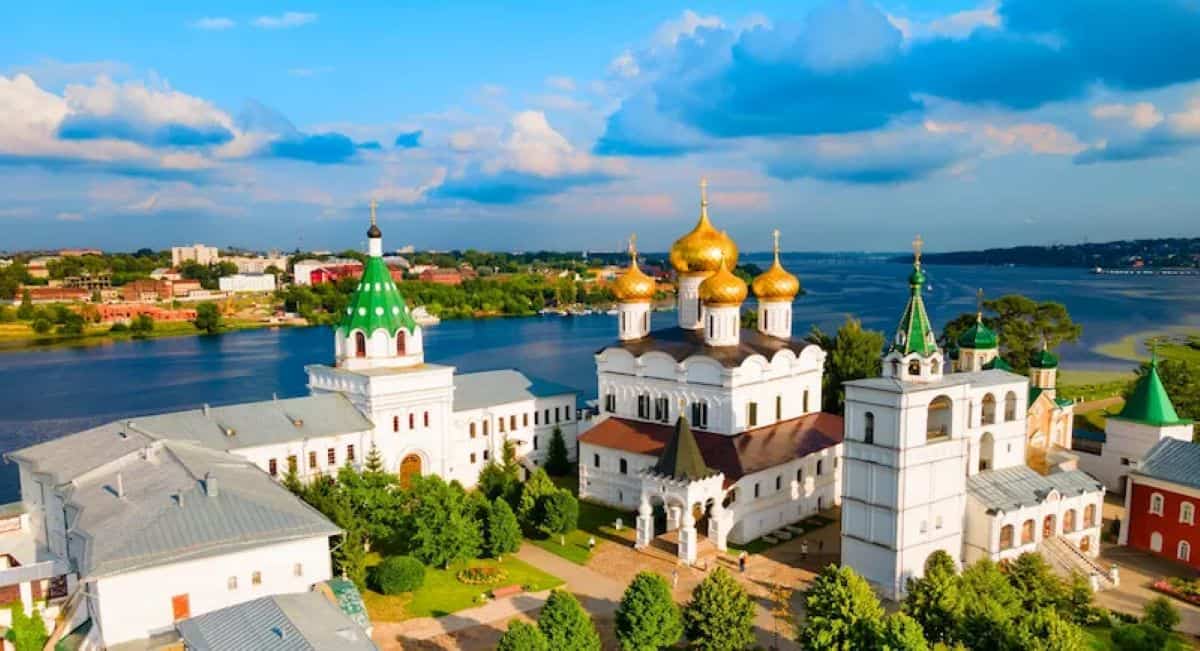
Russia is facing renewed mobility uncertainty as some residents prepare to leave amid fears of fresh military mobilisation, tighter internet controls and economic pressure. The movement remains far smaller than the mass departures witnessed after Russia announced partial mobilisation in September 2022. However, drone attacks, unpredictable flight disruption, connectivity restrictions and heightened security concerns are becoming increasingly relevant to travellers. At the same time, inbound tourism continues to function, with Russia recording 1,642,465 foreign tourist visits in 2025, according to industry analysis based on border statistics. That represented a 4.5% increase from 2024. The latest developments therefore create a divided travel market, with outbound anxiety rising while inbound demand gradually diversifies beyond traditional source markets.
Fresh Anxiety Is Changing Mobility
A new wave of uncertainty is influencing travel decisions among some Russian residents, particularly those concerned about a possible return to large-scale mobilisation. Reports indicate that some people are researching overseas relocation, while others have already moved to neighbouring countries. The pattern differs markedly from 2022, when the announcement of a partial call-up triggered a far more immediate rush towards international borders.
Advertisement
Advertisement
Current movement appears more precautionary than spontaneous. People are considering visa options, accommodation, employment prospects and longer stays before circumstances potentially change. That behaviour matters for travel businesses because early preparation can increase outbound demand without creating the dramatic border queues associated with an emergency departure.
The reported concerns extend beyond military service. Internet restrictions, economic uncertainty, political pressure and worries about personal freedoms are also influencing decisions among some residents. For travel operators, this creates a more complex mobility picture because different groups are travelling for entirely different reasons.
Advertisement
Advertisement
Importantly, there is no confirmed evidence in the latest information of a new nationwide mobilisation being formally announced. Travellers should therefore distinguish between official government decisions and circulating claims on social media. That distinction is essential because rumours can move ticket demand and hotel bookings well before any policy becomes reality.
2022 Still Shapes Traveller Behaviour
The current situation cannot be understood without examining the experience of 2022. Following the partial mobilisation announcement, large numbers of Russians travelled abroad, while neighbouring destinations experienced sharp increases in demand. Georgia, Armenia, Kazakhstan and Turkey became particularly important destinations for people seeking accessible international routes.
Advertisement
Advertisement
The present environment is materially different. There are no comparable reports of nationwide border queues or widespread shortages of airline tickets to major visa-free destinations. Nevertheless, memories of 2022 can encourage residents to make travel arrangements earlier when mobilisation rumours intensify.
This creates an important distinction for analysts. Higher outbound travel interest does not automatically mean another mass exodus is underway. Instead, the market can experience a gradual increase in precautionary departures, longer overseas stays and flexible relocation planning.
| Travel factor | 2022 mobilisation | Current environment |
|---|---|---|
| Outbound movement | Sudden and exceptionally strong | More gradual and dispersed |
| Border pressure | Significant pressure at several crossings | No comparable nationwide queues reported |
| Main concern | Immediate military call-up | Mobilisation rumours plus wider uncertainty |
| Traveller behaviour | Rapid departure | Research, precaution and longer stays |
| Key nearby destinations | Georgia, Armenia, Kazakhstan, Turkey | Similar regional destinations remain relevant |
| Tourism implication | Severe short-term disruption | Uneven outbound pressure |
For travel companies, the distinction has commercial importance. A gradual movement can produce sustained demand for flights, accommodation and relocation services without generating the extraordinary spikes associated with an emergency.
Inbound Tourism Finds New Momentum
Russia’s inbound tourism market has continued to operate despite the country’s wider geopolitical and aviation challenges. Industry data show that 1,642,465 foreigners travelled to Russia for tourism purposes in 2025, representing an annual increase of 4.5%. The fourth quarter was particularly strong, with inbound tourism visits rising 24.4% year on year.
The market is also becoming more geographically diverse. China remained the largest source market, but growing arrivals from the Middle East, India and other countries are changing the composition of foreign tourism. This diversification gives Russian tourism businesses alternative sources of demand as traditional European visitor flows remain constrained.
China accounted for roughly half of Russia’s foreign tourist traffic in 2025. However, the industry has increasingly highlighted the growth potential of smaller but faster-growing markets, particularly across the Gulf and South Asia.
Advertisement
Advertisement
The trend is significant for international travel companies. Russia’s tourism market is not simply shrinking; it is being reconfigured around different source regions. Airlines, destination managers and hotels therefore need to understand changing visitor geography rather than relying solely on historical European demand.
Moscow And St Petersburg Remain Crucial
Moscow and St Petersburg continue to form the backbone of conventional international itineraries. Their concentration of major attractions, established hotel infrastructure, international airports and cultural institutions makes them natural entry points for organised foreign tourism.
However, the wider market is gradually extending beyond the two metropolitan centres. Southern destinations, regional cities and nature-based routes are attracting growing interest from selected overseas markets. That expansion could create new opportunities for regional accommodation providers and destination-management companies.
The development also introduces operational considerations. Travellers moving beyond Moscow and St Petersburg can face different transport frequencies, connectivity conditions and local restrictions. Consequently, regional itineraries require more careful contingency planning than a short metropolitan stay.
Internet Restrictions Affect Travel Planning
Connectivity has become a practical consideration for both residents and visitors. Russia has expanded restrictions affecting access to various websites, platforms and digital services, while temporary mobile internet disruptions can occur during security incidents.
For tourists, the consequences can be surprisingly practical. Boarding passes, hotel confirmations, digital maps, banking applications and translation tools increasingly depend on reliable connectivity. Travellers should therefore download essential documents before departure and retain offline copies of important information.
Advertisement
Advertisement
The same issue is more consequential for remote workers and Russian residents whose income depends on international clients. Persistent access problems can affect communications, payments and business continuity. As a result, connectivity is increasingly becoming part of destination-risk planning rather than simply a convenience issue.
Flight Disruption Remains A Major Risk
Air travel presents one of the most important operational uncertainties for visitors. The UK’s Foreign, Commonwealth & Development Office currently advises against all travel to Russia, citing security incidents, drone attacks, air-defence activity and limited government assistance.
The FCDO also warns that Russian airspace can close during drone attacks. Such incidents have produced unpredictable delays, diversions and cancellations affecting airports in European Russia.
For travellers, this means flight schedules should never be treated as completely static. Passengers should check directly with their airline before leaving for the airport and allow additional time for potential changes. Travel insurance also deserves careful scrutiny because government warnings can affect coverage.
For corporate travel departments, the implications are broader. Companies should assess whether insurance policies cover the destination and whether employees have adequate contingency arrangements. A low-cost itinerary may become considerably more expensive if disruption produces an unplanned overnight stay or rerouting.
Entry Rules Remain Separately Relevant
Security concerns should not be confused with immigration eligibility. Russia continues to operate a unified electronic visa system for citizens of eligible countries, including India, with official rules currently providing for a single-entry visa valid for 120 days and a permitted stay of up to 30 days from entry.
Advertisement
Advertisement
The Russian Foreign Ministry states that applicants do not need an invitation letter or hotel booking confirmation for the unified e-visa. Applications can be submitted between 86 days and four days before the intended entry date through the official system.
| E-visa requirement | Current official position |
|---|---|
| Eligible nationality | Citizens of countries on the approved list |
| India | Eligible |
| Visa type | Single entry |
| Validity | 120 days from issuance |
| Maximum stay | 30 days from entry |
| Tourism | Permitted |
| Hotel confirmation | Not required for e-visa application |
| Invitation letter | Not required |
| Application window | 86 days to 4 days before entry |
| Border crossings | Only designated checkpoints |
Travellers should check the official portal immediately before applying because eligibility and border-entry conditions can change. The existence of an e-visa also does not remove security, airline or insurance considerations.
Border Management Is Becoming More Digital
Russia has also been moving towards more digitally managed border procedures. The country’s official statistical system now publishes detailed data covering inbound and outbound tourist journeys, tourism flows and accommodation activity, alongside updated statistical methodologies.
For travellers, increasingly digital border systems mean documentation accuracy matters more than ever. Passport details, visa information and travel dates should remain consistent across reservations and immigration documents. Visitors should also retain copies of essential records in case connectivity becomes unavailable.
This trend is not unique to Russia. Airports and border agencies worldwide are moving towards digital identity checks and automated processing. Russia’s increasingly data-driven approach therefore forms part of a wider international shift, although its broader security environment makes careful preparation particularly important.
Residents Need More Flexible Plans
Russian residents considering international travel face a different set of practical challenges. The first consideration is destination eligibility, since visa-free entry does not necessarily permit employment or long-term residence. Anyone contemplating an extended stay should therefore examine local immigration rules before departure.
Advertisement
Advertisement
Financial planning is equally important. International payment access can be affected by sanctions, banking restrictions and destination-specific limitations. Travellers should understand which payment methods remain usable and should avoid relying entirely on a single financial channel.
Documentation should also be prepared before departure. Passports, visas, insurance policies, accommodation details and emergency contacts should remain accessible offline. This preparation can prove valuable even when no immediate travel disruption occurs.
Travellers Need Stronger Contingency Planning
The present environment does not mean that every journey to Russia will experience disruption. It does mean that travellers should build greater resilience into their itineraries, particularly when flights, regional connections or time-sensitive business meetings are involved.
A sensible itinerary should include additional time between connections and flexibility around return arrangements. Travellers should also monitor airline notifications and government advisories throughout the journey. These measures are especially relevant when travelling beyond Moscow or St Petersburg.
Foreign governments may also maintain different assessments of the security environment. Visitors should therefore consult the official authority relevant to their nationality before making a booking. The UK’s current advice, for example, remains against all travel to Russia.
| Traveller | Principal concern | Sensible preparation |
|---|---|---|
| Russian residents | Mobilisation uncertainty | Monitor official announcements |
| International tourists | Security conditions | Check government travel advice |
| Business travellers | Flight and connectivity disruption | Confirm insurance and contingency plans |
| Long-stay visitors | Immigration requirements | Verify residence and registration rules |
| Families | Communication disruption | Carry offline documents and contacts |
| Remote workers | Internet restrictions | Prepare alternative connectivity arrangements |
| Tour operators | Sudden itinerary disruption | Build flexible routing and buffers |
The central travel lesson is therefore preparation rather than panic. Travellers should plan for possible disruption without assuming that disruption will occur. That approach provides a more balanced response to an uncertain operating environment.
Advertisement
Advertisement
Industry Faces A Two-Speed Market
The latest developments are producing two contrasting forms of mobility. Some Russian residents are considering international relocation because of political, economic or military uncertainty, while foreign tourism continues to develop through markets across Asia and the Middle East.
That creates a fragmented tourism environment rather than a straightforward collapse. Domestic tourism can remain resilient even as outbound behaviour changes, while inbound operators can expand through new international markets.
Official Rosstat continues to publish updated tourism datasets covering inbound and outbound tourist journeys, tourism flows and industry performance. The statistical agency updated several tourism datasets in September 2026, giving operators a more current basis for analysing market movement.
The industry’s changing composition is particularly important. Russia’s 2025 foreign tourist total increased 4.5%, yet the growth was concentrated among selected markets rather than representing a broad return of pre-war European tourism.
For hotels, airlines and destination managers, that means source-market strategy will become increasingly important. Operators that understand Chinese, Indian, Gulf and neighbouring-market demand may be better positioned than those relying on historical European traffic.
What Travellers Should Watch Next
The next phase of the story will depend on whether mobilisation rumours develop into an official policy announcement. At present, the available information supports caution rather than treating a new nationwide mobilisation as an established fact.
Advertisement
Advertisement
Travellers should instead watch several measurable indicators. These include official military announcements, border conditions, airline schedules, airport restrictions, internet disruptions and changes to entry requirements. Together, those signals will provide a more reliable picture than social-media speculation.
For Russian residents, early preparation can provide greater flexibility if circumstances deteriorate. For international visitors, the priority should remain accurate documentation, reliable insurance and realistic contingency planning.
Russia’s tourism market remains operational, but its operating environment has become more complex. Foreign arrivals continue to grow through alternative markets, while some residents are increasingly looking overseas for stability and flexibility. The result is a travel market shaped less by one dramatic policy shift than by several overlapping pressures.
For visitors, preparation now matters as much as itinerary design. Checking official entry rules, monitoring flight conditions and retaining offline travel documents can reduce avoidable disruption. The Russian Foreign Ministry’s e-visa system remains the appropriate source for visa eligibility, while travellers should consult their own government’s latest Russia advisory before departure.
For the wider travel industry, the bigger story is market adaptation. Russia’s inbound tourism sector continues to attract visitors despite geopolitical constraints, while outbound mobility is being influenced by uncertainty at home. That divergence will remain important for airlines, hotels, tour operators and travel managers as 2026 progresses.
Advertisement
