
Thailand Follows Australia and More as Tourism Stays Resilient Despite Inflation and Rising Costs in 2026

Published
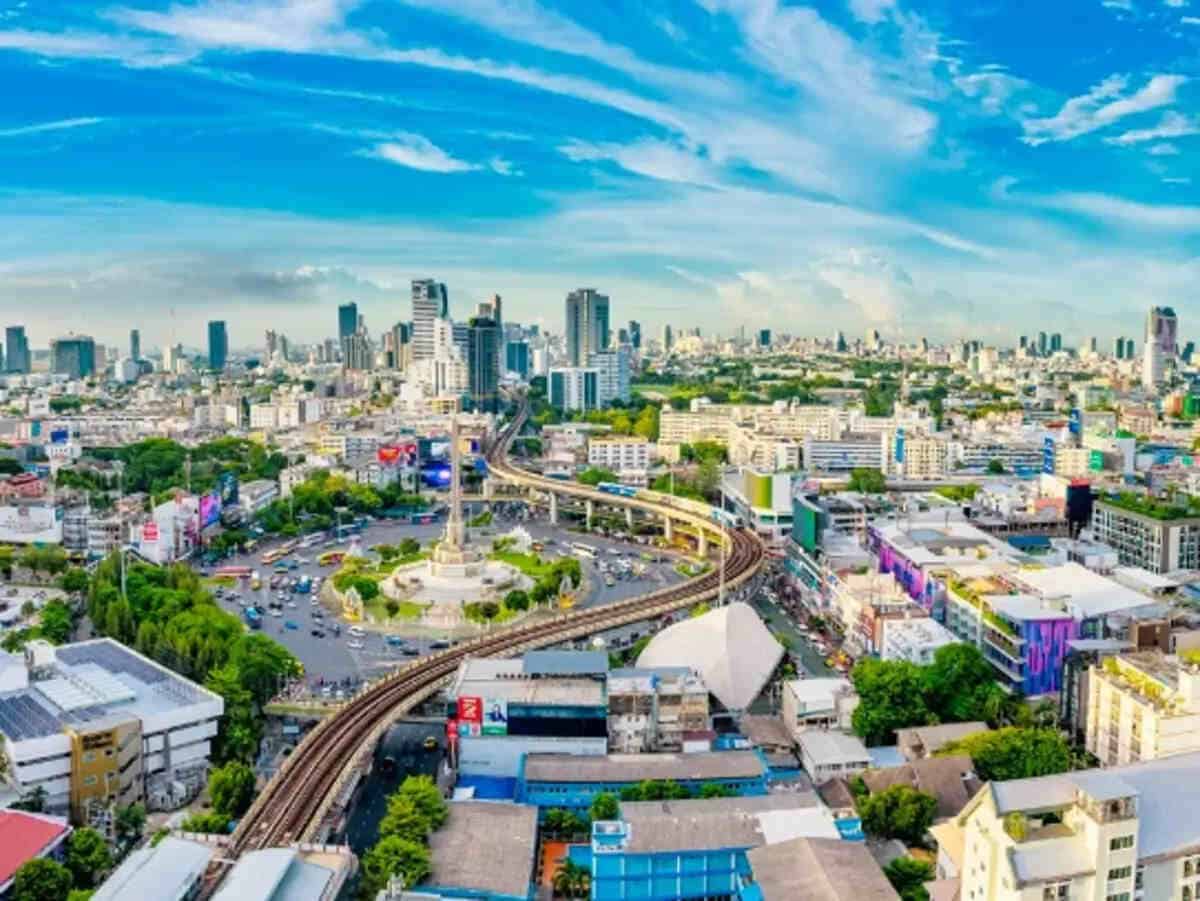
Thailand’s tourism remains resilient in 2026 despite inflation and rising travel costs. Thailand’s tourism economy is showing resilience in 2026 as visitor revenue continues to grow despite higher inflation, rising prices and weak consumer confidence. Similar pressure is being seen in other major tourism markets, including Australia, Malaysia, Japan and parts of Europe, where travel demand has remained active even as consumers and tourism businesses face changing costs.
The latest regional economic picture in Thailand reveals a country moving at different speeds. Tourism revenue has continued to expand nationally, but growth has not been evenly distributed. Northern Thailand has emerged as a particularly strong performer, while Bangkok and the southern region have recorded marginal declines in visitor revenue.
Thailand Tourism Holds Up as Inflation Accelerates
The wider economic environment surrounding Thailand’s tourism industry became more challenging in August 2026. The country’s Consumer Price Index increased 2.53% year-on-year, with inflation recorded across every major region.
The South recorded the highest inflation rate at 2.85%, followed by the Central region at 2.81%. Inflation reached 2.43% in the Northeast, 2.38% in Bangkok and surrounding provinces, and 2.21% in the North.
Advertisement
Advertisement
The regional figures show that rising prices were not confined to one part of the country. Instead, inflationary pressure was being experienced nationwide, creating a more challenging economic environment for households, businesses and travellers.
For the travel economy, these broader cost pressures remain important. Higher operating expenses can affect accommodation, transport and other visitor-facing services. Travellers may also become more selective about their spending when the overall cost of a trip increases.
Advertisement
Advertisement
Despite this pressure, tourism has continued to provide an important source of economic activity across Thailand, with visitor spending remaining resilient at the national level.
Visitor Revenue Reaches 235.16 Billion Baht
Despite those pressures, Thailand’s visitor economy remained resilient. Nationwide visitor revenue reached 235.16 billion baht in July 2026, representing an increase of 1.2% compared with the previous year.
Advertisement
Advertisement
The national increase is important because it shows that tourism spending has continued to advance even as households have been confronted by higher prices and subdued confidence.
However, the regional numbers reveal a much more complicated recovery.
The North recorded the fastest visitor-revenue growth at 14.8%, generating 17.98 billion baht. The Northeast also recorded positive momentum, with tourism revenue increasing 5.2% to 10.44 billion baht.
The Central region generated 51.483 billion baht, representing growth of 0.7%.
Advertisement
Advertisement
By comparison, Bangkok and surrounding provinces generated 73.438 billion baht, but revenue was down 0.1% year-on-year. The South generated 81.82 billion baht, the largest regional amount in the figures provided, although revenue decreased 0.4%.
These differences suggest that Thailand’s tourism performance should not be viewed as a single nationwide recovery story. Strong expansion is being recorded in some regions, while major tourism centres are experiencing much slower movement.
Weak Consumer Confidence Creates Another Challenge
Consumer sentiment has also remained fragile. Thailand’s consumer confidence index fell to 49.5 in August, remaining within a range associated with a lack of confidence.
The Northeast was the only region to record a confidence reading above 50, reaching 52.0. The Central region stood at 47.3, Bangkok and surrounding provinces at 49.2, the North at 49.4, and the South at 49.9.
This weakness is significant for tourism because domestic travel depends partly on household confidence and discretionary spending. When accommodation, transport and other everyday expenses increase, travel budgets can face greater competition from essential household costs.
Thailand’s tourism sector has nevertheless continued to generate substantial visitor revenue, demonstrating a degree of resilience against these wider economic pressures.
Advertisement
Advertisement
New Businesses Grow but Dissolutions Rise Sharply
Thailand’s business environment presents another mixed signal. New business registrations reached 7,913 in August 2026, an increase of 3.6% year-on-year.
The Northeast recorded the strongest growth at 36.3%, with 1,037 new legal entities registered. The North followed with growth of 28.4%, while registrations in the Central region increased 1%.
Different conditions were recorded elsewhere. New registrations declined 3.7% in Bangkok and surrounding provinces and fell 11.5% in the South.
At the same time, 2,244 registered businesses were dissolved nationwide, representing a substantial 35.2% increase. Dissolutions increased in every region. The Central region recorded the sharpest increase at 69.1%, followed by the North at 35.1%, the South at 27.9%, Bangkok and surrounding provinces at 25.6%, and the Northeast at 24.1%.
Business sales also showed uneven momentum. Based on the latest June 2026 figures, nationwide sales declined 0.2%. However, the Central region recorded 17.1% growth, while increases of 3.1% in the Northeast, 1.2% in the South and 1.1% in the North were recorded. Bangkok and surrounding provinces registered a 5% decline.
Australia Shows Similar Tourism Resilience
Thailand is not alone in balancing rising costs against resilient travel activity in 2026.
Advertisement
Advertisement
In Australia, annual CPI inflation reached 3.8% in June 2026. Travel-related prices were also affected, with holiday travel and accommodation prices rising 4.6% during June.
Yet international tourism remained strong. In the year ending June 2026, 8.4 million international trips were recorded, representing 9% growth from the previous year. International visitor spending in Australia reached A$40.5 billion, an increase of 16%, while 314.9 million visitor nights were recorded.
The figures demonstrate a pattern similar to the broader situation being seen in Thailand: cost pressures do not automatically translate into declining tourism demand.
Malaysia, Japan and Europe Add to the Wider Trend
Similar conditions can be identified elsewhere.
In Malaysia, inflation stood at 1.8% in July 2026. Broader price pressures continued to shape household expenditure and the operating environment, providing another example of how tourism economies are navigating changing costs during 2026.
In Japan, international visitor spending remained exceptionally high. Foreign visitor expenditure reached approximately ¥2.5125 trillion between April and June 2026, up 0.3% year-on-year. Average expenditure per international visitor reached about ¥245,000, representing growth of 3.4%.
Advertisement
Advertisement
A similar pattern has been visible across the European Union. Around 1.321 billion overnight stays were recorded at tourist accommodation establishments during the first half of 2026, an increase of 1.7% compared with the same period of 2025.
Foreign visitor nights increased 2.5%, while domestic visitor nights rose only 0.9%. At the same time, EU package holiday prices were 3.2% higher in August 2026, matching overall EU inflation.
What Rising Costs Mean for Travellers
For travellers, the 2026 picture is therefore becoming increasingly complex. Tourism demand has not disappeared, but the cost of travel and tourism services is being reshaped by inflation, transport expenses and wider economic conditions.
Thailand provides a clear example. National visitor revenue is still expanding, yet significant differences can be seen between destinations. Northern Thailand is recording rapid visitor-revenue growth, while Bangkok and the South are moving at a slower pace.
This uneven performance also demonstrates why national tourism figures do not always tell the complete story. Different destinations can experience significantly different levels of visitor spending, business activity and economic momentum during the same period.
For tourism businesses, inflation and wider cost movements can eventually influence operating expenses. Accommodation providers, transport operators and other travel businesses may therefore have to manage higher costs while continuing to compete for increasingly value-conscious travellers.
Advertisement
Advertisement
Thailand’s 2026 Tourism Story Is One of Resilience, Not Uniform Growth
Thailand’s latest economic indicators show why tourism resilience has become an important theme in 2026. Inflation is being felt across every region, consumer confidence remains weak and business dissolutions have increased sharply.
Yet visitor revenue has continued to grow nationally, supported particularly by strong performances in the North and Northeast.
The same broad tension can be observed internationally. Australia has combined higher inflation and travel costs with strong international visitor spending. Malaysia continues to face wider inflationary pressures. Japan continues to generate substantial inbound visitor expenditure, while EU tourism nights have increased even as package holiday prices rise.
Together, these trends show that tourism demand is remaining resilient despite inflation and rising costs in 2026. Thailand’s experience is therefore part of a broader international pattern in which travellers continue to take trips and spend on tourism, even as affordability and value become increasingly important considerations.
Despite inflation and soaring costs, Thailand’s tourism remains a resilient force in 2026. With visitor revenue growing 1.2% year-on-year to 235.16 billion baht, driven by a tourism boom in the country’s North and Northeast.
While the outlook for tourists is one of demand that remains remarkably durable, an increasing emphasis is being placed on affordability. For Thailand, this means that continuing to grow its tourism industry will require looking not only at attracting more visitors, but also at maintaining value and ensuring destinations across the country can benefit from the demand while also managing the pressures generated by inflation and rising costs.
Advertisement
