
Hobart and Launceston Lead Tasmania’s Island Tourism Future as Hospitality Battles Economic Headwinds and Connectivity Challenges

Updated
Published
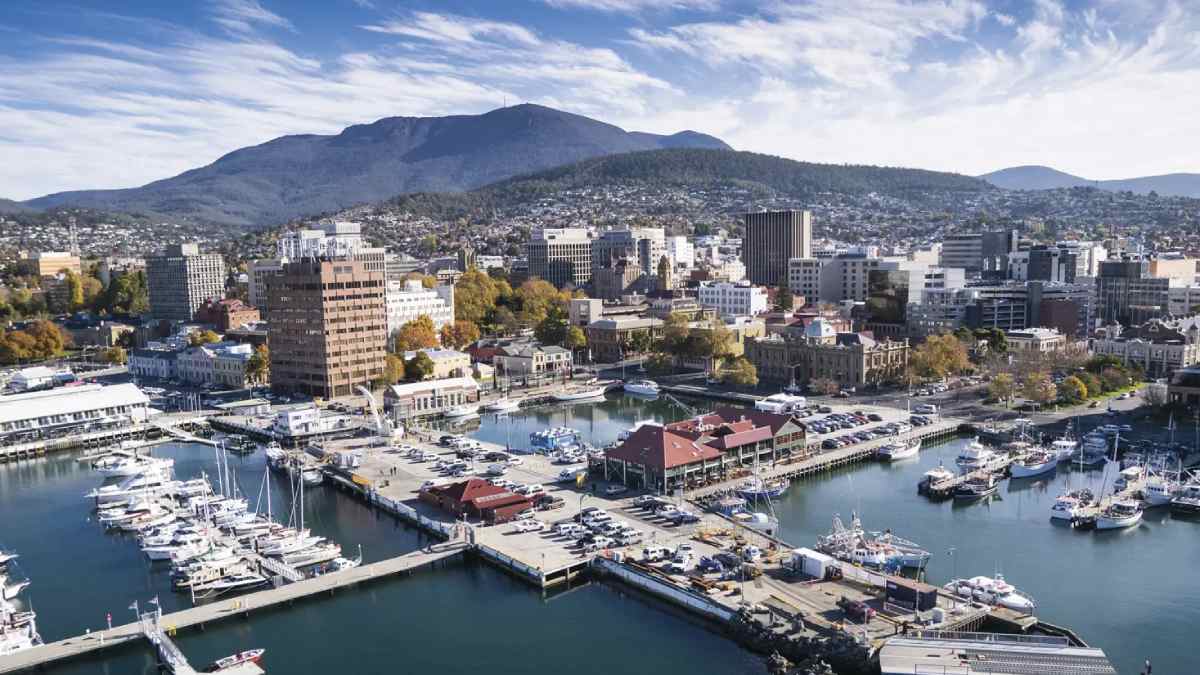
Hobart and Launceston will become pivotal engines driving the tourism future of the Tasmanian island, as Tasmania’s hospitality industry faces increased costs and transport issues as well as changing expectations of the tourists visiting the region. As part of the transition from the pure number of visitors towards value-driven tourism in terms of high-class accommodation, food, adventure tourism, and regional development, Tasmania will continue to face particular problems that come along with its location as an island. Airfares, freight, and logistics are among the biggest challenges of this type.
Macroeconomic Divergence: Australia’s Urban Tourism Surge Versus Island Realities
The Australian visitor economy is characterised by a profound operational contrast between high-density mainland corridors and isolated, resource-dependent regional destinations. Across the nation, the hospitality sector generates approximately USD $37.45 billion in annual revenue, charting a compound annual growth rate projected to reach 7.35% through 2034. National hotel occupancy averages 72.6%, underpinned by a healthy Average Daily Rate (ADR) of $250.65 AUD. Meanwhile, international passenger arrivals are steadily surpassing pre-pandemic benchmarks on track to exceed 8.3 million visitors nationwide.
Advertisement
Advertisement
However, the geographic distribution of capital investment, aviation capacity, and visitor expenditure remains heavily concentrated across Australia’s eastern seaboard capitals. New South Wales and Victoria alone capture the dominant share of national accommodation revenue, driven by dynamic corporate travel, major sporting events, and continuous direct international aviation services. Sydney functions as Australia’s primary international aviation gateway, accounting for nearly 34.1% of national market share when combined with the Australian Capital Territory. Melbourne leverages its packed major events calendar and robust culinary reputation to maintain elevated room rates and weekend food and beverage turnover.
Further north, Brisbane and regional Queensland are undergoing an unprecedented capital expansion phase, accelerating infrastructure development and resort capacity ahead of the 2032 Olympic and Paralympic Games. In Western Australia, Perth records exceptional revenue per available room (RevPAR), supported by mining-sector corporate travel and high-end commercial delegations. South Australia continues to expand its boutique accommodation footprint, capitalising on established viticultural destinations like the Barossa Valley and McLaren Vale to capture domestic premium spend.
Advertisement
Advertisement
| Australian Region / Market | National Market Share & Primary Drivers | Operational Buffers & Demand Generators | Structural Supply Chain Vulnerabilities |
| Sydney / New South Wales | 34.1% market share (combined with ACT); primary gateway for inbound international aviation routes. | High international arrivals, deep corporate MICE sector, large local consumer catchment. | Elevated commercial leasing overheads, acute inner-urban hospitality labour shortages. |
| Melbourne / Victoria | Second-largest hospitality market; exceptionally high ADR driven by cultural and sporting events. | Main departure terminal for Bass Strait maritime links; mature metropolitan dining ecosystem. | High sensitivity to domestic consumer spending contractions and discretionary belt-tightening. |
| Brisbane / Queensland | Fastest capital expenditure growth in lodging ahead of the Brisbane 2032 Olympic Games. | High interstate winter leisure migration; dual-hub appeal across corporate and resort assets. | Exposure to acute climatic disruption and high regional distribution costs outside the South East. |
| Perth / Western Australia | Elevated RevPAR anchored by resource-sector corporate commerce and luxury lifestyle properties. | Sustained state balance sheet strength, corporate entertainment budgets, mining operations. | Geographic detachment from eastern population centres; long-haul domestic airfare dependence. |
| Adelaide / South Australia | Expanding boutique hotel inventory and culinary touring corridors across premier wine regions. | Strong regional drive tourism networks, high culinary spend per domestic visitor. | Moderate direct international flight arrivals; heavy reliance on interstate road networks. |
| Hobart & Regional Tasmania | High-yield boutique lodging, paddock-to-plate culinary tourism, and nature-based ecotourism. | Exceptional length of stay among interstate holidaymakers (8.8 to 9.4 nights average). | Total sea and air boundary; severe freight surcharges; extreme seasonal capacity constraints. |
Tasmania occupies a radically different structural position within this national hierarchy. While mainland operators can absorb transport cost shocks through transcontinental highway freight corridors and competing rail systems, the Tasmanian visitor economy is entirely bounded by air and sea.
Advertisement
Advertisement
When nationwide inflation escalates and real household wages compress, consumer price elasticity directly punishes destinations that require multi-modal transit. A mainland consumer residing in Melbourne or Sydney can readily substitute an interstate holiday with a self-drive escape to the Yarra Valley or the Blue Mountains. Reaching Tasmania, conversely, necessitates an explicit financial commitment encompassing commercial airline bookings or maritime ferry crossings, baggage fees, and regional car rentals.
Consequently, Tasmanian hospitality businesses do not simply compete on hospitality standards, service quality, or culinary excellence. They operate at the receiving end of a fragile logistics chain, where seat allocation choices made by mainland airline boardrooms and cargo capacity constraints across Bass Strait dictate baseline business profitability.
Structural Headwinds in Island Tourism Economics: Connectivity and Logistics
The foundational economic model of island destinations dictates that visitor volume and local supply chains are inextricably linked to transport infrastructure. In island tourism economics, physical isolation can function as a desirable brand attribute, creating perceptions of pristine wilderness, safety, and exclusivity. However, the same isolation introduces operational vulnerabilities that threaten small and medium enterprises during periods of national macroeconomic distress.
Advertisement
Advertisement
In Tasmania, the hospitality and accommodation ecosystem relies on two transport conduits: regular public transport (RPT) aviation corridors landing at Hobart Airport (HBA) and Launceston Airport (LST), and commercial roll-on/roll-off passenger ferries crossing Bass Strait into Devonport.
Whenever transport friction intensifies—whether manifested as surging jet turbine fuel surcharges, domestic airline route rationalisation, or maritime freight cost inflation—the operational impact is transferred directly to small business balance sheets.
Advertisement
Advertisement
The Aviation Bottleneck: Domestic Capacity Discipline and Airfare Elasticity
Aviation represents the entry route for more than 85% of all interstate visitors arriving in Tasmania. As a result, commercial decisions executed by major domestic airlines determine daily room occupancy rates across Hobart and regional Tasmania. In recent years, Australian domestic aviation has undergone pronounced seat capacity discipline. Rather than chasing market share through discounted seating volume, major airlines have focused on yield management, restricting seat capacity to sustain elevated load factors and fare returns.
Official data monitored by the Bureau of Infrastructure and Transport Research Economics (BITRE) illustrates the volatility of this environment. Across the Australian domestic regular public transport network, annual passenger volumes reached 60.75 million passengers, representing a modest 2.2% annual growth, while load factors maintained high averages around 82.2%.
Simultaneously, the BITRE domestic airfare best discount index displayed wild monthly swings, oscillating from low baselines of 60.5 to peak rates of 76.3 during seasonal holiday surges.
The economic transmission channel for these airfare swings is direct and punitive for island operators:
- Mainland carriers reduce scheduled capacity or reallocate narrow-body aircraft to highly profitable golden triangle routes (Sydney-Melbourne-Brisbane), creating immediate seat scarcity into Hobart and Launceston.
- Ticket prices for dynamic discount fares rise rapidly, pushing the entry price of a weekend Tasmanian getaway out of reach for price-sensitive interstate couples and families.
- Mainland travelers respond to elevated transit fares by truncating their itineraries, substituting multi-day regional road trips with compressed 48-hour city stays, or cancelling planned regional travel altogether.
- Regional boutique accommodation properties and regional dining venues experience sudden dips in mid-week occupancy, which destabilises cash flows and leaves kitchens overstocked with perishable produce.
While metropolitan Hobart retains a consistent revenue baseline supported by state government business, corporate delegations, and institutional conferences, regional hoteliers in the Huon Valley, the East Coast, and the North West rely almost entirely on leisure travelers collecting rental vehicles at airport terminals. When high airfares compress holiday lengths of stay, regional businesses absorb the greatest financial hit.
Advertisement
Advertisement
Bass Strait Freight Dependencies and the Next-Generation Ferry Fleet
The maritime corridor across Bass Strait represents Tasmania’s vital logistics artery, operating as the sole physical bridge for passenger vehicles, motorhomes, heavy equipment, and bulk containerised supplies. Operated by the state-owned TT-Line Company, the Spirit of Tasmania vessels transport more than 320,000 passengers across the strait annually. Unlike commercial aviation travelers, visitors crossing Bass Strait exhibit travel behaviors that are exceptionally beneficial to regional economies.
Data sourced from the Tasmanian Visitor Survey (TVS) confirms that passengers arriving via the sea corridor travel further into regional communities, stay significantly longer, and record higher average spending within rural municipalities than visitors arriving on short-stay airline flights. The vehicular freedom afforded by sea transit enables visitors to tow caravans, haul recreational outdoor equipment, and explore dispersed touring routes, delivering vital patronage to remote caravan parks, heritage pubs, and roadside providores.
However, this maritime route has faced significant capacity caps during peak summer seasons, with vehicle bays selling out months in advance and freight space reaching maximum limits. This bottleneck is set for historic relief with the long-awaited introduction of the next-generation vessels, Spirit of Tasmania IV and Spirit of Tasmania V.
Spirit V completed its fit-out in Hobart in mid-2026, while Spirit IV executed comprehensive berthing trials at Devonport in August 2026, targeting commercial passenger sailings beginning after 31 October 2026. Constructed to handle up to 1,800 passengers and offering 4,098 lane metres of vehicle deck capacity, these new ships expand passenger carrying space and freight throughput.
| Asset / Transport Corridor | Historical Baseline & Technical Limits | Upgraded Operational Capacity (Post-2026) | Direct Strategic Hospitality Dividend |
| Spirit of Tasmania Fleet (TT-Line) | Spirit I & II; restricted lane-metre allocations during peak agricultural/tourism summer periods. | Spirit IV & V; 1,800 passenger capacity and 4,098 lane metres per vessel. | Removes vehicle booking caps, unlocks extended regional caravan and drive tourism, and expands freight delivery. |
| Port of Devonport Berth 3 Infrastructure | Aging roll-on/roll-off berthing berths with slower turnaround and turnaround logistics. | 740-tonne gantry superstructure, 27m high, supporting four dedicated vehicle loading ramps. | Accelerates passenger and vehicle turnaround, eliminating port congestion delays. |
| Geelong Ferry Terminal (Spirit Quay) | Historic operations out of Station Pier, Port Melbourne, subject to heavy urban traffic delays. | Dedicated facility at Corio Quay, North Geelong, connected to Victoria’s primary highway networks. | Provides easier drive-and-sail logistics for regional Victorian and interstate road travellers. |
| Regional Aviation Gateways (Hobart & Launceston) | Regular airline capacity discipline, dynamic pricing spikes, and vulnerability to aircraft reallocations. | State-backed $5 million Aviation Fund incentivising permanent, year-round airline services. | Stabilises baseline visitor arrivals, protects shoulder-season travel, and curtails volatile airfares. |
Deconstructing the “Island Tax”: Inbound Overheads and Outbound Export Frictions
Small hospitality enterprises throughout Tasmania operate under an unavoidable cost structure colloquially known as the “Island Tax”. This penalty functions as a two-way freight surcharge that compresses business margins across both input procurement and product distribution.
Advertisement
Advertisement
On the inbound logistics side, Tasmanian cafes, bistros, and boutique lodges pay an unavoidable freight surcharge on specialized catering hardware, commercial refrigeration units, imported dry goods, packaging items, and maintenance materials shipped from Melbourne distributors.
When critical machinery breaks down—such as a combi-oven in Swansea or an espresso system in Strahan—replacement parts must be air-freighted or shipped across Bass Strait. This incurs elevated logistics fees and forces extended operational downtime that directly harms guest revenues.
On the outbound distribution side, Tasmania’s exceptional primary producers face reciprocal shipping penalties. Small-scale wineries in the Coal River Valley, artisanal cheesemakers in the North West, and premium seafood harvesters on the East Coast face substantial maritime freight fees to reach wholesale restaurant accounts across Sydney, Melbourne, and Brisbane.
While the Australian Government’s Tasmanian Freight Equalisation Scheme (TFES) and the Bass Strait Passenger Vehicle Equalisation Scheme (BSPVES) provide financial rebates to offset sea transit costs, the application criteria and regulatory complexity often leave smaller producers undercompensated, squeezing cash flow margins across the regional food and beverage value chain.

Empirical Profile of the Tasmanian Visitor Economy: Yield, Spend, and Regional Dispersal
Despite macroeconomic headwinds, official empirical data confirms that the Tasmanian visitor economy has developed an effective counter-strategy: aggressively prioritising visitor yield over sheer volume.
Advertisement
Advertisement
Rather than chasing mass-market tourism that overwhelms regional roads and fragile natural reserves, Tourism Tasmania has focused destination marketing on high-spending demographics willing to invest heavily in authentic regional experiences.
According to the Tasmanian Visitor Survey (TVS) for the year ending March 2026, total visitor expenditure reached a record $3.791 billion—a 7.8% expansion compared to the prior year. Total visitation rose 4.8% to 1.404 million travellers, while aggregate visitor nights reached 12.91 million.
These gains build directly upon results recorded for the calendar year ending December 2025, which saw spend hit $3.710 billion (+5.7%) across 1.386 million visitors and 13.04 million nights.
| Visitor Segment / Economic Metric | YE December 2024 Benchmark | YE December 2025 Annual | YE March 2026 Performance | Structural Economic Significance |
| Aggregate Visitor Expenditure | $3.413 billion | $3.710 billion (+5.7% YoY) | $3.791 billion (+7.8% YoY) | Expenditure expansion outstripping general inflation, driving positive cash inflows. |
| Total Physical Visitor Arrivals | 1.310 million | 1.386 million (+5.8% YoY) | 1.404 million (+4.8% YoY) | Steady, managed visitation growth protecting local environmental assets. |
| Total Visitor Nights in State | 12.55 million | 13.04 million (+3.9% YoY) | 12.91 million (+1.6% YoY) | Sustains demand across regional commercial accommodation providers. |
| Total Interstate Visitor Spend | $2.871 billion | $3.199 billion (+11.4% YoY) | $3.172 billion (+4.1% YoY) | Mainland domestic travellers generate over 85% of total tourism revenue. |
| Interstate Holiday Spend per Trip | $3,510 | $3,586 | $3,674 (+$88 YoY) | Holidaymakers show sustained willingness to pay for premium experiences. |
| Interstate Holiday Spend per Night | $379 | $384 | $392 (+$8 YoY) | Elevated food, beverage, and accommodation rates maintain strong daily margins. |
| International Visitor Spend | $551 million | $712 million (+29.1% YoY) | Sustained recovery trajectory | Strong rebounds from the UK, North America, Singapore, and Europe. |
| Total Employment Contribution | 47,200 direct/indirect | 50,800 filled jobs (15.6% share) | Sustained employment share | Tourism accounts for 1 in every 6 jobs across Tasmania, especially in regional areas. |
| Total Gross State Product (GSP) | $4.20 billion | $4.55 billion total contribution | Core state revenue anchor | High economic multiplier supporting secondary retail and agricultural trade. |
High-Yield Interstate Travel Patterns and Holidaymaker Longevity
The economic viability of Tasmanian hospitality is anchored directly within the mainland domestic market. Approximately 87% to 88% of all travelers entering Tasmania originate from interstate, predominantly departing from Victoria, New South Wales, and Queensland. For the year ending March 2026, mainland Australian travelers spent $3.172 billion across 1.222 million journeys—a 57% increase in expenditure compared to 2019.
The standout component within this data is the interstate holidaymaker cohort. Holiday travelers account for 48% of all interstate visitors, contributing $2.161 billion in expenditure.
Advertisement
Advertisement
Their economic footprint is exceptional: each holidaymaker spends an average of $392 per night and $3,674 per journey across an average length of stay (ALOS) of 9.4 nights.
Because these travelers commit to extended itineraries, their expenditure disperses across multiple regional stops, providing the financial liquidity that sustains boutique accommodation, independent cafes, craft breweries, and regional wildlife reserves.
Agritourism and Nature-Based Adventures as Core Growth Drivers
A granular review of visitor segmentation demonstrates that nature-based and culinary tourists deliver the highest yield for the Tasmanian economy. Visitors undertaking outdoor adventure activities represent roughly half of the island’s total visitation.
Bushwalkers and wilderness trekkers record an average length of stay of 18 nights and generate an average expenditure of $4,159 per visit—dwarfing standard leisure travel averages.
Concurrently, agritourism has emerged as a major economic catalyst. Nearly 70% of domestic travelers express interest in agritourism experiences, which connect consumers directly with local farming operations through farm tours, orchard pick-your-own activations, artisanal cheese tastings, and cellar door dining.
Advertisement
Advertisement
By directly monetising the primary agricultural landscape, agritourism encourages visitors to disperse far beyond urban hotel hubs, channelling crucial discretionary capital into the Huon Valley, Derwent Valley, Meander Valley, and the North West Coast.
Employment Intensity and Economic Contribution Benchmarks
The hospitality and visitor economy functions as a foundational pillar of Tasmania’s employment landscape. State Tourism Satellite Account data reveals that the sector supports 50,800 filled jobs, representing 15.6% of the state’s total employment base.
Essentially, one in every six Tasmanian jobs depends on visitor expenditure. Furthermore, the visitor economy contributes $4.55 billion directly and indirectly to Tasmania’s Gross State Product (GSP).
Because hospitality employment is geographically distributed across coastal towns, agricultural villages, and wilderness areas, the health of small hospitality businesses is critical to regional community stability and local youth employment opportunities.
Strategic Policy Architecture: The 2036 Small Business Framework and 2030 Visitor Roadmap
To insulate small hospitality businesses against national economic headwinds, freight costs, and operating inflation, the Tasmanian Government has deployed comprehensive, multi-year policy frameworks.
Advertisement
Advertisement
On 4 September 2026, Guy Barnett, Minister for Small Business, Trade and Consumer Affairs, formally launched public consultation on the draft Tasmanian Small Business Strategy 2036.
This decadal strategy is specifically designed to establish a ten-year operational roadmap for the state’s 42,000 small enterprises, ensuring businesses have the regulatory and financial backing necessary to navigate an unpredictable economic climate.
Minister Barnett highlighted the strategic significance of the sector, stating that the state’s 42,000 small businesses were regarded as fundamental contributors to the economy and essential pillars of local communities, particularly across rural and regional areas. It was further emphasised that these businesses were being affected by evolving technologies, changing customer expectations, workforce pressures, and broader domestic and international economic challenges, which were creating both new opportunities and increasing uncertainty.
The consultation, open through 30 September, focuses on identifying what works for local operators, where specific roadblocks exist, and how government interventions can make the greatest difference for tourism operators, farmers, retailers, and hospitality owners.
The Draft Tasmanian Small Business Strategy 2036: Decadal Policy Transformation
The draft Tasmanian Small Business Strategy 2036 operates alongside the state’s overarching economic roadmap, the 2030 Strong Plan for Tasmania’s Future.
Recognising that small hospitality businesses lack the extensive compliance departments of corporate hotel chains, the policy framework prioritises administrative streamlining, regulatory simplification, and practical cost-reduction measures.
Advertisement
Advertisement
A major reform within this framework is the rollout of the 12-month Small Business Start-Up Permit. This mechanism establishes a single-permit structure enabling entrepreneurs and hospitality operators to trial new ventures, pop-up dining concepts, or boutique cellar doors without enduring months of fragmented municipal council and state agency approvals.
Additionally, the introduction of single-form tendering for state procurement contracts under $250,000 slashes administrative burdens, allowing regional caterers, event providers, and hospitality suppliers to secure government business without cumbersome compliance paperwork.
Capital Investment, Energy Audits, and Operational Overhead Mitigation
Operating cost inflation—especially commercial electricity charges and capital equipment costs—represents a continuous pressure on small dining and lodging operators. To directly ease these operational overheads, the Tasmanian Government introduced several targeted grant programs:
- Capital Purchase Grants: The Small Business Growth Strategy Grant Program provides matching grants up to $10,000 for capital acquisitions, requiring a 30% co-contribution from the business. Hospitality venues utilise these funds to acquire modern commercial cooking technology, energy-efficient combi-ovens, and updated electronic point-of-sale systems that streamline ordering workflows and manage bookings efficiently.
- Energy Efficiency Audits and Modernisation: Through the Energy Efficiency Audit Grants Program, small hospitality operators access grants of up to $1,000 to conduct comprehensive energy audits. Findings guide operational investments supported by the Energy Saver Loan Scheme, which delivers interest-free financing up to $10,000 for energy-efficient upgrades, including high-efficiency commercial refrigeration, building insulation, heat pumps, and solar installations.
- Agritourism Land-Use Planning Reforms: Overhauling regional zoning restrictions, the government has moved to establish agritourism as a permitted land-use activity across agricultural zones. This planning reform allows primary producers to build farm-gate cafes, farm stays, and tasting rooms without the extensive delays and prohibitive costs associated with full commercial development applications.
The T21 Visitor Economy Strategy 2030: Regional Tourism Loan Scheme and Aviation Support
The overarching strategy guiding destination management is the T21 Tasmanian Visitor Economy Strategy 2030, an established partnership between the Tasmanian Government and the state’s tourism industry.
The strategy is supported by an additional $12 million direct investment, targeting an ambitious expansion of visitor expenditure to $5.6 billion annually by 2030, generated by 1.6 million interstate and 400,000 international visitors.
Advertisement
Advertisement
To stimulate private sector investment and foster regional dispersal, the T21 framework is backed by key financial and market-facing initiatives:
- $50 Million Regional Tourism Loan Scheme: Provides low-interest debt capital to operators investing in transformative regional visitor experiences, eco-resorts, and innovative attractions, ensuring investment flows beyond Hobart and Launceston.
- $10 Million Business Events Attraction Fund: Administered in partnership with Business Events Tasmania to capture national conventions, corporate MICE gatherings, and association meetings that drive high-yielding business travel into the state during mid-week periods.
- $5 Million Aviation Fund: An active market-intervention fund operated by the Department of State Growth to negotiate airline capacity commitments, support route retention, and incentivise carriers to maintain direct regional connectivity throughout winter and shoulder months.
The Actionable Hospitality Playbook: Margin Preservation for Boutique Operators
To withstand the combined pressures of Bass Strait freight expenses, unpredictable domestic airfares, and cost-of-living constraints on discretionary spend, Tasmanian hospitality businesses have established a distinctive operational model.
Rather than chasing volume through destructive price-cutting wars, leading boutique operators implement an integrated four-pillar mitigation framework designed to protect profit margins and elevate guest expenditure.
| Strategic Mitigation Pillar | Operational Mechanism & Implementation | Strategic Financial Objective | Real-World Operational Model |
| Hyper-Local Supply Chains | Establish direct procurement agreements with regional growers, fisheries, and vineyards; eliminate mainland distributors. | Eliminates Bass Strait maritime freight surcharges and protects kitchen margins from shipping delays. | Stillwater (Launceston), The Agrarian Kitchen (New Norfolk). Daily dynamic menus dictated by local farm harvests. |
| Strategic Yield Stratification | Package all-inclusive, multi-day retreat stays bundling luxury accommodation, local larders, and curated wilderness activities. | Maximises RevPAR and spend per guest night; insulates room rates against mass-market discounting. | Pumphouse Point (Lake St Clair), Stillwater Seven. High-value inclusive packages ($800–$2,000/night). |
| Seasonal Counter-Programming | Activate unique, atmospheric cold-weather experiences aligned with Tourism Tasmania’s “Off Season” winter campaigns. | Eliminates winter trading troughs; sustains year-round occupancy and supports permanent staff retention. | Winter open-fire dining, barrel tastings, sauna retreats, Dark Mofo regional activations. |
| Agritourism Revenue Blending | Merge agricultural output with visitor experiences via farm-gate dining, cellar door tastings, and on-farm accommodation. | Diversifies enterprise revenues, hedges against agricultural commodity swings, and captures retail spend. | Truffle Farm Tasmania, Tamar Valley wine trails, Freycinet marine farm oyster pavilions. |
Hyper-Local Supply Chain Integration: Eliminating Maritime Intermediaries
Traditional hospitality models rely heavily on broadline mainland food distributors who aggregate goods in Melbourne before trucking containers across Bass Strait. This conventional channel exposes operators to double-handling logistics fees, cold-chain breakdowns, and shipping delays during stormy Bass Strait crossings.
To insulate their businesses, forward-thinking Tasmanian restaurateurs build direct, hyper-local farm-to-table networks. In Launceston, Stillwater—operating within an adapted 1830s flour mill on the kanamaluka / Tamar River—structures its culinary identity around seasonal harvests from local growers.
Advertisement
Advertisement
Executive chef Craig Will and the kitchen team collaborate directly with Tamar Valley vegetable growers, local heritage livestock producers, and cool-climate viticulturists. Menus change continuously depending on morning farm deliveries, bypassing mainland distributors entirely.
Similarly, The Agrarian Kitchen in New Norfolk operates an integrated culinary ecosystem featuring an expansive walled kitchen garden. The restaurant, cooking masterclasses, and casual eatery draw produce directly from on-site heirloom vegetable beds, regional orchards, and nearby small-scale livestock farms.
By eliminating interstate freight intermediaries, these operators protect their gross margins from shipping cost inflation.
Furthermore, they convert hyper-local sourcing into a major brand asset: consumers recognise the exceptional authenticity of the dining experience, willingly paying premium prices for menus that celebrate local terroir.

Strategic Yield Stratification: Prioritising High-Expenditure Demographics Over Volume
When economic headwinds tighten domestic consumer budgets, the instinct of mass-market accommodation operators is often to lower room rates to chase occupancy. For island properties, this discounting strategy quickly proves counterproductive.
Advertisement
Advertisement
High volumes of budget-focused guests generate substantial wear and tear on facilities, increase laundry and housekeeping overheads, and stretch staff resources without generating sufficient revenue to offset high island fixed costs.
Boutique Tasmanian operators deploy the opposite playbook: aggressively stratifying their guest offerings to target high-yield travelers.
At Pumphouse Point, a luxury wilderness retreat situated over Lake St Clair, the accommodation model is built around all-inclusive packages ranging from $800 to more than $2,000 per night.
The retreat enforces multi-night minimum stays and bundles luxury lodging with in-room larder provisions, four-course communal farmhouse dinners featuring local produce, premium Tasmanian wines, and private rowboat use.
This approach aligns directly with Tourism Tasmania’s targeted market segments: “Positive Impact Travellers” and “Conscious Adventurers”.
Advertisement
Advertisement
These demographics possess higher discretionary spending power, display lower price sensitivity to domestic airline ticket shifts, and seek out authentic, environmentally responsible experiences.
By curating high-value, comprehensive offerings, boutique properties achieve strong revenue per available room (RevPAR) while operating at sustainable occupancy levels that do not strain staff or degrade property assets.
Smoothing Winter Occupancy Troughs: Seasonal Off-Peak Counter-Programming
Historically, seasonality represented the greatest existential risk to Tasmanian hospitality operators. Venues generated robust profits over the summer high season, only to bleed working capital during the winter freeze, when visitor traffic dropped sharply and regional properties were forced into seasonal hibernation.
To counter this cycle, Tourism Tasmania developed its acclaimed “Off Season” winter campaign. Rather than apologising for colder weather, the strategy embraces the dark, crisp winter climate as a distinctive asset.
Operators create exclusive winter packages: wood-fired outdoor stone tubs, open-air fire feasts, truffle hunting masterclasses, barrel tastings in historic cellars, and thermal sauna experiences nestled in the bush.
Advertisement
Advertisement
The growth of winter cultural gatherings—from Dark Mofo in Hobart to the Huon Valley Midwinter Festival and regional food fiestas—has completely rewritten consumer expectations.
TVS data demonstrates that winter visitation and expenditure now record steady annual gains, enabling regional operators to maintain year-round staffing rosters, preserve talent, and smooth cash flows across all four seasons.
Agritourism Convergence: Unlocking Multi-Channel Farm-Gate Revenue
The final pillar in the island hospitality playbook is the deliberate convergence of primary agricultural production with consumer-facing hospitality.
Historically, farmers and artisanal food producers operated solely as wholesale commodity price-takers, leaving them vulnerable to market price fluctuations and shipping surcharges across Bass Strait.
Supported by the Tasmanian Government’s agritourism land-use planning reforms, primary producers are integrating hospitality into their farms. Operations like Truffle Farm Tasmania, maritime oyster farms on the Freycinet Peninsula, and boutique vineyards in the Tamar and Coal River Valleys have constructed farm-gate tasting pavilions, micro-distilleries, and boutique farm-stay accommodations.
Advertisement
Advertisement
This multi-channel operational model delivers three distinct financial advantages:
- Direct-to-consumer retail margins replace depressed mainland wholesale pricing, significantly expanding profit returns per kilogram of produce.
- Tasting room sales and accommodation bookings generate immediate daily cash flow, providing working capital that offsets seasonal farming expenses.
- The on-farm visitor experience builds strong brand loyalty, driving profitable post-visit e-commerce subscription sales that deliver ongoing mainland revenue long after travelers return home.
Future Outlook: Long-Term Resilience and Structural Transformation Toward 2036
Looking ahead to 2036, the Tasmanian visitor economy will continue to operate in a complex and shifting macroeconomic landscape. Transport logistics will remain a central determinant of operating viability.
Aviation seat pricing will continue to fluctuate based on jet turbine fuel volatility, airline fleet deployment choices, and emerging international carbon reduction standards.
However, Tasmania’s island geography also creates an enduring competitive moat. In an increasingly crowded and commodified global travel landscape, Tasmania’s reputation for environmental sustainability, pristine wilderness areas, cool-climate agricultural excellence, and authentic, human-scale hospitality makes it exceptionally attractive to high-yield domestic and international travelers.
The commissioning of Spirit of Tasmania IV and Spirit of Tasmania V in late 2026 establishes a crucial infrastructure upgrade for Bass Strait transit.
Advertisement
Advertisement
By unlocking substantial vehicle deck capacity and expanding roll-on/roll-off freight lane metres, these new vessels will alleviate the severe vehicle constraints that historically capped interstate self-drive tourism during summer.
The expansion in freight capacity will also help stabilize wholesale distribution schedules for regional food and beverage venues.
At the policy level, the Tasmanian Government’s concurrent rollouts—including the Tasmanian Small Business Strategy 2036, the 2030 Strong Plan for Tasmania’s Future, and the $50 million Regional Tourism Loan Scheme—provide the financial tools and regulatory clarity required for long-term operator survival.
By lowering energy overheads through audit grants, slashing compliance hurdles through single-form permits, and funding route access via the $5 million Aviation Fund, state policymakers are actively helping de-risk small business operations.
Ultimately, the future health of Tasmanian hospitality will depend on managerial focus and strategic clarity. Small enterprises cannot succeed by attempting to emulate the high-volume, low-margin business models of mainland hotel chains and urban hospitality groups.
Advertisement
Advertisement
Lasting resilience will belong to operators who lean into Tasmania’s natural strengths: anchoring their dining around hyper-local supply chains, protecting room rates through differentiated, all-inclusive luxury packages, activating atmospheric winter counter-programming, and embracing digital and energy-efficiency innovations.
Through these strategies, Tasmanian operators can insulate themselves against external economic headwinds, ensuring that the state’s island hospitality model remains a benchmark for regional economic sustainability.
Navigating ongoing macroeconomic volatility requires island destinations to transition decisively from unchecked volume expansion to disciplined value creation. For Tasmanian hospitality, enduring structural resilience relies on counterbalancing geographic separation through strategic policy alignment, logistical modernisations, and hyper-local supply chain integration. While elevated maritime freight charges and domestic aviation pricing pose distinct operational hurdles, Tasmania’s pristine environmental assets, premium food and beverage culture, and immersive ecotourism offerings command defensible pricing power. By capitalising on expanded Bass Strait ferry capacity, targeted off-peak winter activations, and decadal government support programs, the sector can protect operational margins and secure long-term sustainability across regional communities.
Conclusion
Hobart and Launceston serve as examples of the evolving character of Tasmania’s tourism economy based on an island. Despite the ongoing difficulties associated with geographic location for hospitality operators, a policy of increased transport connectivity, regional development, and quality tourist experiences is opening up new perspectives for the state. By using local supply chains, sustainable approaches and attracting selective tourists, Tasmania is minimizing its dependence on external factors. Future development of the hospitality industry in Tasmania will require a combination of accessibility and exclusivity in order to preserve the status of the unique destination.
Advertisement
