
Colombia Amazon Tourism Surges as Vaupés Records 63.2% Growth Beyond Bogotá and Cartagena

Published
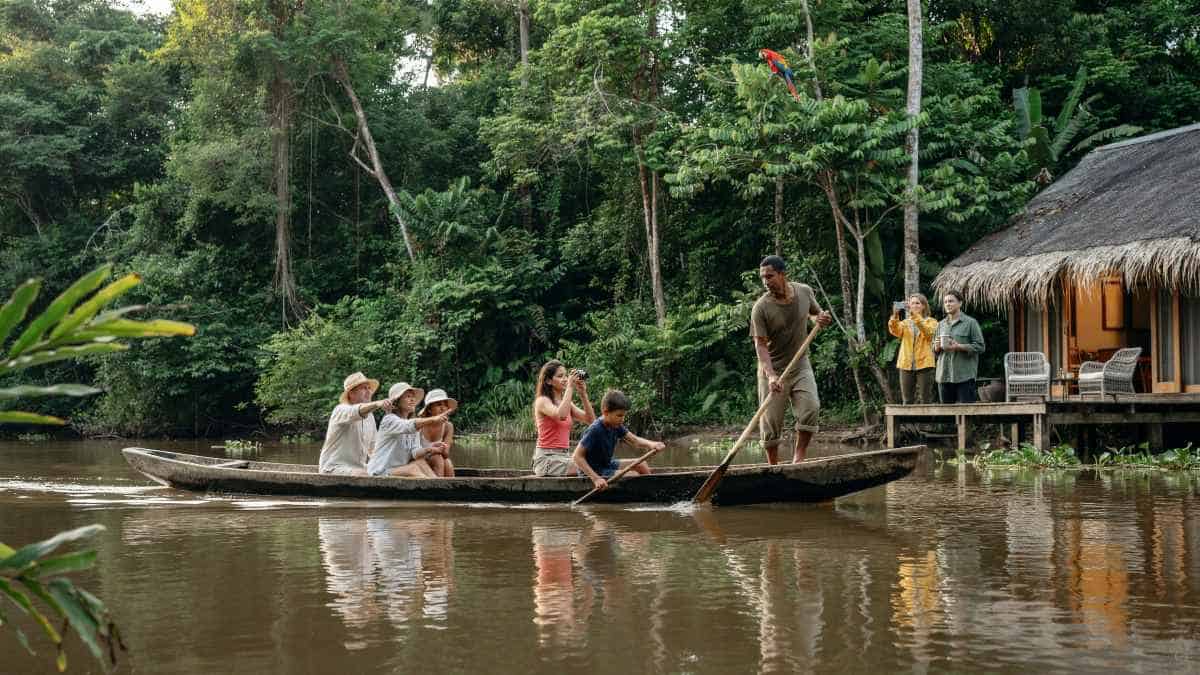
Image generated with Ai
Colombia Amazon tourism is gaining remarkable momentum as Vaupés records 63.2% growth in foreign visitor arrivals, showing that international interest is beginning to spread beyond established destinations such as Bogotá and Cartagena. During the first half of 2026, several lesser-visited Colombian departments recorded strong increases in foreign arrivals, with Vaupés leading the expansion, followed by Guaviare at 24.7%, Guainía at 21.9% and Nariño at 21.7%.
The numbers do not mean Colombia’s remote departments now receive more international travellers than the country’s traditional tourism centres. Bogotá, Medellín, Cartagena and other established gateways continue to account for much larger visitor volumes. Instead, the latest figures reveal where some of the fastest percentage growth is occurring.
Advertisement
Advertisement
For Colombia’s tourism industry, that distinction is important. It suggests international visitors are gradually discovering destinations built around rainforest landscapes, biodiversity, Indigenous cultures, rivers, wildlife and adventure experiences.
Vaupés Leads Emerging Destination Growth
Vaupés recorded the strongest increase among the emerging departments highlighted in the first-half data.
Advertisement
Advertisement
Foreign visitor arrivals increased 63.2% compared with the same period in 2025.
Advertisement
Advertisement
That makes Vaupés particularly notable as Colombia works to distribute tourism beyond its established urban and Caribbean destinations.
| Colombian Department | Foreign Visitor Growth in H1 2026 |
|---|---|
| Vaupés | +63.2% |
| Guaviare | +24.7% |
| Guainía | +21.9% |
| Nariño | +21.7% |
The figures indicate percentage growth rather than total visitor volumes. Because destinations such as Vaupés begin from relatively small tourism bases, even a modest increase in travellers can produce a large percentage change.
Nevertheless, the direction of travel is significant.
Why Vaupés Is Attracting More Attention
Vaupés sits deep within Colombia’s Amazon region and remains very different from the country’s conventional city and beach destinations.
Its tourism appeal centres heavily on natural landscapes and cultural encounters.
Advertisement
Advertisement
Mitú, the departmental capital, serves as the main gateway. Beyond the town, the region offers rivers, rainforest, rock formations and opportunities to experience one of Colombia’s most remote environments.
Indigenous communities are also central to the identity of Vaupés. That makes careful, community-led tourism particularly important as international interest increases.
Visitors considering the region should expect a journey very different from a conventional city break.
Infrastructure is more limited, distances can be challenging and many experiences require local expertise. Those characteristics are part of the destination’s appeal, but they also make responsible planning essential.
Guaviare Emerges as Another Nature Tourism Destination
Guaviare recorded a 24.7% increase in foreign visitor arrivals during the first half of 2026.
Advertisement
Advertisement
The department has increasingly attracted attention for its combination of Amazonian and Orinoco landscapes, biodiversity and cultural heritage.
One of its distinctive tourism assets is ancient rock art. The wider region also provides opportunities for nature observation, river journeys, hiking and community-based experiences.
Guaviare’s development illustrates an important opportunity for Colombian tourism.
Instead of concentrating international visitors in a handful of famous cities, the country can use its extraordinary geographical diversity to build new tourism circuits.
Guainía Posts 21.9% Increase
Guainía provides another example of this emerging tourism pattern.
Advertisement
Advertisement
Foreign arrivals increased 21.9% during the first six months of 2026.
Located in eastern Colombia, Guainía is known for rivers, forests and remote landscapes. Inírida serves as the departmental capital and principal gateway for visitors.
The Cerros de Mavecure are among the region’s best-known natural attractions. The ancient rock formations rise dramatically above the surrounding landscape and have helped give Guainía a distinctive identity within Colombia’s nature-tourism market.
Like Vaupés, however, Guainía is not a mass-tourism destination.
Growth therefore needs to be considered alongside environmental protection, community involvement and infrastructure capacity.
Advertisement
Advertisement
Nariño Adds Another Dimension to Emerging Colombia
The growth story is not limited to the Amazon.
Nariño recorded a 21.7% increase in foreign visitor arrivals during the same period.
Located in southwestern Colombia, the department provides a different combination of landscapes and cultural attractions.
Pasto serves as an important urban centre, while the Sanctuary of Las Lajas near Ipiales is one of the region’s most striking architectural and religious attractions.
Nariño also offers Andean scenery, lakes, local gastronomy and cultural traditions.
Advertisement
Advertisement
Its inclusion among the fastest-growing departments demonstrates that international tourism expansion is reaching different parts of Colombia rather than following one geographical pattern.
Bogotá Cartagena and Medellín Remain Tourism Heavyweights
The rapid percentage increases in emerging destinations should be placed in context.
Bogotá, Cartagena and Medellín remain among Colombia’s dominant international tourism centres.
Bogotá functions as the country’s main aviation gateway and offers museums, historic districts, gastronomy, nightlife and business travel.
Cartagena remains one of Colombia’s most internationally recognisable leisure destinations because of its Caribbean setting, historic walled city and resort appeal.
Advertisement
Advertisement
Medellín has developed a strong international tourism profile around urban transformation, culture, nightlife, events and surrounding landscapes.
The new trend therefore does not represent travellers abandoning these established destinations.
Instead, Colombia’s tourism map appears to be broadening.
Colombia’s Overall Tourism Industry Has Expanded
The emerging-destination trend comes against a much larger period of tourism growth for Colombia.
Government figures show that the country received more than 22 million non-resident visitors between August 2022 and December 2025, including 14.8 million foreign visitors.
Advertisement
Advertisement
This broader expansion gives tourism authorities an opportunity to direct some future demand towards destinations that historically received fewer international visitors.
Doing so could distribute tourism income more widely while creating opportunities for local guides, accommodation providers, transport businesses, restaurants and community enterprises.
Nature and Adventure Travel Create New Opportunities
Several factors can help explain why remote Colombian destinations are becoming more attractive.
Modern travellers increasingly search for experiences connected with nature, adventure and local culture.
Emerging Colombian regions can offer:
Advertisement
Advertisement
- Amazon rainforest experiences
- Wildlife observation
- River journeys
- Hiking and outdoor adventure
- Indigenous cultural experiences
- Community-led tourism
- Archaeological and rock-art sites
- Remote natural landscapes
- Photography and biodiversity tourism
These experiences give Colombia an opportunity to appeal to travellers who may already have visited its major cities and now want to explore less familiar parts of the country.
Rapid Growth Also Creates Responsibilities
A 63.2% increase in Vaupés is encouraging from a tourism-development perspective, but rapid growth requires careful management.
Remote environments can be particularly sensitive to increasing visitor numbers.
Waste management, transportation, accommodation capacity and environmental protection become more important as tourism grows.
Cultural considerations are equally significant in areas with substantial Indigenous populations.
Advertisement
Advertisement
Tourism development should therefore involve local communities and respect their decisions over how visitors interact with their territories and traditions.
This could help Colombia avoid turning fragile destinations into overcrowded attractions.
Access Remains a Challenge for Frontier Tourism
Infrastructure remains one of the biggest differences between established Colombian tourism centres and emerging destinations.
Travellers can reach Bogotá, Cartagena and Medellín through large airports with extensive domestic and international connections.
Reaching remote Amazonian and eastern departments can require domestic flights, local transport and specialist operators.
Advertisement
Advertisement
This limits visitor volumes but can also protect destinations from uncontrolled mass tourism.
For the travel industry, the challenge is turning growing curiosity into tourism products that are safe, bookable and sustainable.
That requires reliable local operators, clear itineraries, transport information, accommodation options and responsible visitor management.
Conclusion: Colombia Amazon Tourism Surges as Vaupés Records 63.2% Growth Beyond Bogotá and Cartagena
Colombia Amazon tourism is surging as Vaupés records 63.2% growth beyond Bogotá and Cartagena, highlighting a significant expansion of international traveller interest into lesser-known parts of the country.
Vaupés posted the strongest foreign-arrival growth during the first half of 2026, while Guaviare increased 24.7%, Guainía 21.9% and Nariño 21.7%.
Advertisement
Advertisement
These percentages do not mean emerging departments have overtaken Bogotá, Medellín or Cartagena in total international visitor numbers. Colombia’s traditional tourism centres remain far larger markets.
What the figures reveal is something different: some of Colombia’s fastest tourism growth is now taking place outside its established visitor circuit.
That shift could create new opportunities for Amazon tourism, Indigenous community enterprises, nature experiences and adventure travel. It could also distribute tourism spending across a wider part of Colombia.
The challenge will be managing that expansion responsibly. If infrastructure development, environmental protection and community participation grow alongside visitor demand, Vaupés, Guaviare, Guainía and other emerging regions could become increasingly important parts of Colombia’s international tourism story.
Advertisement
