
Portugal’s Serra do Açor Brings Restored Schist Villages Into Slow Travel

Published
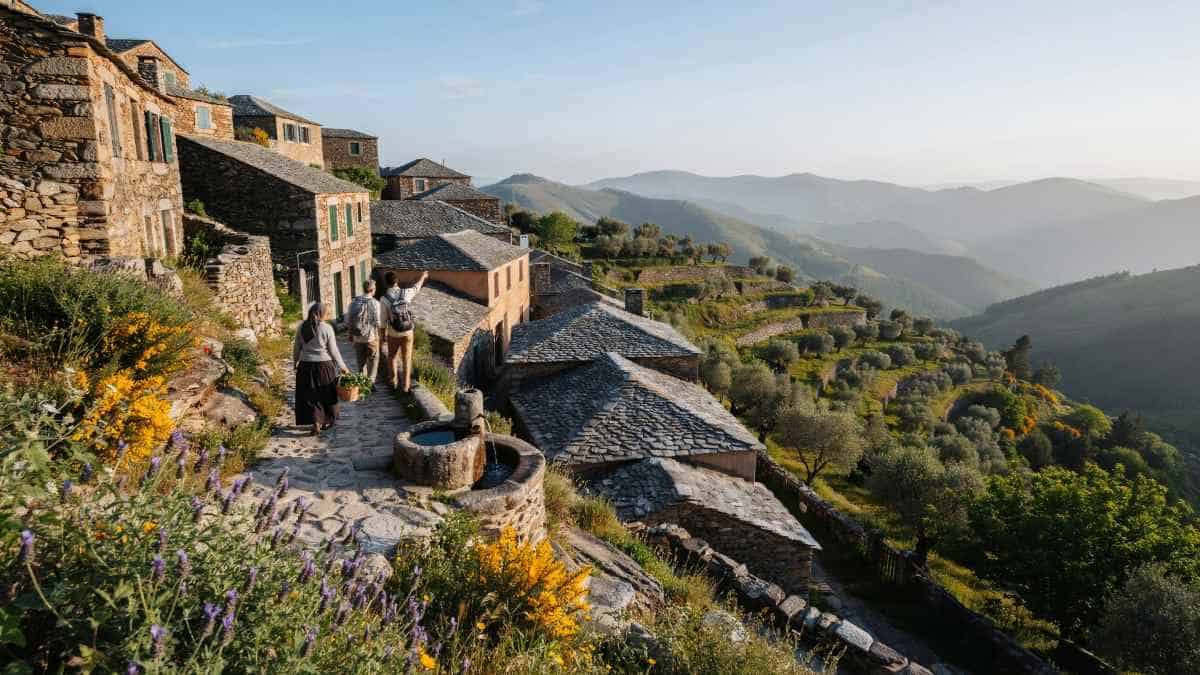
Image generated with Ai
Serra do Açor, located in Portugal, will lure tourists to villages, cultural landscapes, and the countryside, thanks to destinations like Arganil and Piódão, where visitors can explore the tourist products offered by schist buildings, agricultural practices, trails in the woods, and cycling routes. The mountainous area of central Portugal is becoming more appropriate for extended visits and outdoor activities. Serra do Açor is a schist mountain system that covers more than 25,000 hectares and has Arganil as one of the main entrances to this mountain system.
Piódão Remains a Key Tourism Gateway
Advertisement
Advertisement
Piódão continues to be one of the best-known villages in the Serra do Açor. In April 2026, Arganil Municipality announced that the historic village had received the Cinco Estrelas Regiões award in the Villages and Towns category for the eighth time.
The recognition follows years of attention to Piódão’s architectural and cultural heritage. The village is known for its steep mountain setting, schist houses, narrow lanes and traditional character, making it a central stop for visitors exploring the surrounding landscape.
Advertisement
Advertisement
Accommodation also allows travellers to stay within the mountain environment rather than treating Piódão solely as a day-trip destination. Rural properties and hotels provide access to walking routes, local food and nearby villages.
Schist Villages Create a Connected Rural Journey
Advertisement
Advertisement
The wider Aldeias do Xisto network links villages across Central Portugal through architecture, walking routes, cultural experiences and active tourism.
Within and around the Serra do Açor, settlements including Benfeita provide alternatives to Piódão. Visitors can move between smaller communities where stone buildings, agricultural terraces, woodland and mountain streams remain part of the landscape.
The schist construction tradition is especially visible in village homes and public spaces. This allows heritage tourism to be combined with walks through forests, valleys and mountain roads.
For travellers exploring rural Portugal, the journey between villages can therefore become part of the itinerary, rather than simply a transfer between attractions.
Cycling Opens the Mountain Interior
Cycling is an established part of the Serra do Açor tourism infrastructure. Arganil has a Cyclin’ Portugal centre in Côja, providing a base for visitors exploring the surrounding mountain territory by bicycle.
Advertisement
Advertisement
The regional cycling network includes routes with different distances and elevation profiles. This gives visitors the option of shorter recreational rides or longer mountain routes connecting villages and rural landscapes.
One established route linking Côja and Arganil extends for more than 86 kilometres and includes significant elevation gain. Other routes connect Côja with Benfeita and surrounding settlements, creating opportunities to combine cycling with village visits.
The Serra do Açor is also connected to the wider Aldeias do Xisto cycling network, which provides marked routes and services for active travellers.
Forests Add Nature Tourism to the Route
The Serra do Açor extends beyond its historic villages. Its landscape includes streams, forested slopes and the Mata da Margaraça, an important area of native woodland within the Serra do Açor Protected Landscape and Natura 2000 network.
Walking is another established way to explore the region. The wider Aldeias do Xisto destination has hundreds of kilometres of marked walking routes, with different levels of difficulty and trails passing through villages and natural landscapes.
Advertisement
Advertisement
For visitors staying several nights, this creates the possibility of combining heritage exploration with hiking and forest experiences without returning to Portugal’s major cities each day.
Local Food Connects Tourism With Rural Life
Agriculture, pastoralism and beekeeping have historically supported communities across the Serra do Açor. These traditions remain part of the region’s rural identity and provide opportunities for visitors interested in local food and agricultural heritage.
Regional dining can be incorporated into village stays and countryside itineraries, with traditional soups, broths, meat dishes, sausages and sweets forming part of the wider Aldeias do Xisto food culture.
This creates a tourism route that combines accommodation, landscape, cycling, walking and gastronomy rather than concentrating on a single attraction.
New Tourism Investment Reaches Portugal’s Interior
Advertisement
Advertisement
Portugal is continuing to support tourism development outside its major coastal and urban destinations. In 2026, Turismo de Portugal announced new funding for inland tourism projects covering nature tourism, active tourism, cultural experiences, accommodation improvements and heritage development.
The national Crescer com o Turismo programme has also been directed towards projects intended to strengthen tourism in lower-density territories and improve the quality of visitor experiences.
For areas such as Serra do Açor, this wider investment environment provides a framework for developing rural accommodation, outdoor activities and heritage-based tourism.
How to Explore Serra do Açor
The best place to start off in order to visit the entire Serra do Açor is Arganil, while Côja will help one access the already developed cycling circuit of the region. Piódão is one of the most significant cultural locations and, along with other schist villages like Benfeita and others, can offer more routes through the mountains. Travellers arriving from the main road network of Portugal can access the region via Coimbra and Arganil. It is advisable that travellers factor in the time needed to travel through mountain roads in their planning. A two- or three-day tour will involve visiting Piódão as well as cycling in Côja, walking through the Serra do Açor, visiting smaller schist villages and tasting regional produce. The latest development in the tourism sector regarding the region of Serra do Açor means that the region now lies at the heart of rural tourism in Portugal, involving schist architecture and cycling, walking, nature, accommodation and local produce.
Advertisement
