
Berlin Neighbourhoods: From Kreuzberg to Köpenick, Seven Districts Every Curious Traveller Should Explore

Published
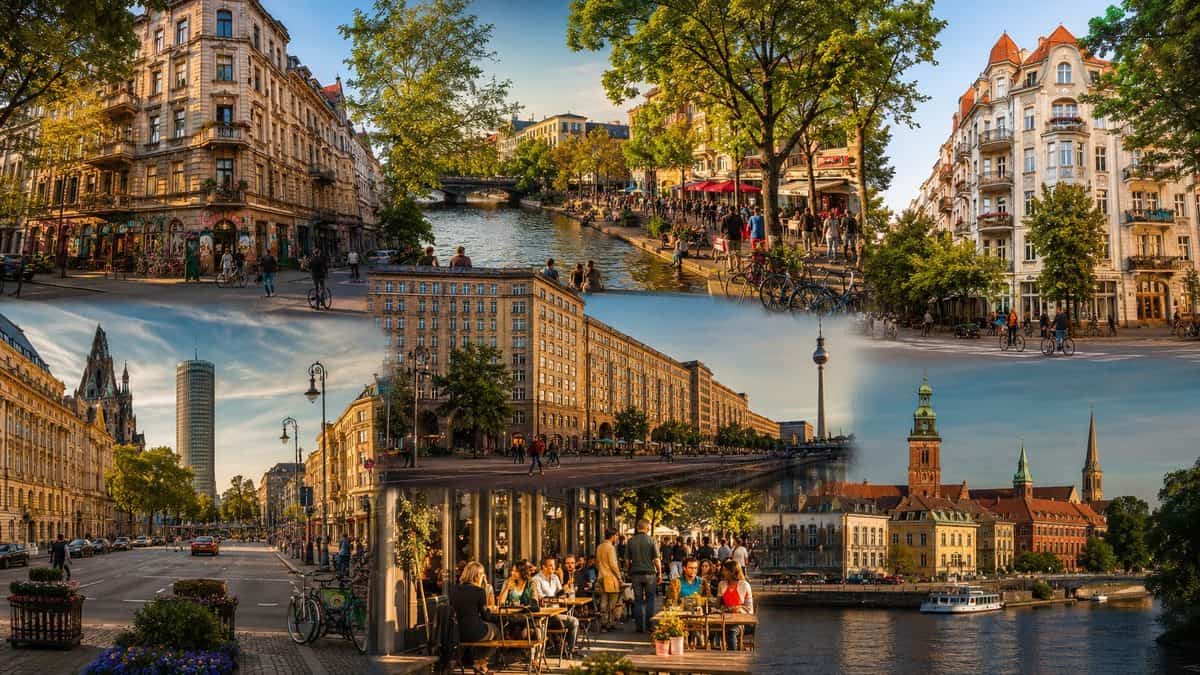
Image generated with Ai
Finley’s neighborhoods are creating unique circumstances for travelers engaging with Berlin’s tenants. With 12.4 million travellers and 29.4 million overnight visits in 2025, per the Berlin-Brandenburg Statistics Office, traveler falls were 2.7 % from the previous year. Traveller falls reflect Berlin’s status as an important urban traveler destination in Europe. The new traveler destination neighborhoods protection and resident quality of life preservation strategies adjust towards a more resident focused traveler experience.
It is important to note that Berlin’s traveller experiences cannot be captured with the Brandenburg Gate and Berlin Wall. Traveller experiences are a collection of urban and city resident aided traveller experiences and most importantly Berlin’s secret courtyards, street markets, multicultural neighborhoods, residential streets, and waterways. Traveller experiences in these neighborhoods help spread traveller experiences beyond the central city and provide residents with the opportunity to experience the city’s neighborhoods.
Why Berlin’s Neighbourhoods Matter Now
Berlin’s appeal has always rested on contrasts, but its scale makes those contrasts unusually pronounced. The city covers roughly 890 square kilometres and has developed through successive layers of Prussian, imperial, Nazi, divided and reunified Berlin. The 1920 Greater Berlin Act dramatically expanded the capital by incorporating eight towns, 59 rural communities and 27 estate districts.
That historical expansion still shapes the traveller experience. Berlin’s 12 administrative districts contain everything from dense inner-city quarters to lakeside settlements, industrial landscapes and old villages. The official tourism organisation now actively encourages visitors who have seen the major sights to explore these neighbourhoods for their water, nature, food and local culture.
Advertisement
Advertisement
The tourism numbers underline the opportunity. In 2025, Friedrichshain-Kreuzberg recorded 4.25 million overnight stays, while Charlottenburg-Wilmersdorf recorded 4.44 million. Neukölln had 769,955 overnight stays, and Treptow-Köpenick recorded 929,145. These figures show that visitor demand already extends well beyond Berlin’s historic core.
Advertisement
Advertisement
| Berlin Area | 2025 Overnight Stays | What Travellers Find |
|---|---|---|
| Mitte | 13.55 million | Major landmarks, museums and central culture |
| Charlottenburg-Wilmersdorf | 4.44 million | City West, architecture, shopping and museums |
| Friedrichshain-Kreuzberg | 4.25 million | Street culture, food, nightlife and history |
| Pankow | 1.18 million | Prenzlauer Berg, cafés and historic housing |
| Treptow-Köpenick | 929,145 | Lakes, waterways, forests and old-town character |
| Neukölln | 769,955 | Multicultural food, markets and changing streetscapes |
Kreuzberg Reveals Berlin’s Cultural DNA
Kreuzberg is where the story of migration, protest and creative reinvention becomes especially visible. Labour migration from countries including Turkey, Italy and Greece transformed the district during the 1960s and 1970s. Those communities helped create the social and cultural landscape that visitors encounter today.
The best way to experience Kreuzberg is therefore not as a checklist of fashionable venues. Walk through its older streets, examine the tenement façades and notice how food businesses, independent shops and cultural spaces occupy the same urban fabric. The Landwehr Canal provides another perspective, while areas around Bergmannstraße and Markthalle Neun reveal how everyday neighbourhood life remains central to the district.
For travellers, the important distinction is between seeing Kreuzberg and understanding Kreuzberg. Street art may provide the immediate visual hook, but migration history, housing, food and countercultural politics explain why the district developed its distinctive identity.
Advertisement
Advertisement
Neukölln Shows A City In Motion
Neukölln offers perhaps the clearest view of Berlin as a city undergoing constant change. The district ranges from detached-house areas in the south to large housing estates and dense multicultural streets around Hermannplatz. Its diversity is reflected particularly strongly through food, markets and independent businesses.
The area around the Landwehr Canal and Maybachufer is particularly useful for travellers who want to observe neighbourhood culture rather than simply consume attractions. Markets, cafés and international restaurants create a street rhythm that feels markedly different from monumental central Berlin.
Advertisement
Advertisement
Yet Neukölln also rewards visitors who look further. Rixdorf preserves the traces of an older settlement, while Körnerpark introduces an unexpectedly formal green space into the urban landscape. This contrast gives the district its real travel value: old village structures, immigrant histories and contemporary culture coexist within the same borough.
Prenzlauer Berg Tells A Story Of Reinvention
Prenzlauer Berg demonstrates how dramatically Berlin can change without losing its architectural memory. Historic tenement streets, courtyards and former industrial sites remain visible beneath a much more polished contemporary identity.
The district’s brewing history is particularly revealing. Pfefferberg, Prater and Kulturbrauerei recall a period when breweries and beer gardens shaped the area. Today, cafés, restaurants, cultural venues and renovated housing occupy much of that urban fabric.
That transformation makes Prenzlauer Berg valuable for travellers interested in urban change. The neighbourhood once carried a strong alternative reputation, particularly around the late GDR period and reunification. It later attracted investment and wealth, changing its demographic and commercial character.
Travellers should therefore look above the café terraces. The façades, courtyards and street plans often tell a longer story than the businesses occupying them.
Advertisement
Advertisement
Friedrichshain Connects Two Berlins
Friedrichshain provides one of the clearest opportunities to read Berlin’s divided past through architecture. Karl-Marx-Allee remains an extraordinary example of East German monumental planning, with grand residential blocks built during the socialist period. The second construction phase produced 4,674 homes, using industrially manufactured concrete elements during the late 1950s and early 1960s.
The avenue is especially valuable because it moves beyond the familiar Wall narrative. Instead of focusing only on border barriers and escape stories, it reveals how everyday life was physically planned in East Berlin.
At the same time, Friedrichshain became synonymous with post-reunification nightlife and alternative culture. The result is a neighbourhood where socialist architecture, converted industrial spaces, contemporary bars and creative businesses occupy overlapping layers.
For travellers, that makes Friedrichshain more rewarding when explored slowly. A route can begin with Karl-Marx-Allee, continue towards the Spree and finish around the former Wall landscape without treating each location as an isolated attraction.
Charlottenburg Restores Berlin’s Elegant Side
Berlin’s identity is often marketed through its alternative districts, yet that can obscure the sophisticated character of the western city. Charlottenburg-Wilmersdorf provides the necessary counterweight.
Advertisement
Advertisement
Kurfürstendamm was the commercial and cultural centre of West Berlin during the Wall years. After reunification, some of the city’s creative energy shifted eastwards. City West later entered another phase of renewal, with renovated post-war buildings, galleries, restaurants and high-end retail helping reshape the area.
The architectural range is particularly useful for visitors. Rococo elements, grand turn-of-the-century town houses, 1950s modernism and contemporary buildings sit within the same broader district. That makes Charlottenburg a strong destination for travellers interested in architecture rather than nightlife alone.
It also changes the definition of “authentic Berlin”. Authenticity does not require grittiness. Elegant streets, established cafés, museums and residential avenues are equally important to understanding the city.
Wedding Offers A Less Curated Berlin
Wedding is useful for travellers who want to move further from Berlin’s established visitor circuits. Its appeal lies less in monumental attractions and more in its everyday urban texture.
The district combines long-established communities, international businesses, housing estates, independent cultural spaces and former industrial areas. It provides a useful counterpoint to neighbourhoods that have already become heavily associated with Berlin’s visitor economy.
Advertisement
Advertisement
The travel value here is observational. Walk rather than rush, use public transport, stop for food and pay attention to how streets change between commercial corridors and residential blocks. Wedding can make Berlin feel less like a destination assembled for visitors and more like a functioning metropolis.
That distinction matters as tourism grows. Berlin recorded 29.4 million overnight stays in 2025, while international visitors accounted for 41.1% of overnight stays. The city’s tourism authorities have increasingly highlighted the need for tourism to remain compatible with neighbourhood life.
Köpenick Changes The Berlin Picture
Köpenick may provide the biggest surprise for first-time visitors. Here, Berlin suddenly becomes a city of water, forests and historic lanes.
The old town sits at the confluence of the Dahme and Spree, giving it an almost island-like character. The historic Kietz area contains traditional houses, narrow streets and buildings with roots stretching back centuries.
The wider Treptow-Köpenick district is even more striking. It contains seven lakes and around 150 kilometres of navigable waterways, while almost 13% of the borough is covered by water. Müggelsee is Berlin’s largest lake, and the surrounding landscape supports cycling, boating, swimming and walking.
Advertisement
Advertisement
| Neighbourhood | Best For | Suggested Pace | Strongest Travel Lens |
|---|---|---|---|
| Kreuzberg | Food and culture | Half day | Migration and creativity |
| Neukölln | Markets and street life | Half day | Change and diversity |
| Prenzlauer Berg | Architecture and cafés | Half day | Urban reinvention |
| Friedrichshain | History and nightlife | Half to full day | East-West contrasts |
| Charlottenburg | Architecture and culture | Half day | West Berlin heritage |
| Wedding | Everyday city life | Half day | Contemporary Berlin |
| Köpenick | Water and history | Full day | Berlin beyond the metropolis |
Public Transport Makes The Wider City Accessible
Berlin’s neighbourhood strategy works because the capital has an extensive public transport system. The BVG recorded 1.109 billion passenger journeys in 2024, about 4% more than the previous year. Its network includes nine U-Bahn lines, while its tram system stretches across roughly 320 kilometres.
The S-Bahn is equally important for neighbourhood exploration. A passenger count recorded 456 million journeys in 2024, with demand returning close to pre-pandemic levels during the second half of the year. The network currently spans 345 kilometres and includes 168 stations across Berlin and Brandenburg.
This makes a neighbourhood-led itinerary practical rather than aspirational. Travellers can combine central sightseeing with longer excursions without relying on taxis. However, visitors should check journey information before setting out because engineering works, major events and security operations can cause temporary changes.
A Smarter Way To Build A Berlin Itinerary
The most effective approach is to combine one historical anchor with one neighbourhood experience each day. A morning around central museums could lead into Kreuzberg for lunch and an afternoon canal walk. Another day could pair East Berlin architecture around Karl-Marx-Allee with Friedrichshain’s riverside landscape.
Travellers staying longer can devote an entire day to Treptow-Köpenick. A route through Treptower Park, the waterways and Köpenick old town offers a completely different sense of scale. Meanwhile, Prenzlauer Berg and Charlottenburg work particularly well for slower architectural exploration.
Advertisement
Advertisement
The city also provides district-level tourist information, including centres serving Neukölln, Pankow and Treptow-Köpenick. These can help visitors find local activities and current neighbourhood information.
What Berlin’s Tourism Shift Means For Visitors
The move towards neighbourhood-focused tourism reflects a broader industry question: how can a major city accommodate millions of visitors without concentrating them in a handful of locations?
Berlin’s 2025 tourism figures show the scale involved. Tourism generated an estimated €15.1 billion in visitor spending, while around 224,800 people were directly or indirectly supported by the visitor economy. Tourism therefore remains economically significant, even as the city seeks a more balanced model.
For travellers, the change is positive. Exploring districts beyond Mitte can reduce pressure on the most crowded attractions while directing spending towards local businesses. It can also produce a richer experience because visitors encounter food, architecture, parks and cultural life in their natural setting.
The shift also reflects changing international demand. In 2025, the United States generated around 1.28 million overnight stays, narrowly ahead of the United Kingdom at 1.27 million. Overnight stays from China rose 14.4%, while India increased 10%.
Advertisement
Advertisement
The Berlin You Remember May Not Be The Berlin You Find
Berlin’s travel advantage is its versatility. It doesn’t stay one thing and is always evolving. Many travellers know that each district in Berlin represents a different time in the city’s history. For example, the area of Prenzlauer Berg shows how the city is gentrified. Another district, Friedrichshain, embodies the socialist system as post-Wall experiments influenced the district after the changes to East Berlin in 1990. One more District called Charlottenburg, used to be West Berlin and has been completely modernized with some elegant architecture.
Further out, yet another District, Koepnick, breaks another assumption showing Berlin can be a river, lake, and forest destination all in one.
Visitors are starting to see the value of traveling outside the Wall. While the wall itself has now been replaced with many monuments and memorials, the Districts of Berlin show travellers how the city is currently living. Understanding this and the 30 million+ visitors makes it essential that Berlin itineraries focus on Districts and exploring at a more relaxed pace rather than dedicated, time-focused visits to monuments.
Useful Reader Data
| Indicator | Latest Figure |
|---|---|
| Berlin visitors, 2025 | 12.4 million |
| Overnight stays, 2025 | 29.4 million |
| International share of overnight stays | 41.1% |
| Domestic overnight stays | 17.3 million |
| International overnight stays | 12.1 million |
| BVG passenger journeys, 2024 | 1.109 billion |
| S-Bahn passenger journeys, 2024 | 456 million |
| Treptow-Köpenick navigable waterways | About 150 km |
| Lakes in Treptow-Köpenick | 7 |
| Berlin districts | 12 |
Advertisement
