
Basel Crosses Paths with Hong Kong and Paris as Art Tourism Spending Exposes the Battle for High-Value Travellers

Published
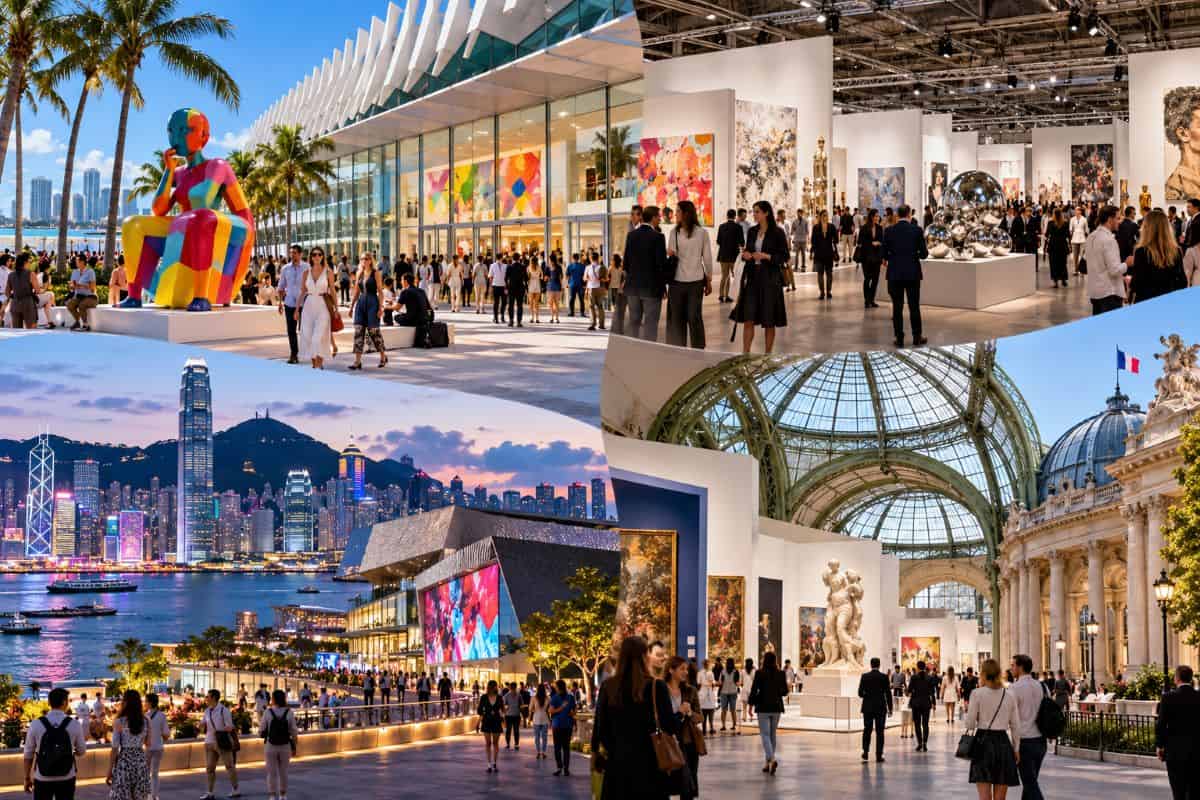
Miami Beach, Basel, Hong Kong and Paris are competing for international art travellers as major exhibitions combine gallery showcases, public installations and wider cultural experiences. Art Basel Miami Beach will feature 272 exhibitors from more than 40 countries and territories from 4–6 December 2026. Meanwhile, Basel welcomed 90,000 visitors in June, and Hong Kong recorded 91,500 attendees in March. Art Basel Paris will bring 211 exhibitors from 41 countries and territories to the Grand Palais from 23–25 October.
The emerging contest extends beyond artwork sales and admission receipts. Hotels, restaurants, museums, transport operators, independent galleries and retailers can all benefit when visitors extend their stays. Yet art tourism spending remains difficult to compare because cities publish different measures of attendance, accommodation demand and visitor expenditure. The available evidence offers important clues, but a definitive economic winner requires comparable event-specific spending data.
Art Fairs Turn Cultural Prestige Into Travel Demand
International art fairs increasingly function as destination-wide tourism events rather than isolated exhibitions. Collectors, curators, gallery professionals, museum representatives and cultural travellers arrive with different budgets and itineraries. Their spending can reach luxury hotels, independent restaurants, local transport networks, museums and neighbourhood businesses.
However, attendance alone does not establish economic value. A visitor who attends a fair for several hours and leaves the same day contributes differently from an international collector who stays for five nights. Similarly, a hotel booking does not automatically represent additional tourism spending if the guest would have visited the destination anyway.
Advertisement
Advertisement
The strongest comparison therefore examines visitor volume, length of stay, accommodation performance and expenditure outside the fair. It also considers public exhibitions and associated cultural events, which can broaden participation beyond commercial galleries. These distinctions matter for tourism authorities seeking measurable returns from cultural investment.
Four Destinations, Four Distinct Tourism Models
The following figures establish the scale of the four markets. They represent different reporting periods and categories, so they should not be interpreted as a direct ranking of economic impact.
Advertisement
Advertisement
| Destination | Fair attendance | Exhibitors | International reach |
|---|---|---|---|
| Miami Beach, 2026 | Awaiting event | 272 | More than 40 countries and territories |
| Basel, 2026 | 90,000 | 290 | Visitors from 103 countries |
| Hong Kong, 2026 | 91,500 | 240 | Galleries from 41 countries and territories |
| Paris, 2026 | Awaiting event | 211 | Galleries from 41 countries and territories |
The comparison reveals different strengths. Basel provides completed attendance and hotel-performance figures, while Hong Kong recorded the largest reported attendance among these two completed Art Basel editions. Miami and Paris still have upcoming fairs as of 14 October 2026. Their eventual attendance and event-period tourism results remain unconfirmed.
Crucially, exhibitor totals do not measure visitor spending. Nor does a high attendance figure prove that a city generates more revenue per traveller. Those questions require expenditure surveys and comparable accommodation data.
Advertisement
Advertisement
Miami Beach Builds a Wider Art Week Economy
Art Basel Miami Beach returns to the Miami Beach Convention Center from 4–6 December 2026, with VIP preview days on 2–3 December. Its 272 exhibitors represent more than 40 countries and territories, giving the event a broad international profile. The 2026 programme also includes digital-era art presentations and public installations beyond the commercial exhibition floor.
Miami’s principal advantage is the wider cultural calendar surrounding the fair. Miami Art Week brings exhibitions, satellite fairs, private events and hotel-based art projects into a concentrated period. The city’s No Vacancy programme will place installations by 12 artists across 12 Miami Beach hotels from 12 November to 19 December 2026. This creates additional opportunities for visitors to encounter art outside conventional galleries.
The economic potential extends to restaurants, taxis, retail, nightlife and accommodation. Visitors may combine exhibition appointments with beach activities, architecture tours and visits to local cultural institutions. Nevertheless, the extent of additional spending depends on how long travellers stay and whether the event generates new trips rather than simply changing the timing of existing visits.
The City of Miami Beach has cited an estimated US$547 million in economic activity associated with Art Basel Miami Beach in 2024, alongside more than 75,000 attendees. This is a significant headline indicator, but it should not be confused with direct visitor expenditure. Economic-impact estimates can include indirect and induced effects, and their methodology must be examined before comparison with other cities.
Advertisement
Advertisement
For visitors planning December travel, the practical consideration is the concentrated demand period. Travellers should compare accommodation rates across Miami Beach and the wider Miami area, check transport connections and book early if their dates are fixed. Public art and hotel installations may also provide cultural experiences without requiring a ticket to the main fair.
Basel Provides the Clearest Hotel-Demand Evidence
Basel offers one of the strongest measurable cases because its 2026 fair results can be examined alongside official accommodation statistics. Art Basel welcomed 90,000 visitors from 103 countries in June, bringing together 290 galleries from 43 countries and territories. Representatives from more than 270 museums and foundations also attended, underlining the event’s importance to international cultural networks.
The Canton of Basel-Stadt recorded more than 39,000 hotel overnight stays during Art Week, with average net room occupancy reaching 84%. Occupancy peaked at 93% on Monday, 15 June, while the reported low was 44% on Sunday, 7 June. These figures demonstrate concentrated accommodation demand, although the reporting window and comparison dates matter when assessing the fair’s precise contribution.
Basel’s compact geography also creates a potentially useful visitor proposition. Travellers can combine the main fair with museums, galleries, architecture and the city’s historic centre without undertaking lengthy journeys between districts. For visitors staying overnight, this could create opportunities for restaurant visits and additional cultural spending.
However, the 39,000 hotel nights are not equivalent to 39,000 individual tourists. One guest staying four nights generates four overnight stays, while multiple visitors may share accommodation. A credible comparison must therefore distinguish room nights, guests and unique event attendees.
Basel’s next fair is scheduled for 17–20 June 2027, giving tourism businesses a predictable planning horizon. Hotels and restaurants can prepare staffing and inventory, while visitors can assess whether a longer stay offers better value than arriving solely for the exhibition.
Advertisement
Advertisement
Hong Kong Connects Art With Asian Travel Markets
Hong Kong’s 2026 edition welcomed 91,500 visitors, placing it among the strongest attendance performers in this comparison. Its 240 participating galleries represented 41 countries and territories, while more than 170 museums and foundations from 27 countries and territories attended. The figures reinforce Hong Kong’s position as a meeting point for collectors, institutions and galleries across the Asia-Pacific region.
The fair also benefits from a wider public programme. Free film screenings, conversations and collaborations with cultural institutions allow visitors to experience art beyond the exhibition hall. This can connect the fair with Hong Kong’s museums, independent cultural venues, restaurants and retail districts, potentially spreading visitor activity across the city.
The Hong Kong government announced a five-year collaboration with Art Basel in March 2026. The partnership aims to strengthen the city’s position as an international art-trading centre while supporting public art, education and the local cultural ecosystem. The agreement offers a longer-term policy framework than a single annual event, although its eventual economic results will require independent measurement.
Hong Kong’s wider visitor economy provides another useful indicator. The Hong Kong Tourism Board publishes monthly arrival statistics and maintains tourism data for researchers and industry professionals. However, these general figures cannot establish how much Art Basel visitors spend specifically on hotels, dining, shopping or cultural activities. That requires an event-linked expenditure survey.
For travellers, the attraction is the possibility of combining an art-fair visit with museums, waterfront districts, local cuisine and wider city exploration. The value of such an itinerary depends on the visitor’s interests, accommodation choices and length of stay. The next edition is scheduled for 25–27 March 2027, allowing travellers to plan around the event’s spring calendar.
Paris Offers Art Beyond a Single Fair
Art Basel Paris will occupy the Grand Palais from 23–25 October 2026, with preview days on 21–22 October. The fair’s fifth edition brings together 211 exhibitors from 41 countries and territories, including 32 first-time participants. Its programme also includes a public programme developed with Parisian cultural institutions, connecting the fair with the city’s broader artistic landscape.
Advertisement
Advertisement
Paris differs from the other destinations because the fair sits within a substantial year-round cultural economy. Museums, historic monuments, independent galleries, design districts and other exhibitions can encourage visitors to build longer itineraries around the main event. The challenge for researchers is to distinguish the fair’s incremental contribution from tourism that Paris would attract regardless.
The regional figures demonstrate the scale of that wider market. Paris Region welcomed 24.7 million tourists during January–June 2026, including 11.5 million international visitors and 13.2 million domestic visitors. Tourism expenditure reached €11.8 billion, up 4% year on year and 17% above the comparable 2019 level. The region also recorded 34.1 million hotel overnight stays during the first half.
These totals provide valuable context, but they are not Art Basel Paris impact figures. They include the region’s full tourism activity, from leisure holidays and business travel to visits motivated by other events. Attributing even a small share directly to the fair without supporting evidence would exaggerate its measured contribution.
Paris also demonstrates why a destination-wide cultural offer matters to visitors. A traveller can attend the fair and then visit public museums, historic neighbourhoods or other exhibitions. This creates more ways to spend time and money beyond the main venue, although the article must test the extent to which those activities produce additional expenditure.
For visitors attending in October, the Grand Palais location makes advance planning important. Travellers should check fair opening hours, accommodation rates and transport arrangements before finalising their itinerary. Those seeking a broader cultural trip can compare the fair dates with museum exhibitions and other events, while allowing time for travel between venues.
Hotel Occupancy Reveals the Strongest Immediate Signal
Accommodation statistics offer a practical way to investigate whether an art event attracts overnight visitors. However, occupancy alone cannot reveal how much guests spend on dining, transport or cultural activities. Researchers must also examine room rates, length of stay and performance against comparable dates.
Advertisement
Advertisement
Basel currently provides the clearest event-week evidence among the four destinations. Paris offers useful regional benchmarks, while Miami’s forthcoming December fair and Hong Kong’s future editions create opportunities for further measurement.
| Destination | Verified accommodation indicator | What it reveals |
|---|---|---|
| Miami Beach | 2026 event results pending | The effect of December art demand remains to be measured |
| Basel | More than 39,000 hotel nights; 84% average net room occupancy during Art Week | Concentrated accommodation demand |
| Hong Kong | Event-specific hotel figures still required | Visitor spending needs to be linked to overnight stays |
| Paris Region | 34.1 million hotel overnight stays in H1 2026 | Scale of the wider regional tourism economy |
For a fair comparison, each destination should report accommodation performance over an equivalent event window. A three-day exhibition may generate hotel demand over a full week because visitors arrive early or extend their trips. Comparing only the official public dates could therefore miss a substantial part of the tourism effect.
Researchers should also distinguish room occupancy from room revenue. A destination can achieve high occupancy without generating the greatest spending per visitor, particularly if accommodation prices and average stay lengths differ considerably.
Public Exhibitions Expand the Visitor Economy
Public programming can widen the economic reach of an art fair by encouraging visitors to explore places beyond its main venue. Free installations, talks, screenings and museum collaborations can attract residents and travellers who do not purchase fair tickets. They can also provide additional reasons for international visitors to extend their stay.
Miami Beach’s No Vacancy programme offers a clear example, transforming 12 hotels into exhibition locations during November and December 2026. Hong Kong’s public programme connects fair activity with cultural institutions and citywide installations. Art Basel Paris also plans a public programme in partnership with Parisian institutions.
These initiatives create potential benefits for neighbourhood businesses, cafés, restaurants and transport providers. Nevertheless, public participation figures alone cannot establish additional economic value. Researchers need to determine whether participants are tourists, local residents or visitors who would have spent money in the destination regardless.
Advertisement
Advertisement
The same principle applies to museums and independent galleries. Their attendance may rise during fair week, but a credible impact assessment should compare visitor numbers with normal seasonal patterns. Where available, ticketing records, visitor surveys and aggregated mobility data could help establish the relationship.
Measuring Spending Beyond Artwork Purchases
The central research challenge is the absence of a consistent, publicly available expenditure dataset covering all four fairs. Each destination publishes valuable information, but the available measures do not yet support a definitive cross-city ranking of visitor spending outside the fair.
A robust study would collect expenditure across accommodation, food and drink, local transport, shopping, cultural attractions and entertainment. It would exclude artwork purchases and fair admission from the main comparison, while reporting those categories separately if useful. It should also identify whether the spending came from international tourists, domestic overnight visitors or same-day attendees.
| Measurement | Required evidence | Why it matters |
|---|---|---|
| Spending per visitor | Visitor expenditure survey | Compares the value of different visitor groups |
| Average length of stay | Accommodation and visitor survey data | Identifies destinations encouraging longer trips |
| Additional hotel demand | Event-period performance versus a suitable baseline | Separates event-related demand from normal tourism |
| Cultural participation | Museum, gallery and public-programme attendance | Measures activity beyond the main fair |
| Incremental visitor expenditure | Spending attributable to the event | Provides the strongest basis for an economic comparison |
The final measure is particularly important. Total spending during an event week can include ordinary tourism, business travel and local consumption. Incremental expenditure instead attempts to identify the additional activity associated with the event, while accounting for visitors who would have travelled anyway.
An independent assessment should disclose its methodology, survey sample, reporting period and treatment of indirect economic effects. Without those details, large economic-impact estimates should not be compared as though they were equivalent measures of tourism spending.
What Travellers Should Know Before Booking
Art-fair travel offers different advantages depending on the destination and the visitor’s interests. Basel provides a concentrated exhibition experience within a relatively compact city, while Hong Kong combines an international fair with a broad urban cultural programme. Miami Beach adds public installations and a wider Art Week calendar, while Paris offers extensive opportunities to combine fair attendance with museums and other exhibitions.
Advertisement
Advertisement
Visitors should compare the full cost of their itinerary rather than focusing only on admission prices. Accommodation, local transport, dining and the number of days required to explore the programme can materially affect the overall budget. Flexible arrival dates may also help travellers avoid the most expensive hotel nights, although actual savings depend on availability.
The upcoming calendar provides useful planning milestones. Art Basel Paris runs from 23–25 October 2026, followed by Miami Beach from 4–6 December 2026. The 2027 editions are scheduled for Hong Kong on 25–27 March and Basel on 17–20 June. Travellers should confirm ticket availability, preview access and public-programme schedules through official event channels before booking.
Which City Offers the Strongest Measurable Value?
The evidence does not yet establish a definitive winner in the contest for art tourism spending. Basel currently presents the clearest event-specific accommodation evidence, with 90,000 attendees, more than 39,000 hotel overnight stays during Art Week and average net room occupancy of 84%. Hong Kong recorded 91,500 visitors in 2026, while Paris and Miami offer substantial cultural programmes that could extend visitor activity beyond their main fairs. However, comparable expenditure data remain incomplete. The most defensible conclusion is that each destination has a different economic proposition. A reliable ranking will require consistent visitor-spending surveys, hotel performance comparisons and measurements of additional cultural participation.
Advertisement
