
Michael Jackson Joins Elvis Presley, The Beatles, Freddie Mercury, Bob Dylan, David Bowie, Beyoncé and Frank Sinatra as Global Ranking Reveals How Legendary Musicians Continue Driving Entertainment Tourism, Cultural Heritage Travel and Destination Appeal Worldwide—What Every Travel Enthusiast Should Know

Published
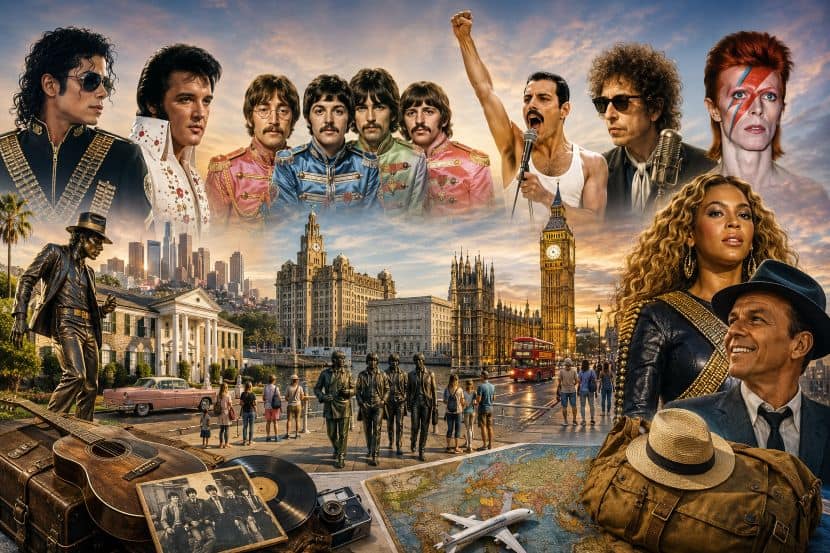
The global entertainment industry is becoming one of the strongest catalysts for international travel, with entertainment tourism emerging as a multi-billion-dollar economic force that continues to reshape destination marketing, aviation demand, hospitality investment and cultural heritage preservation. A newly circulated ranking of the world’s greatest musicians has once again drawn attention to artists whose influence extends far beyond music sales, creating year-round visitor economies centered around museums, recording studios, memorials, festivals, hometown attractions and legendary performance venues. Michael Jackson, Elvis Presley, The Beatles, Freddie Mercury, Bob Dylan, David Bowie, Beyoncé and Frank Sinatra remain among the artists whose enduring legacies continue to attract millions of domestic and international visitors, strengthening tourism revenues across the United States, the United Kingdom and several other destinations. Entertainment tourism is no longer a niche segment but an increasingly important pillar of destination competitiveness.
The economic significance extends well beyond concert ticket sales. Travelers now plan entire itineraries around iconic music landmarks, while governments and destination marketing organizations increasingly recognize music heritage as an essential tourism asset. According to the UN Tourism (formerly UNWTO), cultural tourism accounts for approximately 40% of global tourism, with music, heritage and creative industries representing rapidly expanding components of visitor experiences. Meanwhile, organizations including the U.S. National Park Service, VisitBritain, and numerous municipal tourism agencies continue investing in preservation, interpretation and promotion of music-related attractions that generate repeat visitation, longer visitor stays and higher tourism spending. The ranking therefore offers more than entertainment nostalgia—it illustrates how legendary musicians continue influencing global travel patterns decades after many of their careers reached their peak.
Entertainment Tourism Continues Expanding Into a Global Travel Economy
For decades, destinations relied primarily on beaches, natural attractions or historical monuments to attract visitors. Today, music heritage has become equally influential.
Streaming platforms have introduced younger generations to artists from previous decades, while documentaries, anniversary celebrations, museum exhibitions and tribute concerts continuously renew international interest. As a result, cities associated with legendary performers increasingly position themselves as year-round tourism destinations rather than simply places connected with music history.
Advertisement
Advertisement
Governments have also realized that preserving musical heritage delivers measurable economic returns through accommodation, aviation, restaurants, retail, guided experiences, and cultural events.
The United Kingdom provides one of the clearest examples. Cities including Liverpool and London have transformed musical heritage into internationally recognized tourism brands that generate continuous visitor demand rather than seasonal spikes.
Advertisement
Advertisement
Similarly, in the United States, destinations linked to Elvis Presley, Michael Jackson, Frank Sinatra and Bob Dylan have become integral components of cultural tourism itineraries.
Rather than functioning solely as museums, these sites now support surrounding hospitality ecosystems including boutique hotels, restaurants, souvenir retailers, tour operators and local transportation providers.
Advertisement
Advertisement
Table 1: Entertainment Tourism’s Growing Economic Importance
| Indicator | Latest Available Data |
|---|---|
| Estimated share of global tourism related to culture | Approximately 40% |
| Countries actively promoting music heritage tourism | More than 100 |
| Economic sectors benefiting | Aviation, hotels, restaurants, museums, retail, transport |
| Major tourism drivers | Museums, festivals, concerts, heritage sites, recording studios |
| Primary visitor markets | Domestic travelers, international tourists, cruise passengers, educational tours |
Michael Jackson Continues Inspiring Music Pilgrimages Across America
Few entertainers have built a global legacy comparable to Michael Jackson.
Although years have passed since his final performances, destinations associated with the King of Pop continue attracting visitors from around the world.
Fans regularly visit Gary, Indiana, his birthplace, while Los Angeles remains central to Jackson-related tourism through recording studios, performance venues and memorial sites. His influence also extends to Las Vegas, where tribute productions continue drawing audiences from international markets.
Jackson’s appeal cuts across generations because his music remains among the most streamed globally. New documentaries, anniversary events and special exhibitions continue introducing younger audiences to his artistic achievements.
Advertisement
Advertisement
For travel companies, Jackson represents an ideal example of entertainment tourism generating sustained demand without requiring new album releases or touring schedules.
His legacy supports museum visitation, guided cultural experiences and destination branding, particularly in American cities connected with his career.
Elvis Presley Keeps Memphis at the Center of Global Music Travel
Few individual attractions illustrate entertainment tourism more effectively than Graceland.
Located in Memphis, Tennessee, Elvis Presley’s former home has evolved into one of America’s most recognizable music heritage attractions.
Each year, visitors from dozens of countries travel specifically to experience Elvis-related exhibitions, preserved living spaces, archives and annual commemorative events.
The surrounding tourism economy has expanded accordingly.
Advertisement
Advertisement
Hotels, themed restaurants, transportation providers and retail businesses benefit directly from continuous visitation generated by Elvis’s enduring popularity.
The destination has also become an important stop for international cultural tours exploring the history of American rock and roll.
Rather than relying solely on nostalgia, Memphis increasingly integrates Elvis tourism with broader experiences including blues heritage, recording studios and culinary tourism.
The Beatles Continue Defining Liverpool’s International Tourism Brand
Perhaps no city demonstrates the power of entertainment tourism more clearly than Liverpool.
The global popularity of The Beatles transformed the city from an industrial center into one of Europe’s leading music tourism destinations.
Visitors travel to experience locations associated with John Lennon, Paul McCartney, George Harrison and Ringo Starr, including childhood neighborhoods, recording landmarks and the internationally recognized Cavern Club district.
Advertisement
Advertisement
Music heritage now forms a core component of Liverpool’s visitor economy.
Hotels, restaurants, museums, guided walking tours and local transportation services benefit from continuous international arrivals inspired by Beatles history.
The city’s tourism identity increasingly combines maritime heritage, UNESCO-recognized cultural assets and popular music history into a single destination experience.
Table 2: Selected Music Legends Driving Destination Tourism
| Artist | Primary Tourism Destination | Tourism Experience | Broader Travel Impact |
|---|---|---|---|
| Michael Jackson | Gary, Indiana; Los Angeles | Memorial sites, recording history, exhibitions | Domestic and international cultural tourism |
| Elvis Presley | Memphis, Tennessee | Graceland, museums, annual commemorations | Hospitality, aviation, retail |
| The Beatles | Liverpool, England | Beatles heritage trail, museums, Cavern Club | International city branding |
| Freddie Mercury | London, Zanzibar associations | Memorial tourism, exhibitions | Heritage tourism |
| Bob Dylan | Duluth, Minnesota | Museums, music history | Literary and music tourism |
| David Bowie | London | Walking tours, exhibitions | Creative tourism |
| Frank Sinatra | Hoboken, New Jersey | Heritage experiences | Urban cultural tourism |
| Beyoncé | Houston, Texas | Modern music tourism, festivals | Contemporary entertainment travel |
Freddie Mercury’s Legacy Continues Connecting Global Destinations
Although Freddie Mercury spent much of his career in the United Kingdom, his multicultural background has expanded his tourism appeal far beyond Britain.
Fans frequently include London locations associated with Queen’s history in their travel itineraries, while Zanzibar, Mercury’s birthplace, increasingly benefits from international recognition linked to his remarkable career.
This cross-border tourism appeal demonstrates how globally recognized musicians can strengthen destination awareness across multiple countries simultaneously.
Advertisement
Advertisement
Rather than concentrating demand in one city, Mercury’s legacy supports broader cultural travel connecting Africa and Europe through shared musical heritage.
Museums, exhibitions and tribute performances continue introducing new audiences to Queen’s music, ensuring that visitor interest remains consistently strong across generations.
Bob Dylan and David Bowie Illustrate the Depth of Heritage-Based Travel
Unlike artists whose tourism appeal centers primarily on iconic residences, Bob Dylan and David Bowie represent broader cultural landscapes.
Dylan’s hometown of Duluth, Minnesota, has embraced literary and musical heritage tourism through museums and interpretive experiences celebrating songwriting, folk traditions and American cultural history.
Meanwhile, London’s connection with David Bowie has inspired numerous guided walking tours exploring neighborhoods, recording studios and artistic landmarks associated with one of Britain’s most influential musicians.
These destinations demonstrate that entertainment tourism increasingly overlaps with literary tourism, architecture, urban regeneration and creative economy initiatives.
Advertisement
Advertisement
Rather than promoting isolated attractions, cities now curate immersive visitor experiences that combine museums, public art, local businesses, culinary offerings and performance venues into integrated tourism products.
Beyoncé Demonstrates How Contemporary Artists Are Transforming Entertainment Tourism
While heritage tourism has traditionally focused on legendary performers from previous generations, Beyoncé illustrates how contemporary artists are redefining entertainment tourism for the modern travel economy. Her global tours have consistently generated measurable economic benefits for destinations, driving demand for airlines, hotels, restaurants, rideshare services and local attractions.
Recent stadium tours have demonstrated that major music events are no longer isolated entertainment experiences. Instead, they function as destination-wide economic catalysts. Travelers frequently extend concert trips into weekend vacations, combining performances with cultural attractions, shopping districts and culinary experiences. Tourism boards increasingly coordinate marketing campaigns around major concerts because visitor spending extends well beyond ticket purchases.
For travel businesses, artists like Beyoncé represent a shift toward experience-led tourism, where fans organize travel calendars around concert schedules. Airlines have responded by adding capacity during high-demand periods, while hotels frequently report occupancy rates approaching full capacity during major music events.
Frank Sinatra’s Legacy Continues Supporting Classic American Cultural Tourism
Few artists remain as closely associated with classic American culture as Frank Sinatra. Although born in Hoboken, New Jersey, Sinatra’s influence extends across destinations including Las Vegas, New York City and Palm Springs.
Las Vegas, in particular, continues benefiting from Sinatra’s association with the city’s golden entertainment era. Visitors interested in music history often combine casino experiences with historic performance venues, museums and guided tours celebrating the Rat Pack period.
Advertisement
Advertisement
This illustrates an important characteristic of entertainment tourism: the strongest destinations rarely depend on a single attraction. Instead, they integrate music history with architecture, gastronomy, nightlife, luxury hospitality and cultural storytelling, encouraging visitors to extend their stays.
Entertainment Tourism Is Becoming a Strategic Asset for Destination Marketing
Destination marketing organizations increasingly recognize music heritage as a competitive advantage. Rather than promoting only natural attractions or historical monuments, tourism authorities are incorporating music into broader destination branding strategies.
This approach generates multiple benefits. Music-related attractions operate throughout the year, helping reduce seasonality. They appeal to domestic and international visitors alike, encourage repeat visitation and attract travelers across multiple generations.
The economic impact also extends through supply chains. Airlines transport visitors, airports benefit from higher passenger volumes, hotels increase occupancy, restaurants experience higher spending and local retailers benefit from increased foot traffic.
Table 3: How Entertainment Tourism Benefits the Travel Economy
| Tourism Sector | Direct Impact | Secondary Benefits |
|---|---|---|
| Airlines | Increased passenger demand during concerts and festivals | New routes, seasonal capacity expansion |
| Airports | Higher passenger throughput | Retail and food revenue growth |
| Hotels | Improved occupancy and average daily rates | Longer guest stays |
| Restaurants | Higher visitor spending | Evening economy growth |
| Museums | Increased admissions | Educational tourism |
| Local Transport | Greater demand for taxis, rail and buses | Employment generation |
| Retail | Music merchandise and souvenirs | Local business development |
| Tour Operators | Music-themed itineraries | Multi-day cultural packages |
Music Heritage Is Increasingly Influencing International Travel Decisions
Research across global tourism markets indicates that travelers increasingly seek authentic cultural experiences. Music has become one of the most accessible forms of cultural engagement because it transcends language barriers.
Visitors often include iconic recording studios, performance venues, museums and artists’ hometowns within broader itineraries. For example, travelers visiting London frequently combine traditional attractions such as Buckingham Palace and the British Museum with music-focused experiences related to Freddie Mercury, David Bowie and The Beatles.
Advertisement
Advertisement
Similarly, American visitors often combine Memphis, Nashville and New Orleans into music heritage road trips encompassing rock and roll, blues, jazz and country music.
These travel patterns create opportunities for regional tourism development rather than concentrating benefits in a single city.
Digital Streaming Is Extending the Lifespan of Music Tourism
The streaming era has fundamentally changed how music destinations attract visitors.
Previous generations primarily discovered artists through radio or television. Today, global streaming platforms continuously introduce classic musicians to younger audiences, sustaining tourism demand decades after original recordings were released.
Documentaries, anniversary editions, digital archives and social media discussions also renew public interest in music heritage.
Consequently, destinations associated with legendary musicians continue attracting first-time visitors despite changing consumer preferences.
Advertisement
Advertisement
Table 4: Selected Destinations Associated with Music Tourism
| Destination | Music Association | Tourism Strength |
|---|---|---|
| Memphis, Tennessee | Elvis Presley | Heritage tourism |
| Liverpool, England | The Beatles | International music city |
| London, England | Freddie Mercury, David Bowie | Urban cultural tourism |
| Gary, Indiana | Michael Jackson | Pop music heritage |
| Duluth, Minnesota | Bob Dylan | Folk and literary tourism |
| Hoboken, New Jersey | Frank Sinatra | American music history |
| Houston, Texas | Beyoncé | Contemporary entertainment tourism |
| Las Vegas, Nevada | Legendary performers and residencies | Entertainment destination |
Top Fifty Music Legends Whose Legacy Continues to Shape Global Travel
The following ranking highlights the musicians referenced in the broader discussion surrounding global music influence:
| Rank | Musician | Country |
|---|---|---|
| 1 | Michael Jackson | United States |
| 2 | Elvis Presley | United States |
| 3 | The Beatles | United Kingdom |
| 4 | Bob Dylan | United States |
| 5 | Freddie Mercury | United Kingdom |
| 6 | Jimi Hendrix | United States |
| 7 | Stevie Wonder | United States |
| 8 | Frank Sinatra | United States |
| 9 | David Bowie | United Kingdom |
| 10 | Prince | United States |
| 11 | Madonna | United States |
| 12 | Aretha Franklin | United States |
| 13 | Ray Charles | United States |
| 14 | Paul McCartney | United Kingdom |
| 15 | Whitney Houston | United States |
| 16 | Elton John | United Kingdom |
| 17 | John Lennon | United Kingdom |
| 18 | Beyoncé | United States |
| 19 | Marvin Gaye | United States |
| 20 | Chuck Berry | United States |
| 21 | Nina Simone | United States |
| 22 | Kurt Cobain | United States |
| 23 | Johnny Cash | United States |
| 24 | James Brown | United States |
| 25 | Adele | United Kingdom |
| 26 | Tina Turner | United States |
| 27 | Eric Clapton | United Kingdom |
| 28 | Mariah Carey | United States |
| 29 | Bruce Springsteen | United States |
| 30 | Janis Joplin | United States |
| 31 | Bob Marley | Jamaica |
| 32 | George Harrison | United Kingdom |
| 33 | Buddy Holly | United States |
| 34 | Eminem | United States |
| 35 | Patti Smith | United States |
| 36 | Louis Armstrong | United States |
| 37 | Otis Redding | United States |
| 38 | B.B. King | United States |
| 39 | Stevie Nicks | United States |
| 40 | Johnny Marr | United Kingdom |
| 41 | John Coltrane | United States |
| 42 | Ella Fitzgerald | United States |
| 43 | Billy Joel | United States |
| 44 | James Taylor | United States |
| 45 | Carole King | United States |
| 46 | Luciano Pavarotti | Italy |
| 47 | Patsy Cline | United States |
| 48 | Roy Orbison | United States |
| 49 | Amy Winehouse | United Kingdom |
| 50 | Tupac Shakur | United States |
What This Means for the Global Travel Industry
For airlines, hotel companies, destination marketing organizations and travel advisors, entertainment tourism represents one of the most resilient segments within cultural travel. Unlike seasonal attractions, music heritage destinations generate visitor demand throughout the year, supported by anniversaries, exhibitions, tribute concerts, festivals and new media releases.
Governments are increasingly investing in preserving recording studios, museums, performance venues and artist-related landmarks because these assets contribute to local employment, visitor spending and international destination branding. The growing popularity of experiential travel further strengthens the business case for integrating music heritage into national tourism strategies.
As travelers continue prioritizing authentic cultural experiences over conventional sightseeing, destinations associated with legendary musicians are expected to remain among the world’s most recognizable cultural tourism assets. Whether inspired by the timeless appeal of Michael Jackson, the enduring legacy of Elvis Presley, the global phenomenon of The Beatles, the artistic brilliance of Freddie Mercury, the songwriting influence of Bob Dylan, the creativity of David Bowie, the modern cultural impact of Beyoncé or the classic American legacy of Frank Sinatra, millions of visitors continue to demonstrate that entertainment tourism has evolved into a major driver of global travel demand.
Advertisement
