
Passengers Grounded at San Francisco International Airport As United, American Airlines, Delta Air Lines, Hawaiian Face 7 Cancellations and 123 Delays, Affecting Major Routes to London, Frankfurt, Paris, Zurich, Tokyo, Beijing, Seoul

Published
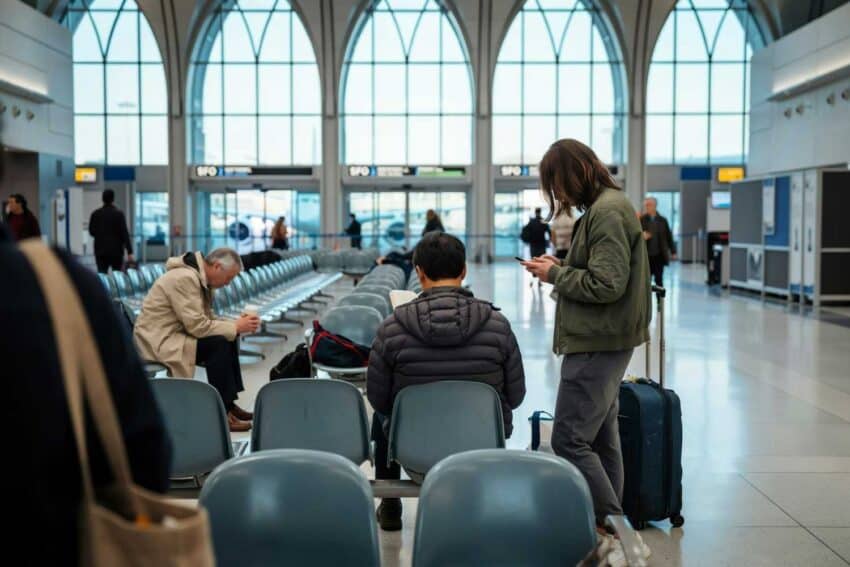
Image generated with Ai
San Francisco International Airport (SFO) is facing significant operational disruption with a total of 7 flight cancellations and 123 delayed flights, affecting both arrivals and departures across major domestic and international corridors linking the United States with Europe, Asia, and Latin America. The disruptions are impacting key aviation partners including United Airlines, Delta Air Lines, American Airlines, Alaska Airlines, JetBlue, Lufthansa, Air France, China Airlines, Air China, and several regional carriers.
The ripple effect of these disruptions extends far beyond California, impacting major global cities such as London (United Kingdom), Frankfurt (Germany), Tokyo (Japan), Beijing (China), Paris (France), Zurich (Switzerland), Mexico City (Mexico), and Seoul (South Korea). Both inbound tourism to San Francisco and outbound US travel are experiencing delays, with passengers facing extended waiting times and schedule uncertainty.
Advertisement
Advertisement
San Francisco International Airport, one of the busiest aviation hubs on the US West Coast, plays a crucial role in trans-Pacific and transatlantic connectivity. The current disruption has raised concerns over schedule reliability during peak travel movement, especially for tourism, business travel, and international transit passengers relying on SFO as a connecting gateway.
Breakdown of Flight Disruptions at SFO: Airlines, Routes, and Operational Impact
Updated Disruption Data
- Total cancelled flights: 7 flights
- Total delayed flights: 123 flights
Airlines Affected By Cancellations And Delays
The disruption has impacted a wide network of carriers operating at SFO.
Advertisement
Advertisement
- United Airlines: 3 cancellations, 43 delays
- American Airlines: 2 cancellations, 15 delays
- Delta Air Line: 1 cancellation, 6 delays
- Hawaiian Airlines: 1 cancellation
- SkyWest: 20 delays
- Southwest: 11 delays
- Alaska Airlines: 10 delays
- JetBlue: 4 delays
- Frontier Airlines: 3 delays
- EVA Air: 2 delays
- China Airlines: 1 delay
- Air China: 1 delay
- China Southern Airlines: 1 delay
- Condor Airlines: 1 delay
- Lufthansa: 1 delay
- Air France: 1 delay
- Swiss: 1 delay
- Air Canada: 1 delay
These disruptions span both long-haul intercontinental flights and domestic US routes, highlighting the interconnected nature of SFO’s global aviation network.
Advertisement
Advertisement
Cities And Countries Affected By Cancellations And Delays
Flight disruptions linked to SFO have impacted a broad geographic spread. In the United States, cities including New York, Los Angeles, Seattle, Denver, Chicago, Boston, Dallas, Phoenix, Washington D.C., and Atlanta are affected. Internationally, disruption extends to London (UK), Frankfurt (Germany), Paris (France), Zurich (Switzerland), Tokyo and Osaka (Japan), Beijing, Shanghai, Guangzhou (China), Seoul (South Korea), Taipei (Taiwan), Manila (Philippines), Singapore, Mexico City, Cancun, and Zurich (Switzerland). This widespread impact highlights SFO’s critical role as a trans-Pacific and transatlantic connector for global tourism and aviation networks.
Reason For Cancellations And Delays
While specific flight-level causes vary, the disruption pattern at SFO aligns with typical large-hub operational constraints such as air traffic congestion, cascading delays from inbound aircraft, crew scheduling limitations, and airport capacity balancing during peak traffic hours. Weather variability affecting West Coast air corridors and international arrival sequencing also contributes to network delays. Additionally, long-haul flight dependencies between US West Coast hubs and Asian and European destinations amplify disruption propagation. Once delays begin at a major hub like SFO, they often ripple through airline rotation systems, causing subsequent schedule adjustments across multiple continents. The result is a system-wide slowdown rather than isolated flight disruption events.
What to Do When Flights Get Cancelled or Delayed
Passengers facing disruption at San Francisco International Airport should adopt structured response strategies to reduce inconvenience and financial loss.
First, travellers should immediately check airline mobile apps or airport digital boards for real-time updates. Most carriers operating at SFO including United, Delta, and American Airlines offer automatic rebooking options when cancellations occur. Passengers should prioritise securing alternate flights rather than waiting at crowded service counters.
Second, travellers should verify their passenger rights under US DOT regulations, which may include rebooking assistance, meal vouchers, or accommodation depending on delay duration and airline policy. International travellers should also check EU or destination-country compensation rules if flying with European carriers.
Advertisement
Advertisement
Third, passengers with connecting flights should proactively inform airlines to adjust onward travel segments. Many missed connections are rebooked automatically but require confirmation.
Fourth, travel insurance holders should document delays through boarding passes and airline notifications for reimbursement claims. Airport lounges at SFO may offer temporary relief for eligible passengers during extended waiting periods.
Finally, passengers are advised to remain flexible with routing options, including nearby airports such as Oakland or San Jose when available.
Impact on US and International Tourism Flows
The disruption at San Francisco International Airport is expected to have a noticeable short-term impact on both US domestic tourism and international inbound travel. SFO is a primary gateway for tourists arriving from Asia and Europe, especially for destinations such as California, Nevada, and the broader West Coast tourism circuit.
Delayed arrivals from major tourism markets including Japan, China, South Korea, Germany, and the United Kingdom may result in itinerary adjustments, shortened stays, or missed connections to domestic leisure destinations like Los Angeles, Las Vegas, and Hawaii. This creates secondary economic pressure on hotels, tour operators, and airport-linked transport services.
Advertisement
Advertisement
Outbound US tourism is also affected as American travellers experience disruptions to long-haul vacation routes to Asia-Pacific and Europe. Cruise departures from West Coast ports may also be indirectly impacted due to late arrivals.
Overall, the disruption underscores the dependency of global tourism flows on stable hub operations like SFO, where even moderate delays can cascade into broader travel inefficiencies across continents.
Overview of San Francisco International Airport (SFO) and Its Tourism Significance
San Francisco International Airport (SFO) is one of the most important international gateways in the United States, serving as a critical hub for trans-Pacific tourism, business travel, and global connectivity. Located in California, SFO handles millions of passengers annually and serves as a major base for United Airlines.
The airport connects the US West Coast with leading tourism destinations across Asia, Europe, and Latin America. Its strategic position makes it a key driver of inbound tourism to California, supporting cities such as San Francisco, Napa Valley, Silicon Valley, and Monterey.
Disruptions at SFO therefore have a direct impact on tourism flow, hotel occupancy, and regional travel demand. Airlines rely heavily on its operational efficiency to maintain tight international schedules. Even short-term delays can affect global tourism circuits, especially during peak travel seasons.
As one of the most globally integrated airports in the world, SFO’s operational stability remains essential for sustaining both US tourism revenue and international visitor confidence.
Advertisement
