
Canada Backs LGBTQ+ Communities With Fresh Funding as Tourism Demands Safer Destinations

Published
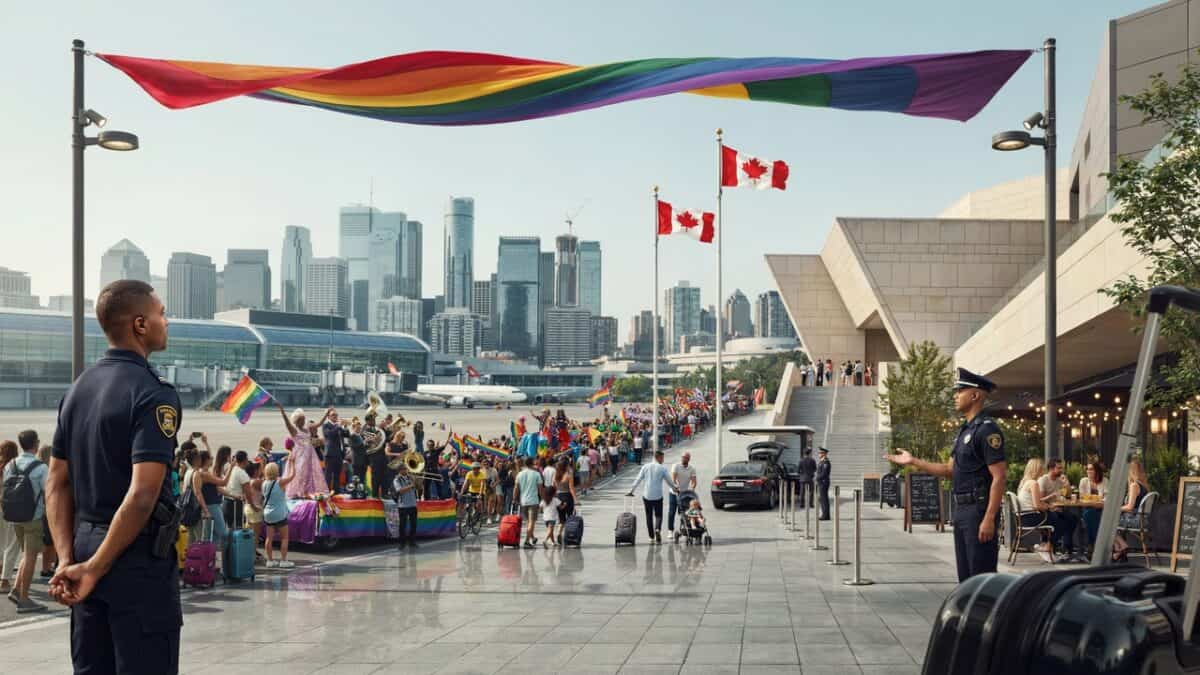
Image generated with Ai
Canada is reinforcing its commitment to 2SLGBTQI+ communities four years after launching its Federal 2SLGBTQI+ Action Plan, with fresh funding aimed at community support and Pride security that could also strengthen confidence across travel and tourism.
Canada marks four years of its LGBTQ+ Action Plan as new funding backs safer communities. For travel and tourism, the message is clear: inclusion, security and visitor confidence increasingly go together.
Advertisement
Advertisement
Canada has reached the fourth anniversary of its Federal 2SLGBTQI+ Action Plan, placing safety, inclusion and participation firmly back on the national agenda. The announcement matters to travel and tourism because destinations depend on visitors feeling welcome, businesses feeling secure, and communities having the capacity to host events and cultural activity. Since 2022, Women and Gender Equality Canada says it has supported more than 240 projects reaching nearly 50,000 2SLGBTQI+ people and allies across Canada. Meanwhile, Budget 2025 committed $54.6 million over five years, including funding for community organisations and Pride Security. That creates a clear connection between inclusion, tourism and destination confidence.
Canada’s Four-Year Milestone Puts Safety Back in Focus
The Federal 2SLGBTQI+ Action Plan was launched four years ago to reduce barriers faced by 2SLGBTQI+ communities and support a safer, more inclusive Canada, according to the statement issued by Women and Gender Equality Canada on August 28, 2026. The latest message from Rechie Valdez, Minister of Women and Gender Equality and Secretary of State (Small Business and Tourism) places particular emphasis on safety as the foundation for people to work, establish businesses, raise families and participate fully in society.
Advertisement
Advertisement
That principle has direct relevance for travel and tourism because visitor economies depend on functioning communities, active businesses, public events and welcoming destinations, while tourism itself brings together people from different backgrounds in hotels, restaurants, attractions, airports, cultural venues and public spaces. When safety and inclusion are treated as practical destination priorities, travel and tourism operators have a stronger foundation for serving residents, visitors and international travellers.
Advertisement
Advertisement
More Than 240 Projects Have Received Support
Since 2022, Women and Gender Equality Canada says it has supported more than 240 projects that have reached nearly 50,000 2SLGBTQI+ people and allies across the country. These investments are intended to strengthen community capacity and advance inclusion, giving local organisations resources to continue work that can influence everyday experiences in Canadian communities.
For travel and tourism, that community-level activity can matter because destinations are not defined only by attractions or accommodation capacity, but also by the social environment visitors encounter when they arrive. Community organisations, cultural groups, event organisers and local businesses can all contribute to how a destination is perceived, particularly when visitors are looking for places where they can participate openly and confidently.
Pride Security Becomes a Major Tourism Consideration
Budget 2025 included a commitment of $54.6 million over five years, with $10.9 million ongoing, to support the 2SLGBTQI+ community sector, according to the federal statement. Within that package, $7.5 million over five years, with $1.5 million ongoing, is earmarked for Pride Security, signalling a specific focus on keeping Pride celebrations safe, welcoming and accessible.
Advertisement
Advertisement
That funding has relevance beyond individual events because Pride celebrations can generate substantial activity across accommodation, food and beverage, retail, transport, entertainment and cultural tourism ecosystems, even though the supplied statement does not quantify their economic value. A safer event environment can therefore support the broader conditions in which travel and tourism businesses welcome visitors, employees and local communities.
Why Safety Matters to Travel and Tourism
Safety is a basic consideration in travel decisions, and the federal statement frames it as something that must be protected continuously rather than assumed. For tourism destinations, that approach is particularly important because visitor confidence can be influenced by how communities respond to discrimination, hate and social tension.
Advertisement
Advertisement
The statement also acknowledges that 2SLGBTQI+ people continue to face hate, discrimination and disinformation, despite progress. That reality gives travel and tourism stakeholders a reason to view inclusion as part of destination management rather than simply as promotional messaging, particularly when businesses compete internationally for visitors, workers, events and investment.
The Unity Campaign Adds a Public-Awareness Layer
Alongside direct project support, the federal government is using its Unity awareness campaign to encourage people across Canada to address stigma against 2SLGBTQI+ communities through education, reflection and action. The campaign adds a public-awareness dimension to the Action Plan and reinforces the idea that inclusion requires participation from communities, organisations and individuals.
For travel and tourism, public awareness can influence the atmosphere visitors experience in destinations and the confidence of people working across hospitality and tourism businesses. The message is therefore relevant to hotels, restaurants, attractions, event venues, transport providers and destination organisations that depend on positive interactions between residents, employees and travellers.
What This Means for Canadian Destinations
The fourth anniversary statement points towards a model in which community support, security and inclusion are treated as interconnected priorities. Rather than focusing solely on tourism promotion, destinations can also benefit from stronger local organisations, safer public events and a wider culture of participation.
This is particularly relevant for travel and tourism because destination competitiveness involves more than advertising a city or province to prospective visitors. A destination’s reputation is shaped by the experience on the ground, including whether travellers feel respected, whether events feel accessible, and whether tourism businesses can operate within stable and welcoming communities.
Advertisement
Advertisement
Tourism and Small Business Are Part of the Conversation
Minister Rechie Valdez’s portfolio includes Small Business and Tourism, giving the statement an especially relevant connection to Canada’s visitor economy. Small businesses form a significant part of the travel and tourism landscape, from accommodation and food services to retail, entertainment, cultural experiences and local visitor services.
The federal statement argues that safety allows people to work, build businesses, raise families and contribute to their communities. That framing connects inclusion with economic participation and provides a broader context for understanding why support for 2SLGBTQI+ communities can intersect with tourism, hospitality and destination development.
Community Voices Will Shape the Next Phase
Looking ahead, the government says continued support will be guided by the lived experiences of people closest to the work. That approach places community organisations and 2SLGBTQI+ participants at the centre of future decisions rather than treating policy as a one-way process.
For travel and tourism stakeholders, this creates an opportunity to listen more closely to communities when planning events, visitor campaigns, accessibility measures and destination experiences. Tourism bodies, businesses and event organisers that understand local concerns can make inclusion more practical and relevant to the visitors and residents they serve.
Anup Kumar Keshan, Editor-in-Chief, Travel And Tour World
“Canada’s continued support for 2SLGBTQI+ communities matters for its travel and tourism economy. Safe, welcoming destinations give visitors confidence, help local businesses attract talent, and allow communities to benefit from events, festivals, hospitality, retail and cultural activity. The Federal 2SLGBTQI+ Action Plan shows why inclusion needs sustained attention rather than occasional messaging. Supporting community organisations and Pride security can help protect the people and places that make Canadian destinations distinctive. For travel and tourism, inclusion is both a social responsibility and a practical priority that can strengthen visitor confidence, community participation and long-term destination resilience across Canada’s tourism sector nationwide.”
Advertisement
Advertisement
The cause is clear: 2SLGBTQI+ communities continue to experience hate, discrimination and disinformation despite progress. The answer is sustained government and community action through funding, awareness programmes, stronger organisations and improved security for Pride celebrations. The reason matters to travel and tourism because safe destinations create better conditions for residents, workers, businesses, events and visitors. Canada’s investment therefore extends beyond social policy into the wider environment in which tourism operates. With more than 240 projects already supported and new Budget 2025 funding committed, the federal approach signals that inclusion requires long-term attention, practical resources and community participation across Canada’s diverse travel and tourism landscape.
Canada’s fourth anniversary statement keeps safety and inclusion at the centre of its Federal 2SLGBTQI+ Action Plan. The government says more than 240 projects have reached nearly 50,000 people and allies since 2022. Budget 2025 adds $54.6 million over five years for community-sector support, including $7.5 million for Pride Security. For travel and tourism, the development matters because welcoming and secure communities influence the wider visitor environment. The next stage will rely on lived experience and continued cooperation with 2SLGBTQI+ organisations. That direction can help Canadian destinations strengthen participation, protect events and support a more confident tourism environment nationwide.
Frequently Asked Questions
What is Canada’s Federal 2SLGBTQI+ Action Plan?
Canada launched the Federal 2SLGBTQI+ Action Plan four years ago to reduce barriers faced by 2SLGBTQI+ communities and support a safer, more inclusive country. Its work includes community support, inclusion initiatives and efforts to strengthen participation in Canadian society and the economy.
How many projects has the federal government supported?
Women and Gender Equality Canada says it has supported more than 240 projects since 2022, reaching nearly 50,000 2SLGBTQI+ people and allies across Canada. The investments are designed to strengthen community capacity and advance inclusion.
How much funding was announced for 2SLGBTQI+ communities?
Budget 2025 committed $54.6 million over five years, with $10.9 million ongoing, to support the 2SLGBTQI+ community sector. The package includes $7.5 million over five years, with $1.5 million ongoing, for Pride Security.
Advertisement
Advertisement
Why does Pride Security matter to tourism?
Pride events can bring together residents, visitors, businesses, cultural organisations and hospitality providers. Safer and more accessible celebrations can therefore support the wider conditions in which travel and tourism activity takes place.
What is the Unity awareness campaign?
The Unity campaign encourages people across Canada to actively address stigma against 2SLGBTQI+ communities through education, reflection and action. It complements the broader work of the Federal 2SLGBTQI+ Action Plan.
What could the announcement mean for Canadian tourism?
The announcement reinforces safety and inclusion as factors relevant to destination environments. For travel and tourism businesses, stronger community organisations and safer public events can contribute to visitor confidence, participation and a more welcoming experience.
Advertisement
