
Venice, Italy Faces €50 Entry Fee Shock as Overtourism Clampdown Intensifies – What Others Are Missing in Europe’s New City Access Model

Published
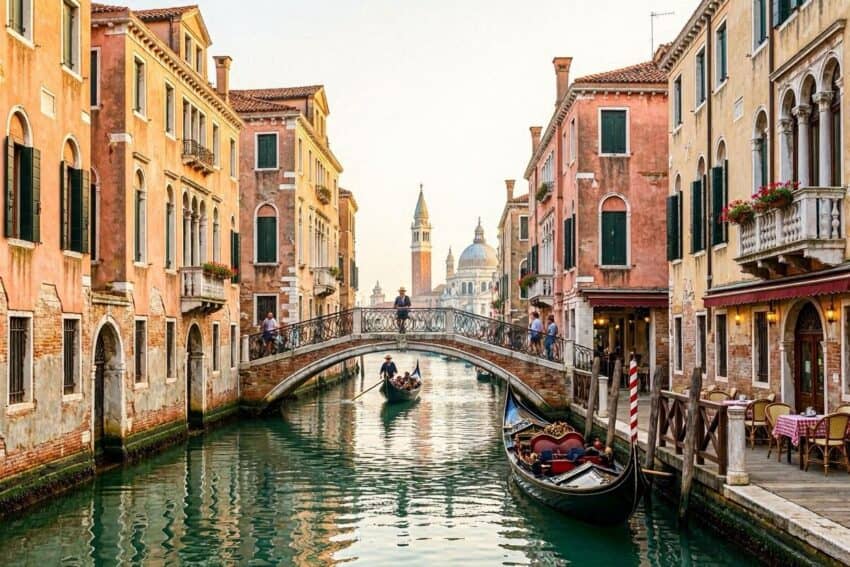
The city of Venice is preparing for a dramatic escalation in its visitor entry system in 2026. A proposal to raise the day-tripper fee from €5–€10 to as high as €50 on peak days is now under political review. The measure, discussed by city authorities this week, is aimed at controlling overwhelming tourist pressure during high-demand periods.
The decision matters immediately because enforcement is already active at key entry points, including outside Santa Lucia railway station, where QR code checks are being carried out.
Advertisement
Advertisement
This shift directly affects short-stay tourists, cruise-linked visitors, and spontaneous day travellers who account for a significant share of Venice’s congestion. The issue is no longer theoretical. It is being operationalised in real time, and Europe’s most fragile heritage cities are watching closely.
Venice at the Crossroads of Overtourism Economics
The historic lagoon city of Venice is under increasing structural pressure from mass tourism flows that exceed its physical capacity.
Advertisement
Advertisement
City officials argue that previous pricing tiers have failed to meaningfully alter behaviour. With €5 advance bookings and €10 last-minute payments still attracting over half a million entries in a short trial window, authorities now see pricing elasticity as ineffective.
Key pressure points include:
Advertisement
Advertisement
- Daily congestion around railway and cruise entry corridors
- Overloaded pedestrian networks in peak months
- Rising maintenance costs for heritage infrastructure
- Resident displacement linked to short-term tourism demand
The underlying concern is no longer just crowding. It is system fatigue. Venice is being forced to redefine itself as a regulated-access destination rather than an open historic city.
From €5 Trial to €50 Surge Pricing Model
The proposed €50 entry fee represents a shift from symbolic regulation to behavioural deterrence.
Advertisement
Advertisement
Initially introduced in 2024, the Venice entry fee system was designed as a pilot project. It is now evolving into a dynamic pricing framework similar to airline or event ticketing models.
Current structure:
- €5 for early booking
- €10 for late booking
- Potential €50 peak-day surcharge under new proposal
- Enforcement via QR validation checkpoints
Officials argue that price sensitivity is too low to reduce demand. Data cited by local administration shows minimal behavioural change between €5 and €10 tiers.
The proposed €50 model is intended to:
Advertisement
Advertisement
- Reduce spontaneous, unplanned day visits
- Shift demand toward off-peak travel days
- Increase revenue for city maintenance and resident relief funds
- Enable crowd redistribution across calendar periods
Supporters in the hospitality sector suggest the model is not punitive but corrective, aligning visitor flow with infrastructure capacity.
QR Codes, Enforcement and the Rise of the Controlled City
One of the most significant developments is the expansion of digital enforcement infrastructure.
Visitors entering Venice are now required to register and display QR verification at multiple checkpoints, including railway station exits and key pedestrian gateways.
The system includes:
- Pre-booking through digital platforms
- Time-slot validation during peak hours (08:30–16:00)
- On-site QR verification by authorised staff
- Fines ranging from €50 to €300 for non-compliance
This creates what analysts describe as a “controlled access urban model,” where entry is no longer passive but actively regulated.
The implications extend beyond tourism management. It introduces a framework where:
Advertisement
Advertisement
- Cities operate like gated cultural assets
- Real-time visitor data shapes pricing policy
- Enforcement becomes embedded in mobility infrastructure
Venice is effectively becoming a test case for digital-first tourism governance in Europe.
What Travellers Are Missing in the Venice Fee Debate
The public discussion has largely focused on cost. However, the deeper transformation is structural rather than financial.
What is often overlooked:
- The entry fee is not just revenue generation but demand engineering
- QR enforcement signals permanent digital access control, not temporary regulation
- Pricing tiers are being designed to reshape travel behaviour patterns
- Heritage protection is being integrated into economic policy
The critical shift is that access to historic cities is becoming conditional, not automatic.
In this context, Venice is not acting in isolation. Similar models are being discussed across high-pressure destinations in Southern Europe, where overtourism has begun to destabilise housing, infrastructure, and cultural preservation systems.
The new angle is clear: tourism is being reclassified as a managed utility rather than an unrestricted right.
Advertisement
Advertisement
Who Wins, Who Loses in the New Pricing Era
The proposed changes create a clear redistribution of access and value.
Potential beneficiaries:
- Residents, through reinvestment of tourism revenue
- Hotel operators benefiting from longer-stay visitors
- Heritage conservation bodies receiving higher funding streams
- Pre-booked international travellers planning structured itineraries
Those most affected:
- Budget day-trippers and spontaneous visitors
- Cruise-linked short-stay arrivals
- Low-cost regional travellers
- Unorganised tourism flows without advance booking
The model incentivises planning over spontaneity, structure over fluid travel, and economic contribution over volume-based tourism.
The Bigger European Shift Emerging from Venice
Venice’s proposal is increasingly seen as a prototype for wider European adoption.
Tourism policy analysts suggest that if successful, similar systems could emerge in:
Advertisement
Advertisement
- High-density heritage cities
- Coastal cruise hubs
- UNESCO-protected urban centres
The key policy direction is convergence between digital identity systems, pricing elasticity, and urban conservation funding.
This represents a fundamental transformation in how cities define access rights in the tourism economy.
Turning Point in Global City Access Models
The Venice €50 entry fee debate is no longer just a local policy adjustment. It is a signal of how global tourism may be restructured in the coming decade.
According to TTW Founder and Editor-in-Chief Mr. Anup Kumar Keshan, this shift reflects a critical turning point: cities are no longer simply destinations, they are becoming regulated experiences where access, timing, and pricing are actively engineered to preserve survival.
He further notes that the most disruptive change is not the cost itself, but the normalisation of controlled entry as a standard tourism framework.
As Venice moves toward a potential €50 threshold, the question facing global travellers is no longer whether cities are expensive. It is whether access itself is becoming conditional.
Advertisement
Advertisement
The next phase of travel may not be about where to go—but when, how, and at what price permission is granted.
Call to action: Travellers planning Europe in 2026 may need to rethink spontaneity entirely, as controlled access tourism moves from experiment to expectation.
Advertisement
