
Costa Rica Overtakes Germany, France, Palau, Japan and Others in Spearheading Sustainable Tourism Driven by Nature Conservation, Eco Taxes, Green Infrastructure and More, Redefining Global Travel Trends in 2026

Published
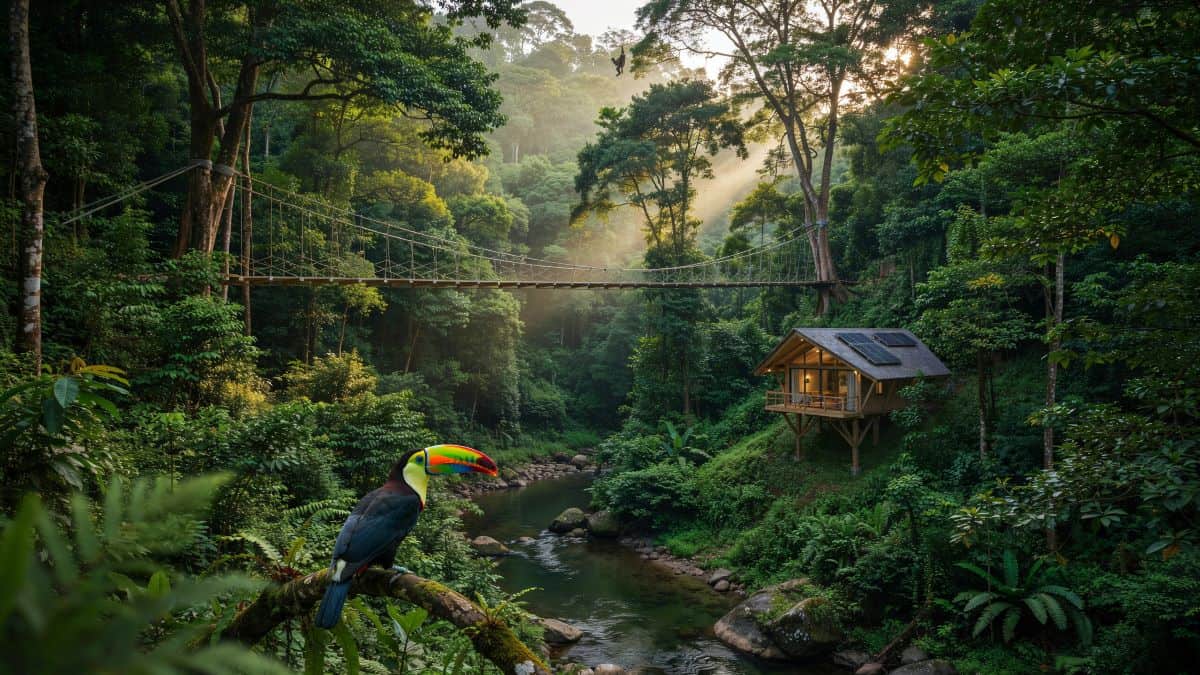
Image generated with Ai
Driven by nature conservation, eco taxes, and green infrastructure, Costa Rica leads sustainable tourism in 2026. Reinvesting tourist revenue directly into reforestation and clean energy, it overtakes Germany, France, Palau, and Japan, redefining global travel trends. Official data from the Instituto Costarricense de Turismo (ICT), the Organisation for Economic Co-operation and Development (OECD), and the World Travel & Tourism Council (WTTC) confirm the concrete numbers driving Costa Rica’s structural dominance. Nationally managed environmental service programs (PES) have expanded national forest cover from 21% in 1987 to over 59% today. At the same time, over 98% of the national electricity grid is consistently generated from clean renewable sources, including hydroelectric, geothermal, wind, and solar energy. Furthermore, 28% to 30% of the total land area is constitutionally set aside within national parks, biological reserves, and wildlife refuges. These environmental boundaries directly support national economic performance, with tourism accounting for roughly 8% to 10% of gross domestic product.
This article analyzes how Costa Rica’s institutional eco-reinvestment model compares against the climate policies, transit mandates, and overtourism controls of other major global destinations, defining the core trends shaping travel in 2026.
Advertisement
Advertisement
Why Sustainable Tourism Takes Center Stage in 2026
Sustainable tourism has evolved from a niche preference into the primary economic driver of global travel trends in 2026. Driven by rising climate impacts and systemic overtourism, both travelers and governments now prioritize ecological regeneration over raw visitor volume. Valued at over $2.3 trillion globally, the sustainable travel market reflects a structural shift: tourists actively seek carbon-neutral transit, zero-waste accommodations, and immersive local experiences that preserve indigenous culture. Concurrently, strict international regulations—such as EU greenwashing bans and mandatory capacity caps—force travel operators to integrate verified eco-certifications. In 2026, low-impact exploration is no longer an optional luxury; it is the global standard for destination competitiveness and long-term industry resilience.
How Costa Rica Dominates the Global Eco-Tourism Index

Image generated with Ai
Costa Rica has established itself as the world’s leading authority on sustainable travel execution, outpacing major global economies and dedicated island conservation zones including Germany, France, Japan, Spain, and Palau. Rather than relying on voluntary corporate pledges or conceptual marketing campaigns, the Central American nation operates a legally mandated, fully integrated framework that channels visitor expenditure directly into ecosystem restoration and climate resilience.
Advertisement
Advertisement
Sustainable Tourism Initiatives by Costa Rica
Costa Rica leads global ecotourism through legally mandated, institutional conservation strategies managed by the Ministry of Environment and Energy (MINAE) and the Costa Rican Tourism Board (ICT). Key government-backed initiatives include:
Advertisement
Advertisement
- Payment for Environmental Services (PES): Funded via fuel tax revenues and tourist levies, this program compensates private landowners for forest conservation, expanding national forest cover from 21% in 1987 to over 59% today.
- Certification for Sustainable Tourism (CST): A rigorous ICT auditing system evaluating hospitality operators on waste management, renewable energy usage, carbon mitigation, and local community pay equity.
- Protected Wilderness Expansion: Over 28% of national territory is constitutionally locked into national parks, wildlife refuges, and biological reserves.
- Bandera Azul Ecológica (Ecological Blue Flag): A national program incentivizing local beach committees and operators to maintain strict coastal water quality, sanitation, and climate resilience standards.
Official benchmark data from the Instituto Costarricense de Turismo (ICT) and international environmental monitoring frameworks highlight the concrete metrics behind Costa Rica’s structural leadership:
- Forest Canopy Expansion: Environmental service policies have expanded national forest cover from 21% in 1987 to over 59% today.
- Grid Decarbonization: Over 98% of national electricity is generated from clean renewable sources—primarily hydroelectric, geothermal, wind, and solar.
- Protected Wilderness: 30% of total territory is constitutionally set aside within national parks, biological reserves, and wildlife refuges.
- Economic Performance: Tourism accounts for 8% to 10% of gross domestic product (GDP), proving that strict ecological boundaries can power robust national economic growth.
France: Revolutionary Transit Mandates & Ecological Capacity Caps
France addresses sustainable tourism by leveraging federal legislation to eliminate high-emission domestic travel legs and protect vulnerable natural landmarks.
- Climate and Resilience Law (Loi Climat et Résilience): France prohibits commercial domestic flights on routes where a direct, high-speed passenger rail alternative under 2.5 hours exists.
- Mandatory Site Capacity Limits: High-density, ecologically fragile destinations utilize hard visitor caps. The Sugiton Calanque within Calanques National Park enforces a daily reservation limit of 400 visitors (down from 2,500+) to stop permanent coastal soil erosion.
- Key Verified Metrics:
- >20% reduction in domestic aviation emissions on impacted rail-interchange routes.
- 84% reduction in peak daily visitor strain at regulated natural reserves like Calanques.
- 26,000+ km of interconnected cycle paths under the Schéma National des Véloroutes.
In 2026, we at Travel and Tour World (TTW) ranked Costa Rica’s Corcovado National Park 11th in our Top 50 Best Eco Tourism Destinations in the World rankings for its for dense rainforests, coastal habitats, and extraordinary biodiversity.
Advertisement
Advertisement
Germany: Unlocking Green Transit & Certified Hospitality Infrastructure
Germany integrates sustainable travel directly into its public transportation networks and industrial environmental auditing systems.
- Deutschlandticket Transit Integration: Overseen by federal transit authorities, the monthly flat-rate regional transport pass allows residents and international visitors to navigate regional rail and municipal transit seamlessly.
- Viabono Eco-Certification: Developed in partnership with the Federal Environmental Agency, Viabono sets quantitative benchmarks for hotel energy consumption, local supply chain sourcing, and guest food-waste management.
- Key Verified Metrics:
- 11M+ active monthly subscribers using the nationwide Deutschlandticket pass.
- 1.8M to 2.5M tonnes of annual $\text{CO}_2$ offset by shifting car journeys to regional rail.
- 1,500+ certified green hospitality operators running under verified eco-standards.
Japan: Defusing Overtourism Through Trail Caps & Rural Preservation
The Japan Tourism Agency (JTA) addresses high tourist density by combining strict high-altitude access fees with rural economic regeneration initiatives.
Advertisement
Advertisement
- Mount Fuji Access Limits: To combat trail degradation and safety issues on the Yoshida Trail, Yamanashi Prefecture enforces a mandatory online booking system, daily entry caps, and climbing fees.
- Satoyama Rural Preservation: Government policy redirects tourist spending away from overcrowded urban routes (Tokyo-Kyoto-Osaka) and into historical agricultural communities (Satoyama), connected via the zero-emission Shinkansen bullet train network.
- Key Verified Metrics:
- 4,000 climbers/day hard cap on Mount Fuji’s Yoshida Trail.
- 4,000 JPY (~$25 USD) mandatory conservation fee implemented for peak-season climbers.
- ~14% drop in peak congestion along high-altitude trail networks.
Spain: Transforming Mass Tourism Into High-Value Circular Models
Spain’s Secretariat of State for Tourism operates under its Sustainable Tourism Strategy 2030, adjusting its long-standing high-volume resort model toward per-visitor economic value and regional preservation.
- Overtourism Taxes & Housing Caps: Regions such as Catalonia and the Balearic Islands levy mandatory tourist surcharges, directing proceeds into municipal water management, coastal preservation, and local housing funds.
- High-Speed Rail Expansion: Spain operates the AVE high-speed rail network, actively shifting intercity passenger journeys from regional airlines to electrified rail.
- Key Verified Metrics:
- €1,400+ average spend per international tourist stay, prioritizing economic yield over raw crowd volume.
- 3,900+ km of high-speed rail tracks (the largest high-speed rail network in Europe).
- 3.0M+ workers employed in national tourism under reformed, permanent labor contracts.
Palau: Ocean Stewardship & Legally Binding Visitor Commitments
Palau operates as a global leader in marine ecosystem management, enforcing constitutional safeguards to protect its fragile island habitat.
- Palau National Marine Sanctuary (PNMS): The island nation secures 80% of its Exclusive Economic Zone (EEZ) as a fully protected marine reserve, prohibiting commercial fishing and resource extraction.
- The Palau Pledge: Every arriving traveler must sign a legally binding ecological pledge stamped directly into their passport, promising to respect local customs and avoid environmental degradation during their stay.
- Key Verified Metrics:
- 475,000 square kilometers of protected ocean within its National Marine Sanctuary.
- 100% of international visitors legally bound by the eco-passport pledge.
- Nationwide ban on reef-toxic chemical sunscreens across all retail channels.
| Country | Key Policy Framework | Primary Quantitative Metric | Environmental Focus Area |
| Costa Rica | Certification for Sustainable Tourism (CST) & PES Program | >98% Renewable Grid Energy; 59%+ Forest Coverage | Terrestrial Biodiversity & Forest Regeneration |
| France | Loi Climat et Résilience | 20%+ Drop in domestic aviation emissions on banned routes | Modal Shift from Regional Flights to High-Speed Rail |
| Germany | Viabono & Federal Transit Integration Framework | 11M+ Monthly Deutschlandticket users | Regional Rail Transit & Hospitality Energy Standards |
| Japan | Japan Sustainable Tourism Standard for Destinations (JSTSD) | 4,000 Climber/Day Cap on Mt. Fuji Yoshida Trail | Alpine Trail Protection & Rural Economic Dispersion (Satoyama) |
| Spain | Sustainable Tourism Strategy 2030 | €1,400+ Average Visitor Spend; 3,900+ km High-Speed Rail | Urban Overtourism Management & Coastal Preservation |
| Palau | Palau National Marine Sanctuary Act | 475,000 $\text{km}^2$ Protected EEZ Zone | Coral Reef Protection & Marine Extraction Bans |
The Four Infrastructure Pillars Reshaping Modern Sustainable Travel
The operational success demonstrated by Costa Rica highlights four fundamental pillars defining modern, responsible travel destinations:
- Enforced Eco-Auditing Over Self-Reporting: Standardized certifications managed by government agencies (such as Costa Rica’s CST or Japan’s JSTSD) ensure hospitality operators meet strict waste, water, and energy thresholds.
- Dedicated Eco-Taxation: Revenue generated from entry fees or lodging surcharges is earmarked directly for park ranger payrolls, watershed management, and local community infrastructure.
- Low-Carbon Transport Networks: Transitioning away from short-haul regional flights toward electrified high-speed rail networks drastically cuts the carbon intensity of moving tourists between urban hubs and rural destinations.
- Data-Driven Access Limits: Implementing online reservation systems and hard daily limits at vulnerable natural sites prevents overcrowding and long-term soil erosion.
Actionable Field Guide: How Travelers Can Verify Authentic Eco-Destinations
For travelers seeking to align their journeys with verified eco-tourism principles, official tourism boards recommend following these core guidelines:
- Verify Regional Certifications: Look for official government-backed accreditations—such as Costa Rica’s CST, Germany’s Viabono, or the Global Sustainable Tourism Council (GSTC) seal—rather than unverified marketing claims.
- Prioritize Low-Carbon Transit: Utilize high-speed rail networks or shared public transit for intercity journeys to minimize individual transport emissions.
- Respect Access Restrictions: Book permits well in advance for high-demand natural sites and respect daily visitor limits designed to protect fragile ecosystems.
- Support Local Supply Chains: Choose accommodations and tour operators that employ local guides, pay fair living wages, and source produce from regional agricultural communities.
In conclusion, Costa Rica overtakes Germany, France, Palau, Japan and others in spearheading sustainable tourism driven by nature conservation, eco taxes, green infrastructure and more, redefining global travel trends in 2026. By converting visitor revenues directly into environmental service payments, enforcing rigid eco-certifications, and powering its travel footprint with a near-100% renewable grid, the Central American nation proves that institutional eco-reinvestment outperforms mere regulatory restrictions. Rather than treating sustainability as an operational burden, Costa Rica uses ecological health as its primary economic engine. In doing so, it sets the definitive standard for how countries can protect natural heritage while powering national growth.
Advertisement
